Hello. I’m 박재형, the director of 원진치과의원.
My gums have swollen and started bleeding since getting veneers
If you look in the mirror after getting veneers and notice that the gums around your front teeth are red, swollen, and throbbing,
it is natural to first feel anxious and wonder, “Could something have gone wrong?”
The conclusion first: gum swelling after veneers can have various causes, and most cases can be resolved.
However, if left untreated, it can lead to gum recession, veneer detachment, or the need to have the veneers remade. Therefore, it is most important to identify the exact cause.
Today, I’ll explain why gums swell, when you should visit a dental clinic, and how the problem can be addressed.
Main causes of gum swelling after veneers
1. Poor fit at the restoration margin
This is the most common cause.
If the boundary where the veneer meets the gum is not smooth or has a tiny gap,
plaque can continuously accumulate in that area, causing chronic gum inflammation.
Although it can be difficult to notice with either your eyes or your fingers, the gums can react very sensitively.
Even a tiny gap that is difficult to see can become a place where bacteria remain, so the precision of the veneer margin is just as important as its appearance.
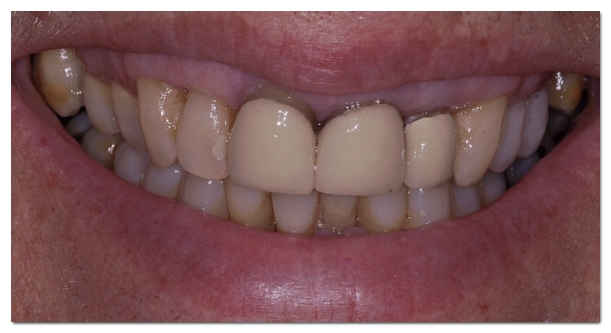
That is why it is important to fit the margin in detail,
and to bond the veneer properly so that tiny gaps do not form and cause gum inflammation or cavities.
The choice of bonding agent can therefore also make an important difference.
Veneer bonding is related not only to gum health but also to the lifespan of the veneers.
In the article below, I explain how to receive veneers that can be used healthily for a long time.
2. Residual bonding agent (resin)
Veneers are made by bonding a thin layer of porcelain to the surface of a tooth.
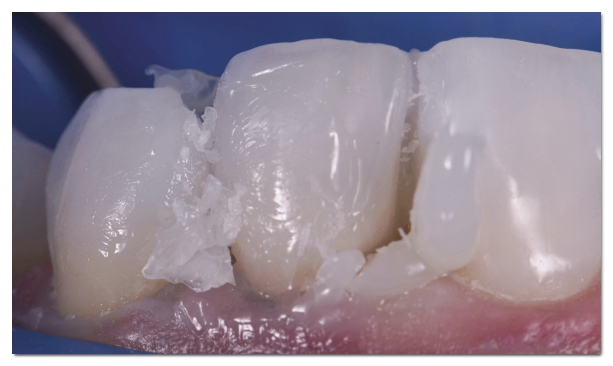
If some of the bonding agent used during the procedure remains microscopically around the margin below the gum,
bacterial plaque can easily adhere to its surface and cause gum inflammation.
If only one particular area keeps swelling and feeling sensitive while the other areas are fine, residual bonding agent may be the cause.
3. Temporary irritation immediately after the procedure
The gums may swell because of physical irritation caused while shaping teeth near the gums and taking impressions.
In this case, the swelling usually gradually subsides within one to two weeks and may be part of the body’s natural recovery process.
If the pain is gradually decreasing, there is generally no need to worry too much.
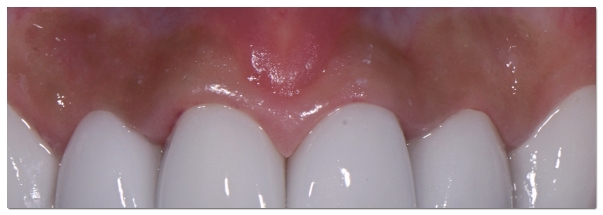
As shown in the photo above, slight gum swelling immediately after the procedure is often temporary.
4. Difficulty maintaining cleanliness
There are bound to be areas around the veneer margins that are difficult to reach with ordinary brushing alone.
If you do not use dental floss or an interdental brush, food debris and bacteria can build up in these narrow spaces, eventually causing the gums to become red and swollen.
If food keeps getting stuck in areas where it did not before the procedure, you should first review your cleaning habits.
5. Pre-existing gum disease
If you already had periodontitis or gum inflammation before the procedure,
your gum problems may continue to progress even without being directly related to the veneers.
In this case, only the appearance of the teeth has been renewed, while the foundation—the gums—remains weak.
That is why a gum examination must be performed before getting veneers.
In such cases, we also treat the gums first to stabilize their condition before proceeding with the veneer procedure.
Even afterward, regular scaling and checkups are needed for continued monitoring.
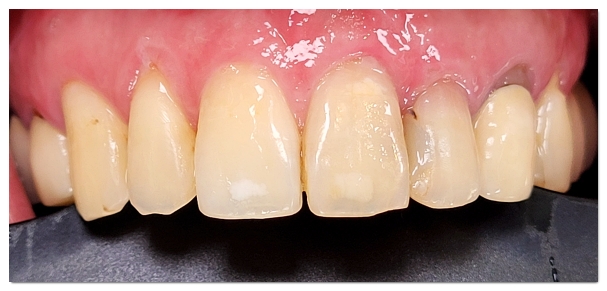
6. Excessive contour or pressure on the gums
If the veneer is made thicker than the natural tooth or slightly presses against the gums,
that pressure can become chronic irritation and cause swelling.
If only the gum around a particular tooth looks especially red when you smile, its contour should be examined again.
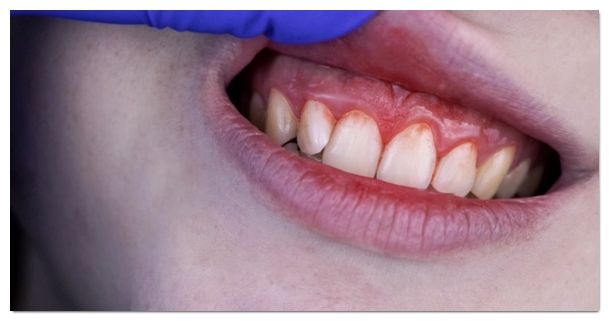
Temporary gum swelling vs. swelling that requires a dental visit
Not all swelling indicates a problem. You should visit a dental clinic promptly if any of the following apply:
- The swelling and pain do not decrease even after two weeks.
- The same particular area repeatedly swells and bleeds.
- The gums are gradually receding, exposing the veneer margin.
- Pus comes out when you press the area, or your bad breath has become severe.
- Pain from cold or hot foods is gradually getting worse.
In contrast, mild swelling immediately after the procedure can often be monitored for a few days while brushing gently.
The important point is the direction of the symptoms: “Are they gradually improving, or gradually worsening?”
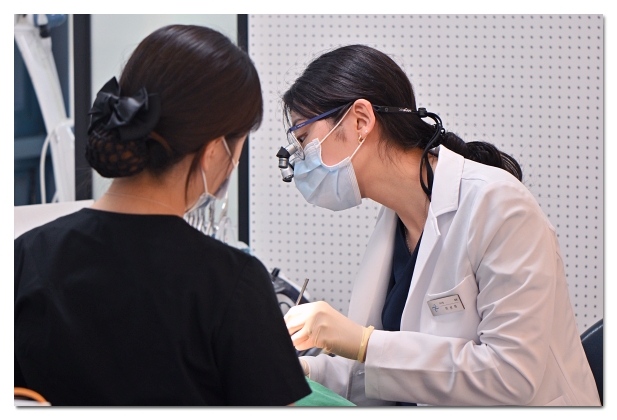
Gum care you can do at home
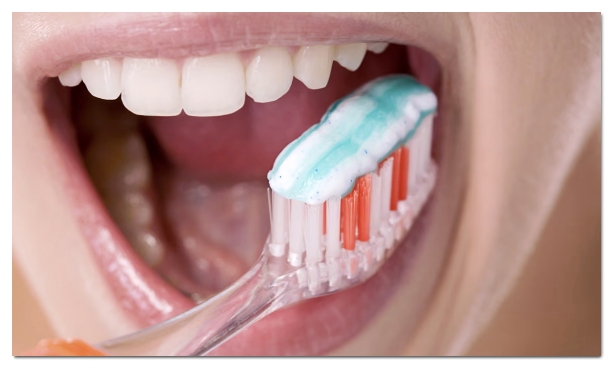
Use a soft toothbrush to gently brush along the gum margin at a 45-degree angle, and clean between the veneers every day with dental floss and an interdental brush.
Avoiding brushing because your gums are swollen can instead allow bacteria to increase and worsen the inflammation.
Rinsing with warm salt water may temporarily help reduce bacteria in the mouth.
It is best to avoid irritating foods and smoking, as they can delay gum recovery.
However, all of these measures are only supportive care.
If the cause lies in the restoration itself, home care alone will not resolve the underlying problem,
and the condition may worsen over time, so I recommend visiting a dental clinic promptly.
Treating gum inflammation at the dental clinic
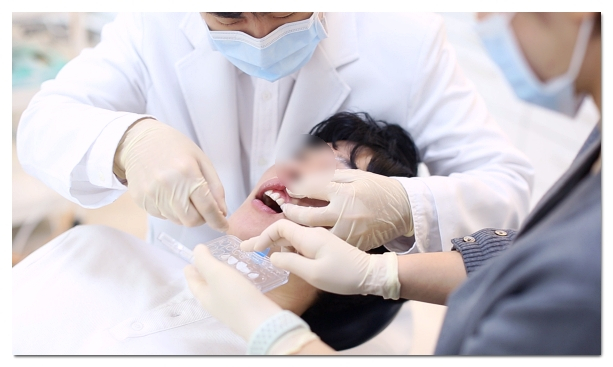
At the dental clinic, we first accurately diagnose the cause of the inflammation.
If the margin is the problem, the boundary is adjusted. If the fit is inadequate, the veneers may need to be remade.
This may be disappointing, but it may be unavoidable. If the current condition continues, more extensive treatment may become necessary.
Any bonding agent remaining below the gums is thoroughly removed, and accumulated plaque and tartar are addressed through scaling and periodontal treatment.
When pre-existing gum disease is also present, the usual approach is to stabilize the gums with treatment first and then address the restoration.
The key is not to think, “My gums are swollen, so I can just take medication,” but to identify why they are swollen and eliminate the cause.
If you only reduce the swelling while leaving the cause unchanged, the same problem will recur.
Prevention is key to avoiding gum swelling after veneers
The true quality of veneers is determined not by the shape of the teeth alone, but by how harmoniously they blend with the gums.
The risk of swelling and inflammation can be greatly reduced by choosing a clinic that thoroughly examines your gum condition before the procedure, fits the margins precisely, and provides guidance on aftercare.
If swelling has already begun, I recommend receiving an accurate diagnosis rather than waiting for time to resolve it on its own.
Gum swelling is one of the clearest signals sent by the body. The earlier you respond, the simpler treatment can be and the lower the financial burden may be.
Conversely, if you delay for a month or two, the gums may recede to the point where the veneers need to be remade.
The sooner the cause is identified, the longer you can keep both your veneers and your precious gums healthy.
Thank you. This was 박재형.