안녕하세요. 원진치과의원 대표원장 박재형입니다.

I had laminates placed, but they keep coming off ㅠㅠ
If your laminates keep coming off—not just once, but repeatedly—it can be incredibly upsetting and worrying.
It is inconvenient to keep going back to have them reattached, and you may also worry, “Is this going to keep happening?”
However, let me make one thing clear: laminates coming off repeatedly is not simply a matter of bad luck.
In most cases, there is an underlying reason that makes them likely to come off. If that cause is not addressed, they may come off again even after being reattached.
Today, I will explain why laminate detachment keeps happening and how it can be addressed.
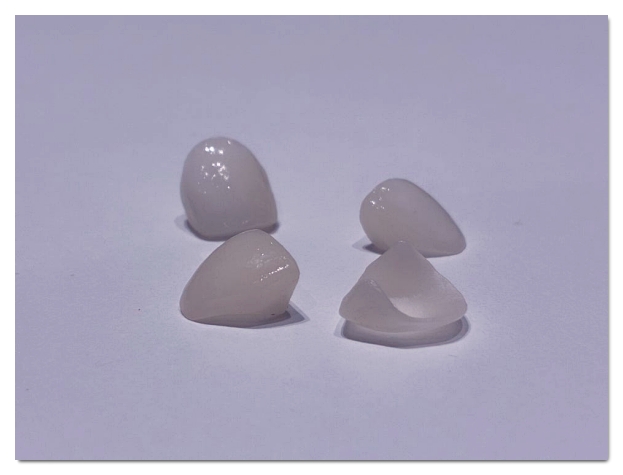
Main Reasons Laminates Keep Coming Off
1. Too much tooth structure was removed
The surface of a tooth has a hard outer layer called enamel. If too much is removed, as was common with older techniques, leaving very little enamel,
laminates have to be bonded to the dentin underneath.
The problem is that dentin has much weaker bonding strength than enamel.
Because the bonding surface itself is unfavorable, the laminate can come off easily no matter how many times it is reattached.
Many cases of “laminate regret” are caused by this excessive tooth reduction.
In contrast, when as much enamel as possible is preserved through no-prep or minimal-prep techniques, bonding is stronger and the laminate is less likely to come off.
(Of course, the condition of the teeth must meet the relevant requirements.)
To reduce complications, the amount of tooth reduction should therefore be minimized.
Please be sure to read the article below before undergoing treatment. It explains several ways to reduce complications.
2. The bonding process was not performed carefully enough
Bonding laminates is a more delicate procedure than you might expect.
The tooth surface must be cleaned properly,
and bonding strength can only be achieved when saliva and moisture are thoroughly controlled.
The mouth is an environment with a great deal of saliva and moisture,
so even one drop of saliva entering at the moment of bonding can significantly reduce bonding strength.
Therefore, insufficient moisture control or surface preparation during this process can weaken the bond and cause the laminate to come off easily.

In addition, regardless of the type of laminate, it is best to use high-quality bonding materials. The final result is also affected by carefully checking whether the color matches well before bonding.
In other words, how carefully the laminate is bonded has a major impact on whether it comes off.
3. The bite, or occlusion, is not properly aligned
This is actually one of the most commonly overlooked causes of repeated detachment.
If the bite is misaligned and excessive force is concentrated on a particular laminate, the same laminate may come off or break each time it is bonded.
This is a representative situation that cannot be resolved simply by reattaching the laminate.
Therefore, if the same laminate keeps coming off, a bite problem should be considered first.
Occlusion is affected not only when chewing food but also whenever the teeth make contact unconsciously during everyday activities.
Even a slight misalignment can gradually build up excess stress on one side over time.
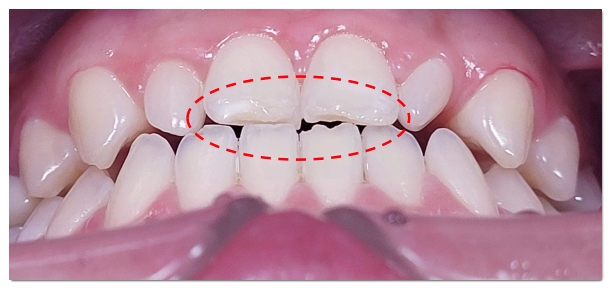
The teeth in the photo above were in an edge-to-edge bite, in which the upper and lower teeth came into contact and the upper teeth became worn down.
In cases like this, if the bite is not properly adjusted, the laminates may break or come off during use.
4. You grind or clench your teeth
If you grind your teeth during sleep or clench them during the day, continuous strong force is applied to the laminates.
Because this occurs while you are asleep and may go unnoticed, the bond may fail, causing the laminate to come off or break.
If your jaw feels stiff in the morning or your teeth feel sensitive, teeth grinding may be a possibility.
5. Lifestyle habits, cavities, and gum problems
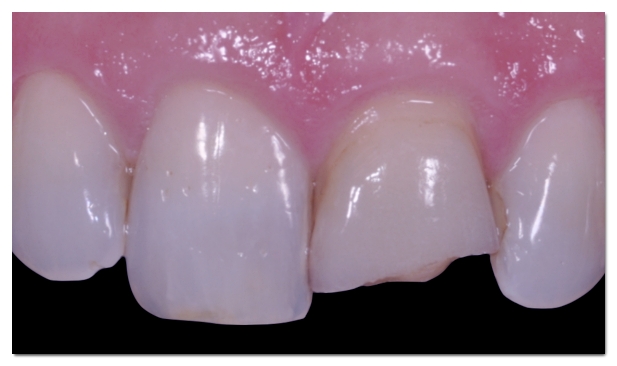
Biting through hard foods with your front teeth or habits such as biting your nails or bottle caps can also cause detachment.
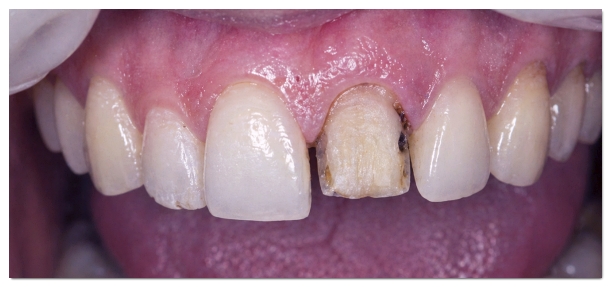
In addition, if a cavity develops along the edge of the bonding area or your gum condition deteriorates, the bonding surface may be damaged, causing the laminate to come off.
Although these factors may seem minor, accumulated habits and poor oral hygiene can lead to detachment and should not be overlooked.
How Can You Fix Laminates That Keep Coming Off?
The key is not to keep repeating the same process of simply reattaching them.
When a laminate repeatedly comes off, the first step is to reassess the cause.
You must first determine exactly why it is coming off.
The solution differs completely depending on whether the problem lies with the bonding, the bite, teeth grinding, the amount of tooth reduction, or personal habits.
If you skip identifying the cause and simply keep reattaching the laminate, you will only spend more time and money while the same problem continues.

If the cause is the bite, the forces should be distributed more evenly through occlusal adjustment.
Properly addressing this alone can significantly reduce repeated detachment.
Occlusal adjustment requires sufficient time to be performed in detail,
so it is worth checking whether the clinic puts effort into this process rather than simply bonding the laminate quickly and ending the appointment.
If teeth grinding is the cause, wearing a mouthguard or night guard during sleep can help reduce the force applied to the teeth.
If bonding is the problem, the surface should be treated carefully, moisture should be thoroughly controlled, and the laminate should be properly bonded using a proven adhesive during reattachment.
If the same laminate has come off again, ask what will be done differently this time.
If the tooth has already been excessively reduced and there is not enough bonding surface,
it may be more realistic to consider whether another type of restoration would be more suitable rather than repeatedly replacing only the laminate.
Finally, lifestyle factors such as eating hard foods or biting on objects, as well as cavity and gum care, must also be addressed to prevent recurrence.

If the same laminate continues to cause problems even after the underlying cause has been addressed,
it may be better to remake the restoration rather than repeat reattachment indefinitely.
If the bonding surface has already been damaged or the design does not fit the tooth properly,
having a new one made to achieve a precise fit may provide a longer-lasting and more stable result.

Key Takeaways on Repeated Laminate Detachment
In summary, repeated laminate detachment is a sign that there is a clear underlying cause, such as bonding, occlusion, teeth grinding, or excessive tooth reduction.
The important thing is not to simply reattach what has come off, but to accurately diagnose why it came off and address the underlying cause.
If you are worried because your laminates keep coming off, we recommend having the cause thoroughly checked before reattachment.
Do not handle or attempt to reattach the detached laminate yourself.
If you still have the detached piece, keep it safe and bring it to the clinic, as it can help with diagnosis and treatment.
Thank you. This was Jae-hyeong Park.