Hello. I am Park Jae-hyung, the director of Wonjin Dental Clinic.

Are there differences between the various types of laminate veneers?
I’m curious which type is the strongest and looks the most natural.
If you have been looking into laminate veneers, you may have had these concerns.
When you search online for laminate veneers, you will find a wide range of terms, such as ceramic porcelain and minimal-preparation veneers.
In particular, many clinics now use their own brand names, making it even more confusing to know which option to choose.
So today, I will summarize the types and features of laminate veneers, their prices, suitable candidates, and precautions all in one place.
After reading this article, you should be able to choose the type that suits the condition of your teeth.
- What Are Laminate Veneers?
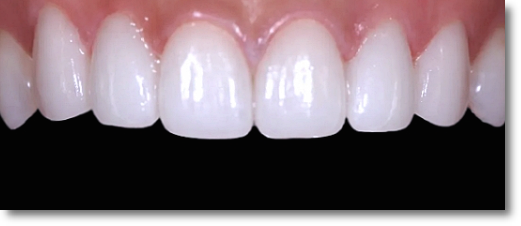
Laminate veneers are a dental procedure in which the front surface of a tooth is prepared and a ceramic restoration is bonded to it with adhesive.
They are used to improve discoloration that does not respond to teeth whitening, gaps between the front teeth, small teeth, chips, and worn teeth.
In the past, laminate veneers were associated with extensive tooth reduction and an artificial appearance.
However, as materials and bonding techniques have advanced, it has become possible to expect more natural and aesthetically pleasing results.
In addition, no-preparation or minimal-preparation techniques are being used to preserve as much of the natural tooth as possible.
- Types of Laminate Veneers
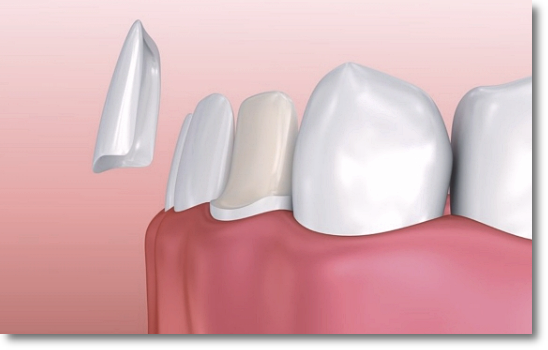
- Porcelain Laminate Veneers
These are the most commonly used type of laminate veneer.
They are made using ceramic (porcelain) materials and have the advantage of reproducing translucency and color similar to those of natural teeth.
They are also resistant to staining and have excellent durability, so they are often chosen by people who value both aesthetics and longevity.
- Resin Laminate Veneers
This refers to laminate veneers made of resin.
The porcelain mentioned above has a material similar to ceramic, while resin can be thought of as plastic for easier understanding.
Compared with porcelain, resin laminate veneers are somewhat more vulnerable to discoloration and staining.
- No-Preparation/Minimal-Preparation Laminate Veneers
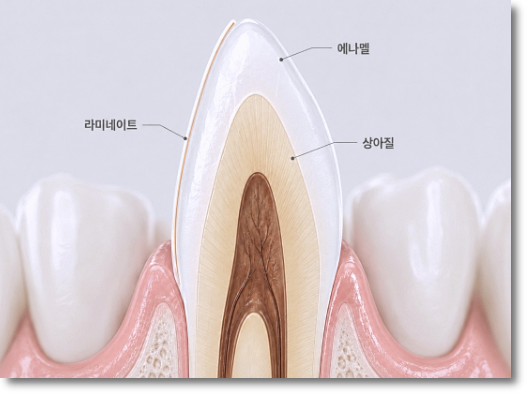
This treatment method focuses on preserving the natural teeth as much as possible.
Compared with conventional laminate veneers, the amount of tooth reduction is minimized, and in some cases the procedure can be performed without reducing the teeth at all.
However, this option is not suitable for every patient.
It may be applicable when the teeth are positioned inward or are small, but it may not be appropriate when the teeth protrude or there are severe alignment problems.
In my practice, I also see many people who visit us for retreatment.
A common factor among those who regret their previous treatment is that they proceeded without receiving accurate information about the amount of tooth reduction during the initial procedure,
and subsequently experienced various complications, including veneer detachment, fractures, tooth sensitivity, and cavities.
Even during retreatment, some of the tooth may need to be reduced, so we take care to remove the restorations as cautiously as possible.
(We sometimes use a water-drop laser to minimize the amount of tooth reduction.)
I always feel that patients should receive proper guidance and make an informed choice from the very first procedure.
The article below explains how to undergo your first laminate veneer procedure and how to approach the consultation.
- Conventional Laminate Veneers
This is the traditional method, performed after reducing a certain amount of tooth structure to improve the shape, alignment, and color of the teeth.
It has the advantage of producing significant aesthetic changes and being applicable to a wide range of cases.
However, the more tooth structure is removed, the greater the potential damage to the natural teeth, so the procedure should be performed only within the necessary range.
- How Much Do Laminate Veneers Cost?

The cost of laminate veneers may vary depending on the materials used, the fabrication method, the dentist’s experience, and the dental clinic’s treatment system.
In general, prices vary widely, from around 200,000 Korean won per tooth at the lower end to more than 1 million Korean won.
(In our case as well, depending on the circumstances, we provide laminate veneer price options at different levels, such as 270,000 won, 550,000 won, and 990,000 won.
The price varies depending on the fabrication method, materials used, and aftercare warranty system. Please refer to the article below for details.)
Rather than simply comparing prices, it is advisable to consider the materials and adhesive, the diagnostic process, and whether aftercare is provided.
This is because even with the same type of laminate veneer, the treatment process and materials used can affect the results and how long they last.
- Who Is a Candidate for Laminate Veneers?
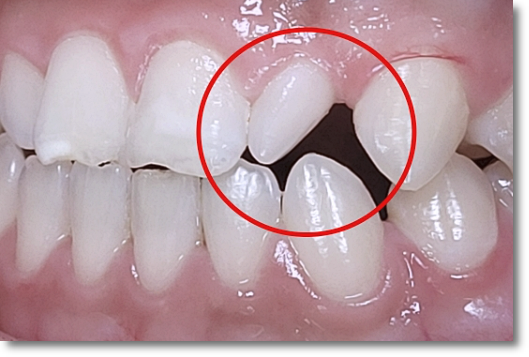
Small teeth are a representative case in which no-preparation laminate veneers may be possible, because only the spaces between the teeth need to be filled.
Laminate veneers may be considered in the following cases:
-
Severe tooth discoloration
-
Gaps between the front teeth
-
Small teeth or irregular tooth shapes
-
Chipped or worn tooth edges
-
A desire to partially improve the alignment of the front teeth
-
A desire for a natural-looking tooth shape
However, if the teeth are severely protruded or there are significant bite problems, orthodontic treatment may be more appropriate.
- Precautions
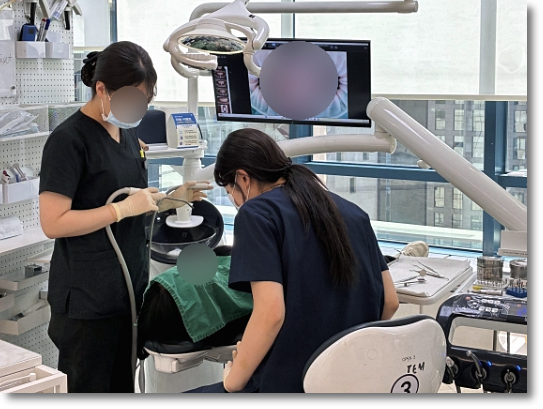
Laminate veneers are a highly aesthetic treatment, but there are several points to keep in mind.
First, tooth reduction cannot be reversed.
Laminate veneers are performed after removing part of the tooth surface.
Once tooth structure has been removed, it cannot be restored to its original condition,
so it is important to make a careful decision after undergoing sufficient consultation and diagnosis.
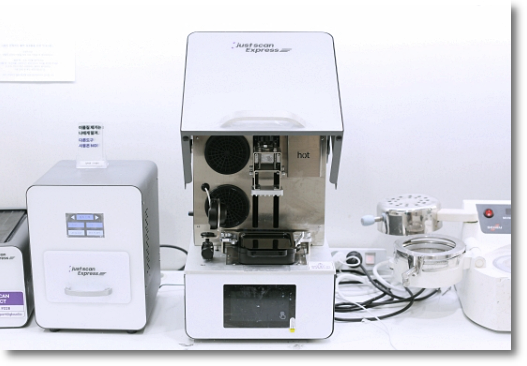
Second, laminate veneers are not suitable for everyone.
If the teeth are severely misaligned or highly protruded,
or if there are bite problems, orthodontic treatment may be more appropriate than laminate veneers.
Therefore, it is necessary to accurately determine whether you are a suitable candidate through detailed examinations, such as digital scanning and simulation.
Third, care after the procedure is also important.
Regular checkups are necessary to examine the bonding condition and the health of the gums.
To ensure that you can receive prompt care if a problem occurs,
please also check whether an aftercare system and warranty program are in place.
- Key Points to Check When Considering Laminate Veneers
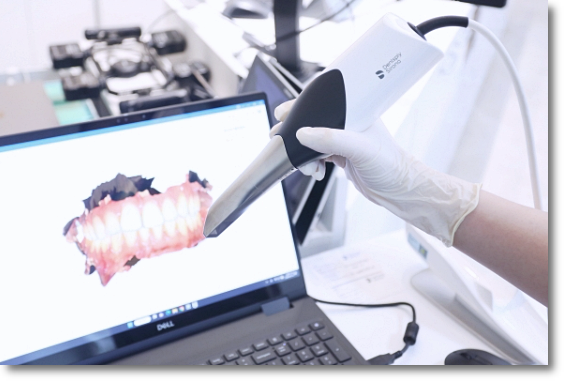
If you are considering laminate veneers, be sure to check the following:
✔ What materials are used
✔ Whether the consultation and treatment process is systematic
✔ Whether efforts are made to minimize tooth reduction
✔ Whether the condition of the gums is also evaluated
✔ Whether an aftercare and warranty program is in place
Conclusion
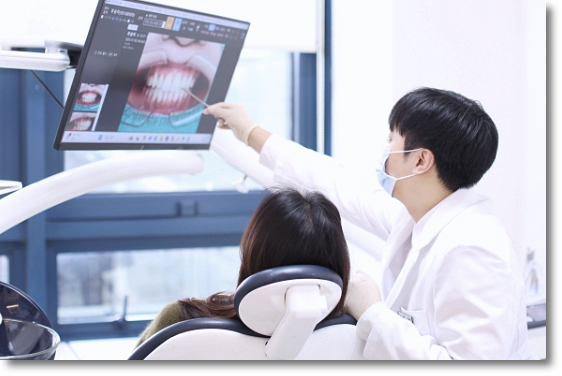
Laminate veneers are an aesthetic treatment designed to improve the shape and proportions of the teeth and the harmony of the overall smile.
However, because the suitable candidates and results may vary depending on the type and treatment method,
it is important to choose a treatment approach that matches the condition of your teeth.
Therefore, rather than making a decision based only on price, please carefully consider the preservation of your natural teeth, the materials,
the bonding system, the dentist’s experience, and aftercare before making your choice.
Thank you. This was Park Jae-hyung.