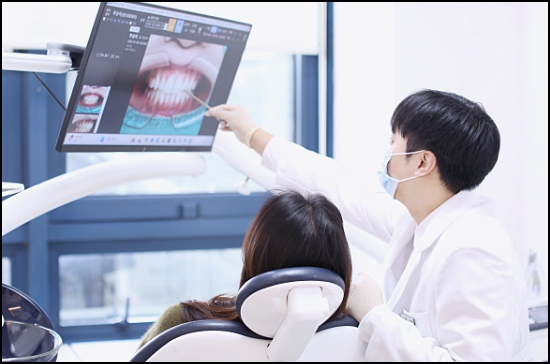
Hello, I am Dr. Jae-hyung Park, director of Wonjin Dental Clinic.

My other teeth are fine,
but there is a noticeable gap only between my front teeth.
Which treatment should I receive—orthodontics or laminates?
If there is a gap between your front teeth, it can inevitably make you self-conscious when talking or smiling.
You may strongly wish to improve it as soon as possible, but hesitate because you are unsure which treatment to choose.
The problem is that if gapped front teeth are left untreated for a long time, the gap may become larger over time, or the balance of the entire dental alignment may be disrupted.
It is important to identify the exact cause and proceed with the appropriate treatment.
In today's post, we will look at the causes of gapped front teeth, the differences between orthodontics and laminates, and the criteria for choosing between them.
<Table of Contents>
-
What causes gapped front teeth?
-
What is the difference between orthodontics and laminates?
-
Treatment processes, advantages, and disadvantages of orthodontics and laminates
-
How should I choose the right option for me?
-
What Causes Gapped Front Teeth?
The treatment method for gaps between the front teeth can vary completely depending on the cause.
If the underlying cause is not identified, the treatment direction may be incorrectly determined, or the space may reopen over time.
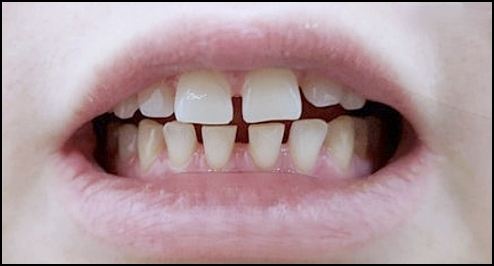
- Imbalance between tooth and jaw size
If the jaw space is wide compared with the size of the teeth, or if the teeth are small, a gap may naturally form between the front teeth.
If the jaw grows rapidly during development, the tooth alignment may not be able to keep up fully, leaving relatively more space.
- Gum disease
When the gums become inflamed, the surrounding tissues that firmly support the teeth gradually weaken.
If this process continues for a long time, the teeth may have difficulty maintaining their original positions, which can lead to slight movement.
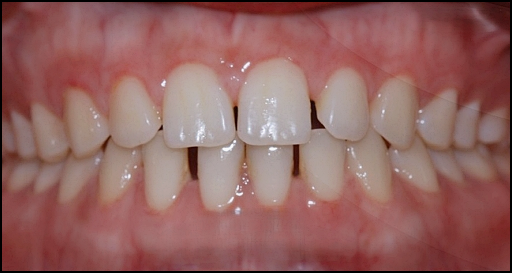
- Tongue-thrusting habit
If you unconsciously push your tongue forward or press against your front teeth, the teeth may gradually move forward.
In many cases, repeated pressure accumulates and affects the alignment of the teeth.
- Tooth loss
Finally, if a missing tooth is left untreated, the surrounding teeth may gradually move into the empty space.
As this change affects the overall balance of the bite, a gap may also develop between the front teeth.
- What Is the Difference Between Orthodontics and Laminates?
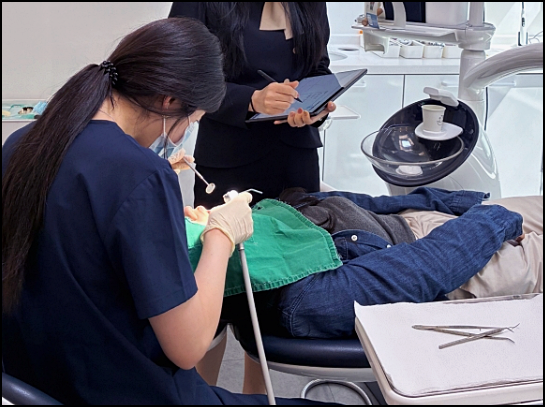
Orthodontic treatment corrects the alignment itself by moving the teeth.
You can think of it as a method that “fundamentally changes the position of the teeth.”
By contrast, laminates do not move the teeth.
They are an aesthetic treatment that “improves the shape, size, and color” by attaching thin ceramic shells to the surfaces of the teeth.
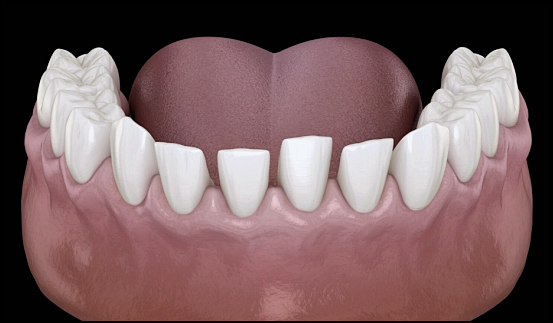
The key difference is that orthodontics takes longer but can provide fundamental improvement, while laminates can provide aesthetic improvement in a relatively short time.
- Treatment Processes, Advantages, and Disadvantages of Orthodontics and Laminates
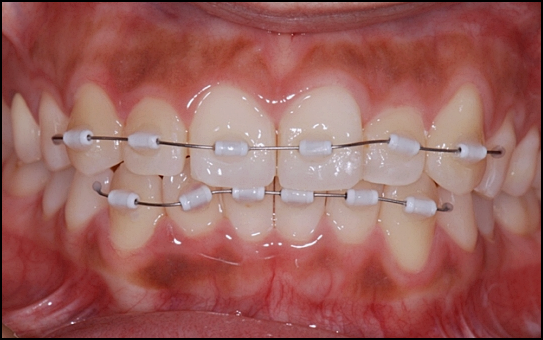
Orthodontic Treatment Process, Advantages, and Disadvantages
Orthodontic treatment proceeds in the following order: detailed examination → diagnosis → attachment of orthodontic appliances → tooth movement → retainer use.
It can fundamentally address crooked teeth, overlapping teeth, protruding teeth, and malocclusion, and one of its advantages is that it preserves the natural teeth without shaving them down.
However, a disadvantage is that the treatment period is long, usually one to three years or more.
Wearing the appliances may cause pain, a foreign-body sensation, or discomfort when speaking.
The considerable treatment cost is also considered a disadvantage.
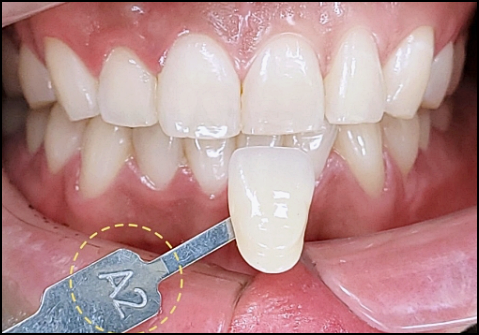
Laminate Treatment Process, Advantages, and Disadvantages
Laminate treatment proceeds in the following order: consultation and design → minimal or no reduction, if necessary → scanning → fabrication → bonding.
Because it can make the teeth look straighter and brighter within a relatively short period, it generally offers a high level of aesthetic satisfaction.
It is particularly useful when you want to quickly improve tooth discoloration, small gaps, or minor irregularities in tooth shape.
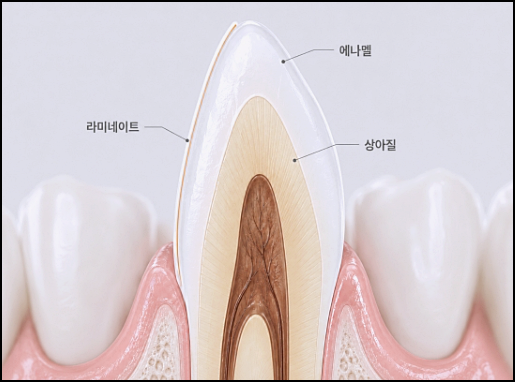
However, laminates may be damaged by strong impact, and they have limitations in fundamentally resolving problems such as malocclusion.
If too much of the natural tooth is removed during the procedure, side effects such as tooth sensitivity, laminate detachment, breakage, and cavities may occur.
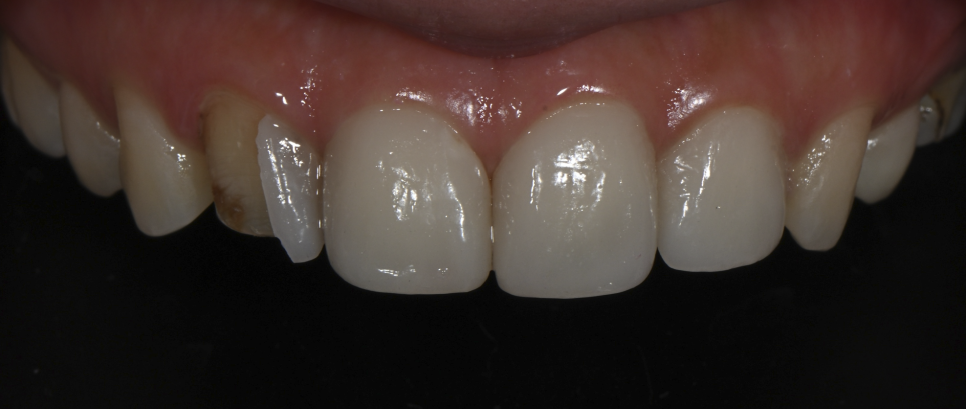
As with the teeth in the photo above, laminates may lead to side effects such as breakage or detachment.
It is unfortunate to see people who visit our clinic for retreatment regretfully say, “I wish less of my teeth had been reduced in the beginning.”
Even when people receive what is described as minimal-reduction or no-preparation laminate treatment, the amount of tooth reduction can sometimes be greater than expected.
That is why the consultation for the initial procedure is important. I have explained below what you should look for when receiving laminates and how they should be fabricated.
If you are considering laminates, be sure to read it.
- How Should I Choose the Right Option for Me?
The important question when treating gaps between the front teeth is not “Which is better?” but “Which option is suitable for my condition?”
If the gap is large and accompanied by bite problems, orthodontic treatment may need to be prioritized.
However, if the gap is minor or aesthetic improvement is the primary goal, laminates may be a more efficient choice.
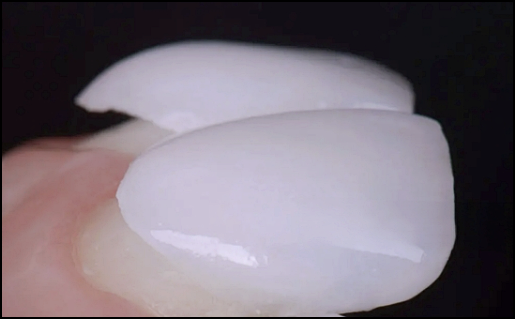
Laminates may also be considered if you have limited time or want quick results, or if a small gap remains after completing orthodontic treatment.
The criteria for choosing between orthodontics and laminates according to the situation can be summarized as follows:
-
Large spaces and problems throughout the dental alignment → Consider orthodontic treatment first
-
Small gap between the front teeth + dissatisfaction with their shape → Laminates
-
Tooth alignment is good, but aesthetic improvement is needed → Laminates
-
Minor space relapse after orthodontic treatment → Improve it with laminates after orthodontic treatment
In Closing
What matters is not the treatment method itself, but an appropriate treatment plan based on an accurate diagnosis.
Please remember that the method suited to your individual condition is the one most likely to lead to the best result.
Thank you. This has been Dr. Jae-hyung Park.