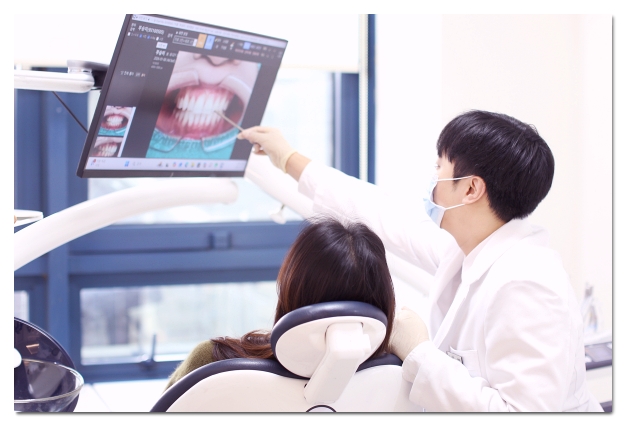
Hello, I am Park Jae-hyung, the director of Wonjin Dental Clinic.
I have an important event coming up,
and I am concerned because my front teeth look yellow.
If I get one-day teeth whitening,
I should be able to see results right away, right?
Many people visit us for one-day teeth whitening because they want to quickly improve their tooth shade before an important photo shoot, job interview, wedding, or other event.
However, the causes and condition of tooth discoloration vary from person to person, so it is important to accurately assess the current condition of the teeth.
Today, I will explain in detail everything from how one-day teeth whitening works and the treatment process to alternatives for cases that cannot be resolved through whitening alone.
- What Is One-Day Teeth Whitening?
One-day teeth whitening is a procedure that chemically breaks down pigments deposited on and inside the teeth.
Hydrogen peroxide-based whitening agents are commonly used.
They penetrate the tooth structure and oxidize staining substances, changing the teeth to a brighter shade.
The main difference from conventional teeth whitening is the treatment period and the way the procedure is carried out.
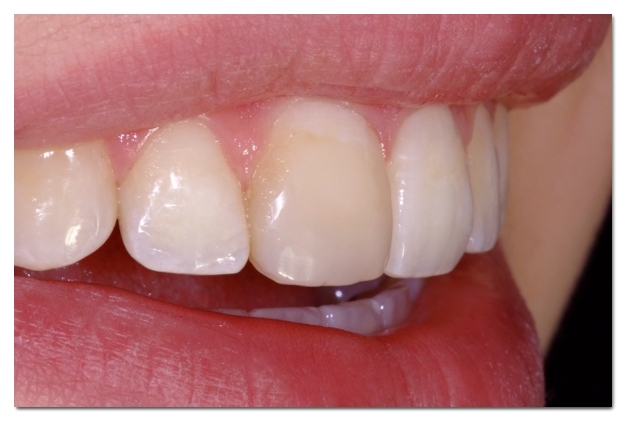
One-Day Teeth Whitening
-
Intensive whitening performed in one day (one visit)
-
A high-concentration whitening agent is applied and LED light is used
-
The procedure usually takes about 1–2 hours
-
Because a rapid brightening effect can be expected, it can be useful when an event such as a wedding, interview, or photo shoot is approaching
-
However, the effect may be limited depending on the individual, and temporary tooth sensitivity may occur after the procedure
Conventional Teeth Whitening
-
Performed through multiple visits to the dentist, or at home over several weeks using a custom tray made by the dentist
-
The whitening agent is often lower in concentration or the treatment progresses gradually compared with one-day whitening
-
The tooth shade can be adjusted step by step
-
Although it takes longer, it can be easier to achieve the desired shade
In other words, the advantage of one-day whitening is “rapid change,” while the advantage of conventional whitening is “gradual and detailed adjustment.”
The maximum brightness that can ultimately be achieved may also vary depending on the condition of the individual’s teeth.
One-day whitening does not necessarily make the teeth whiter, and its suitability may vary depending on the presence of cavities, gum disease, or cracks.
26.06.05 ~ 26.06.05
- Treatment Process
Although there may be slight differences between dental clinics, the overall process for one-day teeth whitening is similar.
- Preliminary Examination and Consultation
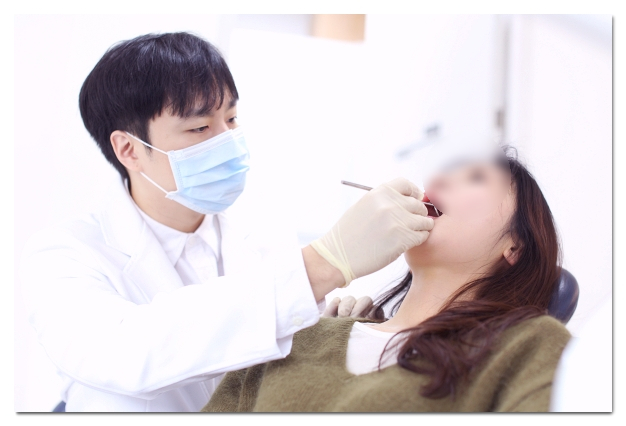
First, a preliminary examination is performed to check for cavities, gum inflammation, tooth cracks, and other conditions.
If oral disease is present, related treatment may need to be performed first.
- Scaling or Tooth Surface Cleaning
Scaling or tooth surface cleaning is necessary because the whitening agent must act evenly on a clean tooth surface.
- Gum Protection
Because a high-concentration whitening agent may irritate the gums if it comes into contact with them, a protective agent is carefully applied around the gums.
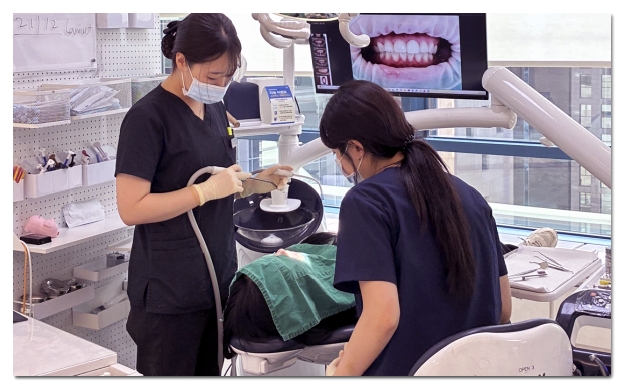
- Application of the Whitening Agent and Light/Laser Exposure
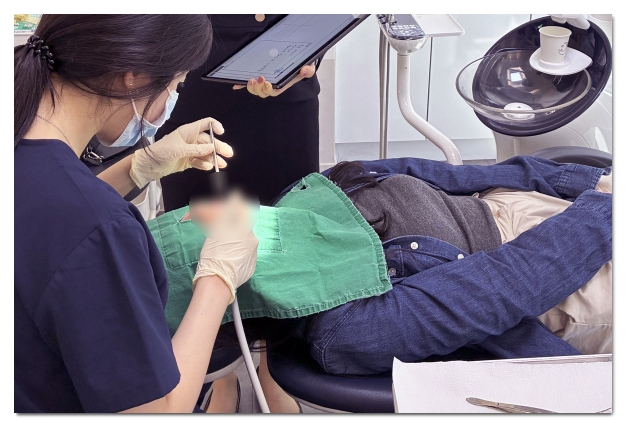
A high-concentration hydrogen peroxide-based whitening agent is applied to the tooth surfaces, and LED light is used to induce the reaction.
At our clinic, we use Osstem’s Beautis whitening agent.
Each session takes about 15 minutes, and the process is repeated two to three times.
- Removal of the Whitening Agent and Shade Check
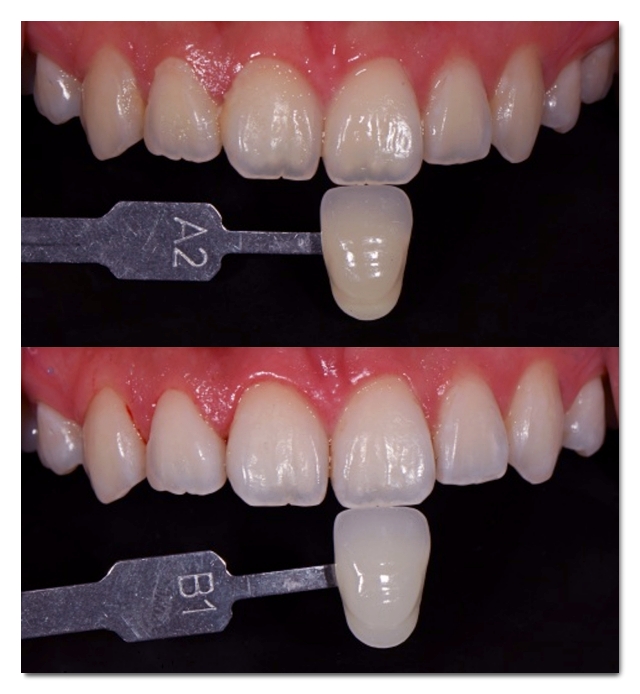
The tooth shade is compared, and if necessary, the procedure is performed one additional time to complete the treatment.
- What If Teeth Whitening Does Not Resolve the Issue?
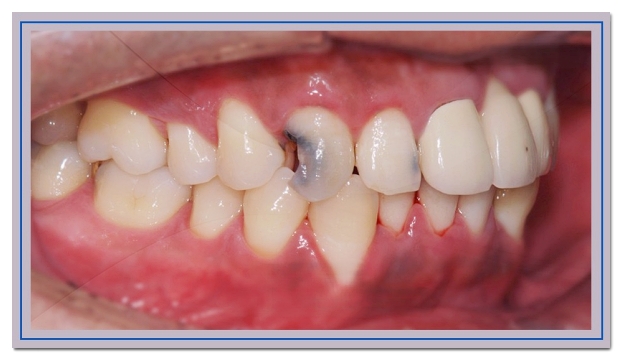
Teeth whitening does not have the same effect for everyone.
In particular, the cases below may not lighten to the desired level.
-
Teeth discolored after root canal treatment
-
Teeth with significant enamel wear
-
Teeth that are naturally very dark in color
-
Discoloration caused by abnormalities in the internal tooth structure
-
Discoloration caused by cracks or trauma
-
Cases involving severe discoloration that has progressed over a long period
In addition, if you want to improve not only the color of your teeth but also their shape, size, and alignment, whitening alone has limitations.
In these cases, the treatment commonly recommended is laminate veneers.
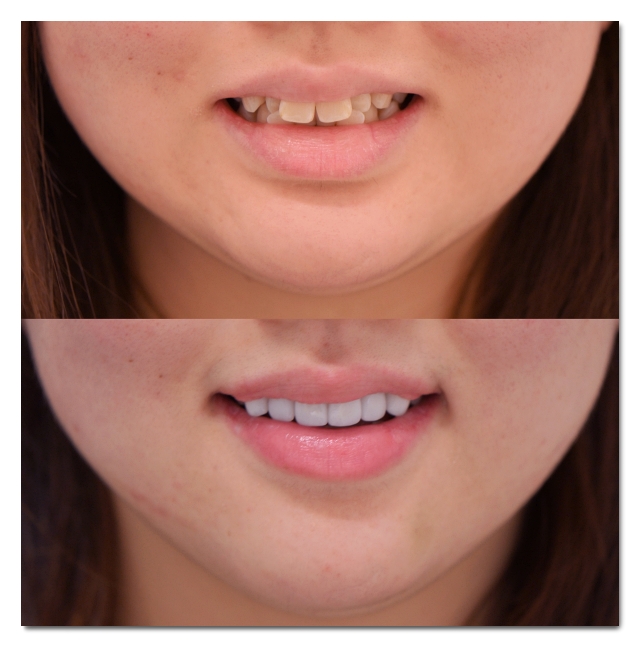
26.05.14~26.05.22
Laminate veneers are a treatment in which thin ceramic restorations are attached to the outer surfaces of the teeth to improve both their color and shape.
In the past, many people felt hesitant because of the perception that a significant amount of tooth structure had to be removed.
These days, more clinics offer no-prep or minimal-prep laminate veneers that aim to preserve as much of the natural tooth as possible.
In addition, when a digital CAD/CAM system is available, the restorations can be made on the same day, allowing treatment to be completed within one day.
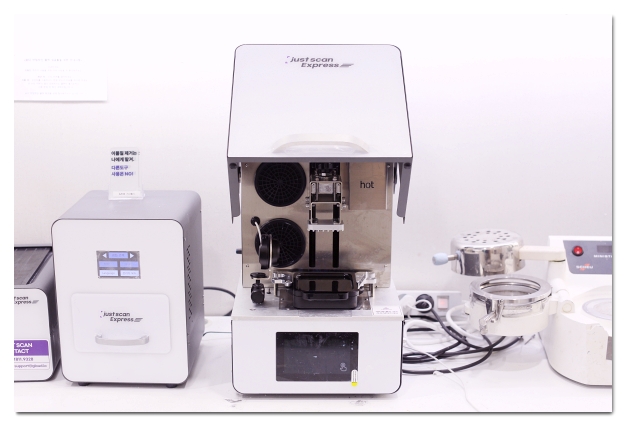
However, there is one point to keep in mind when undergoing one-day laminate veneer treatment.
The amount of tooth reduction may increase.
You may be wondering, “What does one-day laminate veneer treatment have to do with the amount of tooth reduction?”
Because restorations made quickly by machine are produced by milling a block into shape,
there are limitations to creating an extremely thin and delicate thickness.
Therefore, to ensure that the restoration fits together stably with the opposing teeth,
there may be cases where the teeth need to be shaped more than they would otherwise.
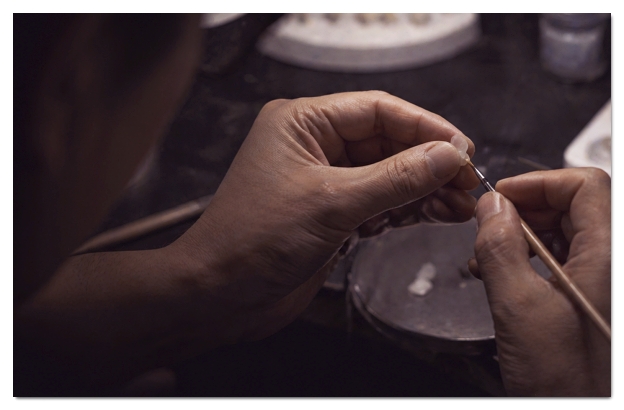
On the other hand, a method that builds up the restoration layer by layer with a brush allows the thickness to be adjusted more finely,
so the treatment can be carried out with the goal of preserving as much of the natural tooth as possible.
For more details, please refer to the article below.
Ultimately, the Most Important Thing Is Diagnosis
Some people can achieve satisfactory results with one-day teeth whitening alone, while others may need laminate veneers.
Please receive a thorough consultation to determine the cause of your tooth discoloration, whether it can be resolved with whitening, and whether another treatment is necessary.
Thank you. This was Park Jae-hyung.