Hello, I am Jae-hyung Park, Director of Wonjin Dental Clinic.

There is one question I hear most often during consultations in the treatment room.
“How are laminates done?”
“What's the difference between no-prep and conventional laminates?”
“Why is the price difference so large?”
These are all common questions.
There is an overwhelming amount of information online, but the details vary so much that it can become even more confusing.
Some clinics emphasize only no-prep laminates, while others focus only on cost or aesthetics, making it difficult to establish accurate criteria.
So today, I will explain everything from the principles and process of laminates to their cost and post-treatment precautions.
By reading this article to the end, you will have a much clearer understanding of how to choose laminates.
- Principles of Laminates
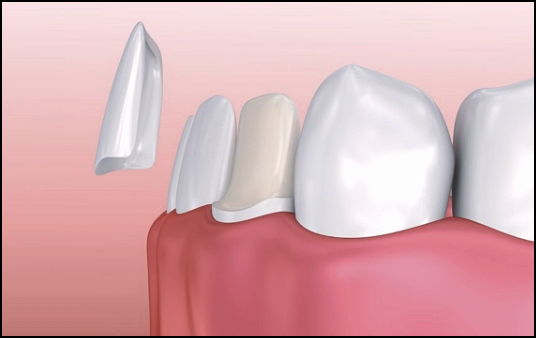
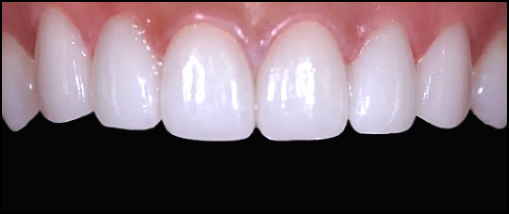
Laminates are an esthetic prosthetic treatment that improves the shape and color of teeth by first preparing the tooth surface and then bonding custom-made ceramic restorations to it.
The key principles of laminates are as follows:
-
Minimally reducing the tooth surface (or not reducing it at all)
-
Treating the surface to improve bonding strength
-
Bonding a custom-made ceramic veneer
-
Reproducing light transmission and color like natural teeth
In other words, laminates can improve aesthetics without significantly altering the structure of the teeth.
- Comparison of Treatment Methods and Features
Laminates are broadly divided into three types according to the amount of tooth reduction.
- Conventional Laminates
- Amount of tooth reduction: approximately 0.5–0.7 mm
This method involves removing a certain portion of the enamel and has been the most commonly used approach for many years.
One characteristic is that the relatively greater amount of tooth reduction allows for a wider range of shape correction and color improvement.
It can be used for various cases, such as when the teeth are unevenly aligned.
However, if excessive reduction is performed without considering the condition of the teeth, symptoms such as tooth sensitivity may occur.
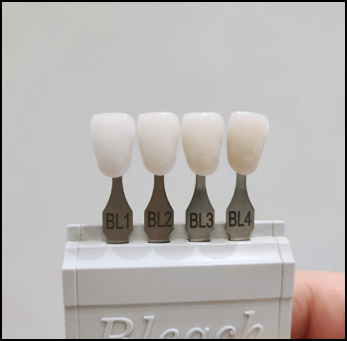
- Minimally Invasive Laminates
- Amount of tooth reduction: approximately 0.1–0.3 mm
As the name suggests, minimally invasive laminates are performed while preserving as much of the natural tooth as possible.
Because they reduce damage to the natural teeth, they may lower the risk of sensitivity,
while also improving aesthetics.
On the other hand, because the amount of reduction is minimized, they may be difficult to apply when the teeth are irregularly aligned or significantly protruding.
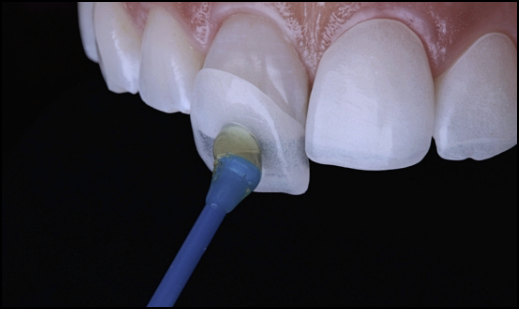
- No-Prep Laminates
- Amount of tooth reduction: 0 mm (or almost none)
This method is performed with little or no tooth reduction and is one that many people have recently been asking about.
Its greatest characteristic is that there is almost no damage to the natural teeth.
As a result, in some cases, the teeth can be maintained after removal without crowns or other full-coverage treatment.
However, because no reduction is performed at all, the cases suitable for this method are more limited than those for minimally invasive laminates.
<Laminate Methods and Key Features at a Glance>
| Category | Amount of reduction | Advantages | Disadvantages |
|---|
| Conventional | 0.5–0.7 mm | Wide range of applications | Requires attention to sensitivity |
| Minimally invasive | 0.1–0.3 mm | Balance between natural-tooth preservation and aesthetics | Limited range of applications |
| No-prep | 0 mm | Maximizes preservation of the teeth | Strict eligibility requirements |
- Laminate Treatment Process

Laminates are generally performed in the following order.
Step 1: Detailed Consultation and Diagnosis
The condition of the teeth, gum health, and bite are examined.
Step 2: Design and Treatment Planning
The desired tooth shape and color are determined.
Step 3: Tooth Reduction (Only When Necessary)
When appropriate, the procedure is performed with minimal or no tooth reduction.
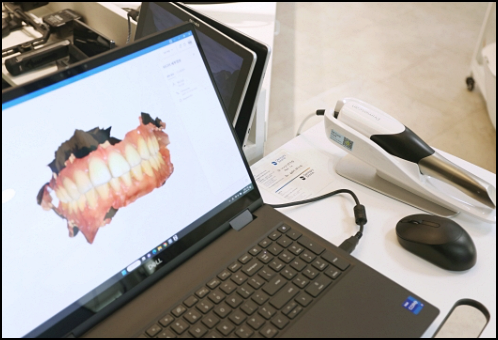
Step 4: Impression Taking or Digital Scanning
The information needed for custom fabrication is obtained.
Step 5: Temporary Teeth
These are used temporarily before the final restorations are fabricated.
Step 6: Laminate Fabrication
The laminates are custom-made at a dental laboratory.
Step 7: Laminate Fabrication
After bonding, the bite is checked and fine adjustments are made.
- Laminate Cost
The cost of laminates generally varies depending on the fabrication method, materials, and aftercare warranty program.
Although prices vary by dental clinic, they generally range from around 200,000 won to the mid-1-million-won range per tooth.
(In our clinic as well, we provide estimates of 270,000 won, 550,000 won, or 990,000 won depending on the case.)
When it comes to the fabrication method, having a dental technician build the restoration layer by layer by hand is naturally more expensive than having it milled by machine.
Materials such as ceramics and bonding agents also become more expensive as their grade increases.
Costs likewise rise when the warranty period is longer (1–10 years) and when more free remakes are included.
In return, the translucency and color expression can be so similar to natural teeth that they are difficult to distinguish, allowing for satisfactory results.
If you are unsure how to choose the laminate that is right for your case,
we strongly recommend that you read the article below.
- Post-Treatment Precautions
Care after laminate treatment is very important.
To help prevent complications and use the laminates for a long time, please be sure to follow the precautions below.
Precautions in Daily Life
-
It is best to avoid hard foods such as ice, dried squid, and nuts.
-
Avoid the habit of tearing or cutting objects with your front teeth.
-
If you grind or clench your teeth, you need to take precautions.
-
Avoid excessive consumption of staining foods such as coffee, wine, and curry.
-
It is best to have regular checkups every 6 months to 1 year.
Frequently Asked Questions (FAQ)
Q. How should I care for my teeth after laminate treatment?
Brush and floss carefully as usual. If you grind your teeth, wearing a mouthguard while sleeping is recommended.
Q. What is the average lifespan of laminates?
They generally last about 7–15 years, but their lifespan can vary significantly depending on tooth-grinding habits, gum health, and eating habits.
Q. What is the difference between laminates and teeth whitening?
Teeth whitening is a treatment that improves only the color of the teeth by making them lighter.
In contrast, the principle of laminates is to improve not only color but also the shape and alignment of the teeth through prosthetic treatment.
Q. What is the difference between laminates and all-ceramic restorations?
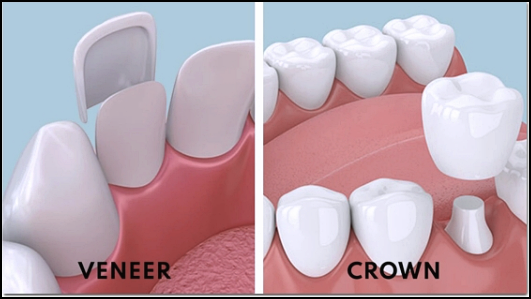
Laminates are bonded after minimally reducing only the front surface of the tooth.
All-ceramic restorations are prosthetic treatments in the form of crowns that cover the entire tooth.
All-ceramic restorations are stronger, but they require more tooth reduction.
Closing Remarks
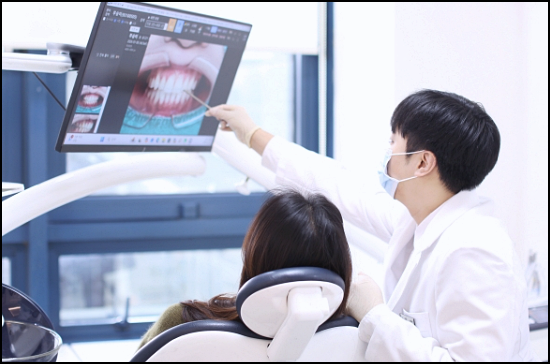
More important than understanding the principles of laminates is receiving an accurate diagnosis and an individualized treatment plan.
No-prep, minimally invasive, and conventional laminates each have different advantages and disadvantages.
Therefore, please make an informed decision after considering your current tooth condition, bite, and gum health comprehensively.
That concludes this article. I am Jae-hyung Park.