Hello. I am Park Jae-hyeong, Director of Wonjin Dental Clinic.

My front teeth are slightly asymmetrical, and I would like to improve them,
but orthodontic treatment feels like too much of a burden...
Is there a simpler way to treat them?
The front teeth are the first part people notice when you smile, so even a slight gap or asymmetry can become a source of concern.
However, many people hesitate to undergo orthodontic treatment because of the time, cost, and inconvenience of wearing appliances.
In such cases, “dental contouring” is a quick and effective way to improve the appearance.
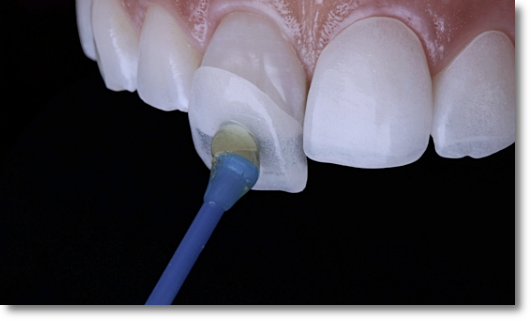
Among these options, veneers may be the treatment that can create the most natural balance.
Today, we will take a detailed look at what dental contouring exactly is, what methods are available,
and why veneers are recommended for gaps or asymmetry in the front teeth.
What Is Dental Contouring?
Dental contouring is an aesthetic treatment that balances the overall appearance by refining the shape, size, or contours of the teeth.
Rather than gradually moving the teeth over a long period, as orthodontic treatment does,
it focuses on creating overall harmony by subtly refining or supplementing the shape itself.

Examples include gaps between the front teeth, differences in size between the left and right sides, and awkward-looking edge contours.
You can think of it as a treatment considered for situations like this:
“It is not a major problem, but it bothers me whenever I look in the mirror.”
Methods of Dental Contouring
Dental contouring does not refer to just one treatment.
Depending on the condition, one method may be used alone, or several methods may be combined.
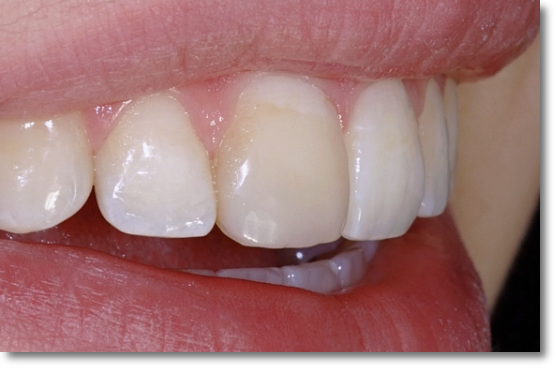
- Composite Resin Treatment
First, composite resin treatment uses a tooth-colored material to directly fill in deficient areas.
Because it can be performed with little or no reduction of the natural teeth, it is relatively less burdensome, and in some cases the entire treatment can be completed in a single day.
It is mainly used to fill small gaps between the front teeth or to improve slightly awkward edge shapes.
One drawback is that staining or wear can develop relatively easily over time, so careful maintenance is necessary.
- IPR (Interproximal Reduction)
IPR is a method of very slightly reshaping the areas between the teeth to improve the balance of the tooth alignment.
It is suitable for people whose front teeth overlap slightly or whose teeth are triangular in shape and make contact only near the top,
and it is especially often used together with orthodontic treatment.
- Veneers
Veneers are a procedure in which part of the enamel is removed and a thin ceramic layer is bonded over it.
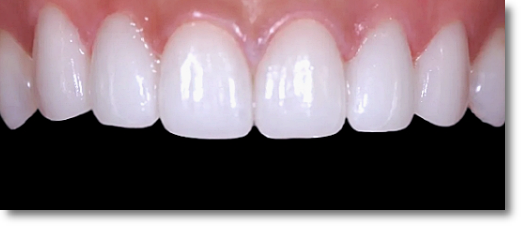
Because the shape, size, and color can be improved at the same time, veneers can provide a high level of aesthetic satisfaction.
However, once a tooth has been reduced, it cannot be restored to its original state, so it is important to proceed in a way that preserves as much of the natural tooth as possible.
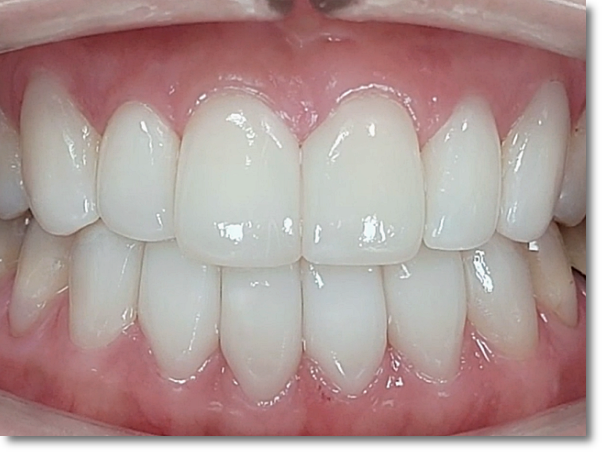
Why Veneers Are Recommended for Gaps and Asymmetry in the Front Teeth
Gaps or asymmetry in the front teeth cannot be resolved simply by closing the space.
The size, length, and angle of the teeth must also be considered to achieve a natural result.
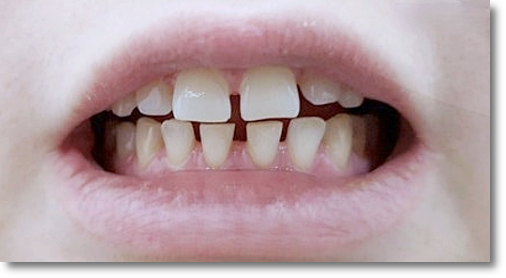
Even if the gap is closed, the result may look awkward if the front teeth appear excessively wide or the balance between the left and right sides is not maintained.
Veneers are recommended in such cases because the tooth design itself can be adjusted.
They can improve overall harmony by modifying the width, length, and shape together.
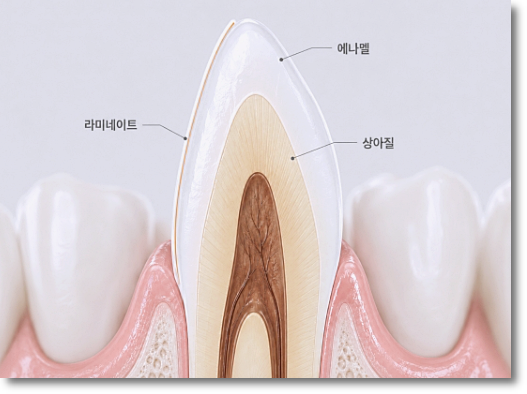
These days, veneers can often be performed with no-prep or minimal-prep techniques that reduce damage to the natural teeth.
They also have the advantage of being usable for a long time because they are less vulnerable to discoloration or wear than composite resin.
In fact, some patients visit us after undergoing retreatment several times because of composite resin discoloration or detachment.
They may sometimes regret it, thinking, “What if I had chosen veneers from the beginning...?”
Ultimately, even composite resin treatment can involve the removal of some tooth structure if detachment or retreatment occurs.
However, this also varies according to each individual’s tooth alignment and condition, so there is no single method that is best for everyone.
A good approach is to choose treatment based on which option can be used conservatively for the longest time given the condition of your teeth.

If veneers are not performed after a precise diagnosis of the current oral condition and with maximum preservation of the natural teeth,
side effects such as veneer detachment, breakage, cavities, and bad breath may occur.
I have written below about how to receive veneer treatment while preventing these side effects.
If you are considering veneers, please be sure to read the article below.
Guide to Choosing a Dental Contouring Treatment
→ Small gaps or mild asymmetry
→ When you want to minimize reduction of the natural teeth
→ When the shape or alignment of the teeth needs to be adjusted
→ When performed together with orthodontic treatment
→ When you want to improve both gaps and asymmetry
→ When size, shape, and proportions all need to be considered
Closing Remarks
Today, we looked at what dental contouring is and what treatment methods are available.
As with all treatments, there is no single correct answer.
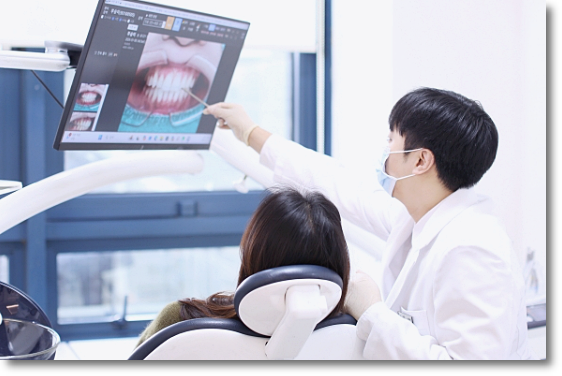
The right choice may vary depending on the current condition of your teeth and your desired outcome,
so we hope you will make an informed decision after a thorough consultation.
Thank you. This was Park Jae-hyeong.