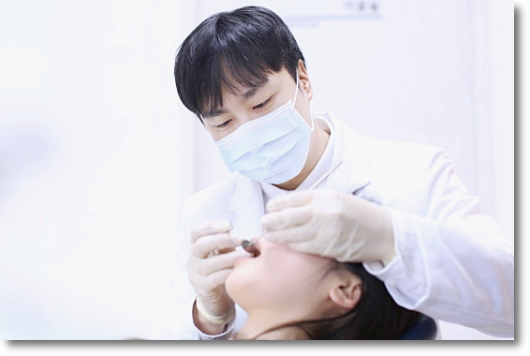
Hello, I’m Dr. Jae-hyung Park, director of Wonjin Dental Clinic.
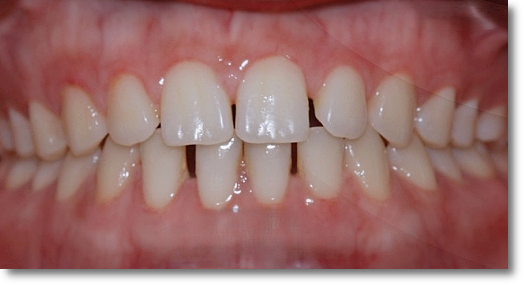
My front teeth are only slightly misaligned.
Can’t I correct them with partial orthodontic treatment?
Many people think that partial orthodontic treatment can resolve cases in which the front teeth are slightly out of balance or have gaps between them.
However, when the teeth are examined, it is not uncommon to find that the issue is not limited to just a few front teeth.
Even so, moving only the front teeth partially may actually disrupt the bite.
Partial orthodontic treatment for the front teeth is not as simple as it may seem, so it is important to make the decision carefully.
In today’s post, I will explain why partial orthodontic treatment for the front teeth requires careful consideration, which cases may be suitable,
and how veneers can serve as an alternative to partial orthodontic treatment.
Why Partial Orthodontic Treatment for the Front Teeth Requires Careful Consideration
Our teeth are not structured to move independently one by one; they maintain balance with one another within the overall bite relationship.
Simply put, the front teeth and molars each have their own roles, but they function together like one team.
If only the position of the front teeth changes without moving the overall alignment,
it may directly affect the way the molars come together, the position of the jaw, and the distribution of force during chewing.
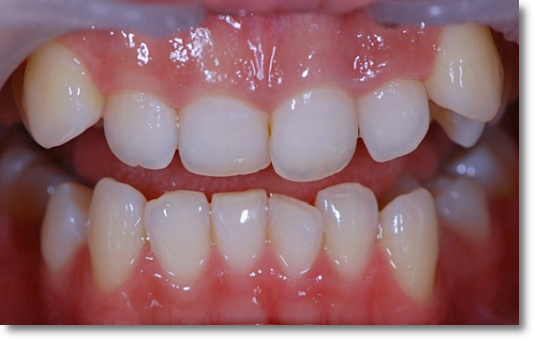
For example, if you try to align only the front teeth when there is insufficient space,
the teeth may be pushed outward or their angles may change unnaturally.
Although they may appear aligned on the surface, the mouth may look more protruded, or the teeth may look awkward when smiling.
In addition, excessive chewing force may become concentrated on the teeth, causing discomfort when eating,
and there is also a possibility that the alignment may become crooked again over time after treatment.
Therefore, if you are considering partial orthodontic treatment for your front teeth, consult thoroughly to determine whether you are an appropriate candidate and make your decision carefully.
Cases Suitable for Partial Orthodontic Treatment of the Front Teeth
When the conditions are appropriate, partial orthodontic treatment can produce satisfactory results in a shorter period than comprehensive orthodontic treatment.
When the Overall Bite Is Stable
If the molars have a normal bite and there are no significant problems with left-right jaw balance or the underlying bone structure, partial orthodontic treatment may be possible.
In other words, this applies to cases with no functional problems and only mild alignment issues limited to the front teeth.
In these situations, it may be possible to improve the alignment partially without moving the entire dental arch.
When the Amount of Tooth Movement Is Small
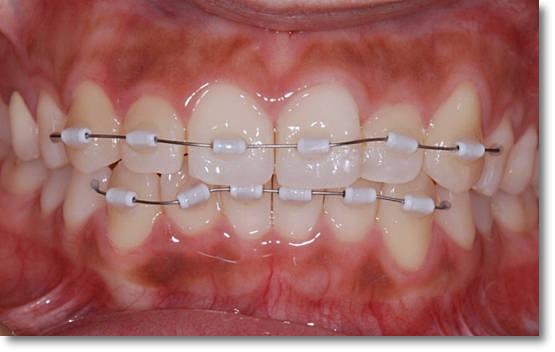
Partial orthodontic treatment is, as the name suggests, a treatment that moves teeth within a limited range.
Therefore, if extraction is needed to create space or the teeth must be moved substantially, partial orthodontic treatment alone may have limitations.
Conversely, it can be a good option when the distance the teeth need to move is short and there is no need to change the structure of the overall alignment.
When the Main Goal Is Cosmetic Improvement
It may also be suitable when you want to make the front teeth slightly more even rather than address a bite problem,
or when you want to improve the appearance of the tooth line visible when you smile.
However, even in these cases, you should not make a decision based simply on the standard that “it is enough if only the front teeth look straight.”
It is important to review your current bite and the possibility of maintaining the result over the long term before deciding whether to proceed with treatment.
Veneers as an Alternative to Partial Orthodontic Treatment for the Front Teeth
One drawback of partial orthodontic treatment for the front teeth is that it takes approximately 3–8 months, during which orthodontic appliances must be worn.
This can make daily care inconvenient, and some people may feel self-conscious about the appliances being visible.
In such cases, veneers may be a more efficient option.
(However, this assumes that the amount of tooth movement needed is small and that the primary goal is cosmetic improvement rather than functional improvement.)
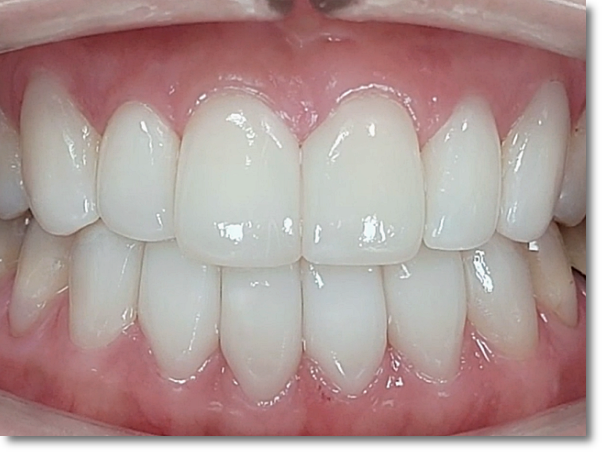
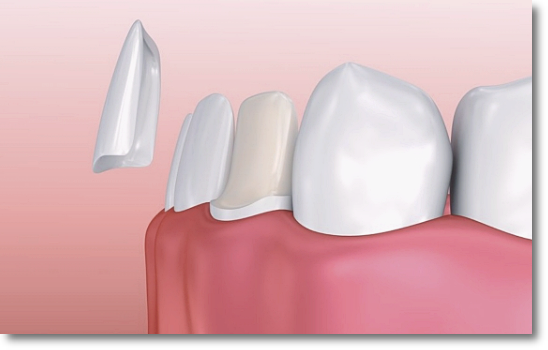
Veneers are a cosmetic treatment in which the tooth surface is lightly reshaped and a ceramic restoration is bonded to it.
Although this varies from person to person, treatment is usually completed within 1–2 weeks,
and one advantage is that you can see the improved appearance immediately after treatment.
(In our dental clinic, if you visit in the morning, the entire treatment may sometimes be completed on the same day.)
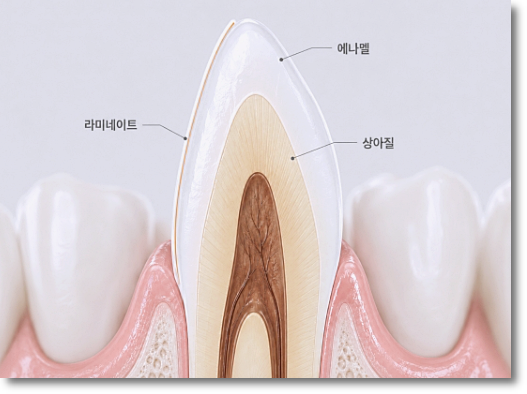
In particular, minimal-preparation and no-preparation veneers involve refining the enamel within a range of approximately 0.01–0.3 mm,
so they can help preserve tooth health without symptoms such as tooth sensitivity.
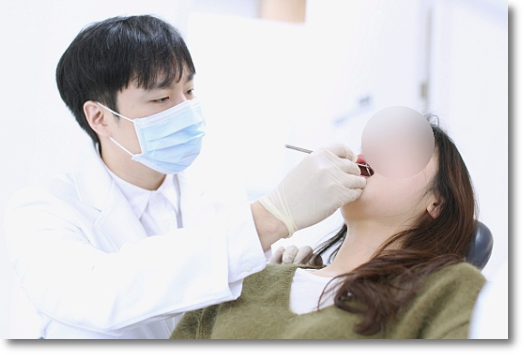
However, whether they can be used depends on factors such as the position of the teeth, the bite, and the thickness of the enamel, so a precise diagnosis must be performed first.
Many people who regret experiencing side effects also visit us for retreatment.
If you are considering veneers, please be sure to read the article below before making your decision.
Conclusion
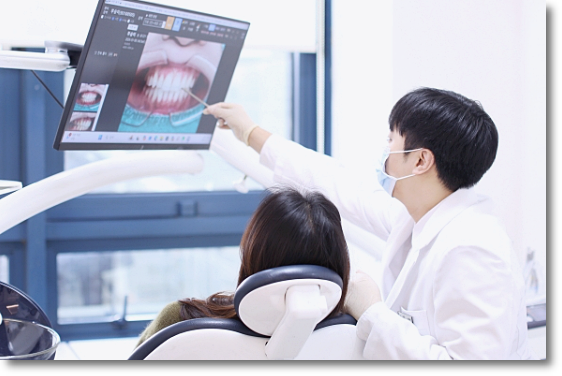
Today, we looked at partial orthodontic treatment for the front teeth and veneers as an alternative.
More important than the treatment method itself is finding the option that is most suitable for you.
Therefore, rather than considering orthodontic treatment alone, consult thoroughly with your dental professional so that you can make a choice you will not regret.
Thank you. This has been Dr. Jae-hyung Park.