Hello. I am Park Jae-hyung, Director of Wonjin Dental Clinic.
If you don’t like your veneers, can’t you just have them removed
and get them redone?
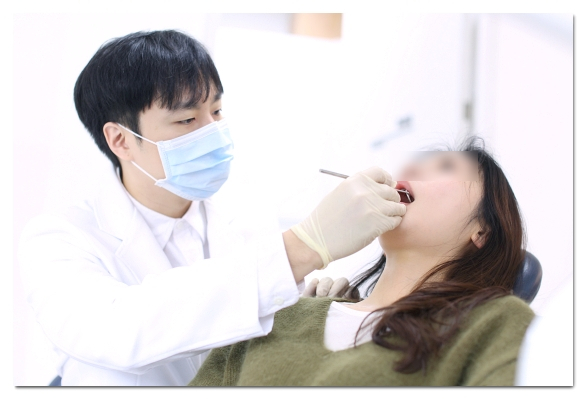
Many people look for this information because several years have passed since they got veneers, the color has changed, decay has developed along the edges, or they are unhappy with the shape and want to have them redone.
However, care is also needed during removal because the teeth may be damaged or further filed down.
To give you the conclusion first, the burden left on the natural teeth clearly varies depending on how the veneers are removed.
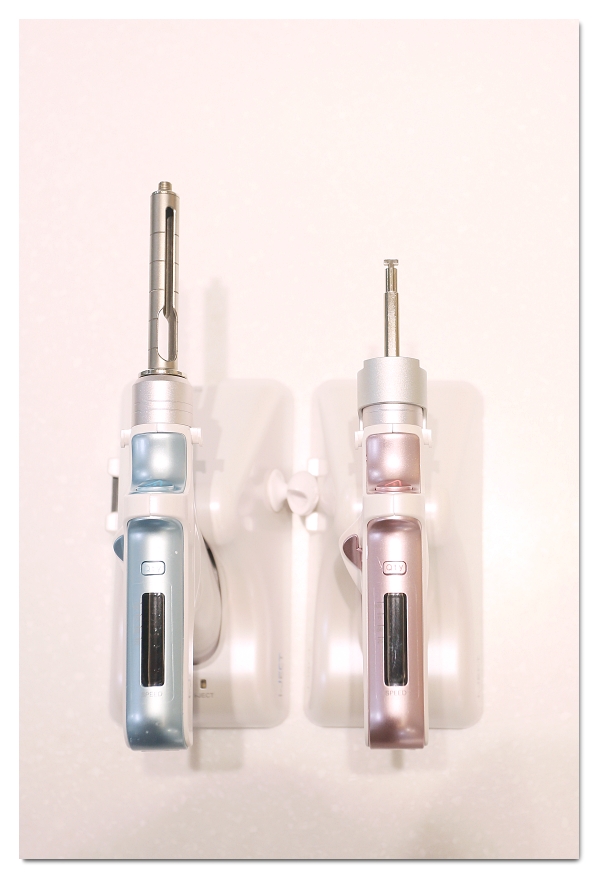
Today, I will explain how to minimize damage to natural teeth when removing veneers and why I use a water-droplet laser for veneer removal.
Even reading this article alone may help minimize secondary damage when removing existing veneers before undergoing retreatment.
When Veneers Need to Be Removed
Common situations in which veneers are removed include the following:
-
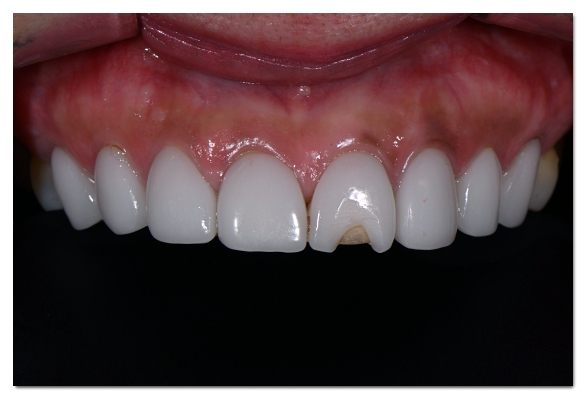
When decay (secondary caries) develops at the boundary between the edge of the restoration and the gums
-
When a veneer is cracked or comes off
-
When its color changes over time and differs from that of the surrounding teeth
-
When the patient is dissatisfied with the shape or length and wants a replacement
These are the situations.
Regardless of the reason, they all have one thing in common:
Part of the natural tooth has already been removed.
Therefore, how much additional removal can be reduced during the removal process will affect the future lifespan of the tooth.
Limitations of Conventional Veneer Removal Methods
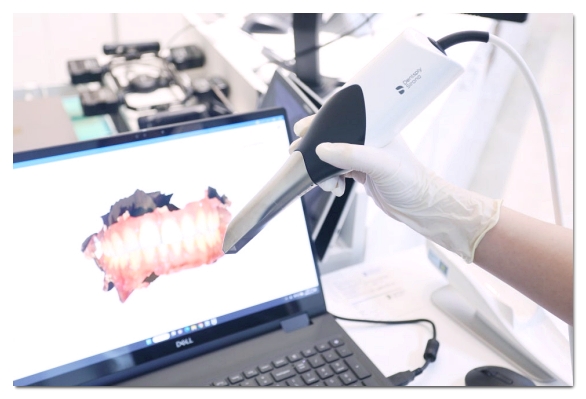
The traditional method involves grinding away the veneer with a diamond bur.
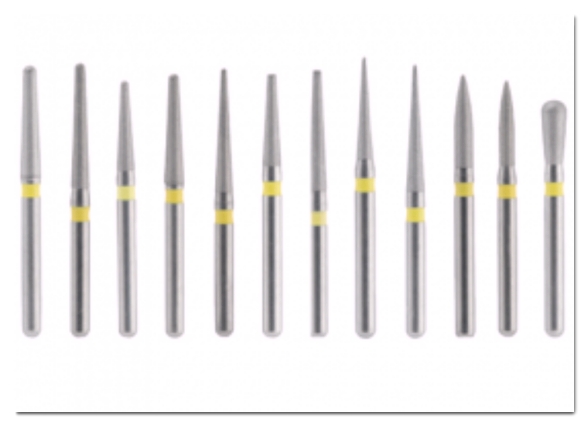
Although this method is relatively fast, the rotary instrument may also grind the surface of the natural tooth, and the vibration and heat generated can place stress on the tooth.
The boundary between the veneer and the natural tooth is often not clearly distinguishable by sight.
(The tooth surface and the bonding surface of the veneer are treated with bonding materials when the veneer is attached, so they are chemically bonded rather than simply placed on top.)
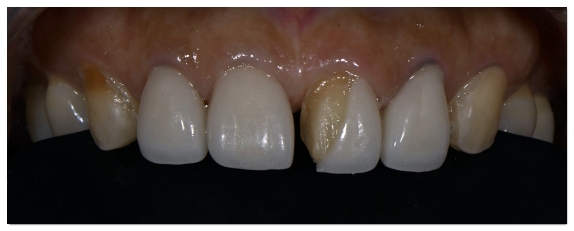
At this point, sound tooth structure may be microscopically filed away, and as this is repeated, the treatment may extend closer to the nerve, leading to sensitivity or additional treatment.
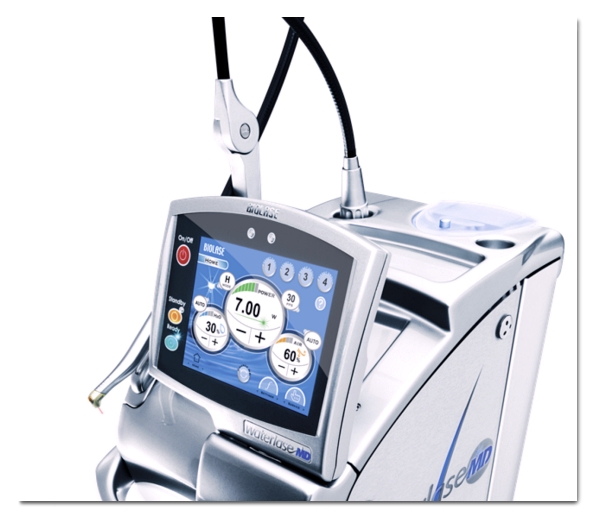
Veneer Removal Using a Water-Droplet Laser
A water-droplet laser delivers laser energy through water particles to weaken the layer of adhesive cement that attaches the restoration to the tooth.
One advantage is that it allows a more precise approach by separating the veneer as a whole, as if lifting it off in one piece.
It reduces direct friction from rotary instruments to minimize the removal of natural tooth structure, and because it works together with water, the procedure is also carried out in a way that reduces heat generation.
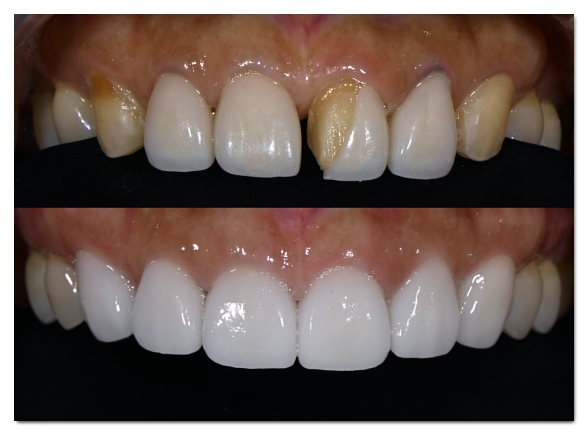
Many patients visit our clinic to have veneers they received in the past redone.
That is why we use a water-droplet laser particularly often.
The amount of tooth reduction during removal must be minimized so that newly made veneers can also be attached more securely.
However, this method does not apply in exactly the same way to every case.
The approach varies somewhat depending on the bonding method, the type of restoration, and the condition of the gums and teeth.
26.05.06~26.06.10
When Water-Droplet Laser Removal Is Especially Helpful
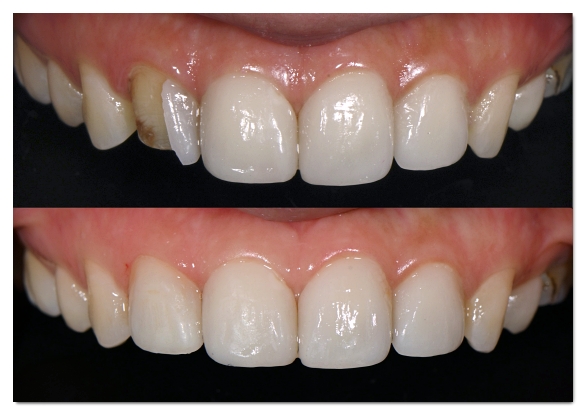
If the natural tooth has already been reduced to a thin layer and is close to the nerve, or if it is an area such as the front teeth where even minor damage can significantly affect the result, precise removal becomes even more important.
Even when several veneers are being replaced at once, removing them while preserving each tooth can help improve the overall treatment result.
On the other hand, if a veneer has already come off substantially in a simple case, a laser may not be necessary.
Therefore, rather than insisting on one method in every case, it is reasonable to choose an approach suited to the condition of your teeth.
26.06.01~26.06.08
How Is Veneer Removal Performed?
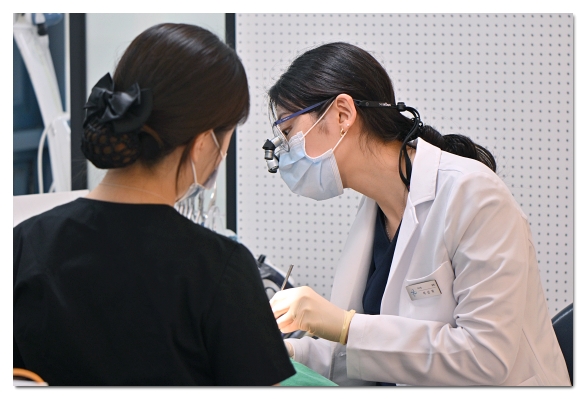
First, X-rays and an oral examination are used to check the condition of the natural teeth, gums, and nerves.
After identifying the restoration margins, the bonding layer is separated using a laser or fine instruments, and any remaining cement is gently cleaned away.
Finally, the condition of the exposed natural tooth is examined.
These steps are divided into stages so that hidden decay or cracks are not overlooked.
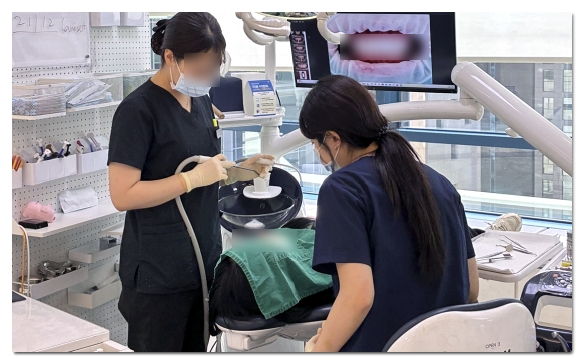
A new restoration is not placed immediately after removal is complete.
If decay is present, it is treated first, and if nerve damage is suspected, the decision about whether to remake the veneer is made after monitoring its progress.
Depending on the case, a crown may be more suitable than a veneer.
(If the nerve is damaged, root canal treatment is needed, and a weakened tooth may not be able to withstand a thin veneer.)
Precautions After Veneer Removal
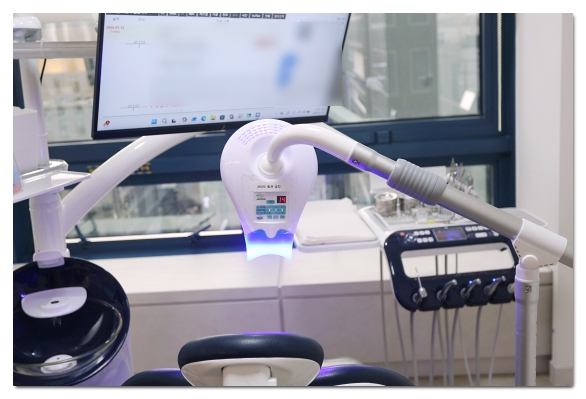
Immediately after removal, the teeth may temporarily feel sensitive or become more sensitive than usual.
Avoid foods that are too hot or cold for a while, and if a temporary restoration has been placed, take care with hard or chewy foods.
If the pain persists or your gums swell, do not endure it—visit the clinic promptly for an examination.
Frequently Asked Questions
Q. If veneers are removed, will my teeth return to their original state?
Because part of the natural tooth has already been removed, it is difficult to return completely to the original shape through removal alone.
A new restoration or another restorative treatment is usually needed as well.
That is why I always say this:
From the very beginning, veneers should be planned based on an accurate diagnosis and in a way that minimizes the amount of tooth reduction.
Even if you are having your veneers redone, please be sure to read the article below.
By receiving treatment with the necessary information, you can undergo veneer treatment more reliably and achieve a more complete result.
Q. Does removal hurt a lot?
The procedure is usually performed under local anesthesia, and using a water-droplet laser tends to reduce vibration and the sensation of pressure.
However, pain varies from person to person.
Q. How long does removal take?
The time varies depending on the number of teeth, the bonding condition, and whether decay is present, so the most accurate estimate can be provided after an examination.
With veneer removal, the key is not “how quickly” but “with how little damage.”
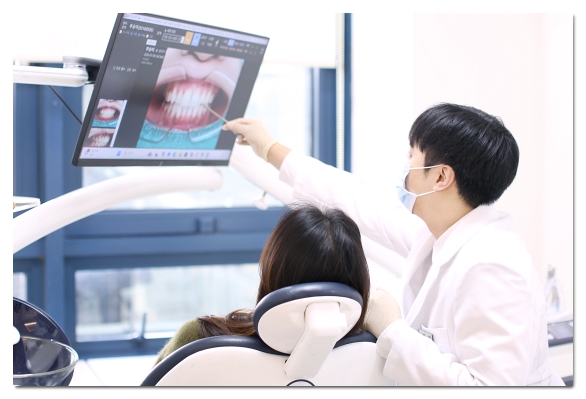
I hope you choose a method suited to the condition of your teeth through a thorough diagnosis and consultation.
The more you know about veneer removal and retreatment, the more safely you can undergo the procedures.
Thank you. This was Park Jae-hyung.