Hello, I’m Jae-hyung Park, the representative director of 원진치과의원.
“I’d prefer not to have my teeth filed down if possible.”
This is the request I hear most often during veneer consultations.
Many people first look into no-prep veneers because they are concerned about potential side effects.
In fact, one advantage of no-prep veneers is that they can preserve as much of the natural tooth as possible.
However, this treatment cannot be applied to every tooth.
Depending on the condition of the teeth, minimal-prep veneers may actually produce a more natural and stable result.
Today, I’ll explain in detail what no-prep veneers are and when they are suitable.
Contents
-
What are no-prep veneers?
-
Conditions for no-prep veneers
-
What is the procedure and how long does it take?
-
Frequently asked questions (Q&A)
-
Key points
1. What are no-prep veneers?
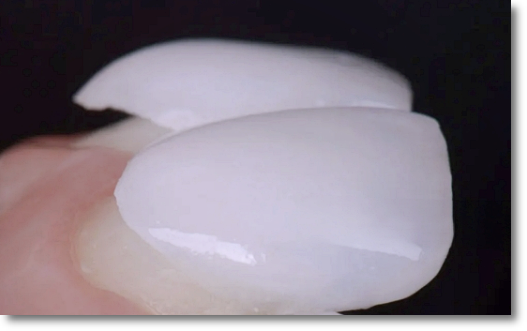
No-prep veneers are a procedure in which thin ceramic veneers are attached to the front surface of the teeth without reducing them, or after only minimal reshaping.
Their main characteristic is that they can preserve the enamel, the outermost layer of the natural tooth, as it is.
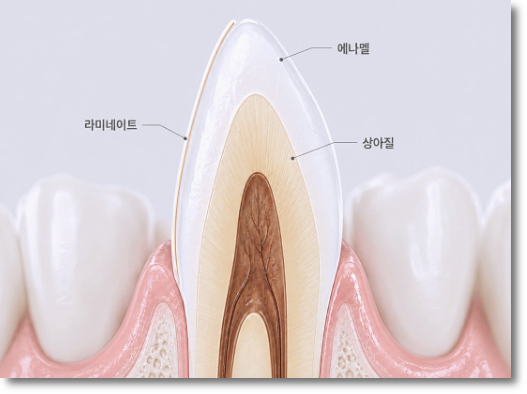
Enamel is one of the hardest tissues in the human body and protects the teeth from external stimuli.
Because the no-prep method does not damage the enamel,
it has the advantage of reducing the likelihood of side effects such as tooth sensitivity or pain after the procedure.
The differences from conventional veneers can be seen more clearly in the table below.
Summary of the differences between conventional veneers and no-prep veneers
| Category | Amount of tooth reduction | Thickness | Pain/anesthesia | Reversibility |
|---|
| Conventional veneers | Approximately 0.5 mm–0.7 mm removed | Approximately 0.5 mm or more | Anesthesia is required because the teeth are reduced | Cannot be returned to their original condition (sensitivity may occur) |
| No-prep veneers | Around 0.1 mm–0.2 mm or no reduction | Approximately 0.1 mm–0.3 mm | Anesthesia is generally unnecessary because there is little to no pain | The original teeth can be restored if the veneers are removed |
2. Conditions for no-prep veneers
No-prep veneers do not create space by reducing the teeth; instead, they add thin veneers to the existing teeth.
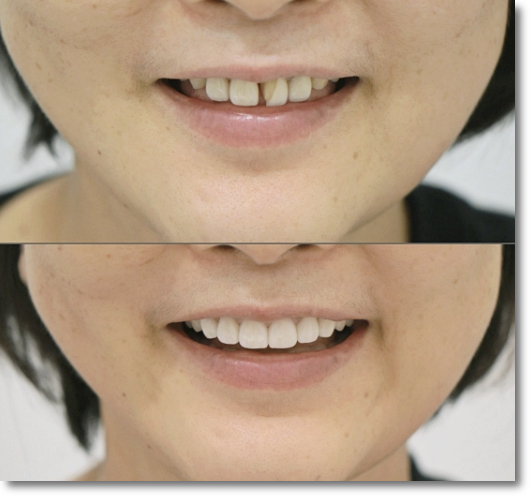
Therefore, they can produce the most noticeable effects when something is lacking or when a gap needs to be filled.
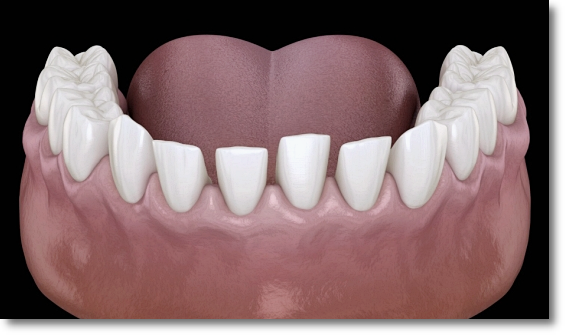
The most ideal conditions are as follows.
-
A slight gap between the front teeth
-
A particular tooth is noticeably small
-
A tooth is positioned inward
-
The edge of a tooth is slightly chipped or worn
Even when a restoration is added, it is possible to create a straight and natural result without affecting the alignment of the teeth or the lip line.
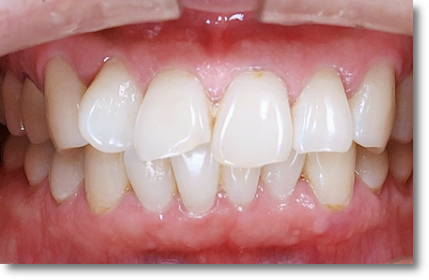
Conversely, if the teeth protrude significantly or the alignment is severely twisted,
the mouth may appear more prominent or the teeth may look oversized.
Even if the procedure involves no tooth reduction, it may ultimately lead to regret if it is not suitable for your teeth.
If you are wondering whether this is a suitable case for you, you can read the article below.
3. What is the procedure and how long does it take?
No-prep veneers usually take approximately one to two weeks, during which you will visit the clinic two or three times.
(When necessary, one-day veneers may also be completed in a single day.)
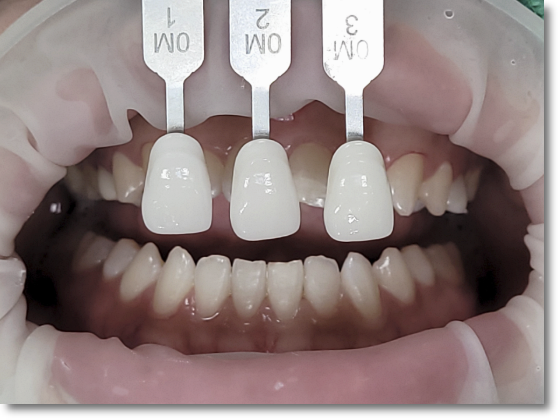
Day 1 (Diagnosis and design)
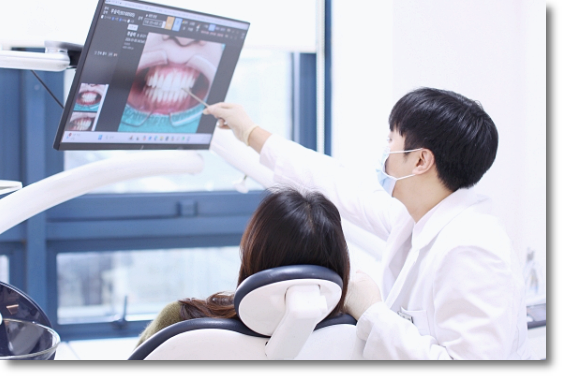
Without anesthesia or tooth reduction, a 3D scan is used to create a personalized design suited to the shape of your face and your teeth.
If necessary, cavity treatment or gum treatment may also be performed.
(The veneers should be placed while the gums are healthy to help prevent gum recession and discoloration along the margins later on.
This also helps prevent the veneers from coming loose easily due to reduced adhesion on the tooth surface.)
Laboratory process (takes 5–7 days)
There are two methods used in the laboratory process.
The first is for a dental technician to further refine what has been milled by a machine in order to bring out precise details.
The second involves a dental technician applying and firing the material layer by layer with a brush, repeating the process until it is complete.
Because the second method is 100% handmade throughout, it is difficult to complete in just one day.
However, its advantage is that it can reflect the details of your teeth and produce a natural design.
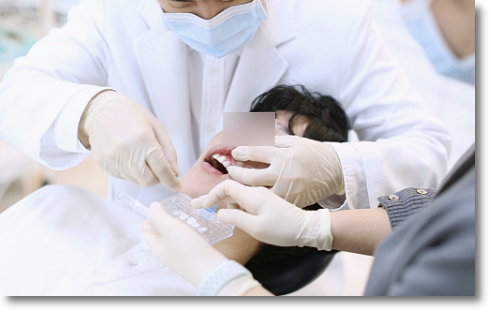
Day 2 (Precision bonding)
The color of veneers can also vary depending on which bonding agent is used.
Since veneers are used for a long time once they are bonded, you will want to be satisfied with their color as well.
That is why we try two or three bonding agents and give you time to choose the color you prefer.
If veneers are bonded incorrectly, side effects such as gaps, chipping, detachment, or secondary cavities may occur.
To prevent this, we carry out precision bonding according to our protocol and carefully complete the first occlusal adjustment.
One week later (Final check)
You may notice discomfort after returning home that you did not feel during the occlusal adjustment at the dental clinic.
Therefore, we perform a second occlusal adjustment to further refine and address any discomfort.
Although I have explained the process above, you may still be wondering how to approach a consultation or how to proceed with veneers while preventing side effects.
Details of the process that may be difficult for patients to know can be found in the article below.
Since these details can affect the lifespan of no-prep veneers, I hope you will be sure to read it.
4. Frequently asked questions (Q&A)
Q1. How much pain should I expect?
A. No-prep veneers are not a treatment that causes severe pain.
The outermost layer of the tooth, the enamel, does not produce pain sensations, and the no-prep approach involves little to no tooth reduction.
Most people undergo the procedure comfortably without significant difficulty.
Q2. If they are thin, won’t they chip or come off easily?
A. Although the restoration itself is thin, when it is bonded tightly to the tooth surface without gaps, it becomes strongly integrated with the tooth.
(The bond is formed chemically.) Therefore, it does not chip or come off easily during everyday activities.
26.05.06~26.06.10
Q3. Can my teeth return to their original condition if the veneers are removed?
A. If no tooth reduction was performed at all, the teeth can retain their original form to a certain extent. However, it may be difficult to restore them perfectly to the condition they were in before the procedure.
(This is why I advise minimizing the amount of tooth reduction from the beginning.)
Q4. How long do they last? Are they permanent?
A. This varies depending on maintenance, but they can generally be used for around 10 years. Regular checkups every six months can help extend their lifespan.
5. Key points about no-prep veneers
-
No-prep veneers are a procedure in which thin ceramic veneers are bonded without filing down the teeth.
-
They are most effective for filling spaces, such as gaps between the front teeth, undersized teeth, or worn teeth.
-
Protruding teeth or severe crowding may require orthodontic treatment.
-
Precision bonding and occlusal adjustment are essential to help prevent easy chipping or lifting.
The important thing is not to avoid tooth reduction unconditionally,
but to reduce unnecessary tooth reduction while creating a natural and stable result.
Rather than simply checking whether no-prep veneers are possible, I recommend first receiving a diagnosis to determine which approach is most suitable for your teeth.
Thank you. This was Jae-hyung Park.