Hello. I am Park Jae-hyung, director of Wonjin Dental Clinic, where I have been practicing in Gangnam since 2012.
I completed orthodontic treatment, but the space between my front teeth
looks black
Food keeps getting stuck,
and I feel self-conscious when I smile
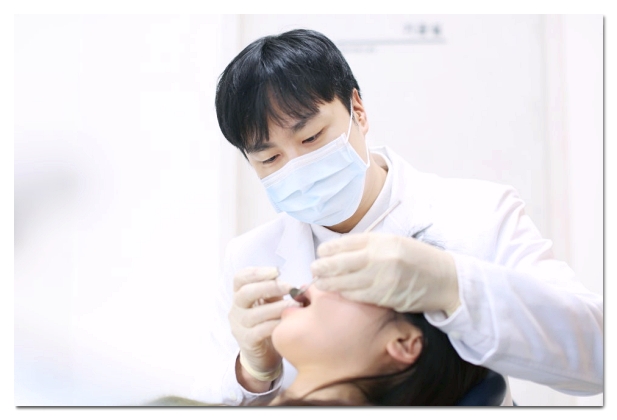
Many people return with these concerns after completing orthodontic treatment.
Their teeth are straight, but a small black triangle has appeared between their front teeth.
This is called a black triangle.
To get straight to the point, the solution for a black triangle varies depending on its cause.
Today, I will explain why black triangles develop after orthodontic treatment and which treatment method may be suitable for each case.
Table of Contents
-
What is a black triangle?
-
Why do black triangles develop after orthodontic treatment?
-
What happens if they are left untreated?
-
How do the solutions for black triangles differ?
-
Frequently asked questions
What is a black triangle?
A black triangle is a small, triangular gap that forms between the teeth near the gums.
Normally, the gum tissue between the teeth—the interdental papilla—should fill this area. When it does not, the dark space behind it becomes visible and looks like a black triangle.
When it develops between the front teeth in particular, it can be noticeable when smiling and may be a cosmetic concern.
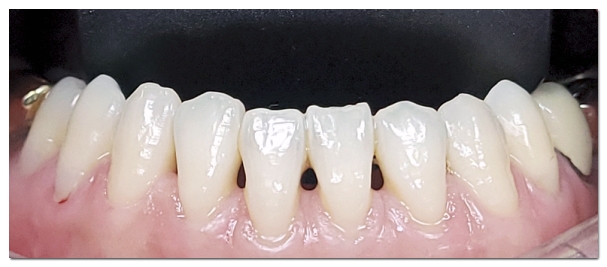
The empty spaces between the teeth in the photo above are called black triangles.
Why do black triangles develop after orthodontic treatment?
Black triangles do not develop for just one reason. There are four main causes.
First, teeth that were overlapping may have been straightened.
As crooked, overlapping front teeth become aligned, deficiencies in the bone and interdental papilla that were hidden by the overlap become visible.
This is the most common case after adult orthodontic treatment.
Second, gum recession.
When the height of the bone between the teeth decreases with age or due to periodontal disease, the gum tissue above it cannot fill the space.
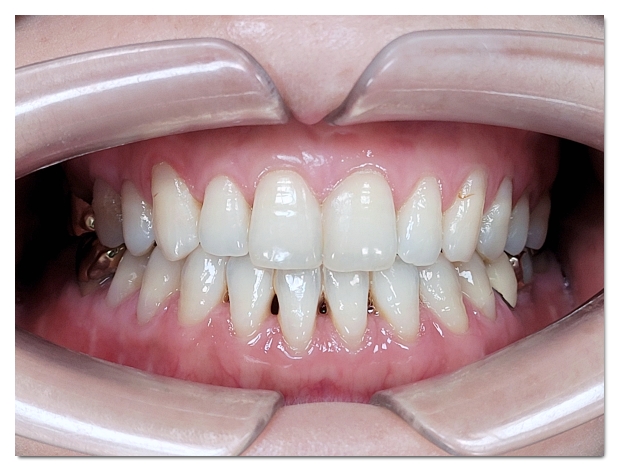
The photo above shows how gum recession around the lower teeth has resulted in black triangles.
Third, tooth shape.
Triangular teeth that become narrower toward the roots have contact points positioned closer to the chewing surface. As a result, spaces are more likely to remain near the gums even after the teeth are properly aligned.
Fourth, the roots and contact points may have changed as the teeth moved during orthodontic treatment.
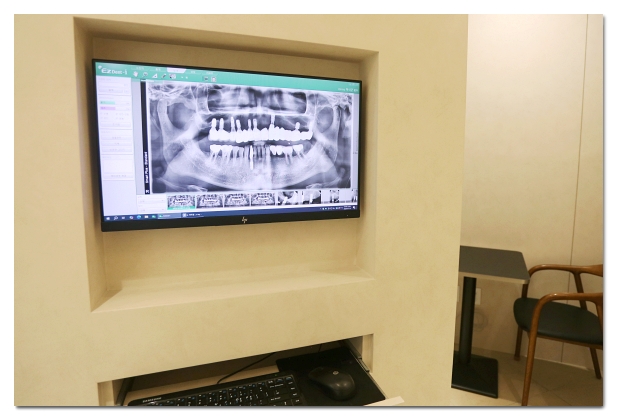
For reference, whether the gum between the teeth can fill the space can be estimated to some extent by measuring the distance between the contact point and the bone.
When this distance is approximately 5 mm or less, the gum often fills the space. The farther apart they are, the more difficult it is for the space to fill.
This is why this area is checked during diagnosis.
What happens if a black triangle is left untreated?
A black triangle itself does not cause immediate pain.
However, leaving it untreated can lead to several inconveniences.
Food may frequently become stuck in the dark gap, and because the area is difficult to reach with a toothbrush, it may lead to gum inflammation or cavities.
Some people may also feel as though air escapes when they speak. Therefore, if the gap is large or difficult to keep clean, it may be worth considering treatment.
How do the solutions for black triangles differ?
The approach varies depending on the cause and size of the black triangle.
- Closing the space by slightly reshaping the sides of the teeth (interproximal reduction and retreatment)
This method involves gently reshaping the sides where the teeth meet to create a new space, then moving the teeth to close the gap.
In fact, black triangles can often be reduced during the orthodontic planning stage.
For triangular teeth, the treatment plan can include carefully reshaping the teeth on a minimal scale to move the contact points closer to the gums.
The roots can also be finished in a parallel position, while the gum condition can be managed starting before orthodontic treatment.
- Improving the area with resin or minimally invasive veneers
Resin and veneers can be completed relatively quickly, with the color and shape matched for a natural finish.
Veneers may be considered when you also want to improve the overall shape and color of the teeth.
However, because some tooth reduction may be necessary, the procedure should be carried out in a way that preserves as much of your natural tooth structure as possible.
I have explained in the article below how to reduce the amount of tooth reduction when getting veneers.
If you are considering veneers, please be sure to read it.
- If gum recession is the cause, gum care and regenerative approaches are needed
To be honest, it is not easy to restore gum tissue that has already receded to its original state.
There are also methods of supplementing gum volume, such as hyaluronic acid fillers, but their effects do not last indefinitely and maintenance is needed.
Therefore, rather than aiming to “fully restore the gums,” a realistic goal is to find the most natural and durable approach suited to the cause.
Frequently asked questions
Q. Does a black triangle always need to be treated?
A. If it is small and does not cause any difficulty with cleaning or daily life, treatment is not always necessary.
However, if food frequently becomes trapped or it bothers you cosmetically, it is a good idea to consider a solution suited to the cause.
Q. Does orthodontic treatment always cause black triangles?
A. No. Black triangles are more likely to develop depending on how much the teeth overlapped, the shape of the teeth, and the condition of the gums. Considering these factors during the orthodontic planning stage can help reduce or prevent their size.
Q. Will it look noticeable if the space is filled with resin?
A. The key is to match the color and shape for a natural finish.
However, the result varies depending on the location and size of the space, so an examination is needed to determine which method is appropriate.
For black triangles that develop after orthodontic treatment, the solution does not begin with “what to use to fill them quickly,” but with “understanding why they developed in the first place.”
Please make your decision at a clinic where the cause can be accurately diagnosed and where you can discuss an approach that involves minimal alteration to your teeth.
Thank you. This has been Park Jae-hyung.