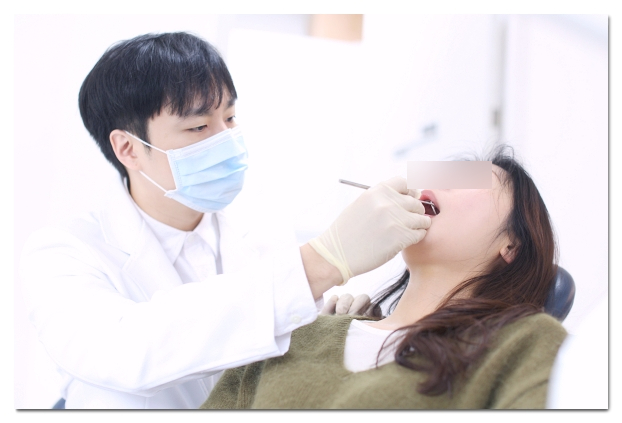
Hello, I’m Park Jae-hyeong, the director of Wonjin Dental Clinic, where I have been practicing near Gangnam Station for 14 years.
The number of teeth they say need treatment
is different at every clinic ㅠㅠ
Could I end up receiving unnecessary treatment
just by going in for a checkup..?
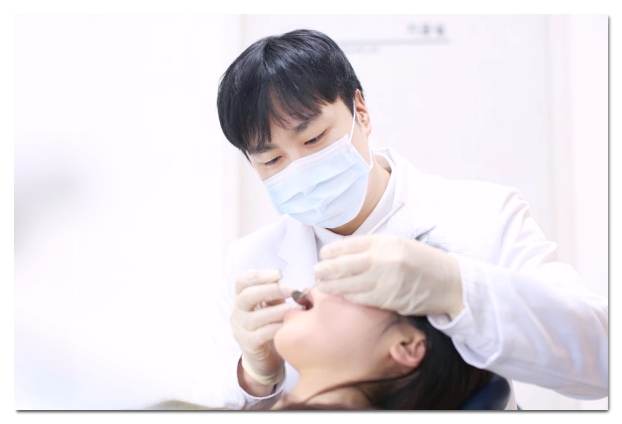
This is a concern that almost everyone has at least once when they start looking for a dental clinic.
So today, I’ve put together this post on how to choose a dental clinic near Gangnam Station.
I organized these points because I hope you receive good care, even if you do not visit our clinic.
There are especially many dental clinics around Gangnam Station,
and many people say that after putting off going to the dentist because of dental anxiety, they finally start looking for a clinic but feel overwhelmed just trying to decide where to go.
In actual consultations, I am often asked questions like this:
"Another clinic said I had six cavities. Why are there only two here?"
It may sound strange, but cavity diagnoses can differ from one clinic to another.
That is because dentists may use different standards when deciding whether to treat an early-stage cavity immediately or monitor it with regular care.
The problem is that, from the patient’s perspective, it can be difficult to tell which decision is truly in the best interest of their teeth.
That is why today’s criteria are important.
Table of Contents
-
A clinic that tells you when unnecessary treatment “does not need to be done”
-
A clinic that shows you the basis for its diagnosis
-
A clinic where the director personally explains everything from the diagnosis onward
-
A clinic you can continue visiting for a long time
-
For costs, check the “breakdown” rather than just the numbers
-
If you are considering cosmetic treatment, criteria to look at
- A clinic that tells you when unnecessary treatment “does not need to be done”
This is one of the clearest signs of a good dental clinic.
Not every cavity needs to be treated immediately.
For an early-stage cavity that has stopped progressing, monitoring it through regular checkups may be a better choice than removing the affected area and filling it.
Once a tooth has been removed, it cannot be restored to its original state.
If you hear statements during a consultation such as, “This tooth does not need treatment yet” or “Let’s check it again in six months,”
there is a good chance the clinic is making decisions based on the patient’s long-term dental health.
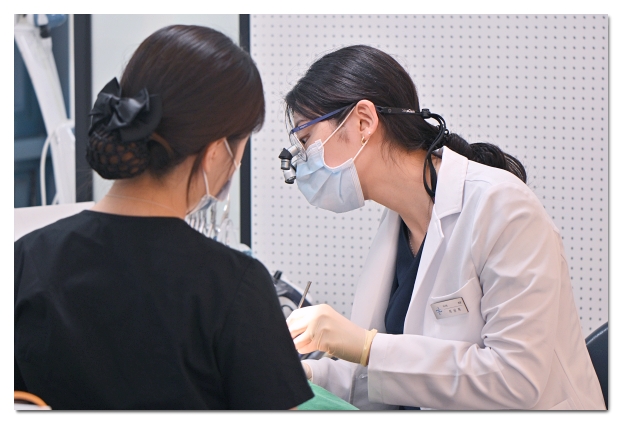
If you are facing extensive treatment, get diagnoses from at least two clinics and compare them.
An area with many options, such as Gangnam Station, is also a good place to receive opinions from different perspectives.
If the treatment plans differ significantly, simply asking each clinic why the differences exist can reveal a great deal.
- A clinic that shows you the basis for its diagnosis
There is a significant difference between a consultation that ends with, “You have several cavities, so you need treatment,”
and one that looks at your intraoral photographs and X-rays with you and explains each point by saying, “This area is in this condition, so this treatment is necessary.”
The photo below shows a device called Qray. It displays images in which areas with accumulated plaque glow fluorescently.
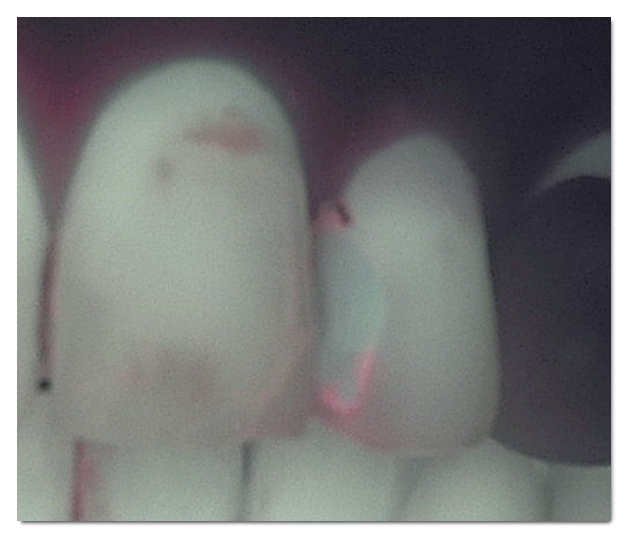
The reddish fluorescent areas in the photo above are plaque.
We also use images like this to show patients cavities that are difficult to identify with the naked eye or through X-rays alone.
Showing the basis for a diagnosis means making information available so that patients can make their own decisions. It also suggests that the clinic is confident in its diagnosis.
It is also important to see whether only one treatment method is presented.
Even when the condition is the same, there may be several possible approaches.
A clinic that explains the advantages and disadvantages, cost, and expected service life of each option can be considered to be providing a trustworthy consultation.
- A clinic where the director personally explains everything from the diagnosis onward
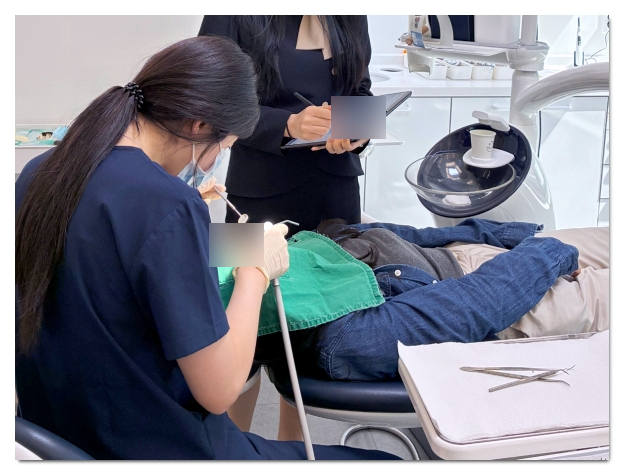
If a consultation is handled by a counseling staff member and the dentist only comes in to perform the procedure, you have fewer opportunities to fully understand the condition of your teeth and ask questions.
Of course, it is natural for staff members to handle cost information and scheduling.
However, it is best to hear explanations about “what is wrong, where it is wrong, and why this treatment is necessary” directly from the dentist who made the diagnosis.
This allows you to ask questions as they arise and gives you a sense of how closely the dentist has examined your particular case.
- A clinic you can continue visiting for a long time
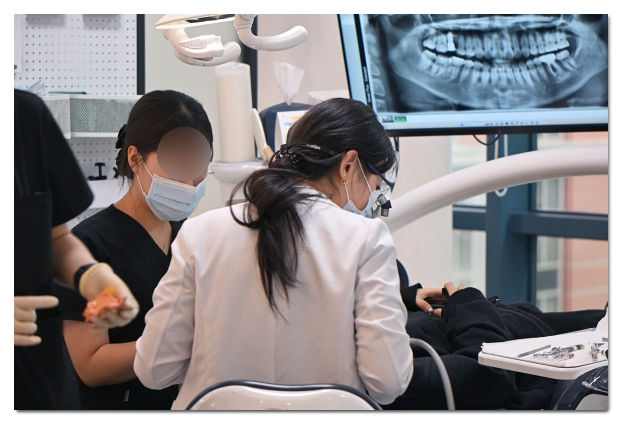
For treatments such as implants, prosthetics, and veneers, care after the treatment is just as important as the treatment itself.
When an examination or adjustment is needed several years later, it can make a bigger difference than you might expect whether the dentist who performed the treatment is still there.
It is also worth checking how long the clinic has been established and whether it has a systematic process for arranging regular checkups after treatment.
For costs, check the “breakdown” rather than just the numbers
A low price does not necessarily mean a clinic is poor, and a high price does not automatically mean a clinic is good.
What you really need to look at is what is included in that price.
For example, with an implant, you need to check what materials will be used, whether additional costs such as bone grafting may arise, and what the warranty period and conditions are before you can compare the actual cost.
This is because the initial estimate and the final cost can differ more often than you might think.
So, for an unusually inexpensive clinic, check whether any items have been left out. For an unusually expensive clinic, consider what justifies the price.
You need to develop the habit of comparing based not on the number in an advertisement, but on the “total cost of my treatment.”
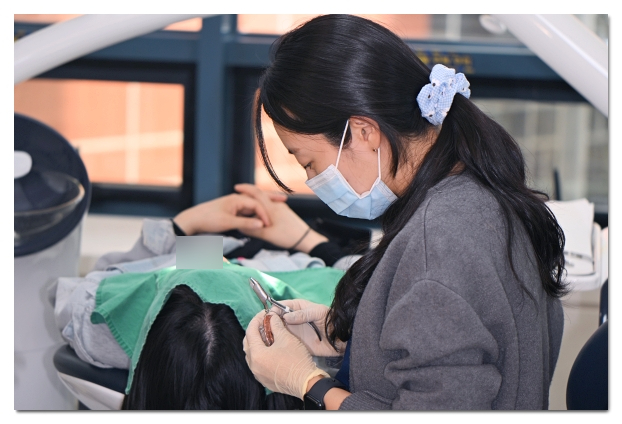
Two more things to consider
When reading reviews, focus on the content rather than the star rating.
More than the number of positive reviews, how the clinic responds to reviews expressing dissatisfaction reveals its attitude more clearly.
Look carefully at whether a complaint concerns the treatment itself or an operational issue such as waiting time.
It is also a good idea to visit first for a simple service, such as scaling or a checkup, before entrusting the clinic with extensive treatment.
If you work near Gangnam Station, you can stop by conveniently during your lunch break or on your way home, experience the consultation style and atmosphere yourself, and then make a decision.
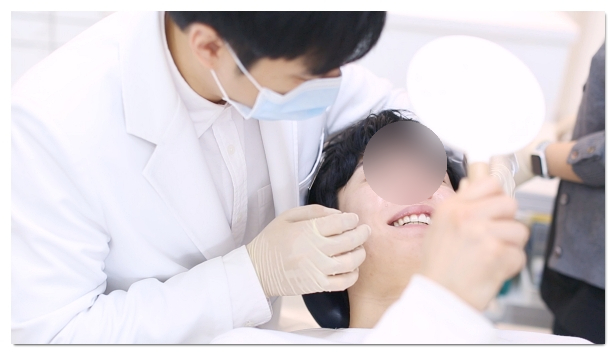
If you are considering cosmetic treatment, criteria to look at
Treatments such as veneers, which change the shape and appearance of your teeth, go beyond restoring function and address “how you want to look.”
In this case, what matters is whether the dentist helps design the impression your teeth create as part of your overall appearance, rather than focusing only on the number of teeth treated or the cost.
During the consultation, see whether they look only at your teeth or also discuss the harmony of your mouth and entire face.
The result of cosmetic treatment remains not as an individual tooth, but as part of your overall impression.
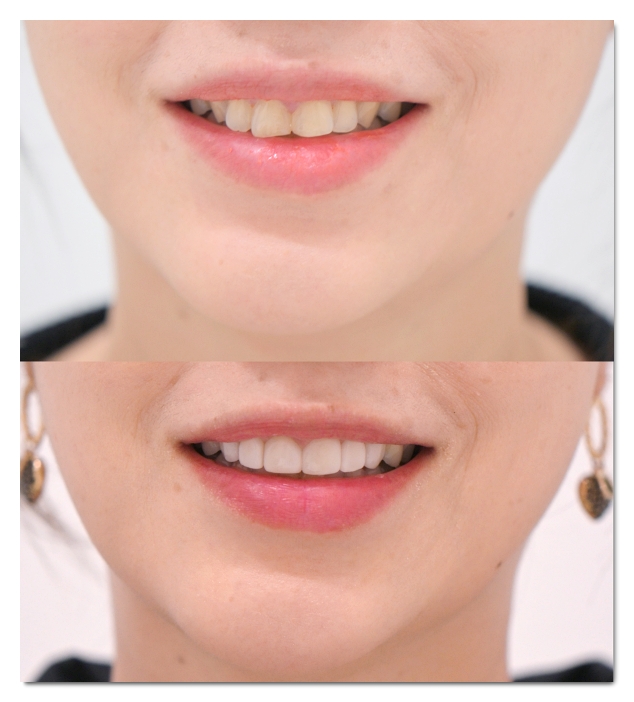 A case involving veneers on the front teeth (260429~260527)
To summarize, try asking these questions in the consultation room:
"How many of these teeth definitely need treatment right now?"
"Are there any teeth that can be monitored without treatment?"
"Are there any items not included in this cost?"
"How will follow-up checks be carried out after treatment?"
Even from the attitude shown in response to these four questions, you can learn a great deal about how the clinic treats its patients.
If you are looking for a dental clinic near Gangnam Station, I hope today’s criteria help you make a good choice.
Thank you. This was Park Jae-hyeong.