Hello. I am Jae-hyung Park, the head director of Wonjin Dental Clinic, where I have been practicing in Yeoksam-dong for 14 years.
The front tooth I had treated years ago looks like a different color. Does it need to be replaced?
At some point, I started covering my mouth
when I laugh widely.
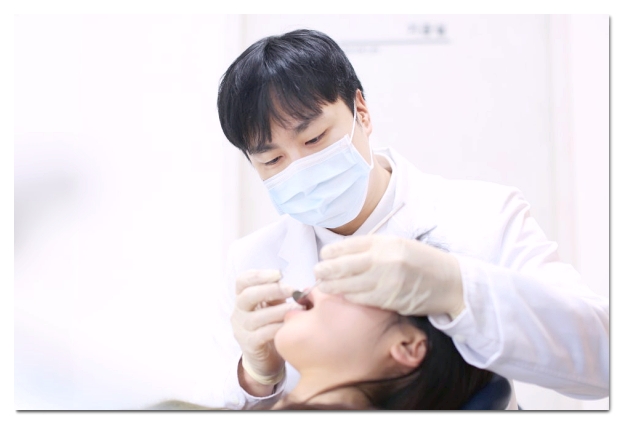
Many people visit us after suddenly noticing in the mirror that only a previously treated front tooth looks like a different color.
In many cases, these are teeth that were treated about 10 years ago, when the patients were students or had just started their first jobs.
Today, I will explain the warning signs that indicate an old resin restoration or crown truly needs to be replaced, as well as the situations in which it can safely remain as it is.
Table of Contents
-
The discoloration is not necessarily due to poor care
-
5 warning signs that resin restorations and crowns need replacement
-
If there are no warning signs, there is no reason to rush
-
If you replace a restoration, the design matters more than the material
-
Frequently asked questions
The discoloration is not necessarily due to poor care
Resin gradually absorbs some of the pigments from coffee, tea, and wine over time.
Natural teeth also change as we age, but the rate and tone of change are different. As a result, a margin that initially looked perfectly natural can gradually become visible over the course of several years.
With crowns, the gums are often a greater variable than the material itself.
As the gums recede over time, previously concealed margins can become exposed. With older crowns containing metal, the gum line may also appear dark.
These are natural changes that can occur even with excellent care, so there is no need to blame yourself.
The important thing is to distinguish whether the change is a sign that replacement is needed.
5 warning signs that resin restorations and crowns need replacement
These are the signs that are actually used in the dental office when determining whether replacement is needed.
You can also check them one by one in front of a mirror.
- When the margin has become stained brown or black
This may be a sign that bacteria are entering through a gap, rather than simple discoloration.
It needs to be checked before it progresses to recurrent decay.
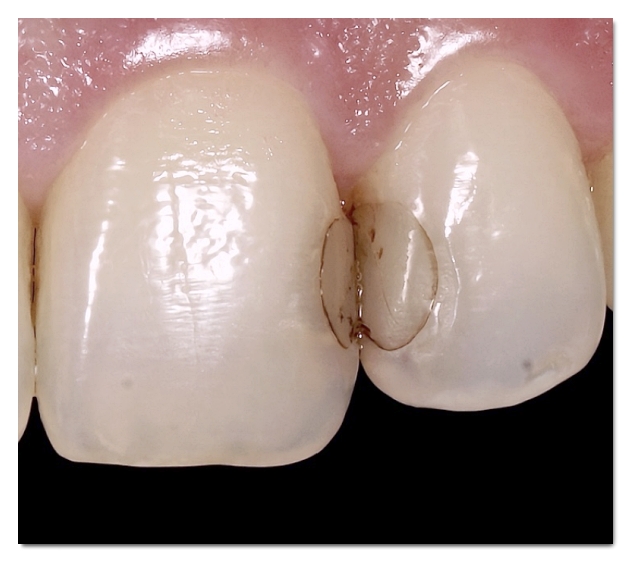
- When the resin has lifted or a corner has chipped
A gap that has opened will not close on its own, and a problem can progress inside it.
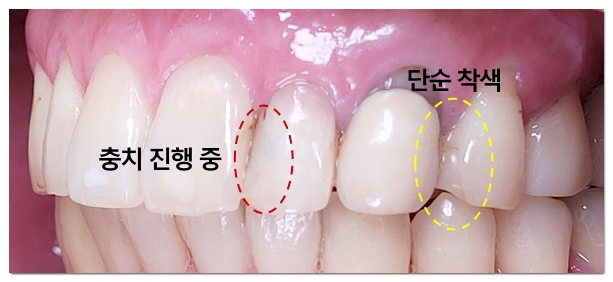
The two areas in the photo above were also cases involving previous resin treatment. Decay was progressing inside one, while the margin between the resin and the tooth was simply stained in the other.
- When the gums around a crown frequently swell or bleed while brushing
This may mean that the margin does not fit properly or that bacteria are accumulating.
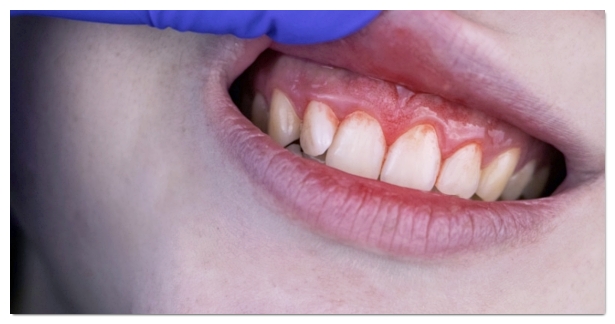
- When dental floss catches or tears in a specific area
Even if it cannot be seen, this is a common clue that the margin has been damaged.
- When the gum line beneath the crown appears dark
This can happen when the gums recede and expose the metal margin, and it is common with older crowns.
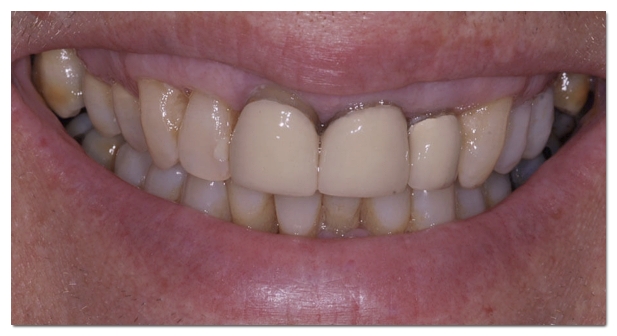
As shown in the photo above, there are cases in which the gums have receded farther than the margin of an old crown, making the margin look unnatural.
What these five signs have in common is that they concern function and hygiene, not just color.
If even one of them applies to you, it is a good idea to have the area checked, regardless of whether replacement is ultimately needed.
If there are no warning signs, there is no reason to rush
To be honest, discoloration alone is not a reason for replacement.
If the margin is clean, there are no gaps, and no problem is found on an X-ray, the restoration is doing its job.
Each time a restoration is replaced, a little more tooth structure may be removed. From the tooth's perspective, rushing to replace a restoration that has no functional problem can therefore be disadvantageous.
That is why, after an examination, we often say, “You can continue using it as it is for now.”
Of course, if the discoloration causes discomfort in daily life, such as covering your mouth when you laugh, treatment may be a good option.
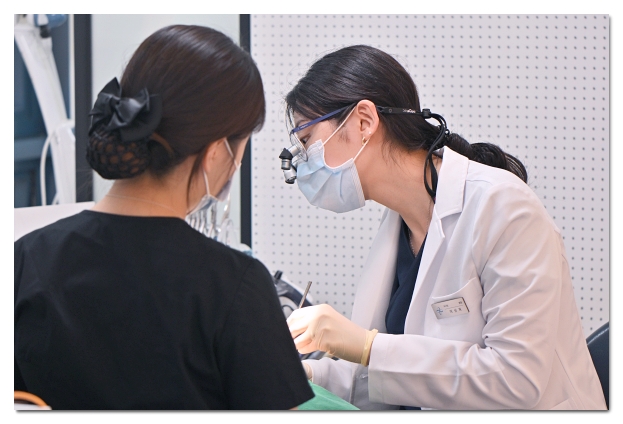
If you replace a restoration, the design matters more than the material
When deciding on replacement, people usually first consider whether to choose resin, a crown, or a laminate veneer.
If the damage is minor, resin is more conservative. However, discoloration may recur on front teeth. If a substantial amount of tooth structure has been removed or the tooth has undergone root canal treatment, a crown may be more stable.
If improvement in color and shape is needed, a ceramic laminate veneer, which does not absorb pigments, may be advantageous.
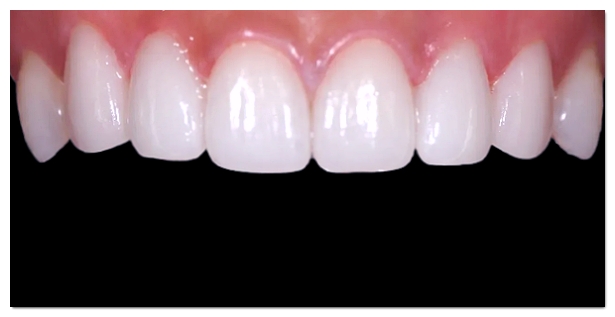
However, the answer depends not on the material but on the remaining condition of your tooth.
There is something I have come to realize through treating front teeth over many years.
What determines satisfaction is the design more than the material.
Because the front teeth shape the impression created when you smile, simply matching the color of one restoration to the adjacent teeth can make that tooth stand out.
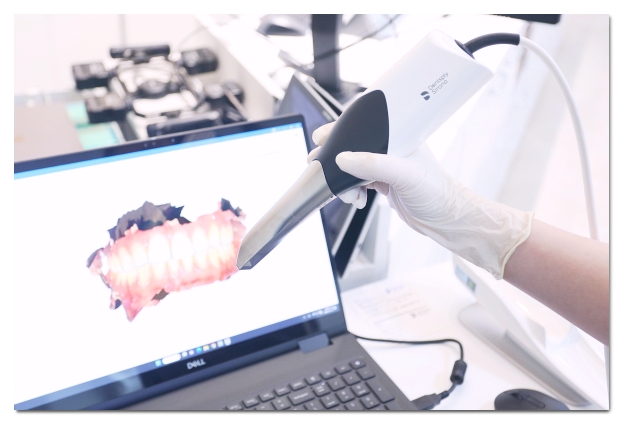
The length and angle of the teeth, the lip line, and the amount of tooth that shows when you smile all need to be considered together to create front teeth that do not look obviously treated.
Frequently asked questions
Q. Can whitening solve the problem of a discolored resin restoration on a front tooth?
A. Whitening works only on natural teeth and cannot change the color of resin or crowns.
It may instead make only the natural teeth brighter and increase the color difference, so a separate plan is needed for the restoration area.
Q. Will more of the tooth be removed if I replace it?
A. Additional tooth reduction may be needed when the existing restoration is removed and a new one is made.
That is why the general principle is not to rush if there is no functional problem.
Q. Is it okay to come in just for an examination?
A. Of course. We will check the area with photographs and X-rays and explain the findings along with the supporting reasons. You do not have to make a decision that same day.
Many working people also visit during their lunch break.

If the front tooth you had treated 10 years ago keeps catching your eye, checking its condition should come before making a decision.
Thank you. This has been Jae-hyung Park.