Hello.
I am Jae-hyung Park, Director of Wonjin Dental Clinic.
Can protruding front teeth
also be corrected with veneers?
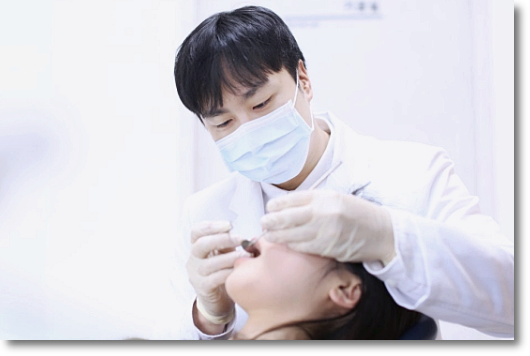
If your mouth appears slightly protruded, it is bound to bother you whenever you look in the mirror.
Although you may want to address it with orthodontic treatment, wearing uncomfortable appliances for two years is not easy.
That is why many people look into whether veneers could be an alternative.
In today's post, we will look at when veneers may be an option and, conversely, when orthodontic treatment should be considered.
Table of Contents
-
Can protruding teeth be corrected with veneers?
-
Conditions under which protruding teeth may be corrected with veneers
-
Cases in which veneers should not be used for protruding teeth
-
Precautions when choosing veneers
-
Conclusion
Can protruding teeth be corrected with veneers?
To start with the conclusion, it is not possible to definitively say whether veneers are possible or impossible without examining the teeth.
This is because the cause and severity of a protruding mouth vary from person to person.
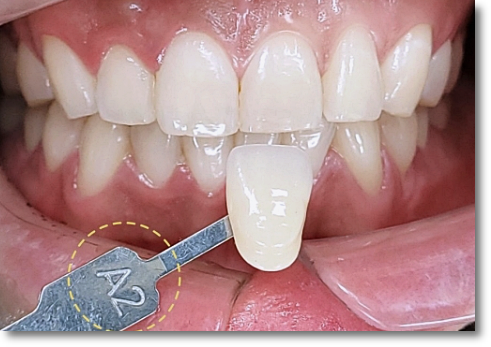
Veneers are not a treatment that pushes protruding teeth backward.
They improve the appearance of protrusion by adjusting the shape and proportions of the front teeth.
In other words, if the cause lies in the jawbone or the bite rather than the teeth, it may be difficult to achieve satisfactory results.
Therefore, it is necessary to first identify the underlying cause of the protruding mouth and then establish an appropriate treatment plan.
Conditions under which protruding teeth may be corrected with veneers
So, in what cases can veneers provide an improvement in the appearance of protruding teeth?
When the problem is partially related to the angle or position of the teeth.
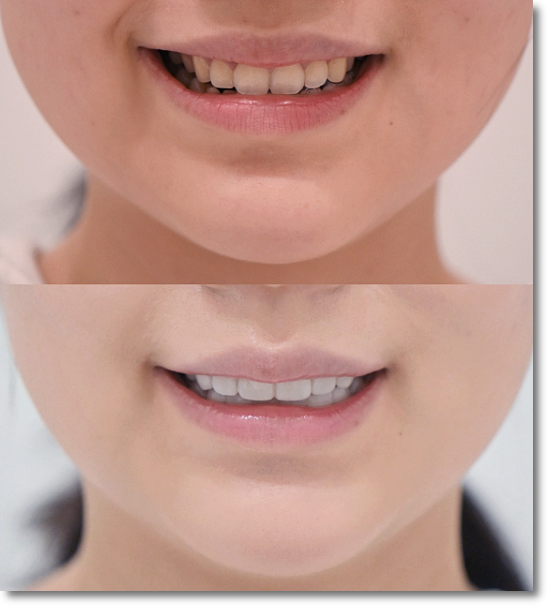
26.05.27 - 26.06.17
- When only certain teeth protrude
This applies to people whose overall jawbone is normal, but whose one or two front teeth appear to extend outward at a slight angle.
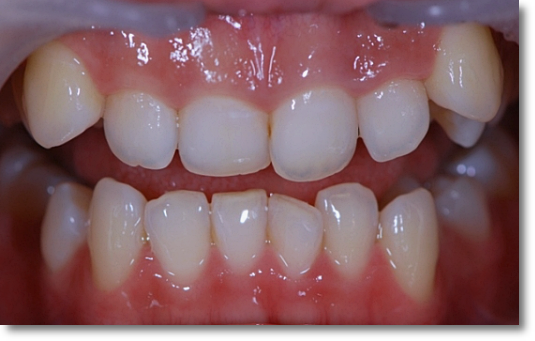
- When the protrusion is minor
This applies to people with mild protrusion that can be addressed by minimally reshaping the tooth surface.
The angle of the restoration must be made slightly inward without putting undue stress on the nerve.
Under these conditions, the teeth can look more orderly and the overall appearance of the mouth can become softer.
However, if the restoration is made too thick, the mouth may appear even more protruded.
It is important to minimize the amount of tooth reduction while making the restoration thin and natural-looking.
Cases in which veneers should not be used for protruding teeth
Those who fall into the following categories should consider orthodontic treatment first.
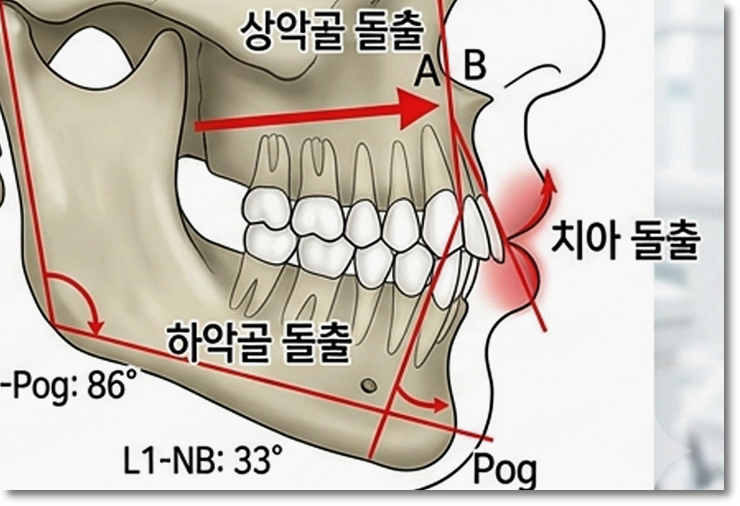
This refers to cases in which the jawbone or facial bones themselves protrude forward, rather than the teeth being the cause.
No matter how much the teeth are reshaped, the protrusion cannot be improved because the bone itself will not move inward.
If the protrusion is severe and you try to address it with veneers, an excessive amount of tooth structure would need to be removed.
If the dentin beneath the enamel becomes exposed, sensitivity may occur, and root canal treatment may even be necessary.
Because the lifespan of the teeth themselves may be significantly shortened, caution is required.
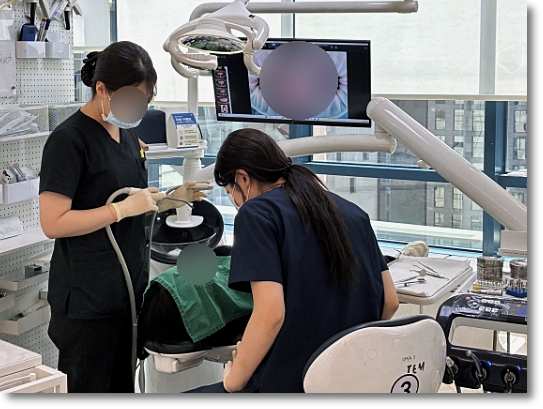
Precautions when choosing veneers
One advantage of veneers is that changes can be seen in a relatively shorter period than with orthodontic treatment.
However, the fact that results can be seen quickly does not mean that the treatment process itself is simple.
For a natural and stable result,
These three aspects should be carefully checked.
How much tooth structure is removed (amount of reduction)
Preserving as much of the enamel—the outermost layer of the natural tooth—as possible is key.
The amount should generally be around 0.1 mm to 0.3 mm and, depending on the condition of the tooth, should not exceed 0.5 mm.
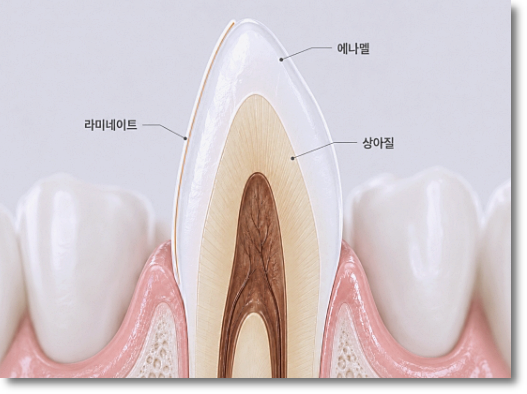 If too much enamel is removed, tooth sensitivity may occur. As shown in the photo above, a sufficient amount should remain. (No-prep/minimal-prep veneer method)
How are they made? (Precision)
For front-tooth veneers, it is important to achieve a thin thickness while maintaining natural translucency and texture.
A dental technician may build up thin layers by hand from the beginning,
or first make the veneer using a machine and then refine it so that it more closely matches the patient's tooth shape.
The machine-cutting method involves milling a single-color ceramic block and placing it over the tooth,
so it has limitations when it comes to reproducing the translucency and color of a natural tooth exactly.
(This is also why we further refine the veneers by hand to complete them as thin as possible.)
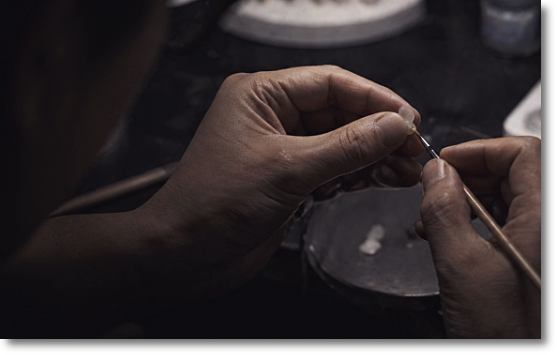 A dental technician must build up the texture layer by layer with a brush in this way to create a restoration with natural color and lifelike texture.
How are they bonded? (Bonding technique)
Veneers must be bonded perfectly without gaps so that decay or discoloration does not develop between the tooth and veneer.
(This is also why we insist on using adhesives from premium product lines.)
In addition, each adhesive has subtle color differences.
The color that produces the most natural appearance should be selected by considering the patient's original tooth color and the translucency of the veneer.
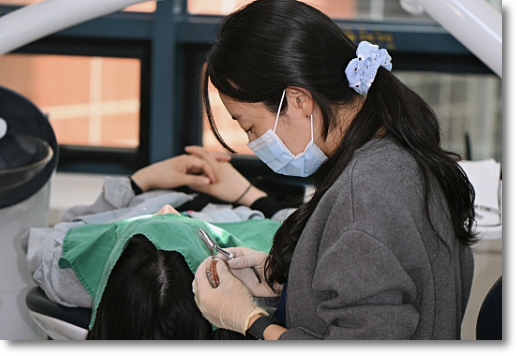
Because differences in results come from these details, I hope you will pay particular attention to the three points mentioned above when deciding on treatment.
If you want veneers without regrets, I recommend reading the article below at the very least.
You will get a sense of what criteria to use when choosing a clinic.
Conclusion
Today, I discussed cases in which the appearance of protruding teeth may or may not be improved with veneers.
Neither orthodontic treatment nor veneers is automatically the right answer.
The right approach is to identify the underlying cause of the protruding mouth and choose the most suitable treatment method.
Once veneers are bonded, it is difficult to return completely to the original condition.
Therefore, please make your decision carefully after a thorough consultation.
Thank you. This was Jae-hyung Park.