Hello. I am Park Jae-hyung, the director of Wonjin Dental Clinic, where I have been practicing in Gangnam since 2012.
My front teeth are spaced apart and discolored, so I feel self-conscious when I smile.
If I get veneers, how many would I need,
and would they look natural without being noticeable?

Front teeth are the first part of the face that people notice.
That is why “naturalness” is much more important for front teeth than for molars, and the number of teeth treated and the method used can significantly affect your overall impression.
Today, I will summarize how many teeth may need treatment, the available approaches, and the standards for achieving natural-looking results when considering veneers for the front teeth.
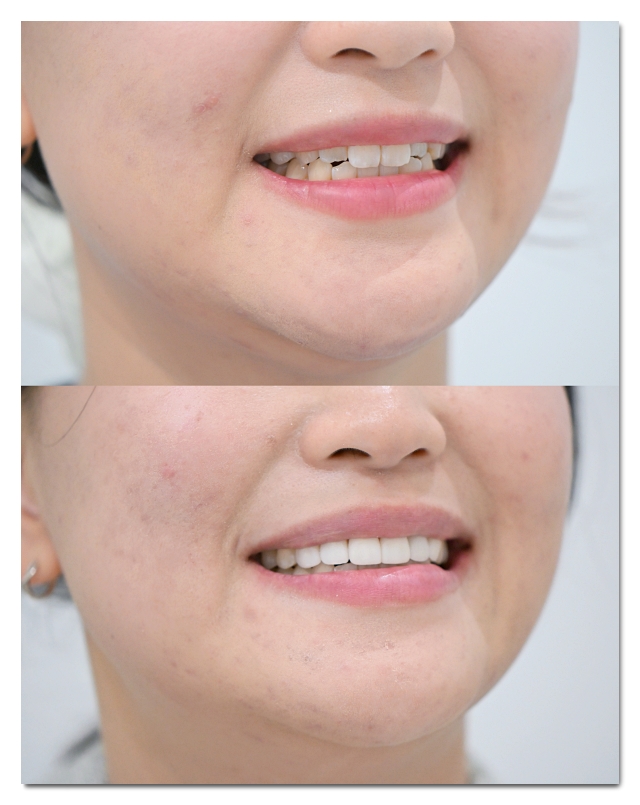
260622~260704
Table of Contents
-
Dental Veneers for Front Teeth: When Are They a Good Option?
-
How many front teeth should be treated?
-
Veneers may not be the answer
-
“Natural-looking color,” which is even more important for front teeth
-
How should you evaluate the cost of front-teeth veneers?
-
What to check when choosing a dental clinic
-
Frequently asked questions
Dental Veneers for Front Teeth: When Are They a Good Option?
Front-teeth veneers may be a good option in the following cases.
| Case | Treatment method |
|---|
| Spaced front teeth (diastema) | Fill and tidy the gap between the front teeth with ceramic |
| Small teeth (peg-shaped teeth) | Improve the size and shape of unusually small front teeth |
| Discoloration | Improve colors that cannot be addressed with whitening |
| Shape and proportions | Refine the shape of front teeth with worn or uneven edges |
Even a slight imbalance in the symmetry and proportions of the front teeth can be noticeable.
Therefore, achieving a natural result requires looking beyond simply making the teeth “whiter” and considering the balance with the adjacent teeth, gum line, and face as a whole.
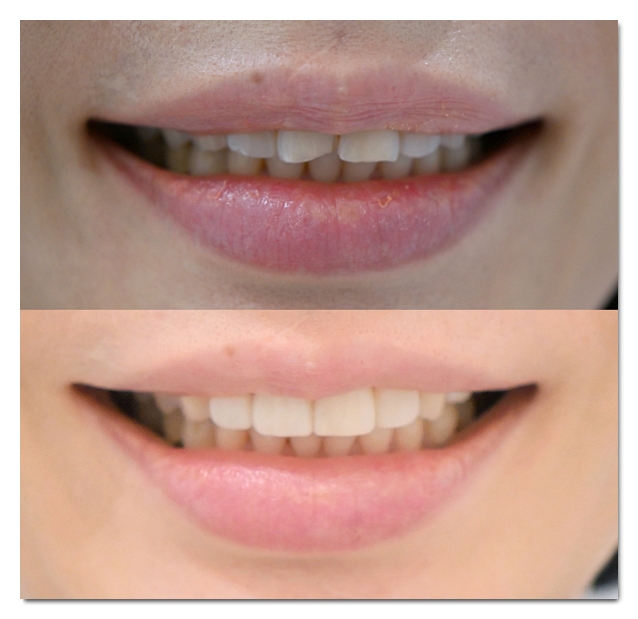 As in the case above, when the front teeth are chipped and rotated, it is important to balance both sides during treatment. Minimally invasive veneer case (260602~260616)
How many front teeth should be treated?
One of the questions I am asked most often concerns the number of teeth.
The answer is: “Only as many as necessary, taking the area of concern and symmetry into account.”
If only two front teeth are spaced apart, treating just those two may be sufficient. In other cases, all six upper front teeth may be considered together to achieve balanced overall proportions.
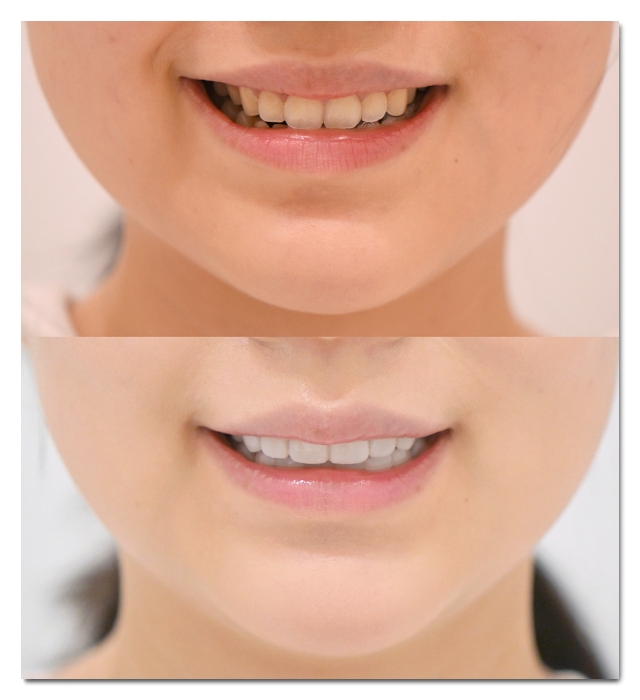
260527~260617
You may wonder why six teeth are sometimes treated. Many people have particularly yellow canine teeth.
As a result, the difference in color can become more noticeable when only the four front teeth are treated. To prevent this, we sometimes treat six teeth.
Of course, as in the case below, if the canines are not very visible in the smile line, we may treat the four front teeth and use whitening to match the color of the canines.
The important thing is not to increase the number of teeth unnecessarily, including teeth that are healthy.
Once a tooth has been altered, it can be difficult to return it to its original state. For this reason, I make it a principle to accurately determine the minimum number of teeth that truly need treatment.
As long as the symmetry is balanced, a natural result can be achieved even with fewer teeth treated.
Veneers may not be the answer
Veneers are not automatically the best solution for every concern involving the front teeth.
If the gap is very narrow or the tooth is only slightly chipped, the treatment may be completed with composite resin, which requires little to no alteration of the tooth.
Conversely, if the gap is wide, filling it only with veneers can make the teeth look excessively thick.
In such cases, it may look more natural to first reduce the gap with limited orthodontic treatment and then complete the treatment with minimal intervention.
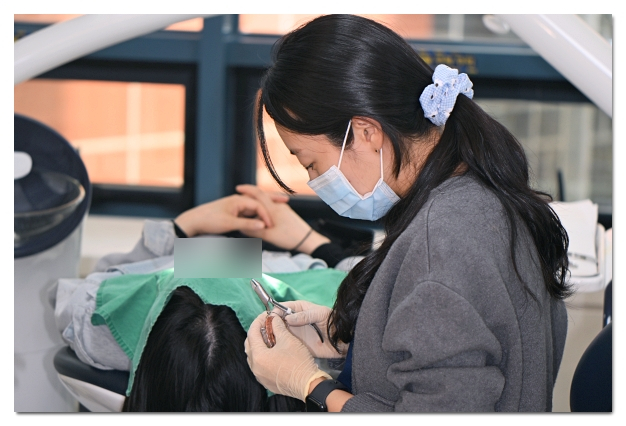 Treatment is carried out in collaboration with an orthodontist.
In particular, when the front teeth are small, as with peg-shaped teeth, excessive reduction can bring the treatment close to the nerve and increase the risk of requiring root canal treatment. A more conservative approach is therefore necessary.
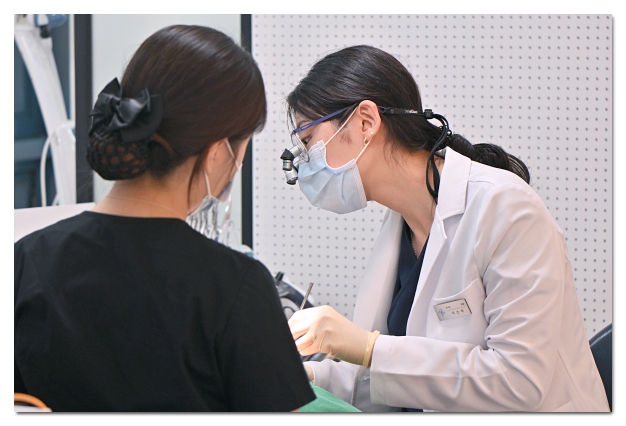
This is why I view orthodontic and restorative treatment as part of one overall process.
Rather than “grinding the teeth down to force them to fit,” we first consider creating space and then intervening as minimally as possible.
“Natural-looking color,” which is even more important for front teeth
In front-teeth veneers, it is no exaggeration to say that color accounts for half of the result.
Many people are most concerned that the veneers will look unnaturally white. Because the color can be difficult to change once the veneers are bonded, the process of deciding on the color beforehand is especially important.
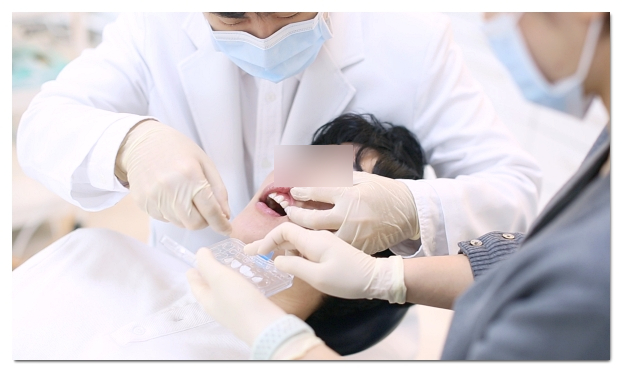
Before bonding the veneers permanently, we temporarily test two or three bonding-agent colors and let the patient check them directly in a mirror before making a decision.
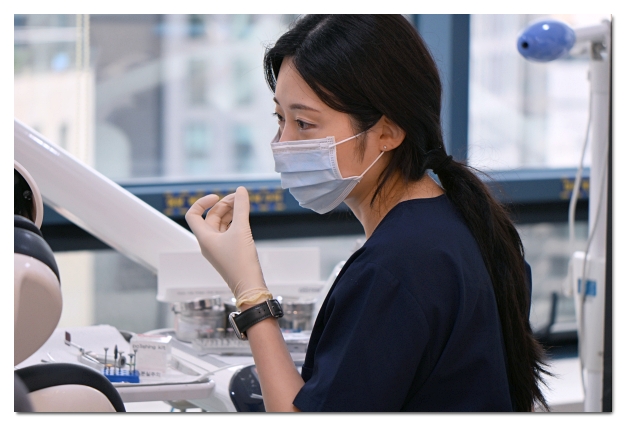
We also do not simply cover the teeth with a plain white color. Instead, we build up the veneers while preserving the individual tones of the teeth, such as their natural reddish or yellowish hues.
This helps create a tone that suits the face, without making only the front teeth look noticeably and artificially white.
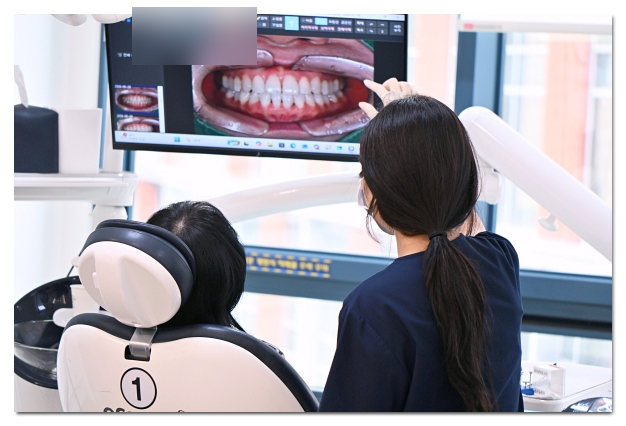
There are several ways to create natural-looking veneers.
To make machine-milled veneers look more natural, it can be helpful to include an additional stage in which they are refined by hand.
A technique in which the dental technician builds up layers one by one with a brush has the advantage of reproducing details, including a color suited to the patient’s own teeth.
I have described these points in the article below, so if you are considering veneers, please be sure to read it.
How should you evaluate the cost of front-teeth veneers?
The cost of front-teeth veneers varies depending on the number of teeth, the type of ceramic, the precision of the process used to match the color and shape, and the condition of the teeth.
As mentioned earlier, the number of teeth directly affects the cost. Therefore, accurately determining the necessary number of teeth is the most practical way to keep the cost reasonable.
Rather than comparing only the price per tooth, also check whether the price includes the color-matching process and follow-up care.
Even if the initial cost is low, repeated retreatment can increase the total cost.
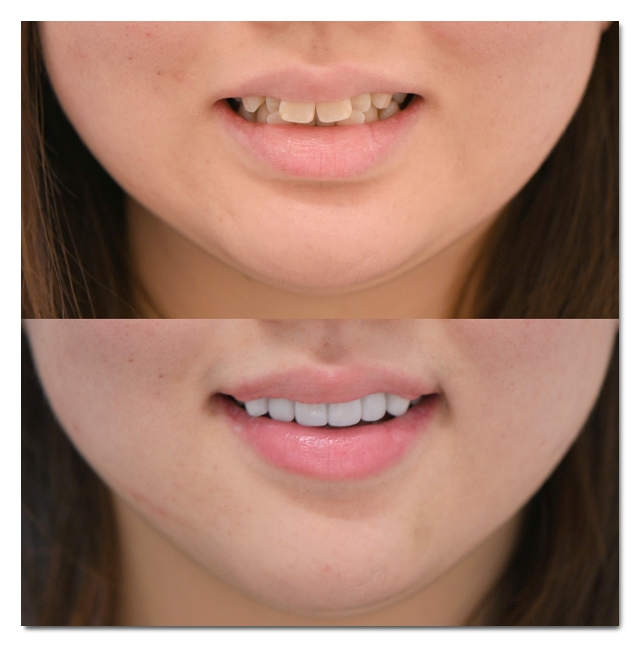
26.05.14~26.05.22
What to check when choosing a dental clinic
-
Whether the clinic first evaluates the condition of the front teeth, symmetry, and proportions rather than focusing on price
-
Whether it recommends only the necessary number of teeth instead of unnecessarily treating healthy teeth
-
Whether it explains alternatives such as composite resin and limited orthodontic treatment
-
Whether there is a process for matching the color in advance and allowing you to check it yourself
Frequently asked questions
Q. For spaced front teeth, which is better: composite resin or veneers?
If the gap is narrow, composite resin may be sufficient. If the gap is wide, or if you also want to change the color and shape, veneers may provide a natural result.
If the gap is very wide, limited orthodontic treatment may be considered first.
Q. Will they look unnaturally white?
If the color is matched in advance and decided on while preserving your natural tone, the front teeth can avoid looking artificially white compared with the rest of your smile.
Q. Does it hurt? How long do they last?
For most people, local anesthesia alone is sufficient, and the level of pain is generally not significant.
Lifespan varies considerably depending on care, but they typically last around 10 years on average. (Some people use them for nearly 20 years.)
The key to front-teeth veneers is not “more and whiter,” but “only as many as necessary, with a natural appearance.”
I hope you make your decision at a clinic where you can discuss together how many teeth are appropriate, whether veneers are truly the best option, and how the color should be chosen.
Thank you. This has been Park Jae-hyung.