Hello. We are Yonsei Jeongwon Dental Clinic in Daechi-dong.
Today, we would like to talk about what peri-implantitis is and how to care for implants so they can be used for a long time.

Peri-implantitis Yonsei Jeongwon Dental Clinic
As implant placement techniques have become more precise and costs have become lower, more and more people are receiving implant treatment in areas where teeth have been lost due to various causes such as periodontal disease or trauma. However, because implants have no blood vessels in the surrounding tissues, it is difficult to notice symptoms even if inflammation occurs, so oral hygiene must be managed more thoroughly than with natural teeth in order to use them for a long time. If you continue the poor oral hygiene habits you had when the tooth was lost, you may not be able to use the implant you worked hard to place for long, and you may have to remove it and place it again.
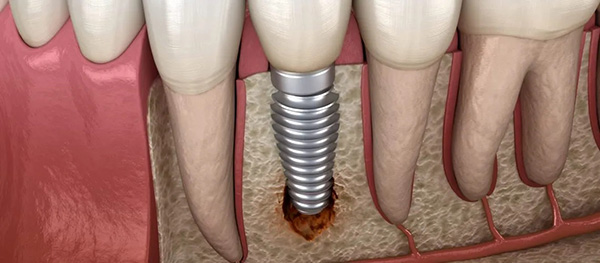
Implant Yonsei Jeongwon Dental Clinic
Although implants are stronger than natural teeth, their biological structure makes them less resistant to infection. The tissues around implants have less blood vessel distribution than the gum mucosa around natural teeth, so there are fewer cells that can respond to inflammation, and regeneration does not occur well. In addition, because there is no attachment tissue that tightly binds the gum and tooth, the mechanical barrier that defends against bacterial invasion is also weaker. Therefore, under the same conditions, it is important to remember that an implant may fail before a tooth does.
Peri-implantitis is inflammation of the gum tissue around an implant due to poor care after implant placement. Its symptoms are similar to periodontitis and may include bleeding when brushing, swollen or receding gums, and pain.
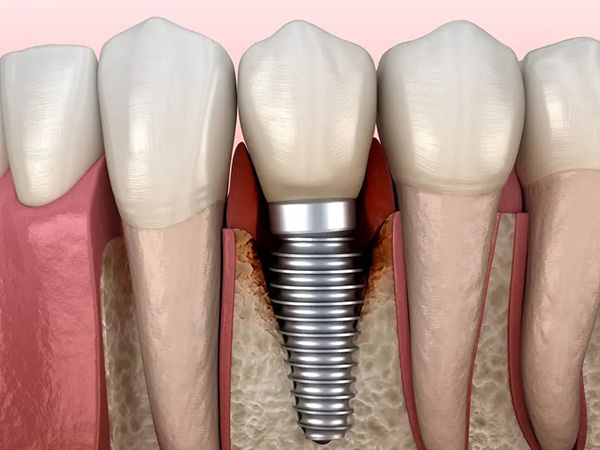
Peri-implantitis Yonsei Jeongwon Dental Clinic
However, if peri-implantitis is not treated properly, a situation may eventually arise in which the implant must be removed and placed again. The following are symptoms to watch for if peri-implantitis occurs.
-
Pus discharge from the gum around the implant
-
The gum around the implant recedes, exposing the screw
-
The implant becomes loose or wobbly
-
Swelling of the lymph nodes in the neck or armpit
If the implant is loose, and the looseness is due to a screw in the implant structure becoming loose, treatment can be done by retightening the screw. However, if the implant becomes loose because the connection between the implant and the alveolar bone has been destroyed due to peri-implantitis, the implant must be removed and placed again.
How is peri-implantitis treated?
There are various mechanical and chemical treatment methods, such as medication, oral hygiene improvement through brushing instruction, and the use of saline or lasers to disinfect the contaminated implant surface. If there is a lack of firm gum tissue around the implant, it may be a problem if brushing is not done well and oral hygiene cannot be kept clean. In such cases, a gum graft procedure can be performed to create firm gum tissue.
If properly cared for, implants can be used for a lifetime. To do this, even if there are no special symptoms, it is necessary to regularly check the implant condition once every six months. It is important to take X-rays to check whether there is any inflammation or any area where the jawbone has receded, and to receive treatments such as scaling.
What are the ways to prevent peri-implantitis?
- Regular dental checkups
Implants have no blood vessels in the surrounding tissues, so it is difficult to feel symptoms even if inflammation occurs. Because of this, many patients who have had implants placed neglect their care. In such cases, inflammation later develops around the implant, the implant becomes loose, and they return to the clinic.
To prevent this, it is important to keep your regular checkup appointments, every 3 to 6 months during the early period after implant placement, and then 1 to 2 times a year thereafter.
- Use of dental floss
To prevent plaque from building up in the tissues around the lower part of the implant, where a toothbrush cannot reach well, it is important to use dental floss so that no food debris remains. However, if you floss with excessive force around the implant tissue, gum damage or gingival recession may occur instead, so you should use floss correctly. So, what is the correct way to use floss?
| | | |
|---|
| After cutting about 30 cm of floss, wrap it around your fingers as shown in the picture and leave only about 10 cm between your hands. | Slowly move it downward along the tooth surface, sawing gently until it reaches between the teeth. | After passing between the teeth, make a C shape around the tooth and slowly insert it up to the curved part.★ Be careful not to damage the gums at this time. | Clean the tooth surface by moving the floss up and down.★ Clean both sides equally well. |
- Use of oral care aids
For people who normally only brush their teeth, it can be very difficult to start using floss and oral care aids all at once. This can be especially difficult for students, office workers, or people who are often active outside. Setting aside time once a day, or even a few days a week, to build the habit of using floss or auxiliary products little by little, and gradually increasing that time, is a way to keep implants healthy. Oral care aids come in many types, including water flossers, interdental brushes, mouthwash, power toothbrushes, and tongue cleaners.
So far, we have looked at how to care for implants. If implant care is neglected, it can lead to various side effects and complications even after the procedure, so I hope this post has been helpful in reminding you not to neglect care.
At Yonsei Jeongwon Dental Clinic, we have medical staff who always strive for the dental health of everyone, so if you visit us for regular checkups, we will do our best to help you maintain healthy teeth for a long time. Thank you.
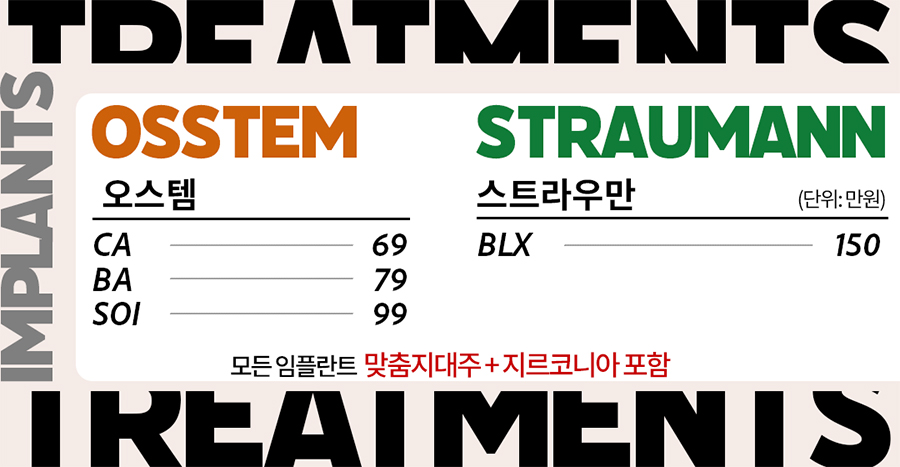
Daechi-dong Dental Clinic Yonsei Jeongwon Dental Clinic Implant Price
"The implant treatment at Gangnam Dental Clinic Yonsei Jeongwon Dental Clinic is led by Director An Ji-ho, a prosthodontics specialist from Seoul National University (currently an adjunct professor at Seoul National University), who has extensive clinical experience and countless cases of high-difficulty procedures. Therefore, we provide highly completed implant results and perform only strictly evidence-based treatment, such as not recommending unnecessary sinus lift procedures and not providing excessive treatment."
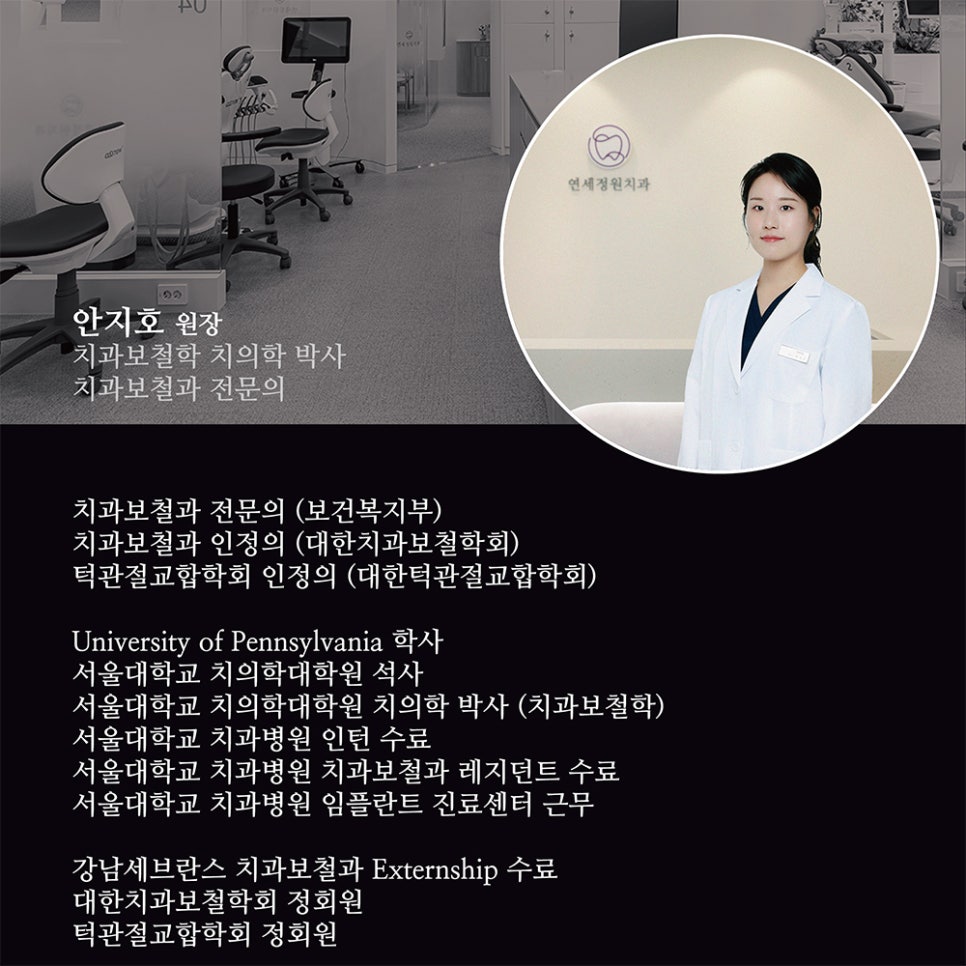
Yonsei Jeongwon Dental Clinic Adjunct Professor at Seoul National University, Director An Ji-ho
Yonsei Jeongwon Dental Clinic is conveniently close to Samseong Station, Hakyeoul Station, Daechi Station, and Hanti Station, making it very convenient for visits from Samseong-dong, Daechi-dong, Gaepo-dong, Dogok-dong, Irwon-dong, Yeoksam-dong, Jamsil, and other areas.
Building next to BMW at the intersection by Woosung Apartment in Daechi-dong
(opposite Starbucks/Samsung Store)
Daechi-dong Dental Clinic Yonsei Jeongwon Dental Clinic offers
convenient and free parking.
Consultation and inquiries: 02-501-2879