
Oral ulcers, Yonsei Jeongwon Dental Clinic
A small sore in the mouth that stings and feels uncomfortable is what we call an oral ulcer.
Most cases pass lightly, but if they recur often or the pain is severe, they can cause major inconvenience in daily life.
In this article, we’ll organize the causes of oral ulcers, ways to help them heal faster, treatment methods, and which type of clinic to visit.
Oral ulcers
✅ Causes of oral ulcers
Oral ulcers occur due to a combination of several factors.
-
Nutritional deficiencies: lack of iron, vitamin B12, or folic acid
-
Stress and fatigue: increased frequency due to weakened immunity
-
Oral trauma: irritation from braces, dentures, or sharp teeth
-
Hormonal changes: in women, related to the menstrual cycle
-
Toothpaste ingredients: toothpaste containing SLS (surfactants) can irritate the mucous membrane
-
Systemic diseases: Behçet’s disease, Crohn’s disease, celiac disease, HIV, and others
👉 Knowing the exact cause is the first step in preventing recurrence.
Types of oral ulcers
✅ Main types of oral ulcers
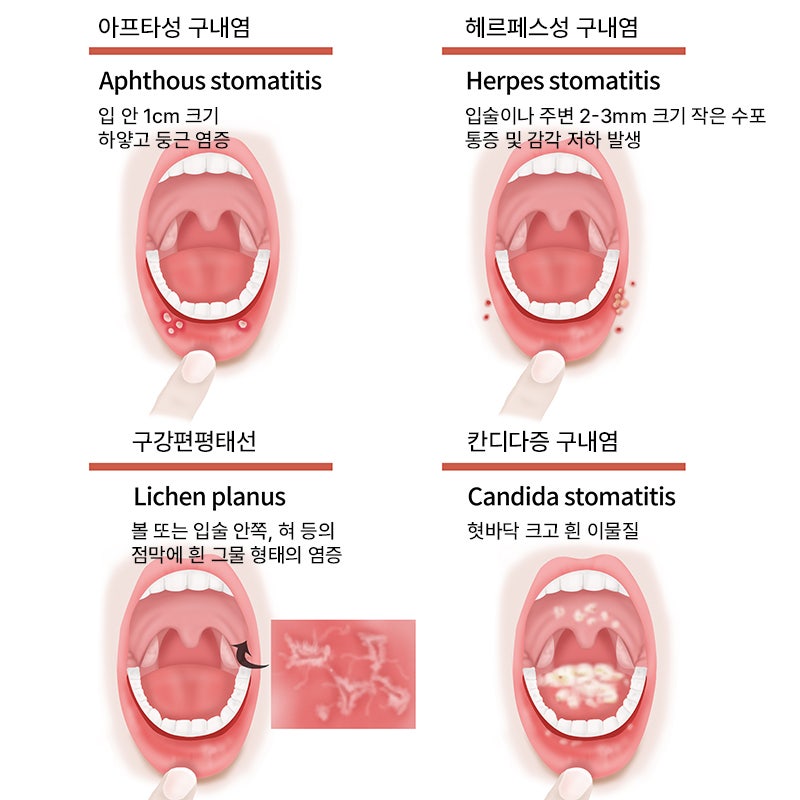
Aphthous stomatitis (Aphthous Stomatitis, canker sore)
-
The most common type of oral ulcer; most cases of what people commonly call “a sore mouth” fall into this category
-
Causes: immune response, nutritional deficiency, stress, hormonal changes, genetic factors
-
Classified into three types depending on form
Minor aphthae: less than 1 cm in diameter, heals naturally within 1 to 2 weeks
-
Major aphthae: larger than 1 cm, deep, takes several weeks or more to heal, may leave scars
-
Herpetiform aphthae: dozens of small ulcers appear in clusters; they look similar to herpes, but the cause is different
Traumatic ulcer
· Occurs when the inside of the mouth is bitten or the mucous membrane is damaged by a toothbrush, orthodontic appliance, or dentures
· Usually improves within 1 to 2 weeks after the cause is removed
Oral candidiasis (Oral Candidiasis, Thrush)
· Occurs due to a fungal infection (Candida)
· A white film forms on the tongue and mucous membrane, and removing it causes pain and bleeding
· Common in people with weakened immunity (infants, older adults, long-term antibiotic users, patients with diabetes)
Herpetic stomatitis
· Caused by infection with the herpes simplex virus (HSV)
· Common in young children, especially, and accompanied by fever, swollen gums, and blister-like ulcers
Denture stomatitis
· Occurs due to long-term denture use, poor hygiene, or ill-fitting prosthetics
· The mucous membrane that contacts the denture becomes inflamed and red
✅ How to help oral ulcers heal faster (home care)
Oral ulcers usually heal on their own within 1 to 2 weeks, but daily care can help speed recovery.
-
Saltwater gargles: help reduce inflammation through antibacterial action
-
Baking soda gargles: neutralize an acidic environment
-
Honey and aloe gel: protect the wound and help soothe it
-
Avoid irritating foods: spicy foods, coffee, alcohol, and sour fruits
-
Get enough sleep and stay hydrated: support immune recovery
✅ Oral ulcer treatment (medication and professional care)
-
Topical treatments: steroid ointments or gels to reduce inflammation
-
Pain relievers/anti-inflammatory drugs: for pain relief
-
Oral rinses: products containing hyaluronic acid or antibacterial ingredients
-
In severe cases: immunosuppressants or laser treatment may be considered
👉 If oral ulcers recur frequently or the ulcers are large, professional treatment is necessary.
✅ How to prevent oral ulcers
-
Maintain a balanced diet (supplement iron, vitamin B, and folic acid)
-
Manage stress and keep a regular lifestyle
-
Use a soft toothbrush and an SLS-free toothpaste
-
Remove irritants through regular dental checkups
✅ Oral ulcers: which clinic should you visit?
Many people wonder which department to visit when they seek medical care for oral ulcers.
- Otorhinolaryngology (ENT)
When pain extends to the throat, tonsils, or larynx
When lesions appear not only in the mouth but also on the skin, eyes, or genitals
When recurrence is frequent or tests related to nutrition or immunity are needed
- Dentistry (oral medicine / oral and maxillofacial surgery)
Can address diseases of the oral mucosa and causes of irritation from braces or prosthetics
👉 For general oral ulcers, it is most efficient to receive care at an ENT clinic.
✅ When should you see a doctor?
-
When there is no improvement for more than 2 weeks
-
When systemic symptoms such as fever or swollen lymph nodes are present
-
When the ulcers are too large or keep recurring
-
When you are undergoing cancer treatment or have an immune-related disease
📝 Closing
Oral ulcers are a common condition, but when they recur, they can significantly reduce quality of life.
Identifying the cause, managing daily habits, and seeking professional treatment when needed are all important.
👉 In particular, try practicing ways to help oral ulcers heal faster, and if symptoms persist for a long time, don’t hesitate to visit a clinic.