Orthodontic Treatment for Underbite | 연세정원치과
"My child's jaw seems to stick out a little. They're still young, so it should be okay, right?"
This is one of the questions parents ask most frequently in the consultation room.
Because the shape of a child's jaw continues to change during growth, parents are often told to wait and observe for a while. However, not every underbite naturally improves as a child grows. In fact, in many cases, the underjaw continues to grow during the growth period, making the condition more pronounced than it was initially.
Therefore, what is important is not simply whether treatment should begin now, but checking in advance which direction the child's jaw is growing in.
Today, we will look at signs that may appear in children with an underbite and when it is advisable to seek an orthodontic consultation.
Underbite: What Exactly Is It?
An underbite is medically referred to as mandibular prognathism. It describes a condition in which the lower jaw protrudes farther forward than the upper jaw. Typical features include the tip of the lower jaw appearing farther forward than the upper lip when viewed from the side, or the front teeth not meeting normally, with the lower front teeth positioned in front of the upper front teeth—known as an anterior crossbite.
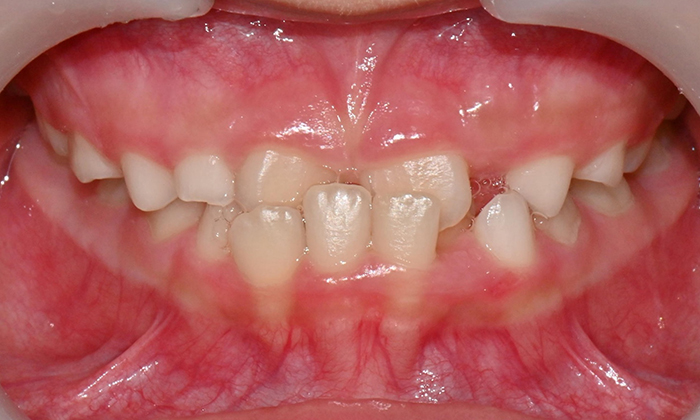
Anterior crossbite
Like a recessed chin, an underbite is strongly influenced by genetics. If a parent or grandparent has an underbite, the likelihood of it appearing in the child tends to be higher than with a recessed chin. However, even when genetics are not involved, acquired factors that can affect growth may also play a role, such as the habit of pushing the lower jaw forward or chewing only on one side.
Does Your Child Show Any of These Signs?
These are behaviors and features frequently observed in children with an underbite. Use them as a reference when observing your child in everyday life.
They have unusual difficulty pronouncing certain sounds When the lower jaw protrudes forward, the upper and lower teeth may not meet normally, causing sibilant sounds such as “s,” “j,” and “ch” to sound slurred or inaccurate. If you have been told at kindergarten or school that your child's pronunciation is unclear, it is a good idea to check the condition of the jaw's growth as well.
They have difficulty biting through food with their front teeth With a normal bite, the upper teeth slightly overlap the lower teeth, allowing a child to bite through food naturally with the front teeth. However, when an underbite is present, the front teeth may not meet properly, making foods that are typically bitten with the front teeth—such as apples or gimbap—particularly difficult to eat.
They react sensitively to side-profile photos or teasing Even by the early elementary-school years, children begin to recognize differences in one another's appearance. If your child becomes withdrawn after being told that their “jaw sticks out,” or tries to cover their jaw when taking photos, this may be a sign that they are already experiencing psychological stress rather than simply having concerns about their appearance.
They have a habit of pushing their lower jaw forward Some children unconsciously develop a habit of pushing their lower jaw forward. This habit may worsen an underbite, so if it is observed repeatedly, it is advisable to seek a professional evaluation.
Why Can “It Will Get Better as They Grow” Be Especially Risky?
An underbite is not simply a matter of the jaw appearing slightly farther forward. The most important point is that the difference in growth between the upper and lower jaws may gradually widen as the child grows. An underbite that was not particularly noticeable in early childhood may become increasingly apparent with growth. This is because growth of the upper jaw slows relatively early, while the lower jaw continues to grow through puberty. As time passes, the difference in growth between the upper and lower jaws may increase, so regular monitoring during the growth period is important.
In addition, if an anterior crossbite—where the front teeth bite in reverse—continues for a long time, the child may develop a fixed habit of pushing the lower jaw forward while chewing food or closing the mouth. When this functional issue is added, it may also affect normal jaw growth.
Therefore, if an underbite is suspected, it is important to examine the direction of jaw growth during the elementary-school years, before growth of the lower jaw becomes more pronounced. If this period is missed and the jawbones themselves need to be corrected in adulthood, the scope and duration of treatment may become considerably greater.
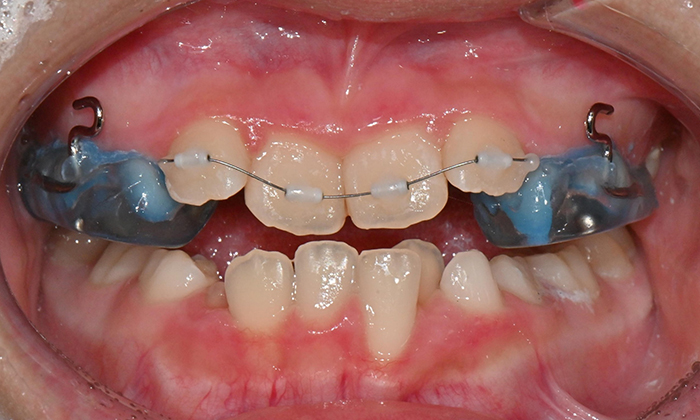
MTA orthodontic treatment for the front teeth and facemask treatment
The front teeth were aligned with MTA partial orthodontic treatment in three months, and facemask treatment can improve the growth discrepancy between the upper and lower jaws.
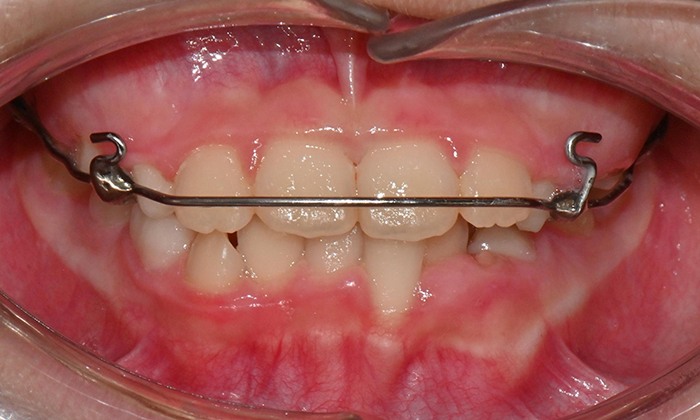
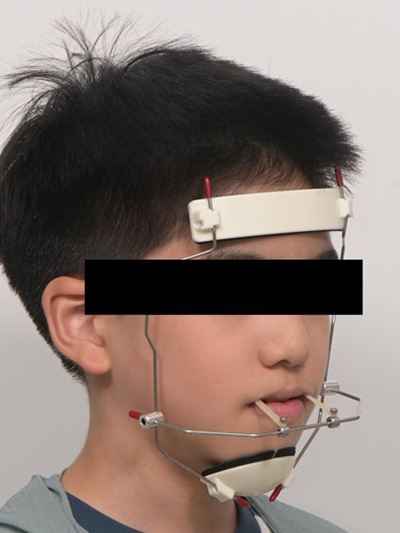
Facemask treatment
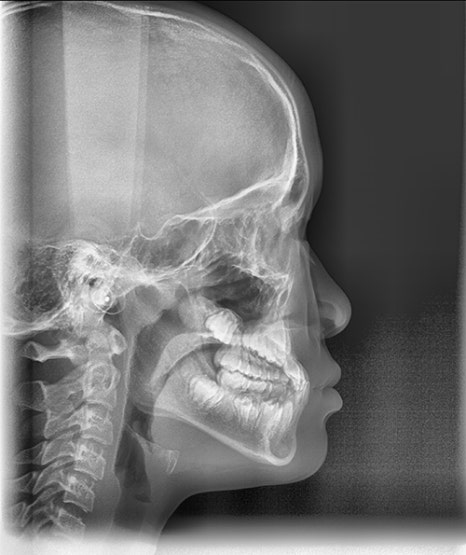
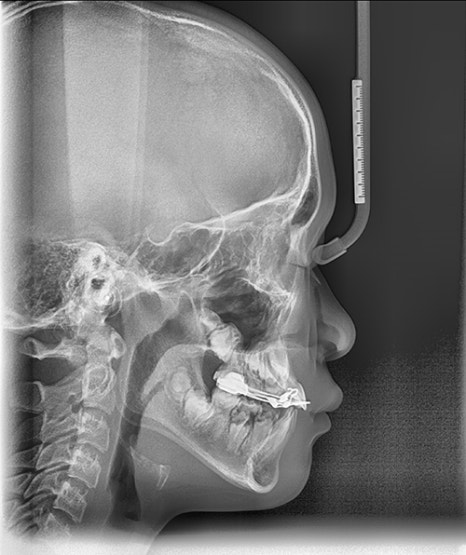
Changes in lower-jaw position before and after facemask treatment
If Any of These Apply, Consider a Consultation Now
-
The lower jaw appears to protrude farther forward than the upper lip in side-profile views.
-
Sibilant sounds remain unclear.
-
The child has difficulty biting through food with the front teeth.
-
You are concerned about a genetic possibility because someone in the family has an underbite.
-
The jaw has recently begun to appear more protruded.
The rate and direction in which an underbite changes during growth vary considerably from child to child. Therefore, the decision to “wait and observe a little longer” should also be based on an accurate examination. During the growth period, the outcome can vary significantly depending on when treatment is started. If you are concerned about your child's jaw growth, simply checking the direction of growth before the symptoms become more severe can be a great help in establishing a future treatment plan.
If you are choosing a dental clinic for orthodontic treatment, we recommend having treatment performed by a doctor with extensive experience.
Dr. Yoon Jeong-won, the director of 연세정원치과, has devoted more than 16 years to orthodontic care and has treated more than 6,000 diverse orthodontic cases to date. Dr. Yoon is an orthodontist and Doctor of Dental Medicine from Yonsei University Dental Hospital and also serves as an adjunct professor. As the clinic director, Dr. Yoon is always present at the clinic, and patients can receive treatment with peace of mind without concerns about a change in the treating doctor midway through treatment. There are also advantages such as more flexible appointment scheduling and better response to emergencies.
With extensive orthodontic treatment experience, Dr. Yoon has also treated many complex cases that were diagnosed at other dental clinics as requiring underbite surgery but could be treated with nonsurgical orthodontics. Those seeking orthodontic treatment can therefore receive appropriate care for a variety of conditions.
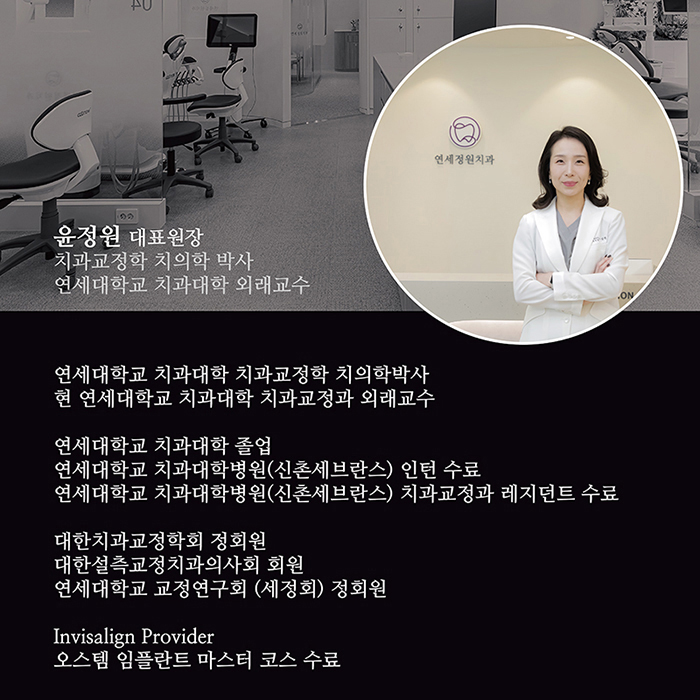
Underbite orthodontic treatment - 연세정원치과
In addition, Dr. An Ji-ho, a prosthodontist responsible for general dental care, is available at the clinic. This means patients do not have to visit another dental clinic for treatments that may be needed during orthodontic care, such as extractions or cavity treatment; all treatment can be provided at 연세정원치과. As a result, everything required for orthodontic treatment can be handled in one place, with comprehensive dental care provided.
The clinic also has a systematic seven-step diagnostic system using the latest equipment, including panoramic X-rays, low-radiation 3D CBCT, iTero Lumina 3D intraoral scanning, before-and-after simulations through Morpheus 3D imaging, and VUNO Med®-BoneAge™ for determining the timing of orthodontic treatment according to a child's amount of growth through growth-plate assessment.
Furthermore, 연세정원치과 sterilizes the instruments used during treatment and uses sterile treatment water through the Novacare system, so there is no need to worry about the water used during treatment. The clinic maintains comfortable indoor air through an efficient air-circulation system using a total heat exchanger and a safe air-purification system using dual filters, including HEPA and pre-filters.
If you are considering orthodontic treatment, please do not put it off any longer and feel free to contact 연세정원치과 for a detailed consultation. The cost of orthodontic treatment at 연세정원치과 includes the detailed diagnostic fee and monthly fees, among other costs (excluding retainers), so you do not need to worry about additional charges. In addition, because general dental services are available at the same clinic, all treatments needed during orthodontic care, including extractions and cavity treatment, can be provided in one place. The clinic also offers installment payments to reduce the burden of paying a large sum at once.
When you visit 연세정원치과, an orthodontic dental clinic in Daechi-dong, you can accurately assess your current condition through a simple oral examination at no additional cost. You can also receive explanations of various orthodontic appliances during your orthodontic consultation, so please feel free to contact us or visit the clinic for a consultation.
During the consultation, you can compare various appliances, including Clarity, Clippy-C, and Invisalign, in person and receive detailed explanations of their advantages and disadvantages. We encourage you to call or visit the clinic for a consultation without any pressure.
연세정원치과 is conveniently located near Samseong Station, Hakyeoul Station, Daechi Station, and Hanti Station, making it easy to visit from Samseong-dong, Daechi-dong, Gaepo-dong, Dogok-dong, Irwon-dong, Yeoksam-dong, and Jamsil.
The building next to BMW at the intersection by Woosung Apartments in Daechi-dong
(across from Starbucks/Samsung Store)
Daechi-dong dental clinic 연세정원치과
has convenient and free parking.
Consultation and inquiries: 02-501-2879
#GrowthPeriodOrthodontics #Invisalign #Facemask #Crossbite #연세정원치과 #DaechiDongOrthodonticClinic #GangnamOrthodonticClinic #OrthodonticTreatment #UnderbiteOrthodontics #RecessedChinOrthodontics #NonExtractionOrthodontics #ProtrudingMouthOrthodontics #FacialAsymmetryOrthodontics #NonsurgicalProtrudingMouthOrthodontics #NonsurgicalFacialAsymmetryOrthodontics #ProtrudingMouthBeforeAndAfter #RecessedChinProtrudingMouthOrthodontics #FacialChangesAfterOrthodonticTreatment