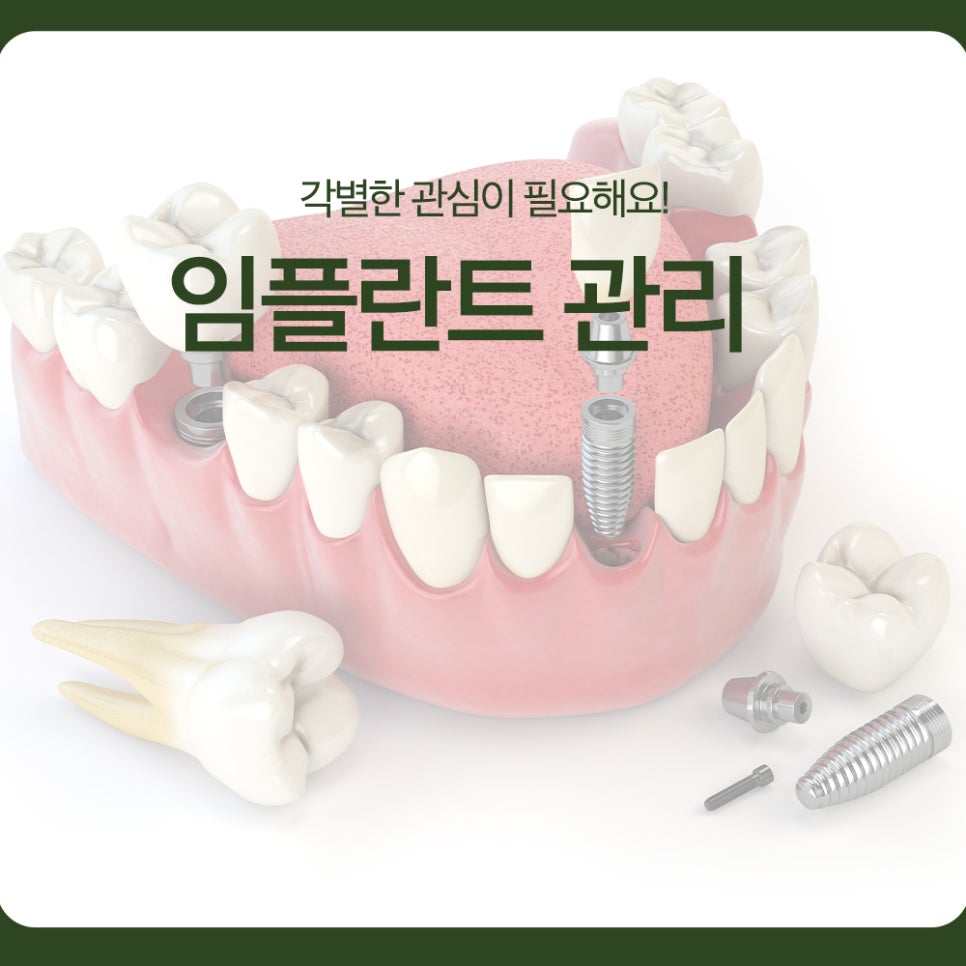
If you lose a tooth,
you can consider dentures, bridges,
or implant treatment
to restore function and appearance.
Among these, implants can reproduce the function and aesthetics
of natural teeth,
which is why they have become a
treatment option preferred by many people.
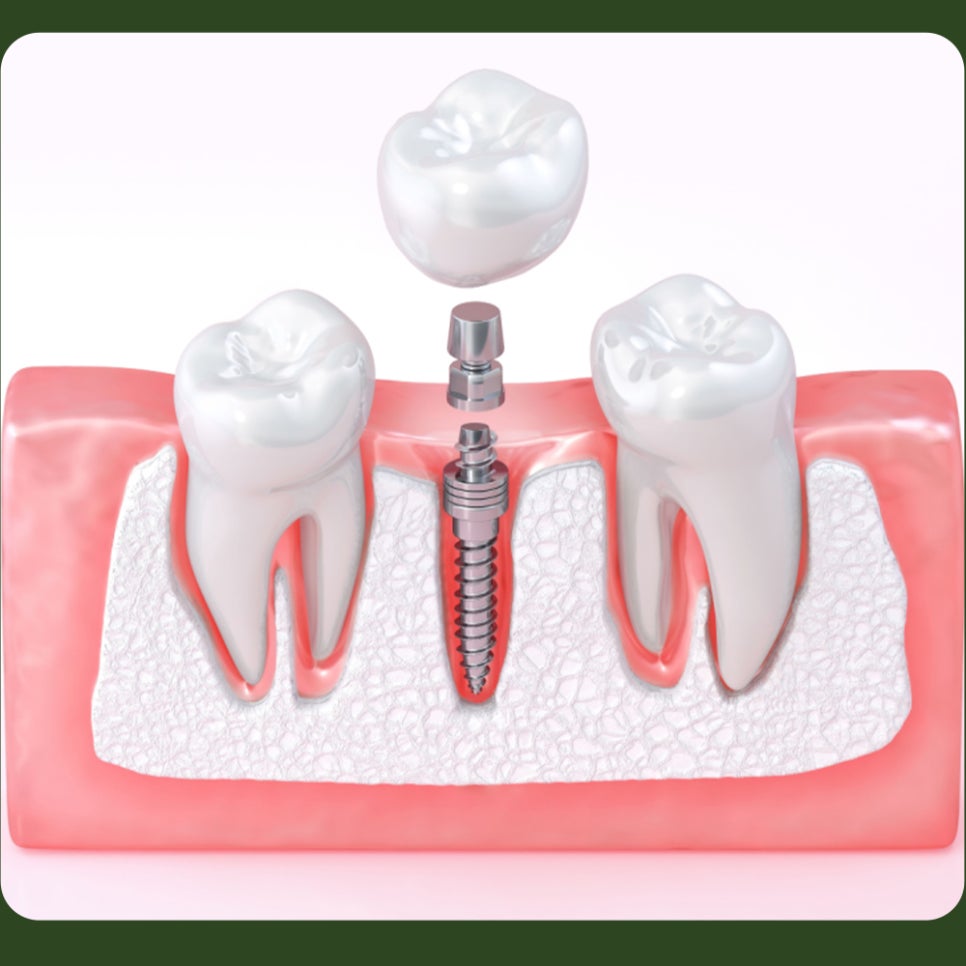
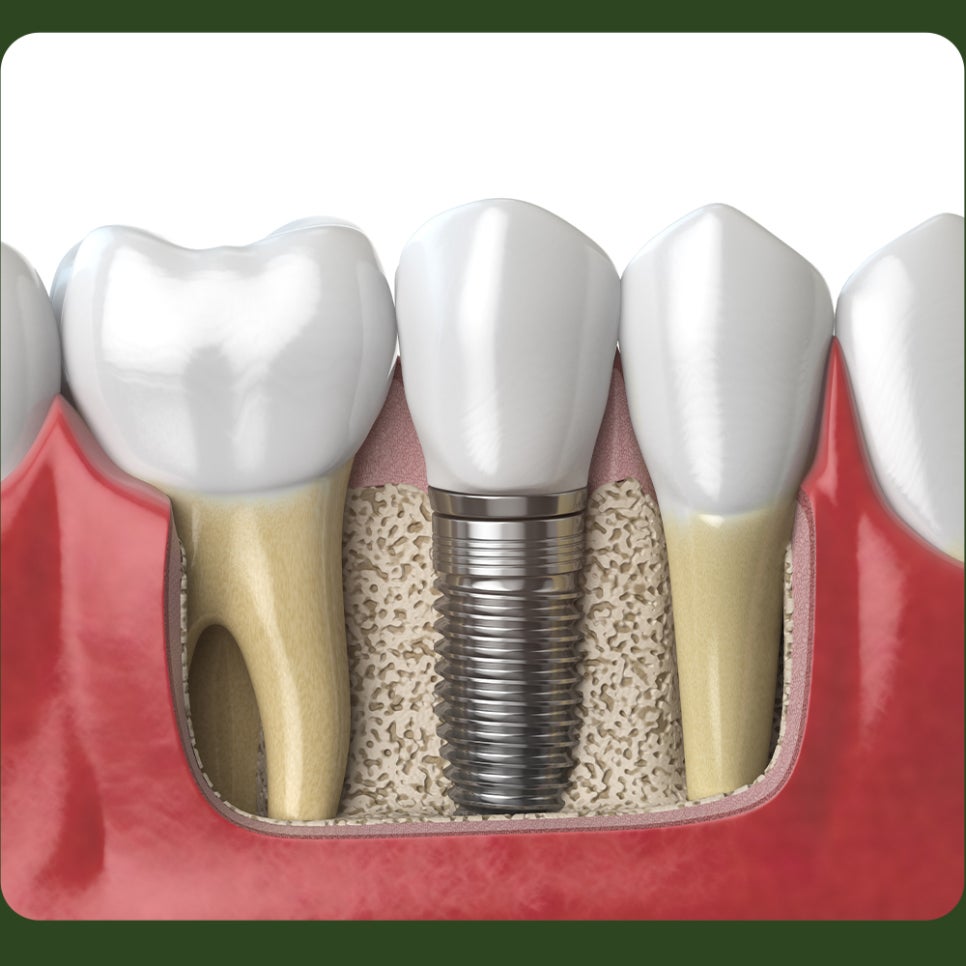
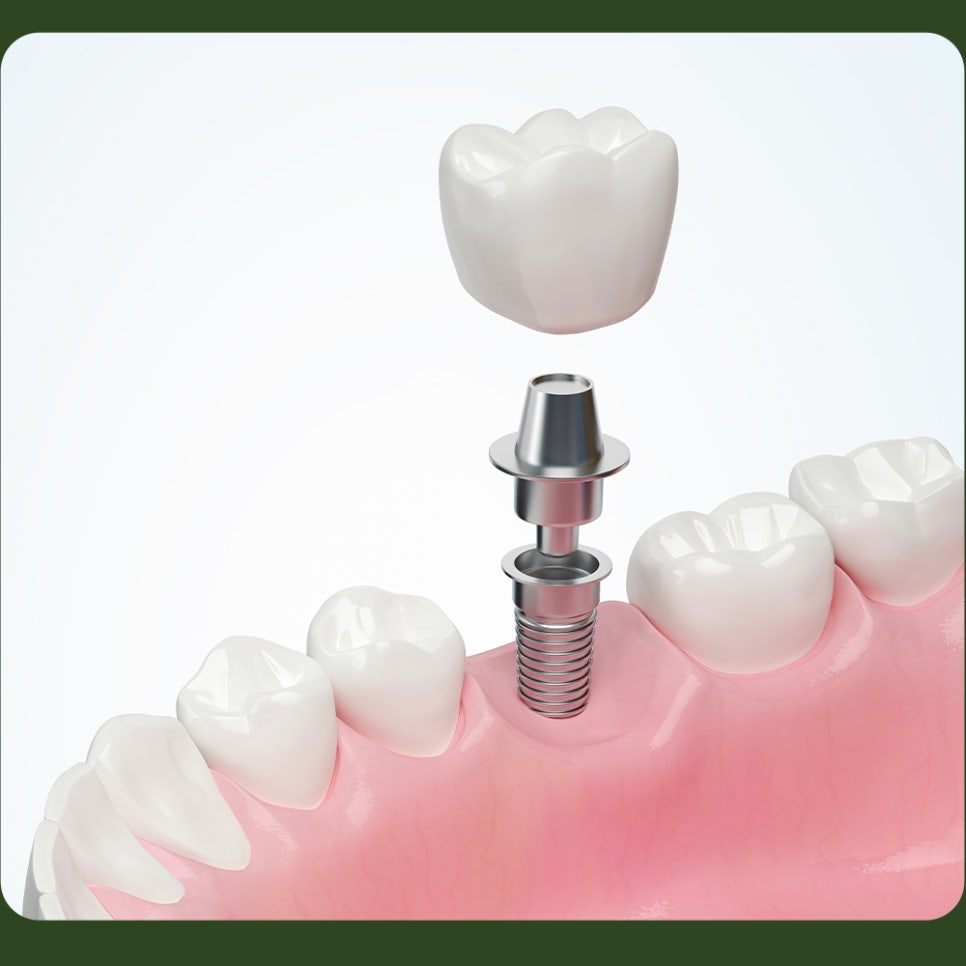
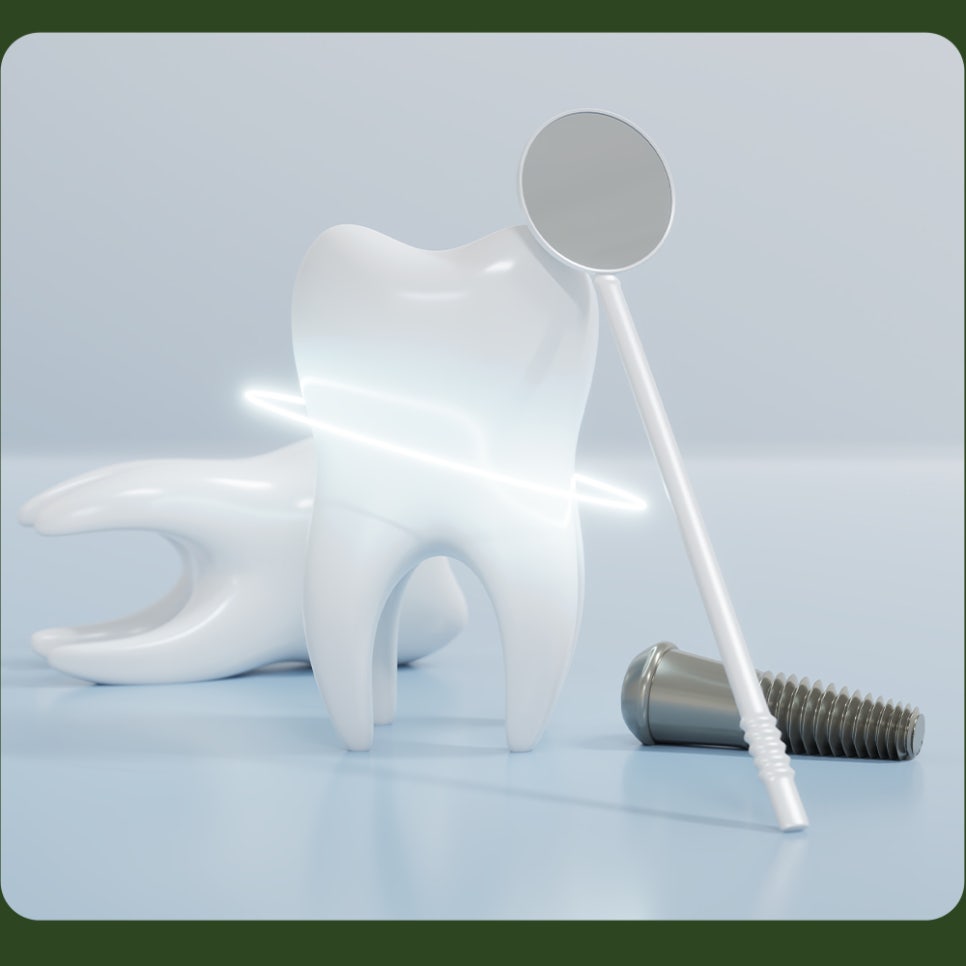
An implant uses an artificially made
artificial tooth root called a fixture,
which is fixed to the jawbone
and serves as the root of a natural tooth.
Then a prosthetic crown is placed on top
to complete the tooth’s shape and function.
If properly cared for,
they also have the advantage of being usable stably
for a long period of time.
Implant care
However, even if the implant is successfully placed
and well integrated with the bone,
problems can arise if post-treatment care is neglected.
Therefore, consistent and careful care
after the procedure is essential.
In particular, if proper brushing is not done
and food debris and plaque accumulate
around the implant,
an inflammatory condition called peri-implantitis
can occur.
This condition affects the bone
that supports the implant and can lead to loosening or loss,
so thorough oral hygiene management is necessary.
So, what care methods help maintain implants
in a healthy condition for a long time?
Let’s take a look together from now on :)
First, after meals, just as you care for natural teeth,
it is essential to brush implants thoroughly as well.
Because basic brushing alone
cannot provide complete care,
it is necessary to use oral care aids such as
interdental brushes and water flossers together
to keep even hard-to-reach areas of the mouth clean.
And even after implant treatment,
many people continue their previous eating habits.
Although implants perform chewing function
like natural teeth,
they do not have the ‘periodontal ligament’ that absorbs impact,
so extra caution is needed.
In particular, if you frequently eat hard or chewy foods,
the screws that fix the implant may loosen
or the prosthetic may be damaged,
so it is best to avoid such foods as much as possible
or reduce how often you eat them.
Also, it is very important to check through regular dental visits
whether there are any issues with the implant
and the surrounding tissues.
Unlike natural teeth,
implants do not have nerves or a periodontal ligament,
so pain or discomfort may be felt later.
Because of this, even if a problem occurs,
it can be difficult to notice early,
and the timing for treatment may be missed.
To prevent this situation,
regular checkups are needed
to detect even small changes early
and respond quickly when necessary.
This has been an explanation of implant care methods.
To keep implants healthy for a long time,
please give special attention to clean oral care
and regular checkups :) 💖
Seoul Obeu Dental Hospital
4th and 5th floors, 196 Baekjegobun-ro, Songpa-gu, Seoul