Seoul Ob Dental Hospital Jamsil
Seoul, Songpa-gu, 196 Baekjegobun-ro, 4th and 5th floors

Hello!
This is Seoul Ob Dental Hospital!
Today, we’d like to talk about root canal treatment~
One of the things you often hear at the dental clinic is
“This tooth needs root canal treatment.”
Many people find root canal treatment scary,
or even misunderstand it as a treatment that involves pulling the tooth.
In fact, root canal treatment (endodontic treatment)
is an important process for
saving the tooth as much as possible without extracting it.
Today, we’ll explain what root canal treatment is,
how the procedure is performed,
and how to care for the tooth after treatment,
step by step.
What is root canal treatment?
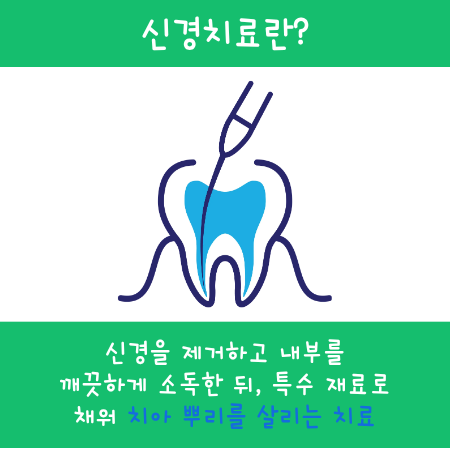
Inside a tooth is a space called the pulp,
through which the nerves and blood vessels pass.
When tooth decay becomes deep and damages the nerve,
or when the nerve dies due to trauma, pain becomes severe
and inflammation develops.
At this point, the treatment that removes the nerve,
thoroughly disinfects the inside,
and then fills it with a special material to save the tooth root
is root canal treatment.
In other words, root canal treatment is a “tooth-saving treatment”
that helps a tooth be used for as long as possible
without extracting it.
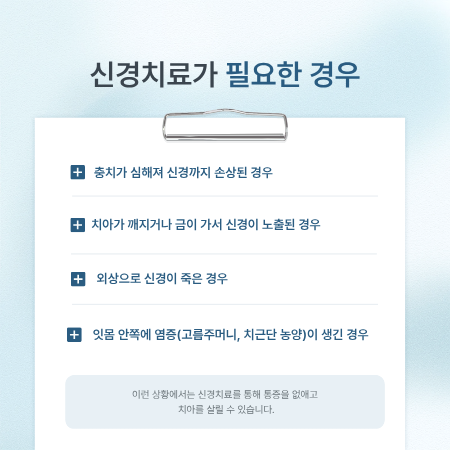
When root canal treatment is needed
-
When severe decay has damaged the nerve
-
When a tooth is broken or cracked and the nerve is exposed
-
When the nerve has died due to trauma
-
When inflammation (a pus sac, apical abscess) has developed inside the gum
In these situations, root canal treatment can relieve pain
and save the tooth.
Root canal treatment process
Root canal treatment usually takes 2 to 3 visits,
though the number of sessions may vary depending on the case.
- Accessing the inside of the tooth
A drill is used to reach the damaged nerve area.
- Removing the nerve and disinfecting
The infected nerve tissue is removed,
and the inside is thoroughly cleaned and disinfected.
- Shaping the root canal
The passage where the nerve used to run (the root canal) is prepared
to prevent reinfection.
- Filling the root canal
The empty space is filled with a special material
to block outside bacteria from entering.
- Prosthetic treatment
Because a tooth that has undergone root canal treatment becomes weaker,
it is often protected with crown treatment.
Benefits of root canal treatment
Saving the tooth and being able to use it for a long time without extracting it
Relieving pain and inflammation so daily life becomes more comfortable
It may involve less cost and time burden than extraction followed by an implant or bridge
Precautions after root canal treatment
Just because root canal treatment is finished does not mean everything is over.
Ongoing care afterward is very important.
Problems that can occur if root canal treatment is delayed
If the timing for root canal treatment is missed, the inflammation can spread to the tooth
root and surrounding bone, making it difficult to avoid extraction.
Therefore, if your tooth hurts severely
or feels sensitive, it is important to visit a dental clinic early
and get examined.
Root canal treatment cost

Many people are curious about the cost of root canal treatment,
and root canal treatment itself is covered by insurance.
However, the prosthetic treatment that follows, such as a crown,
can vary in cost depending on the material or method used.
Therefore, the most reliable way to find out the exact cost is to have a consultation
after the patient’s condition has been examined.

Root canal treatment is the last chance to save a tooth
without extracting it, and it is an important treatment.
If a tooth has been damaged by decay or trauma,
don’t hesitate—visit a dental clinic early
and get a diagnosis.
If proper treatment and care continue,
you can keep your teeth for a long time.