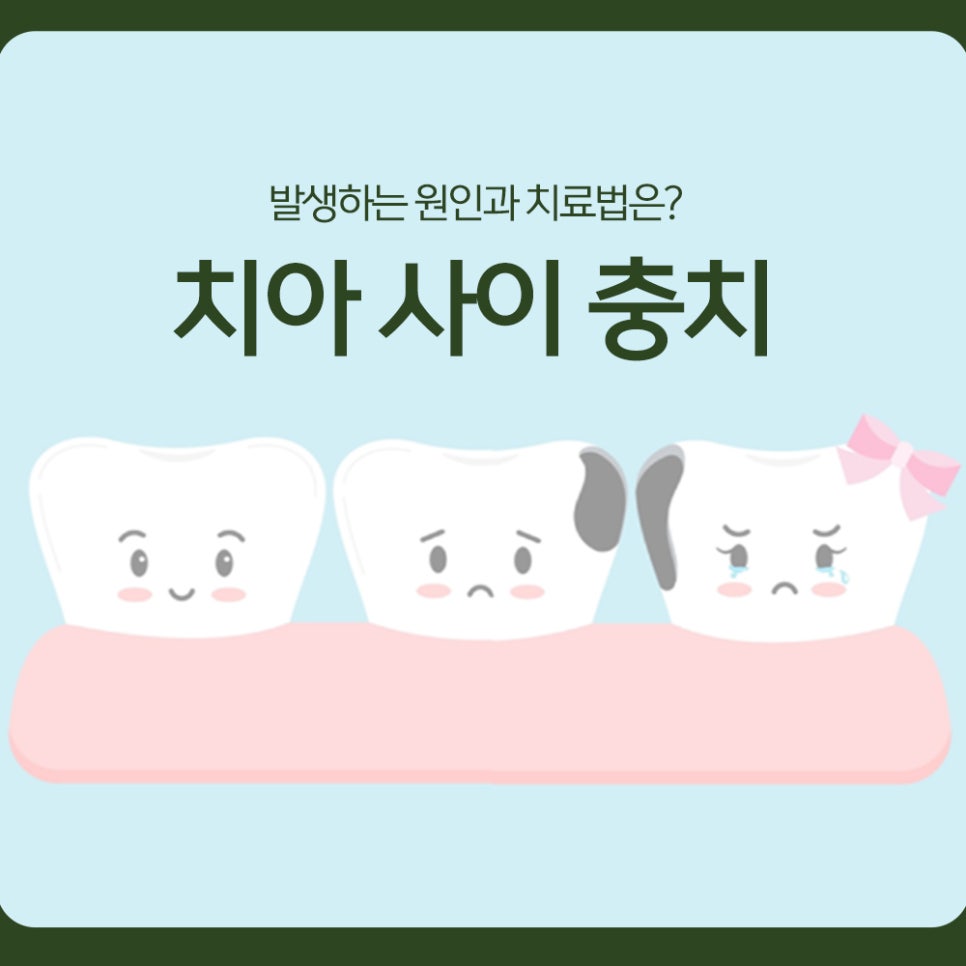
A cavity (dental caries) is a condition that occurs when bacteria living in the mouth and food debris left behind combine to cause disease.
It mainly appears on the chewing surfaces of teeth where food is bitten and chewed,
or in the spaces between teeth,
that is, on the interproximal surfaces.
Interproximal cavities
refer to cavities that form on the contact area between one tooth and another.
Because this area is hard for a toothbrush to reach,
food debris tends to remain easily,
making cavities more likely to develop.
Also, not only one tooth,
but both teeth touching each other are at higher risk of being damaged at the same time.

But cavities that form between teeth are often difficult to see from the outside.
So by the time someone visits the dentist because the cavity is visible
or because symptoms such as pain appear,
it is highly likely that the cavity has already progressed significantly
and the area of damage has become wider.
✅ So when a cavity develops between teeth,
that is, an interproximal cavity, how should it be treated? 👀
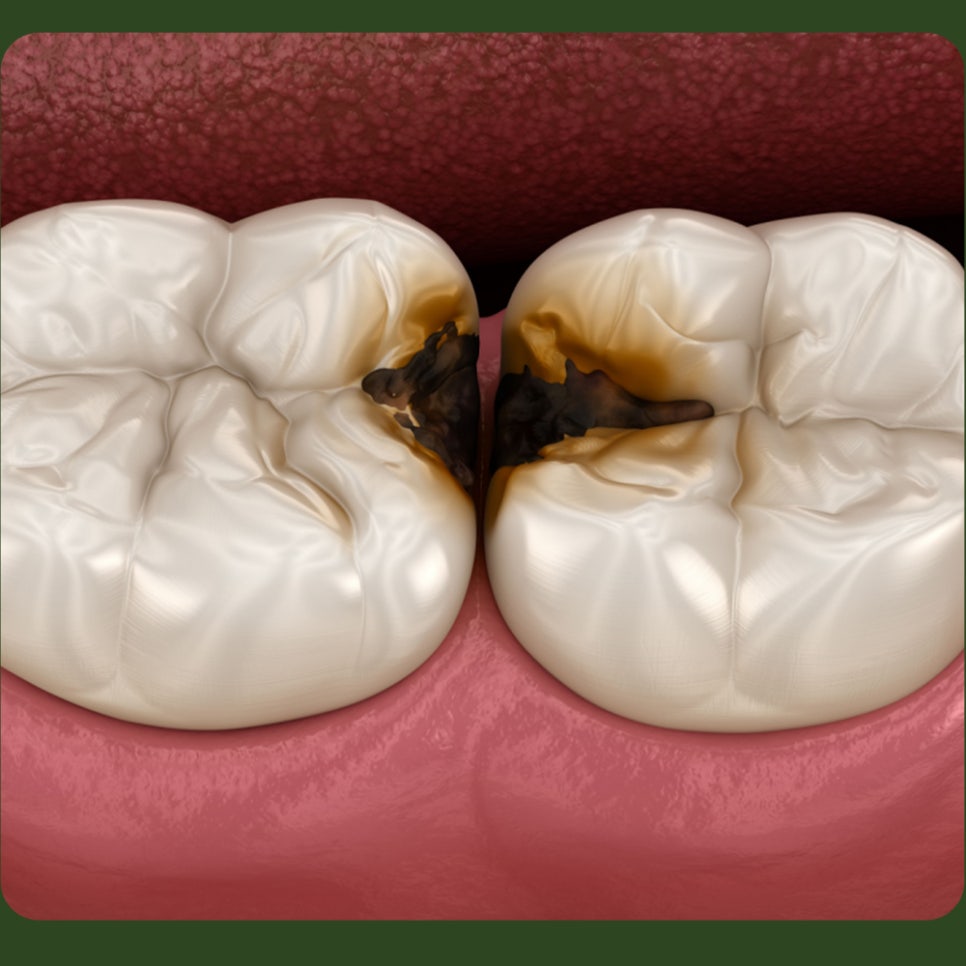
If the interproximal cavity
is limited to the outer surface of the tooth,
a restorative treatment is performed by carefully removing the decayed area
and filling it with resin, a dental material.
This process is relatively simple,
and when the damaged area is small,
it can effectively protect the tooth.
However, cavities between teeth may look small from the outside,
but when removed, the actual cavity is often much larger.
Because of the location,
a simple resin restoration is often not enough,
so in many cases an inlay treatment is chosen.
Inlay treatment involves removing the decay, taking an impression,
fabricating a custom prosthesis,
and attaching it.
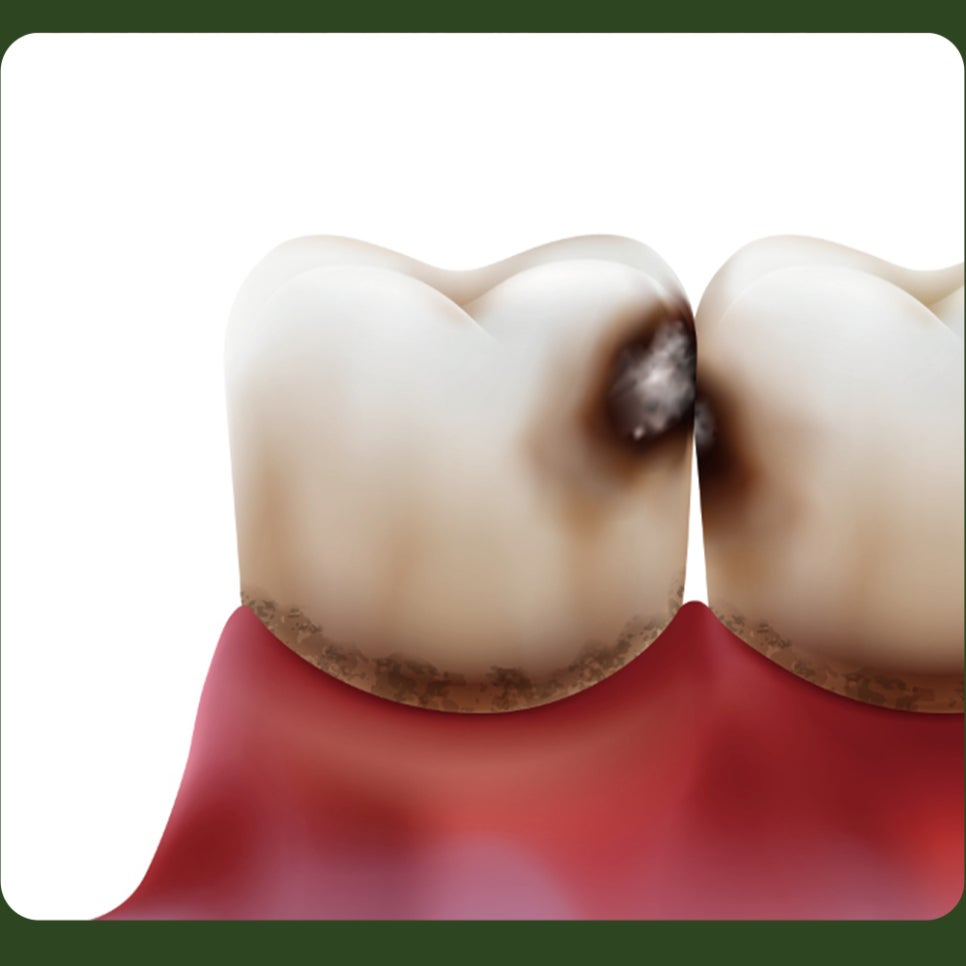
If the cavity has progressed deep into the tooth structure,
root canal treatment may be necessary.
The interproximal area has thinner tooth structure than other areas
and is close to the nerve,
so cavities can progress quickly,
which is why root canal treatment is often performed.
Interproximal cavities can spread damage rapidly if the timing of treatment is missed,
so early detection
and prompt treatment are very important!
We’ve looked at cavities between teeth together like this :)
The earlier a cavity is found,
the smaller the treatment area becomes,
and the less damage there is to the tooth,
so regular dental checkups are essential to detect cavities early
and begin treatment as soon as possible.
What matters even more, above all else,
is maintaining thorough oral care in daily life
so that cavities do not develop in the first place.
In particular, interproximal areas are places that a toothbrush cannot easily reach,
so please actively use oral hygiene products such as dental floss or interdental brushes
to carefully remove food debris and plaque.
Please pay special attention to oral care,
and keep your teeth healthy for a long time! 💖
Seoul Ob Dental Hospital Jamsil
4th and 5th Floors, 196 Baekjegobun-ro, Songpa-gu, Seoul