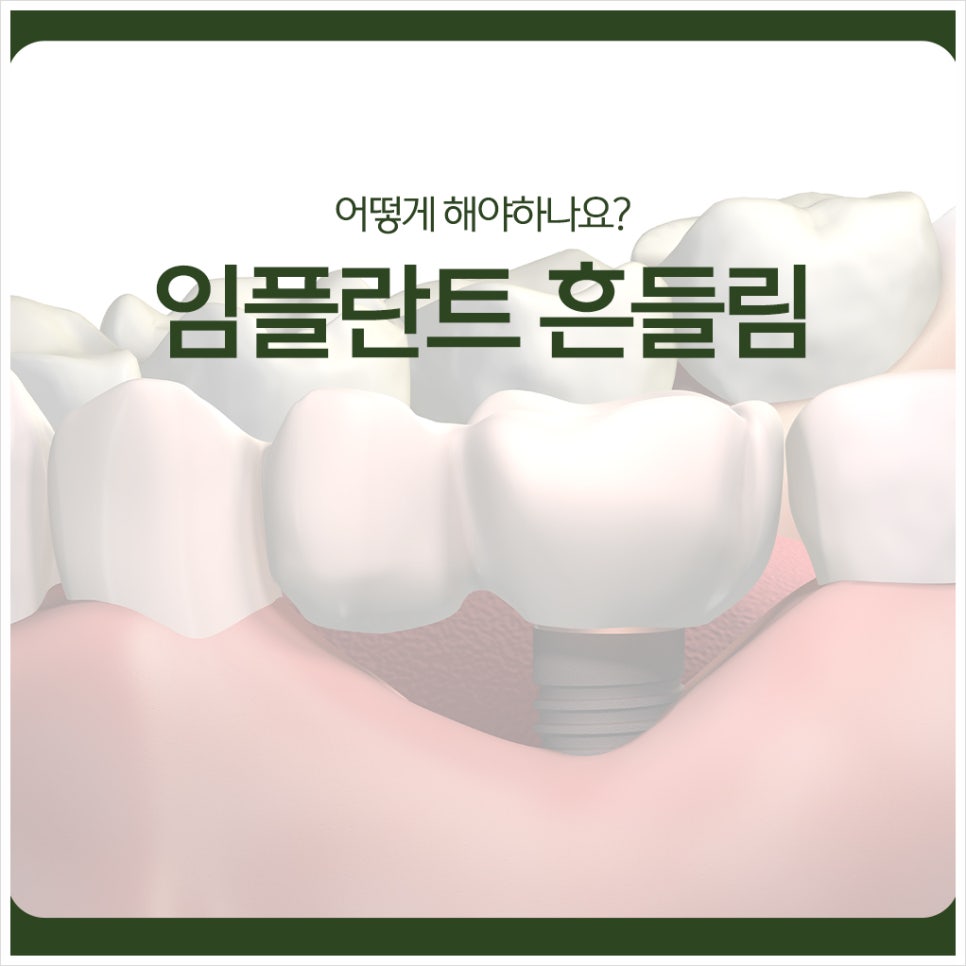
When a tooth is lost,
it is necessary to replace it as soon as possible with prosthetic treatment such as dentures, a bridge, or an implant.
Among these, implants are
considered the most effective restorative treatment because they can reproduce both
function similar to natural teeth
and aesthetic aspects.
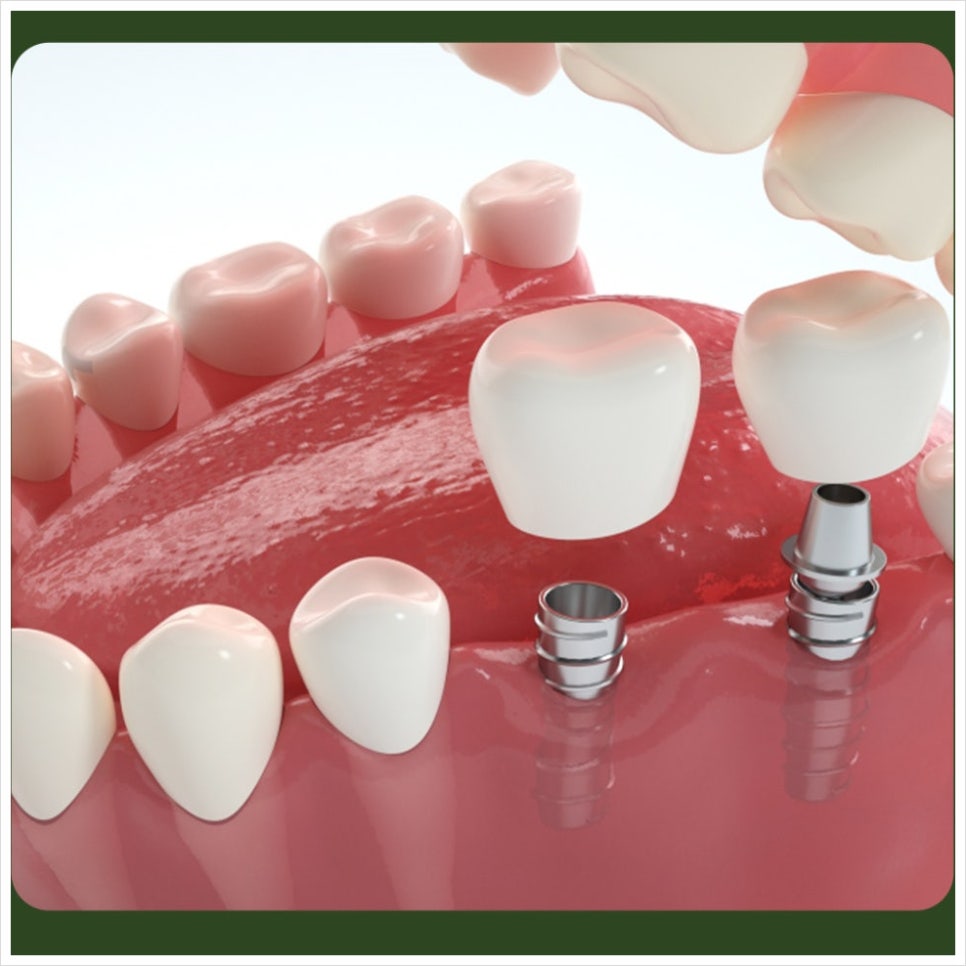
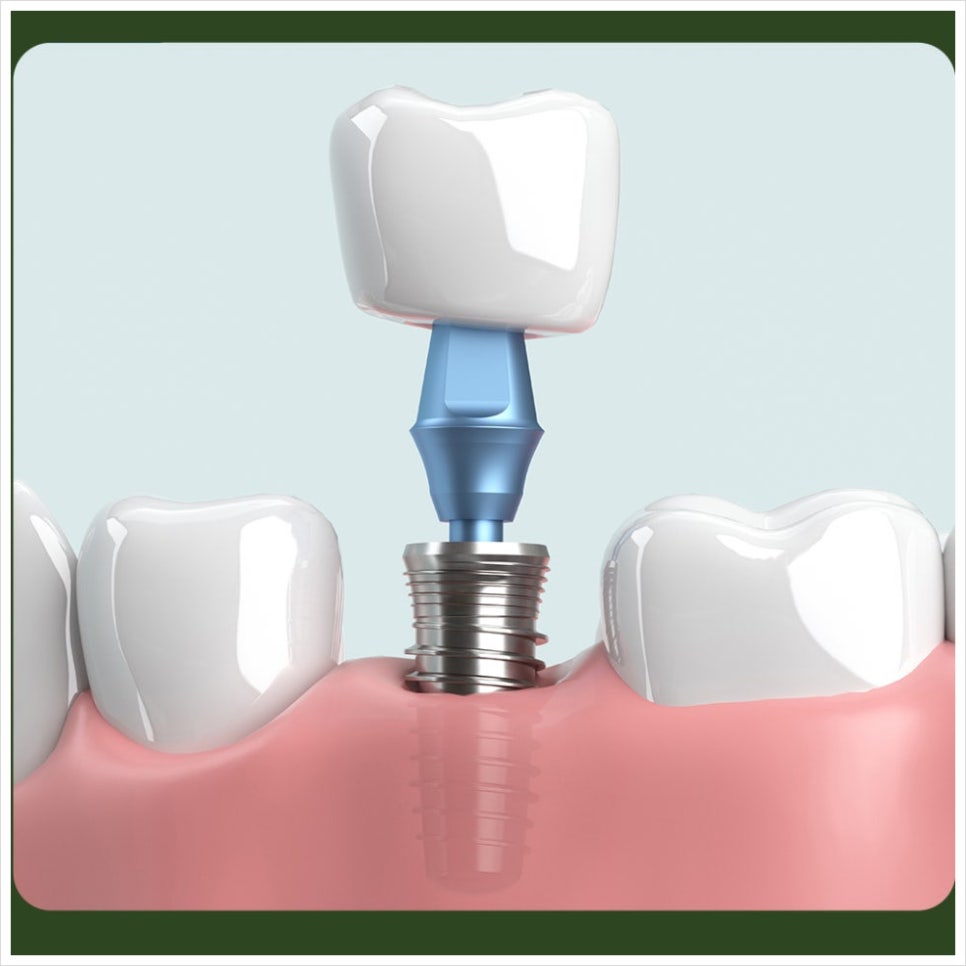
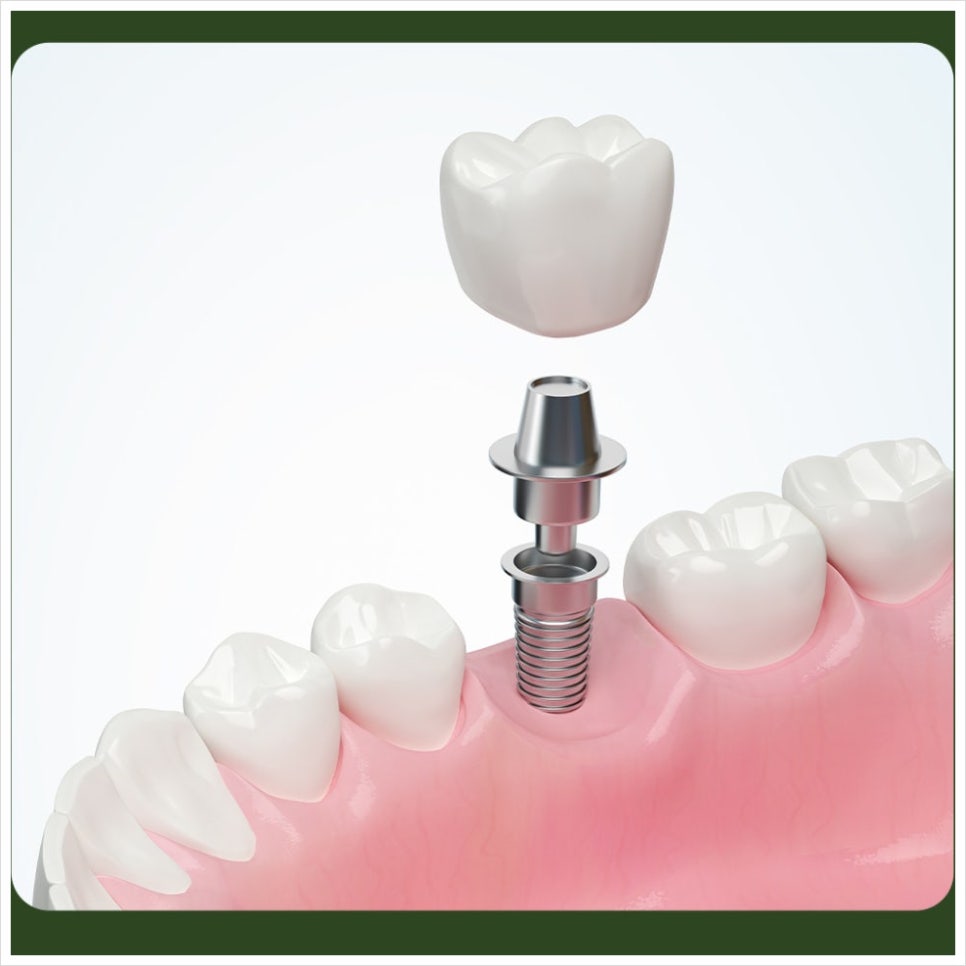
An implant is broadly made up of
three components.
🦷 An artificial root (fixture) that serves as the tooth root,
🦷 A crown (prosthesis) that serves as the tooth crown,
🦷 And the abutment that connects the two parts
An implant structured this way
can be used for a long time as a semi-permanent treatment,
as long as it is placed properly
and maintained consistently.
However, sometimes implants
can feel loose. 😥
So what causes this kind of looseness,
and what kind of care is needed
to prevent it in advance?
Let’s take a closer look now! 🦷
🔶 Why does it become loose?
The success of an implant depends above all on
how well the jawbone and the artificial root
bond together.
Usually after an implant is placed,
it takes about 3 months, though this varies by person,
for the jawbone to firmly surround the artificial root
and settle into a stable position.
If the bone and the implant properly integrate during this period,
it can be said to have been placed stably.
However, if osseointegration does not occur properly during recovery,
the implant may not be fixed to the bone,
which can cause looseness.
Especially in the early period after placement,
it is very important to strictly follow the precautions
provided by the dental clinic.
Eating hard foods,
poor oral hygiene,
or smoking and drinking alcohol can cause problems,
so for a stable result,
you must be sure to follow the precautions.
Even if the implant initially settles stably
and bonds well with the bone,
looseness can develop over time
if post-treatment care is not properly performed.
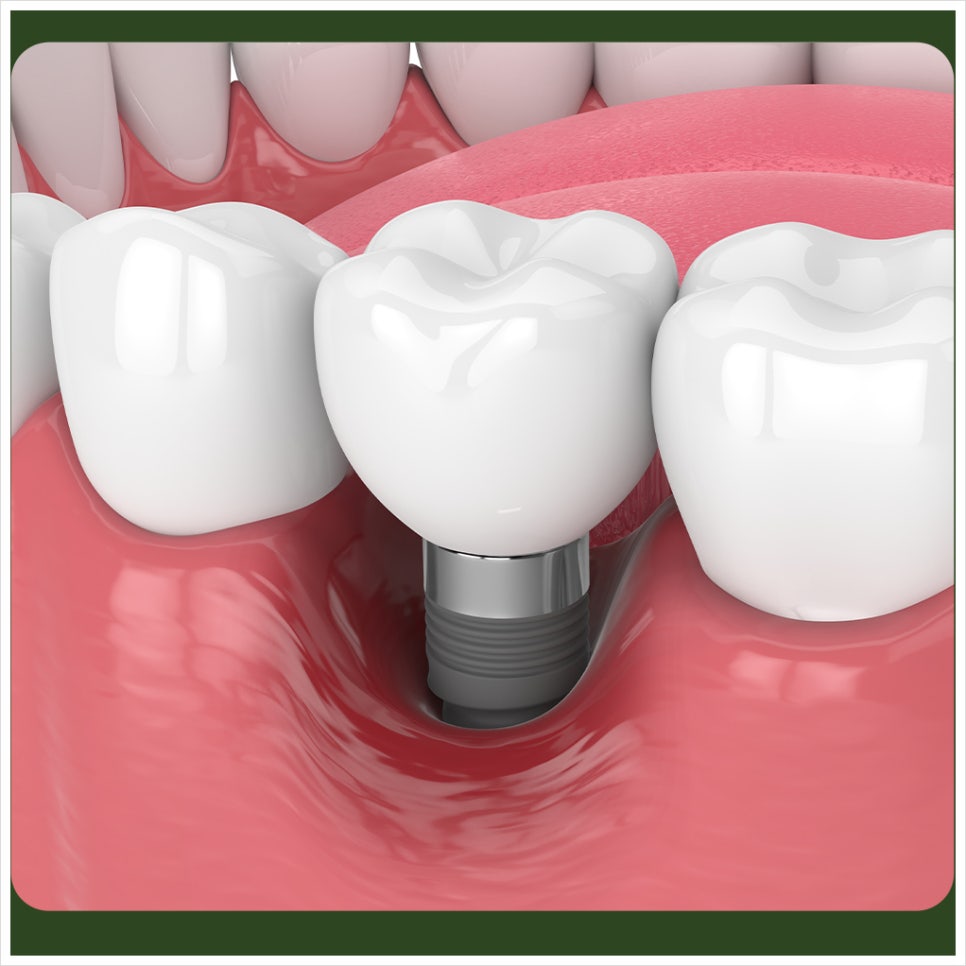
In particular, if brushing is insufficient,
or if plaque and food debris around the implant
are not properly removed,
peri-implantitis can occur.
If this inflammation progresses, the jawbone can deteriorate,
which may lead to implant looseness.
Therefore, thorough daily oral hygiene is essential,
and visiting the dental clinic regularly
for checkups and scaling
is a good way to use the implant for a long time.
In addition, the chewing force generated when we eat
is stronger than you might think.
If this force is continuously transmitted to the implant,
there is also the possibility over time
that the screws inside the implant
may gradually loosen.
In such cases, maintenance is needed through regular dental checkups
to retighten the screws.
Also, to prevent the screws from loosening easily,
it is better to avoid overly hard foods on the side with the implant
and to develop the habit of chewing evenly on both sides.
🔶 If you feel looseness?
Please visit the dental clinic right away!
Today, we looked at the causes of implant looseness
and how to prevent it.
Above all, preventing looseness before it happens
is the most important thing,
and
if you already feel looseness,
you should not delay and should visit the dental clinic
to receive a clear diagnosis of the cause
and prompt treatment.
And even if you do not feel any particular discomfort,
you must continue regular checkups and care consistently
in order to keep the implant healthy for a long time.
Please remember this and put it into practice! 💛
Seoul of Dental Hospital Jamsil
4th and 5th floors, 196 Baekjegobun-ro, Songpa-gu, Seoul