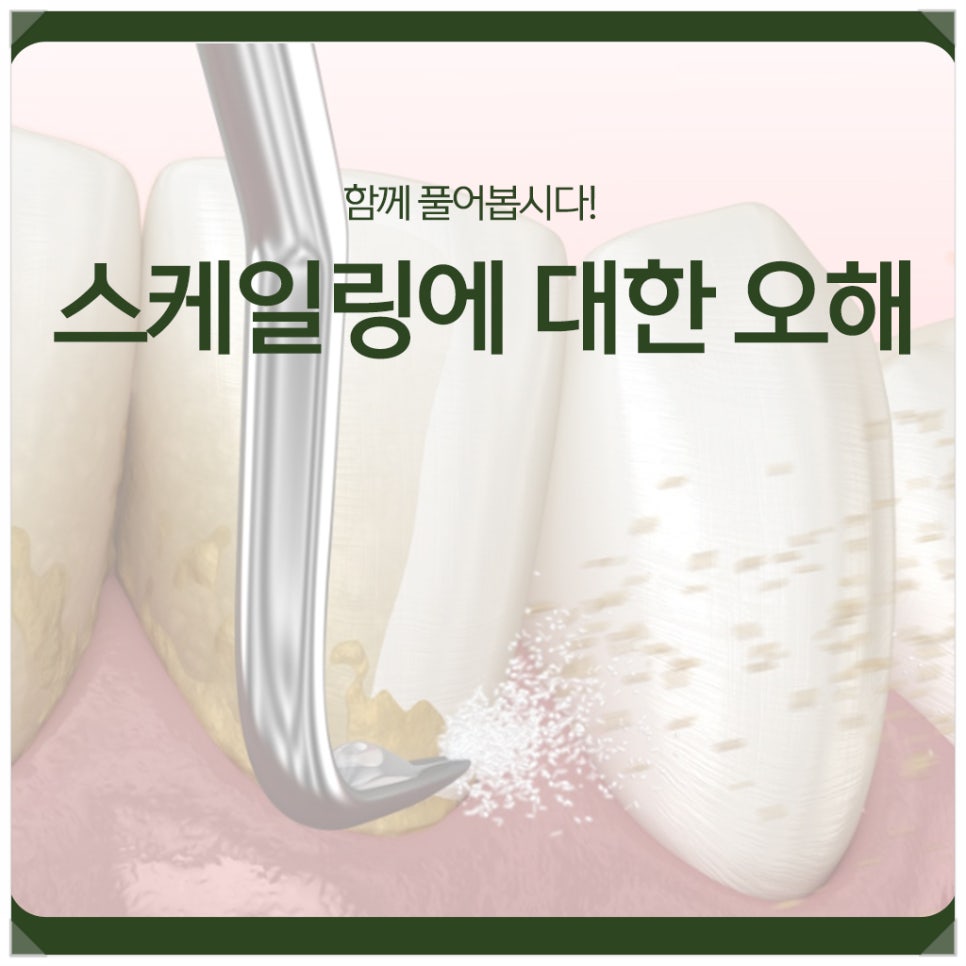
Food debris and plaque left in the mouth
will, over time,
harden and turn into tartar.
Tartar that has become as hard as stone,
hiding between the teeth or along the gumline,
is difficult to remove with self-care alone,
so it must be removed through scaling treatment.
If it is left untreated,
the condition can progress beyond swollen and bleeding gums to periodontal disease,
and the jawbone around the gums may gradually dissolve.
If treatment is not received in time,
there is also a risk of losing healthy teeth,
so tartar should be removed as soon as possible.
🧡 Then what exactly is scaling treatment? 🧡
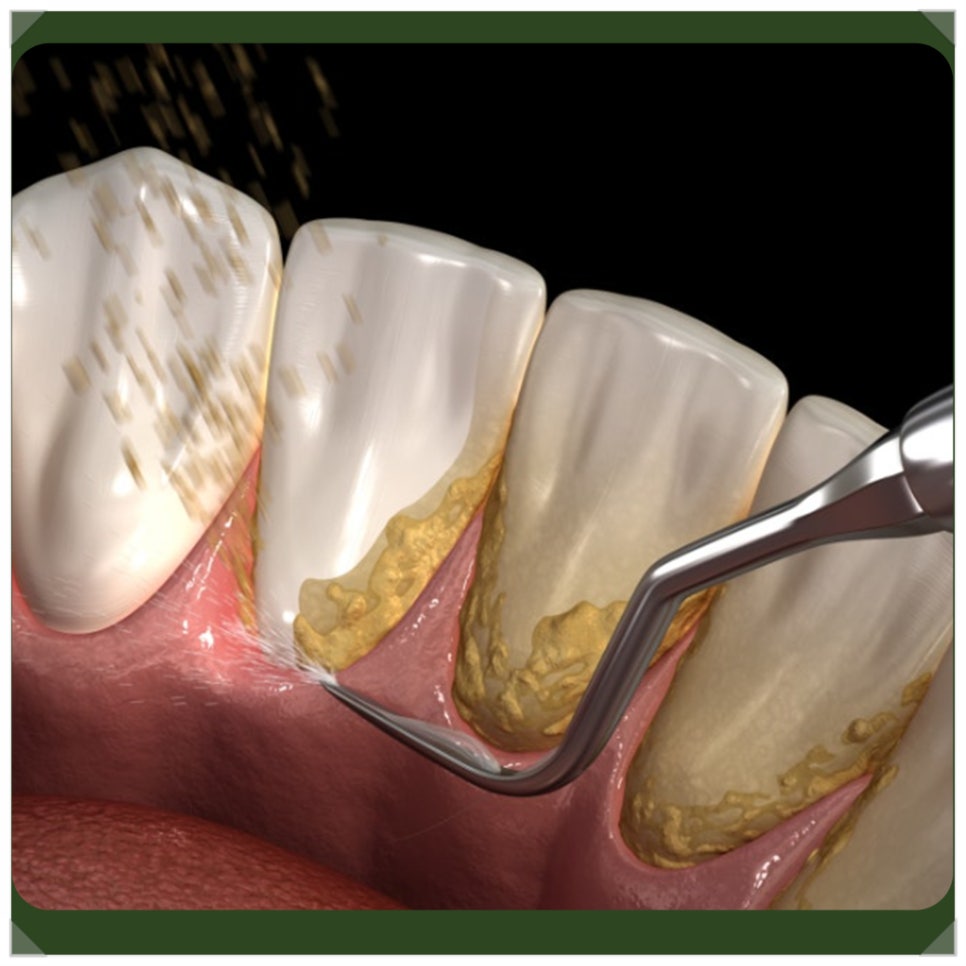
Using specialized equipment,
the process of removing debris attached to the tooth surface
and hardened tartar
is called scaling.
It can be seen as an essential treatment
for keeping the gums healthy
and preventing periodontal disease.
In general, having it done about once a year
is considered ideal,
but because the rate at which tartar builds up
and oral care habits differ from person to person,
the recommended interval may vary slightly
depending on each individual’s condition.
🧡 Misconceptions About Scaling 🧡
Among the people who come to the dentist,
there are often those who hesitate to receive treatment because they worry that:
✔ Scaling grinds down the teeth.
✔ Scaling causes sensitivity afterward.
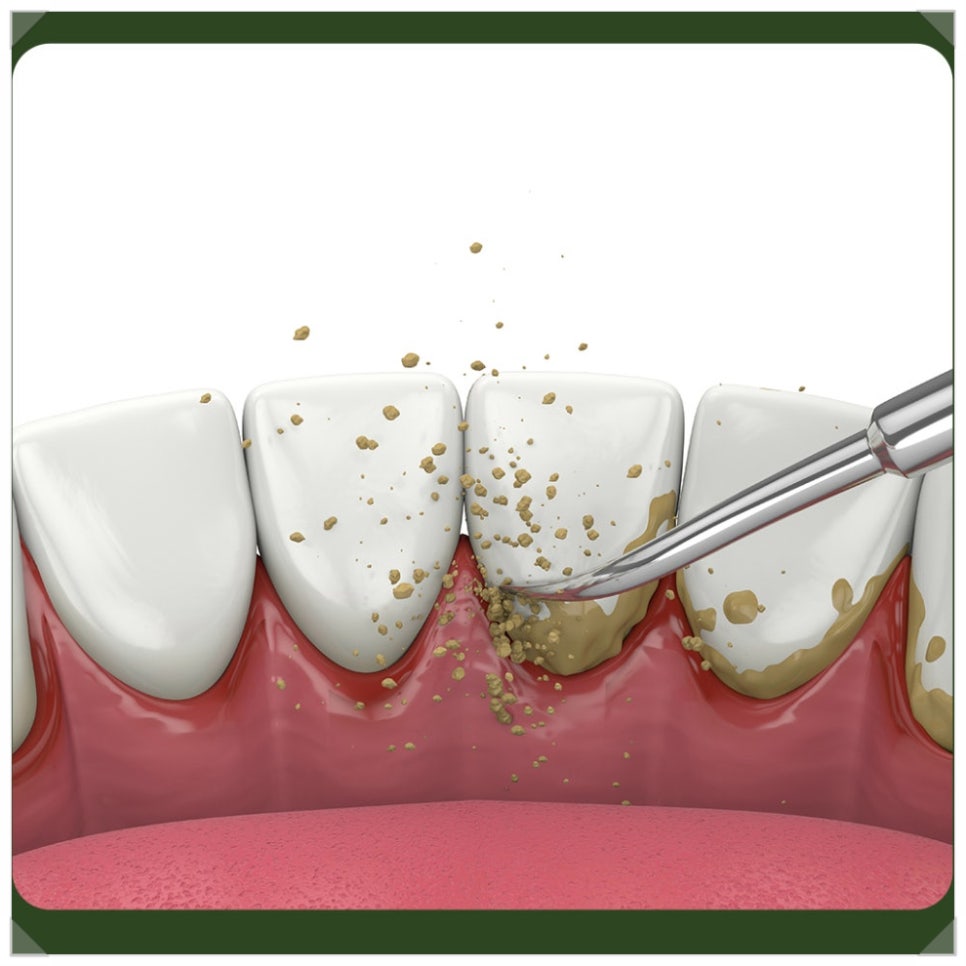
But in reality, scaling is not a process of shaving down the teeth;
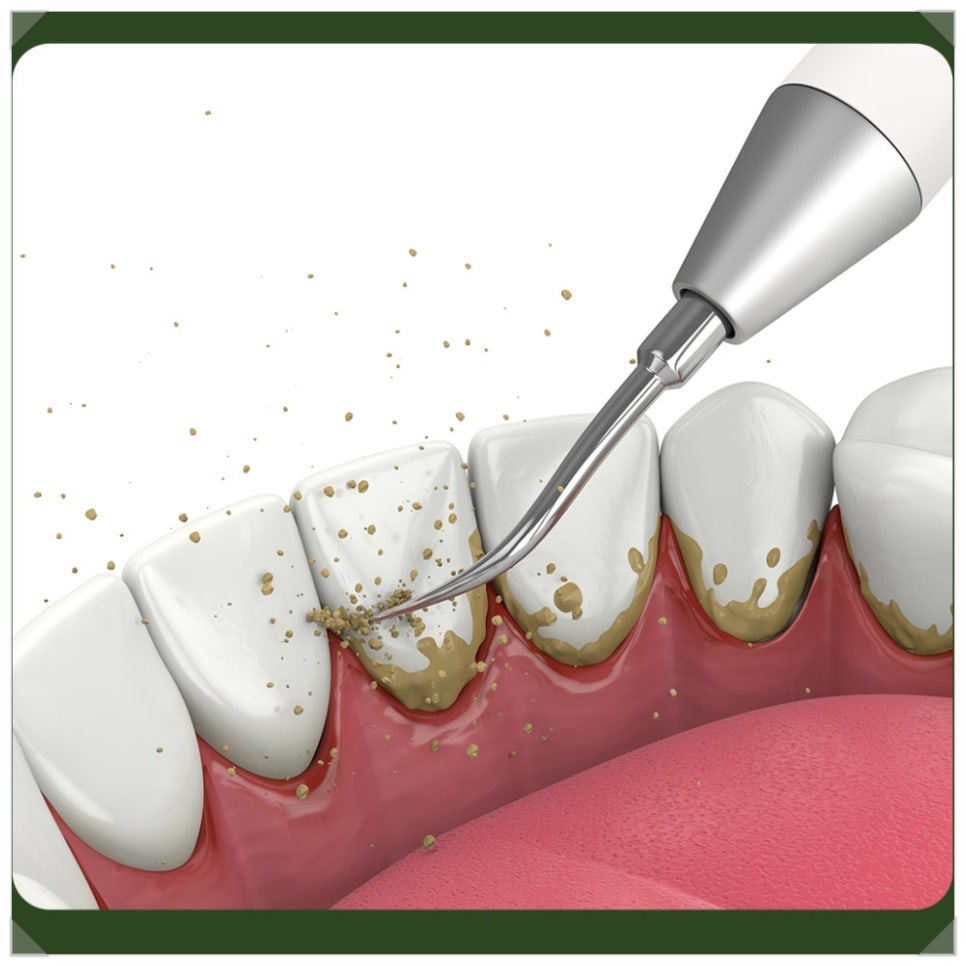
it is a treatment in which an ultrasonic instrument uses fine vibrations
to remove only the tartar.
When the instrument touches the tooth surface,
you may feel a slight grinding-like vibration,
but this does not damage or wear down the teeth.
And the reason the teeth may look more exposed after treatment
is that swollen gums return to their proper position as the inflammation subsides.
Because of this change,
it may feel as though the teeth were shaved down,
but in reality the teeth themselves are not damaged,
so there is no need to worry.
Also, some people say they experienced sensitivity after scaling.
Because of this reaction,
they may worry that there was a problem with the treatment process,
but in fact, it is closer to a temporary normal change
rather than a side effect of scaling.
When tartar that has covered the tooth surface for a long time is removed,
the tooth surface underneath is exposed directly to the outside,
so it may react sensitively even to small stimuli such as
cold food, cold drinks, or brushing.
In particular, the more tartar that had been attached,
the more noticeable these symptoms may be,
and in most cases, after about 1 to 2 weeks,
the sensitivity gradually decreases
and the mouth returns to its original condition.
In addition, after scaling, recovery becomes much easier
if you are a little careful with your daily habits.
First, right after treatment,
it is best to avoid food that is too hot or too cold,
and to use a soft-bristled toothbrush
so as not to irritate the gums.
When brushing, rather than applying strong pressure,
a light and gentle scrubbing motion helps the gums recover,
and using a toothpaste for sensitive teeth together can also be effective.
However, if the sensitivity continues for a long time
or becomes progressively worse,
there may be another cause,
so please visit the dentist for an examination.
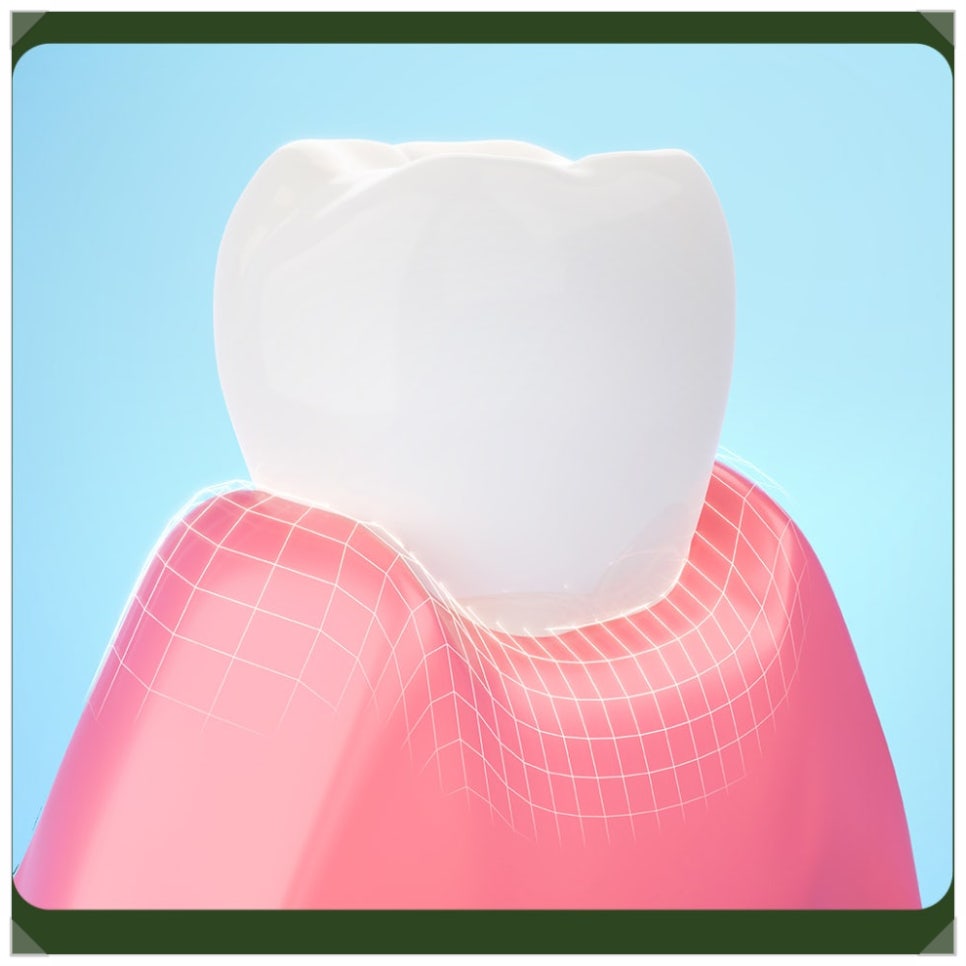
Misconceptions About Scaling
In this way, we have cleared up misconceptions about scaling together
and helped explain why scaling is necessary. :)
In summary,
scaling is the most reliable basic care for protecting dental health,
and it is a treatment that can be received without dangerous side effects.
If tartar is left untreated,
it can become the starting point of gum inflammation,
and in severe cases, the starting point of periodontal disease,
so regular scaling is necessary to protect the health of the teeth and gums.
Small care now
can prevent major treatment later.
Along with regular checkups,
please keep practicing scaling consistently
so that you can keep your teeth healthy
and use them for a long time! 💖
Seoul Ove Dental Hospital
4th and 5th Floors, 196 Baekjegobun-ro, Songpa-gu, Seoul, Republic of Korea