Hello.
This is Seoul of Dental Hospital in Jamsil.💚
When consulting about upper molar implants,
many people feel worried after hearing things like,
“Implant placement is difficult right away because there isn’t enough bone”
or “A sinus lift is needed.”
Because it is a term they hear for the first time,
it can also feel like a major surgery,
and many people feel burdened,
wondering whether implant treatment will become more complicated.
But a sinus lift is
a preparatory procedure that creates the right environment
so the implant can be used for a longer time and more stably.
Why upper molar implants can be difficult
If a tooth has been missing for a long time,
or if dentures have been used for an extended period,
or naturally as we age,
as the jawbone gradually resorbs,
the amount of bone height needed to place an implant
may become insufficient.
Previous image
Next image
If an implant is placed immediately in this state,
the fixation may be weak,
and over time it can lead to wobbling or discomfort.
That is why, for upper molar implants,
we first check the bone condition
and, if necessary, consider a sinus lift together.
What kind of treatment is a sinus lift?
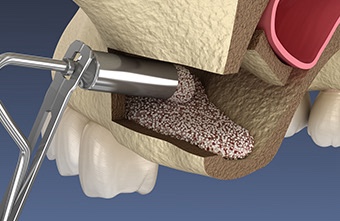
A sinus lift is a treatment in which
the membrane inside the maxillary sinus is carefully lifted,
and bone graft material is placed in the space below it
to secure the height needed for the implant.
Simply put,
it is a process that creates a foundation where bone can grow
before placing the implant.
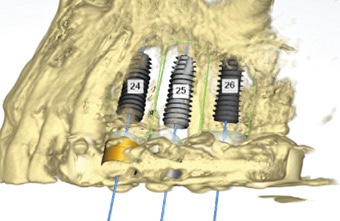
The purpose of this treatment is simple.
It helps build a foundation so that the implant can settle firmly into the gums and bone
and stably withstand chewing forces.
A treatment that applies to more people than expected
A sinus lift is not a treatment performed only in very special cases.
Among people planning upper molar implants,
there are quite a few cases where, during the examination process,
they are told that a sinus lift is needed.

Previous image
Next image
In particular,
if it has been a long time since the tooth was extracted,
if the gum area in the upper molar region has significantly receded,
or if dentures have been used for a long time,
this is a treatment that is naturally considered.
How is the treatment carried out?
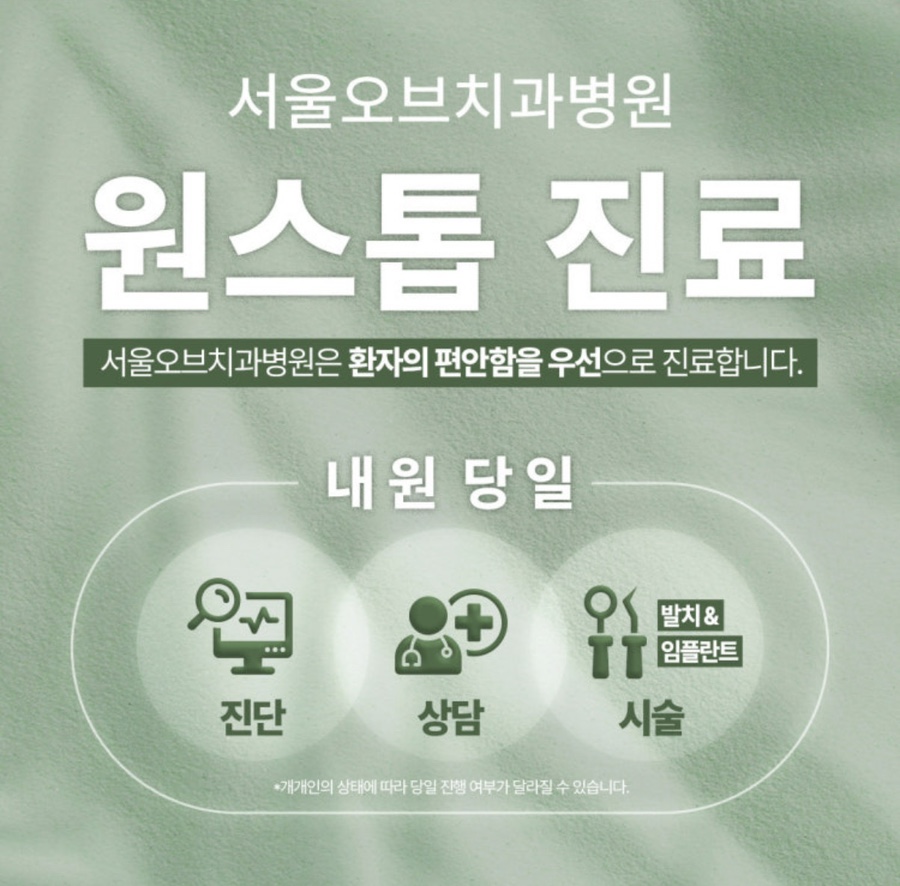
At your first visit,
we check the overall condition using a panoramic X-ray and, if needed, a 3D CT scan,
including the position of the sinus, the height and thickness of the bone, and the location of the nerves.
Based on this diagnosis,
we determine whether the implant can be placed right away
or whether it would be better to proceed together with a sinus lift,
and we create a treatment plan tailored to each person’s condition.
Depending on the situation,
implant placement and the sinus lift may be performed on the same day,
or they may be carried out in stages after the bone has had enough time to settle.
The important thing is not to force it,
but to design the treatment flow so that each step progresses naturally.
What about pain or recovery?
Because of the term “lift,”
many people worry about severe pain or a long recovery period.
In reality, however,
the majority of cases involve swelling or discomfort similar to that of a regular implant surgery,
and with proper care according to instructions,
returning to daily life is relatively quick.


Previous image
Next image
Most importantly,
because it is far more important in the long term that the implant settles stably after treatment,
going through this process can actually be helpful.
Why you do not need to worry too much about a sinus lift
A sinus lift is not a treatment done to rush implant placement,
but a preparatory process for using upper molar implants
for a long time and comfortably.
Just because you were told there is not enough bone,
rather than giving up on treatment,
it may be best to calmly check what methods are possible
in your current condition.

A sinus lift is not a choice that delays implant treatment,
but one process for protecting the result.
Seoul of Dental Hospital
4th and 5th Floors, 196 Baekjegobun-ro, Songpa-gu, Seoul