
When opening the mouth or chewing food,
many people experience a “click” or “pop” sound
from the jaw.

At first, there is no pain, so people often overlook it,
but if these symptoms repeat,
it may be an early sign of temporomandibular disorder.
The temporomandibular joint is located in front of the ear,
and it is a part that is continuously used in everyday movements
such as speaking, chewing, and yawning.

So even a small problem can cause discomfort
that affects daily life overall.

What is temporomandibular disorder?
Temporomandibular disorder refers to a condition
in which problems occur in the jaw joint itself,
the disc inside the joint,
or the surrounding muscles,
causing pain or limited function.

The temporomandibular joint is not simply a structure where bone meets bone.
A disc between them acts as a cushion
and is responsible for very complex movements.
When this balance is disrupted, symptoms such as sounds,
pain, and limited mouth opening may appear.
Typical symptoms of temporomandibular disorder

Symptoms of temporomandibular disorder vary slightly from person to person.
Common symptoms include the following.
When opening the mouth, there may be a sound from the jaw,
or the mouth may not open smoothly and may feel stuck.
When chewing food, the jaw or the area around the ear may feel
aching or sore,
and the jaw may feel
easily fatigued.
In severe cases,
the mouth may not open wide,
or it may lead to headaches, neck pain, and shoulder stiffness.

What if the jaw makes a sound but does not hurt?

There are also cases where the jaw makes a sound but there is no pain.
For this reason, many people think, “It only makes a sound and doesn’t hurt, so it’s fine.” However,
a sound from the jaw joint may be a sign that the internal structure of the joint
has moved out of its normal position.
Even if there is no pain at first,
if it is left alone for a long time, stress can accumulate in the joint and muscles,
leading to pain or limited function.
In other words, rather than pain alone,
the key criterion is whether the symptoms repeat.
Why does temporomandibular disorder occur?

It is difficult to pin down a single cause of temporomandibular disorder.
In many cases, several factors act together.
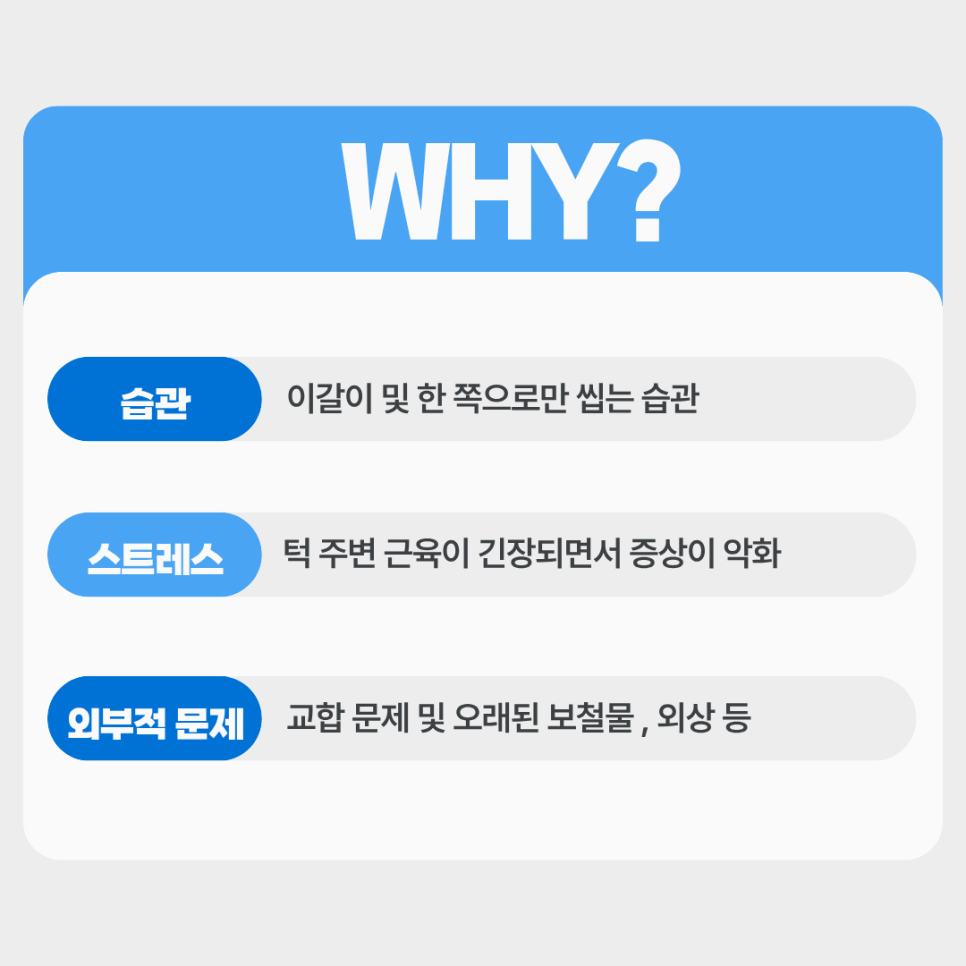
Habitually clenching the teeth, teeth grinding, and chewing on only one side can place
continuous strain on the jaw joint.
Also, when stress is high,
the muscles around the jaw tense up and symptoms may worsen.
Problems with the bite, old prosthetics,
or trauma can also be causes of temporomandibular disorder.
How is temporomandibular disorder treated?

Treatment for temporomandibular disorder varies
depending on the cause and severity of the current symptoms.
In the early stage,
it is often approached by relieving symptoms through lifestyle correction, medication, and physical therapy.
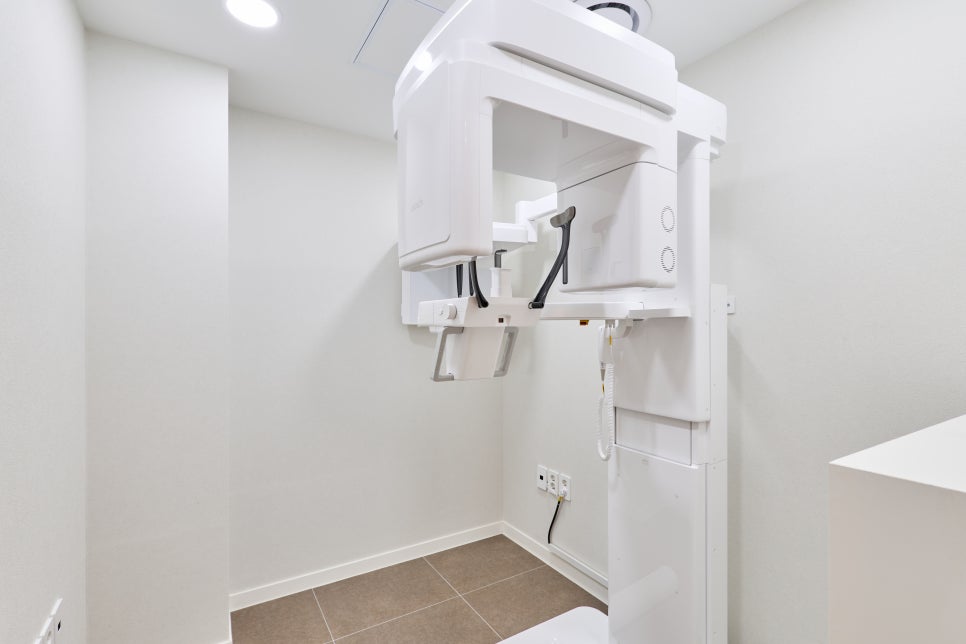
If necessary,
an occlusal splint or similar device can be used
to reduce stress on the joint and muscles.
Most cases of temporomandibular disorder can be managed sufficiently
with non-surgical treatment.
The important thing is
to begin treatment before the symptoms become severe.
Problems that can occur if temporomandibular disorder is left untreated

If temporomandibular disorder is left untreated for a long time,
pain may become chronic,
or the range of mouth opening may gradually
decrease.
In addition, it can cause discomfort while chewing,
which may also affect eating habits,

and it may also lead to neck and shoulder pain, as well as headaches.
Symptoms that could be relatively easy to control if managed early may take much longer to recover from
the longer they are left untreated.
If you have these symptoms, a temporomandibular joint examination
is necessary

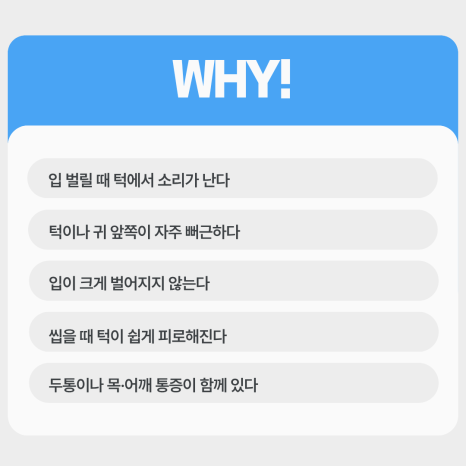
- The jaw makes a sound when opening the mouth
- The jaw or the area in front of the ear often feels sore
- The mouth does not open wide
- The jaw easily becomes tired when chewing
- Headaches or neck and shoulder pain occur together
If these symptoms repeat,
it is a good idea to check the condition of the temporomandibular joint at least once.
Managing jaw joint symptoms early is
important

Because the temporomandibular joint is used every day,
even small problems can have a major impact on daily life.
If you hear a sound from the jaw or feel discomfort,
rather than waiting until it gets worse,
it is helpful to identify the cause early and manage it.
Temporomandibular disorder is
a condition that can improve sufficiently with proper diagnosis and management.