Hello, this is Seoul-Ob Dental Hospital.
Did you know that dental care is also included in the workplace National Health Screening?
If you are eligible for the 2026 National Health Screening, rather than just getting your internal medicine checkup and
calling it a day, it is a good idea to check your dental screening as well.
In 2026, be sure to get your dental screening too,
and check your dental health at the same time!
Dental health screenings are free.
Because of the perception that “health screening = internal medicine tests,” dental screenings are often naturally skipped.
Workplace National Health Screenings
can only be received within a set period,
so if you miss the timing even though you are eligible,
you have to wait until the next year.
One thing we often hear in actual clinical practice is,
“I thought I had to go to a dentist separately,”
and “I didn’t think it was necessary because it didn’t hurt.”
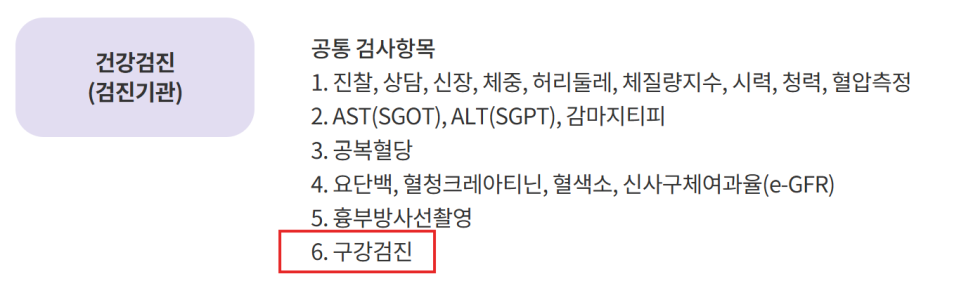
The National Health Screening
formally includes
a dental examination as well.
Since it is provided free of charge,
it is best to make sure you get it.
Scaling is not included.
Eligibility for the National Health Screening is divided according to whether you are a workplace insured member, local insured member, or dependent,
and whether you can receive the screening is determined by your birth year.
Korea Association of Health Promotion
MediCheck is a customized health promotion service of the Korea Association of Health Promotion.
www.kahp.or.kr
You can check the screening eligibility criteria on the Korea Association of Health Promotion website.
Many people think,
“I probably am not eligible,”
but when they check, there are many cases where they are already eligible for the National Health Screening.
So if you are eligible for the 2026 National Health Screening,
it is important to check your eligibility in advance
and review the screening items once more.
Dental screening precautions
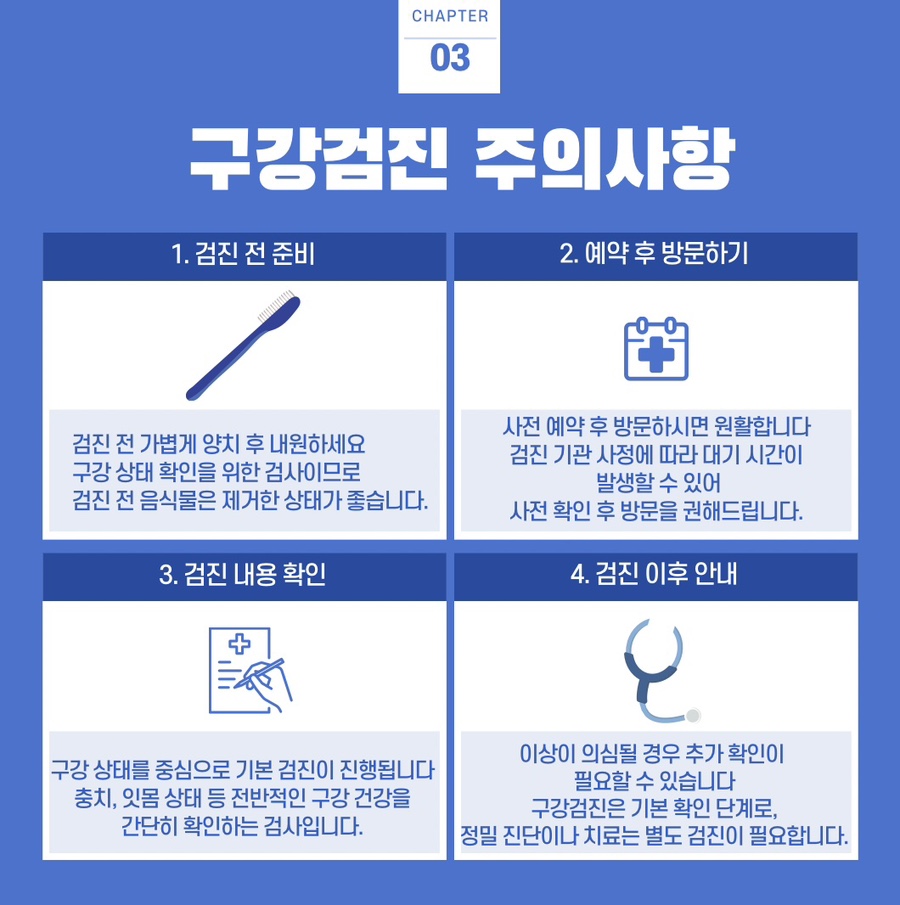
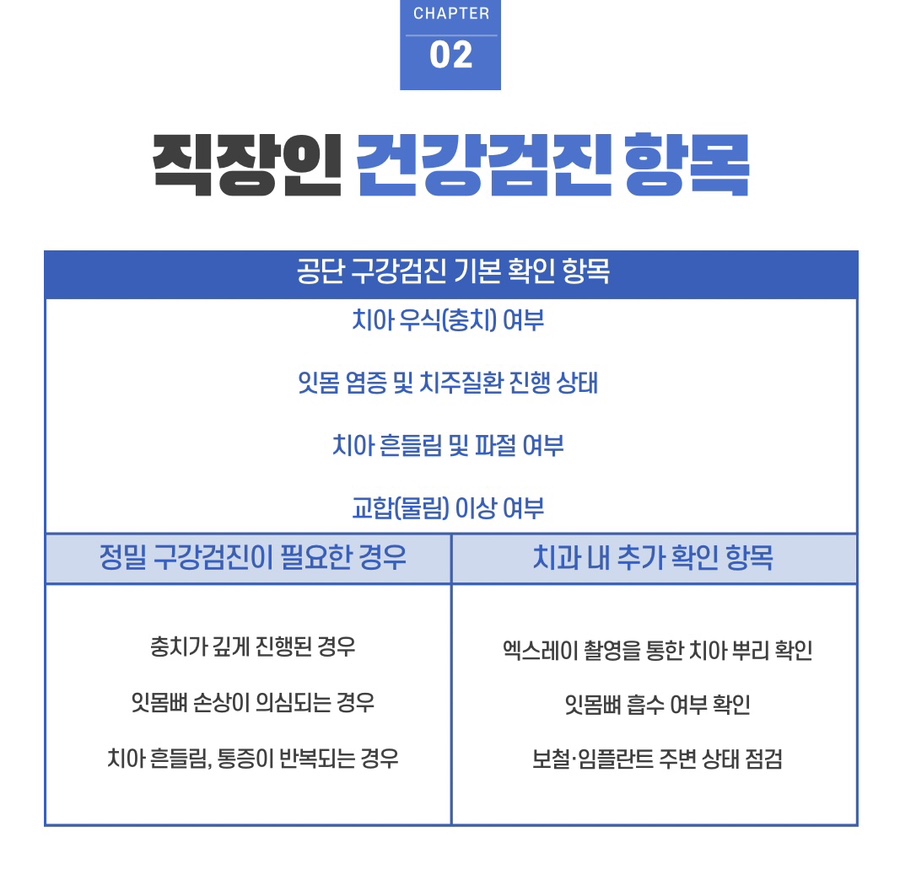
The dental examination in the National Health Screening is not simply a test to see whether or not you have cavities.
In the National Health oral examination,
we mainly check basic oral health conditions such as
-
Whether there are cavities
-
Whether gum inflammation and periodontal disease are progressing
-
Whether teeth are loose or fractured
-
Overall oral hygiene status
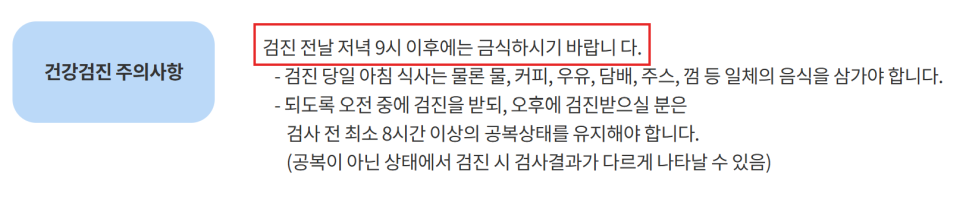
Fasting is mandatory from 9 p.m. the night before the screening,
and most beverages that may affect the screening results
should also be avoided.
After the screening, since your first meal will be after at least 8 hours of fasting,
we recommend eating something healthy such as porridge or salad
rather than spicy food.
Early detection of disease can save more than 50% of treatment costs.
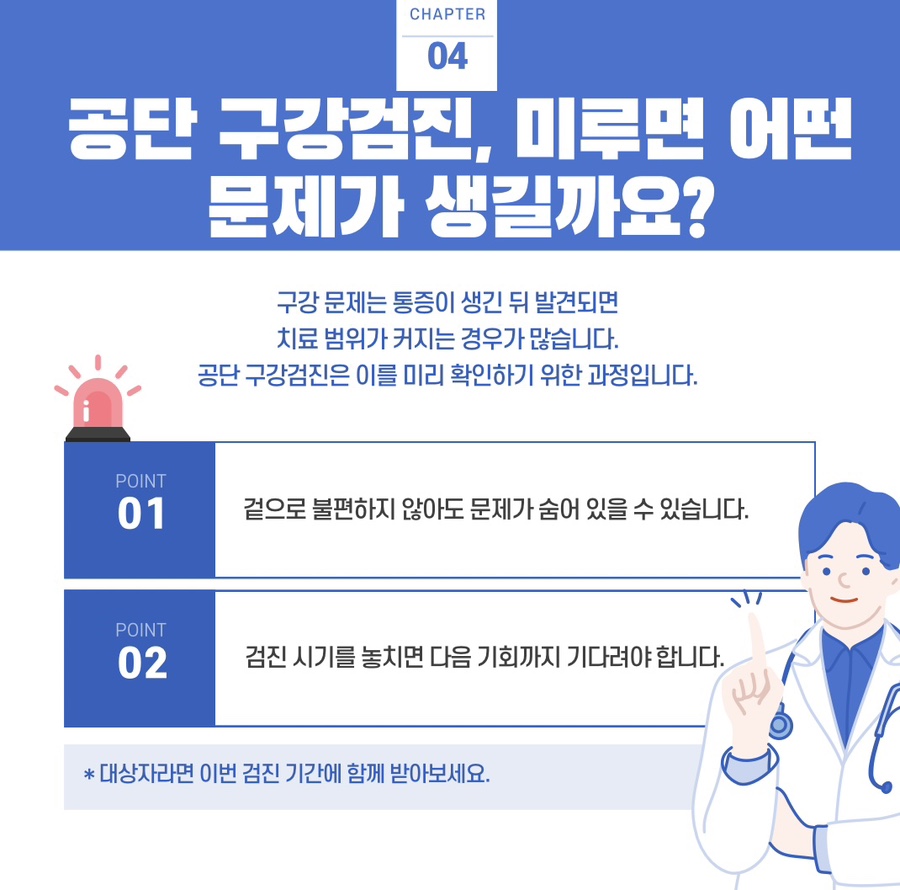
If an oral disease is detected early, cavities and similar problems can be treated for under 100,000 won,
but if the condition is left untreated for a long time,
it may worsen and lead to costs of over 1,000,000 won.
It is a good opportunity to prevent the fatigue and pain of a long treatment period,
so you should get a dental screening every year.
Teeth show the effects of aging clearly,
and because they are exposed to food and foreign substances all year round,
periodic care is especially necessary.
In particular, gum or jawbone problems often progress slowly without pain.
By the time symptoms are felt, the scope of treatment may already be larger,
so there are many people who visit the dentist too late.
That is why the dental screening in the National Health Screening
should be understood as “checking your current condition before pain appears.”
Previous image
Next image
If you are eligible for the 2026 National Health Screening,
you can receive a basic dental examination through a National Health Screening clinic.
If it is judged necessary during the screening process,
X-rays may also be taken to additionally check the roots of the teeth or the condition of the jawbone.
Even if you do not decide on treatment immediately in this process,
knowing your current condition accurately alone can often be helpful in deciding future treatment directions.
In fact, some people ask,
“I was told everything was fine at the screening, so why is there a problem?”
This is because the scope of the National Health oral examination and a general detailed dental examination are different.
-
If you have not had a dental screening for a long time
-
If your gums bleed often
-
If you feel discomfort when chewing
-
If your teeth seem fine on the surface but you are worried about their condition
In such cases,
it is a good idea to use the 2026 National Health Screening period
to check your oral condition once.
One reason many people postpone health screenings is the thought that
“it’s fine right now.”
But dental problems may be growing gradually
without any symptoms.
If you are eligible for the 2026 National Health Screening,
rather than only getting your internal medicine checkup and stopping there,
we recommend also checking the dental examination included in the National Health Screening.
Even if you do not currently have any special pain,
just checking your condition during this screening period
can help reduce the burden of future treatment.