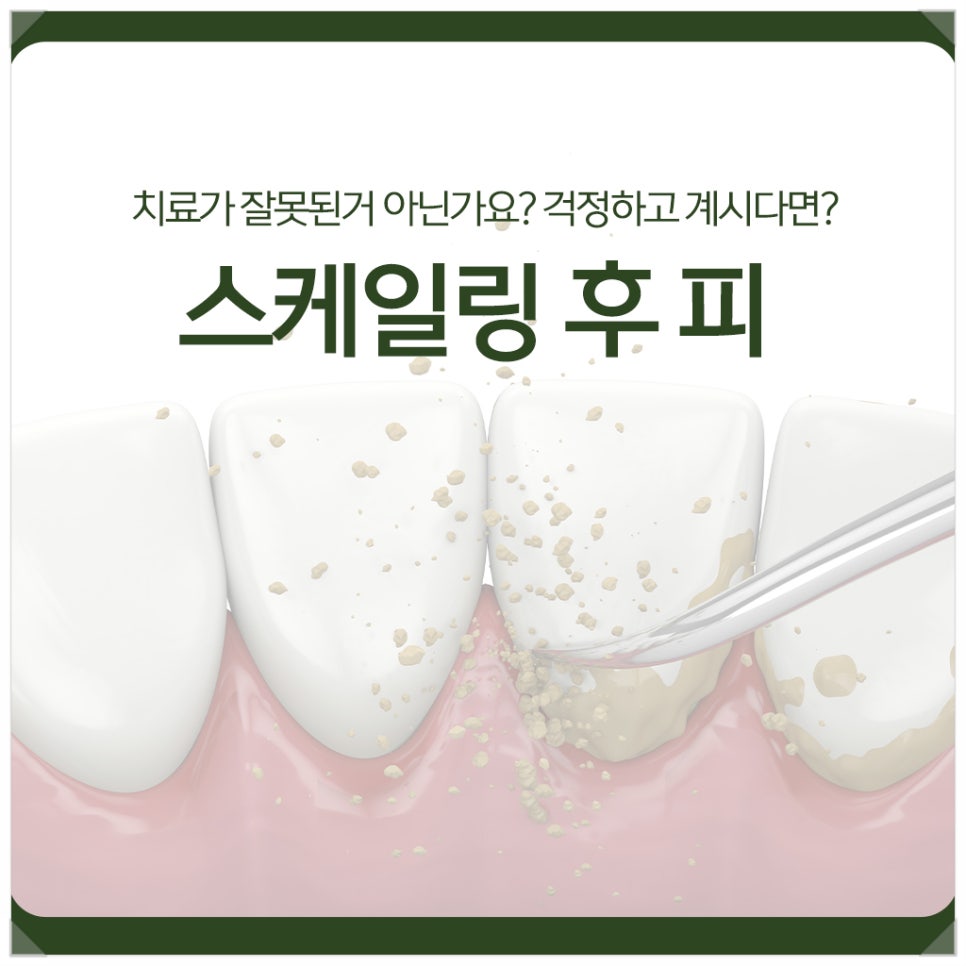
Scaling is an essential process for maintaining dental health,
and many people receive scaling once a year
through insurance coverage.
However, some people occasionally contact the dental clinic,
worried because they bleed after scaling.
Bleeding after scaling,
Is something wrong with the treatment?
If you're worried,
please read this post :)
Why does bleeding happen after scaling?
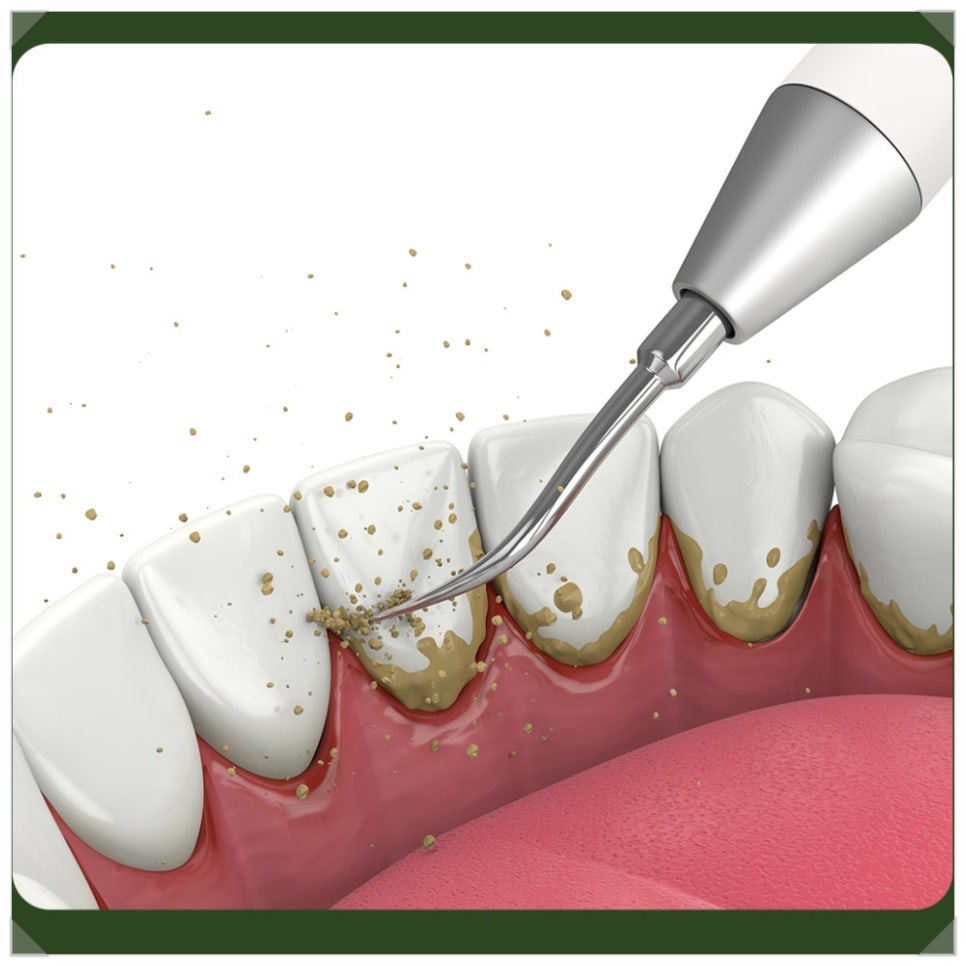
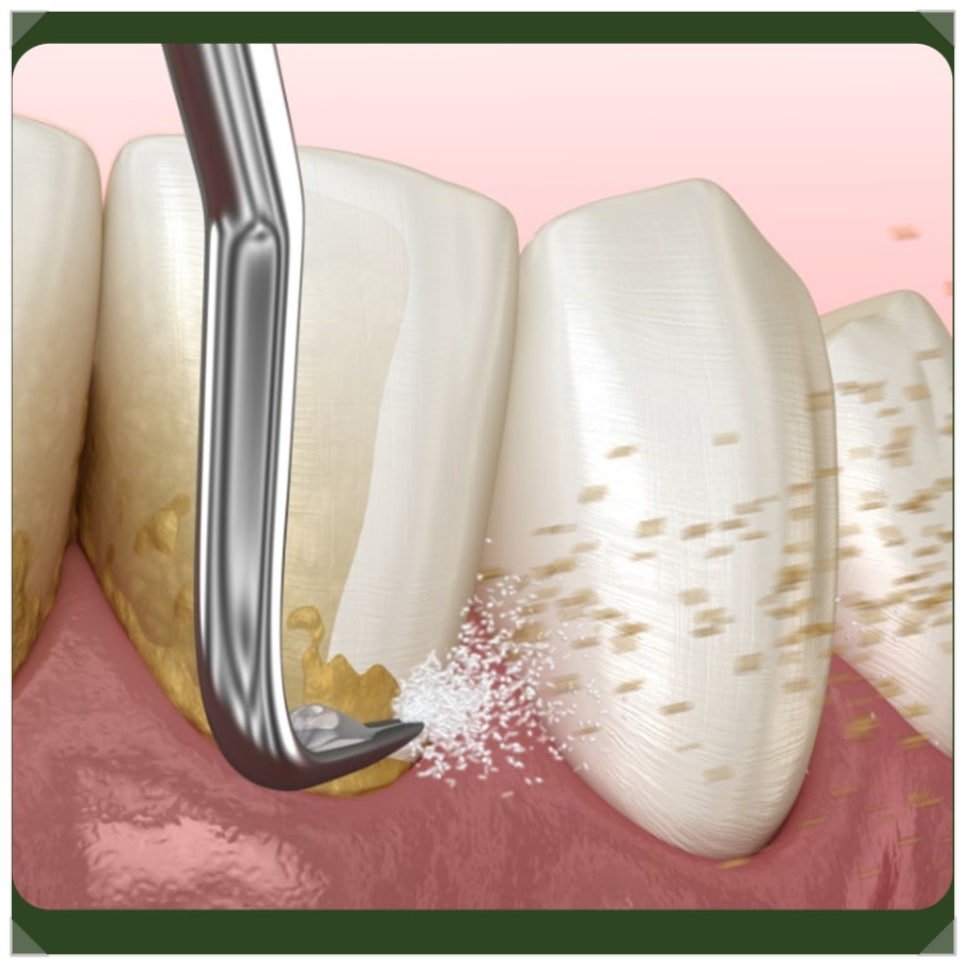
Scaling is a treatment that removes tartar,
and through this process,
it reduces harmful bacteria
between the teeth and gums,
helps prevent inflammation,
and supports the recovery of oral health.
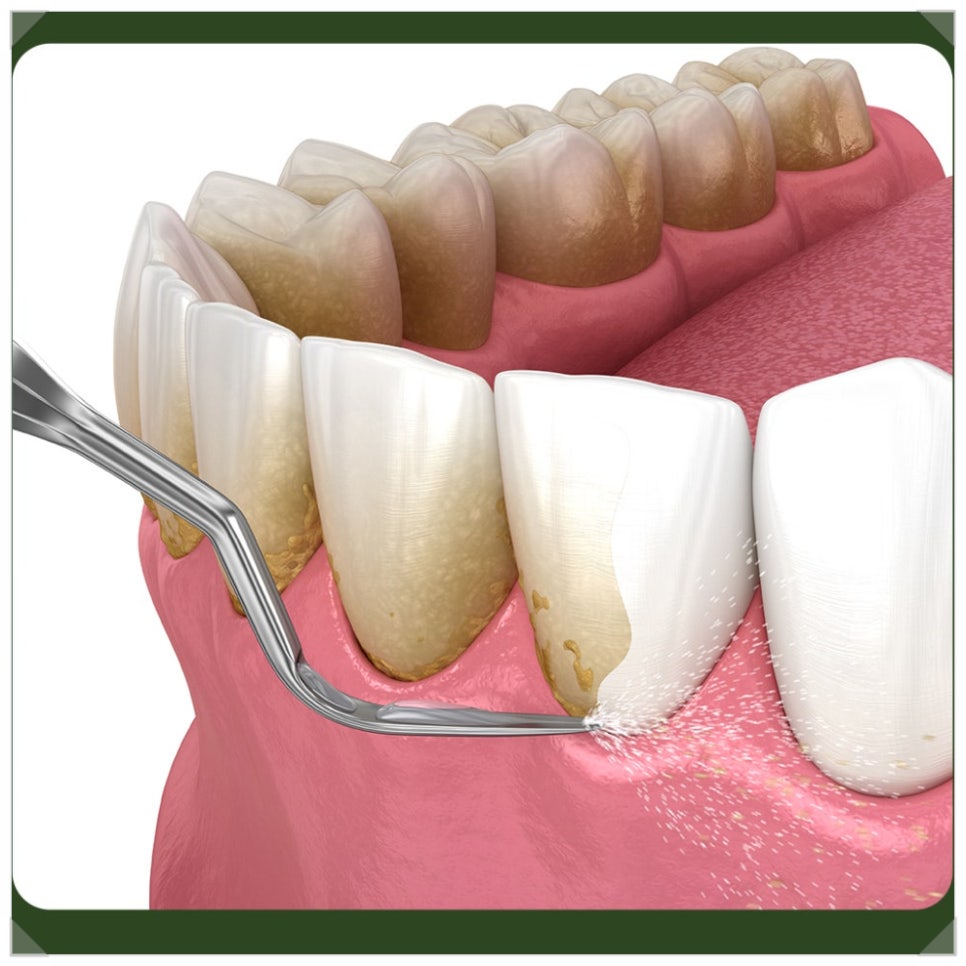
After scaling,
the tooth surface is smoothed,
which can also help prevent new bacteria from adhering.
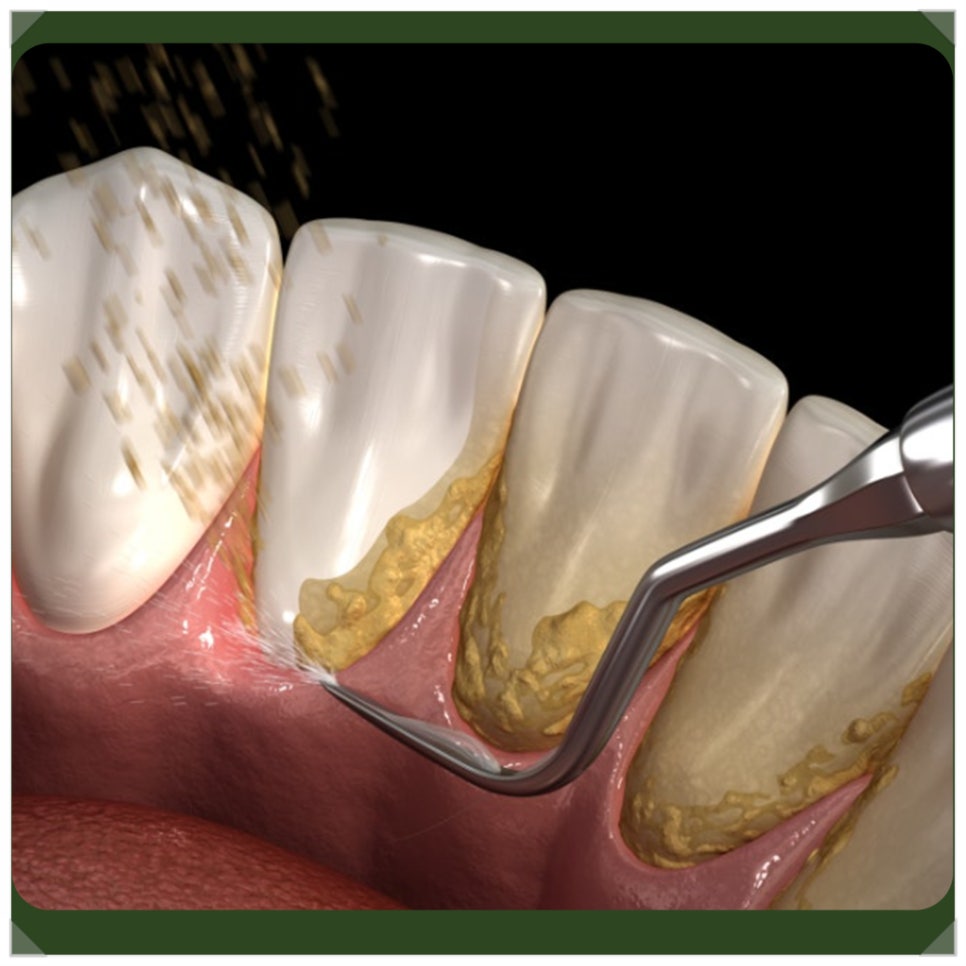
However, during the scaling process,
if your gums are usually weak
or in an inflamed state,
they may be irritated and bleed.
In particular, if the gums are swollen
or the inflammation is severe,
more bleeding may occur.
This is a natural occurrence during scaling,
and in most cases it stops with time,
so there is no need to worry too much.
However, if you keep rinsing your mouth
or spitting out blood frequently,
the bleeding may continue because it does not clot properly.
It may feel uncomfortable to swallow the blood,
but swallowing it can help with hemostasis.
But if the bleeding does not stop
for a long time,
or the discomfort continues,
you need to visit the dental clinic again
to check your condition.
In addition, after scaling,
your gums are in a sensitive state,
so it is a good idea to be careful in several areas.
First, it is recommended to avoid foods that are too hot
or spicy.
Hot or irritating foods can stimulate the gums,
so please eat soft, lukewarm foods.
Also, on the first day after scaling,
it is best to refrain from smoking.
Scaling does not simply remove tartar;
it also removes nicotine stains caused by smoking.
If you smoke,
it can cause staining again,
so it is best to avoid smoking for about a day after scaling.
In addition, if you consume foods or drinks
with a lot of color right after scaling,
they can stain your teeth again.
Therefore, on the day of scaling,
it is advisable to avoid foods with strong coloring.
So far, I’ve introduced the causes of bleeding after scaling
and how to manage it.
As mentioned earlier,
the bleeding that can occur after scaling
is mostly temporary and natural,
so there is no need to worry too much.
And through regular checkups and scaling,
it is really important to keep your teeth and gums healthy.
Brushing is basic,
but for areas that a toothbrush cannot reach,
using interdental brushes, dental floss, or a water flosser
can help you manage them more effectively.
If your teeth are damaged or lost once,
they do not naturally recover or regenerate,
so please give them plenty of attention
and take good care of them! 💕
Seoul Ob Dental Hospital
4th and 5th Floors, 196 Baekjegobun-ro, Songpa-gu, Seoul