Even if you do not usually have cavities,
if your teeth feel sensitive to cold or
if you feel a sharp, tingling pain in certain situations,
it may be worth suspecting a “tooth crack”
at least once.
A crack literally means
a tiny fissure has formed
on the surface of the tooth.
Even a crack so small that it is not visible to the eye
can gradually deepen
if repeated stress builds up.
In particular, this condition often has
no obvious symptoms at first,
or only occasional discomfort,
so it can be easy to leave untreated.
If the crack deepens,
it can lead not only to severe pain,
but in the worst case,
to a situation where the tooth must be extracted,
so caution is needed.
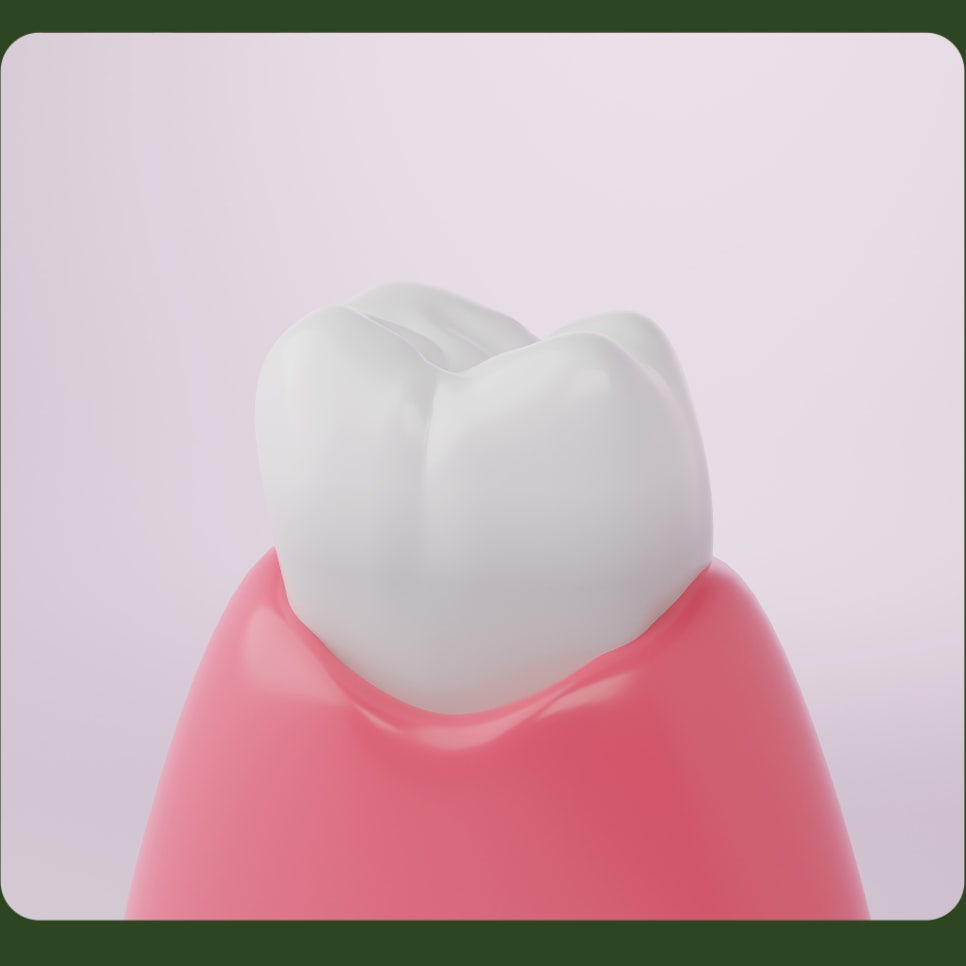 What Causes Tooth Cracks?
Why Do They Form?
There are many causes,
What Causes Tooth Cracks?
Why Do They Form?
There are many causes,
but the biggest factor is repeated
physical pressure and impact on the tooth.
First, a common example is the habit of frequently eating hard or chewy foods.
Foods such as ice, nuts, and dried squid can
transmit strong force to the teeth
and create tiny cracks.
In addition, the following habits
may also have an effect:
✔ Teeth grinding or clenching during sleep or unconsciously
✔ Habits such as biting nails or chewing on pens
✔ A one-sided chewing habit, using only one side
In this way, small habits in daily life
repeat over time, placing strain on the teeth,
and can eventually lead to cracks.
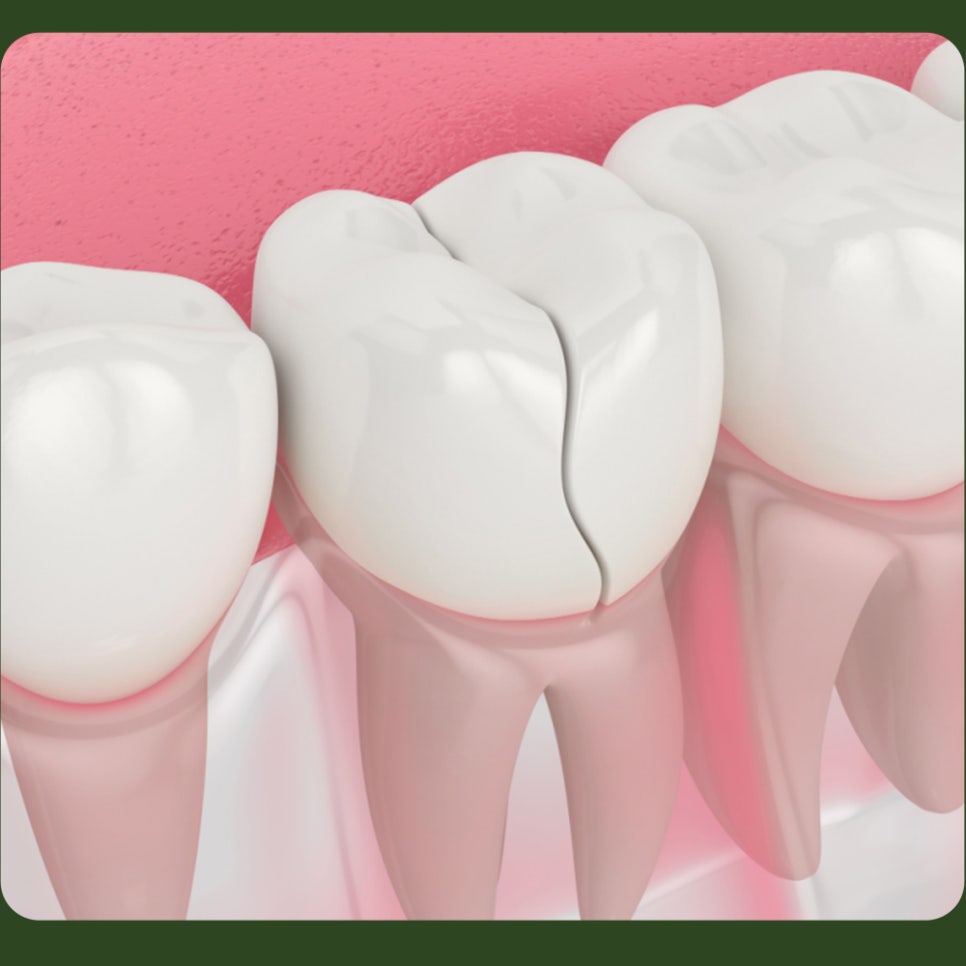 Causes of Tooth Cracks
In addition, to prevent tooth cracks,
it is most important to check and
improve your daily habits.
Because even surprisingly small repeated stresses can
affect the teeth,
you can expect a sufficient preventive effect
simply by managing your everyday habits.
First, it is best to avoid hard or chewy foods
as much as possible.
Foods such as ice, nuts, and dried squid can
place strong pressure on the teeth the moment you chew them,
and may create tiny cracks.
Also, if you have a habit of grinding or clenching your teeth,
it must be managed.
In particular, during sleep,
because it is difficult to control yourself,
having a custom mouthguard made at a dental clinic and using it
can also be helpful.
Along with this, habits such as biting your nails
or chewing on pens or toothpicks
are also best corrected.
Lastly,
if force is concentrated on only one area,
the likelihood of cracks forming in that tooth increases,
so it is important to avoid chewing only on one side
and to use both sides evenly.
In this way, even small changes in daily habits can
reduce the burden on your teeth
and help prevent cracks effectively.
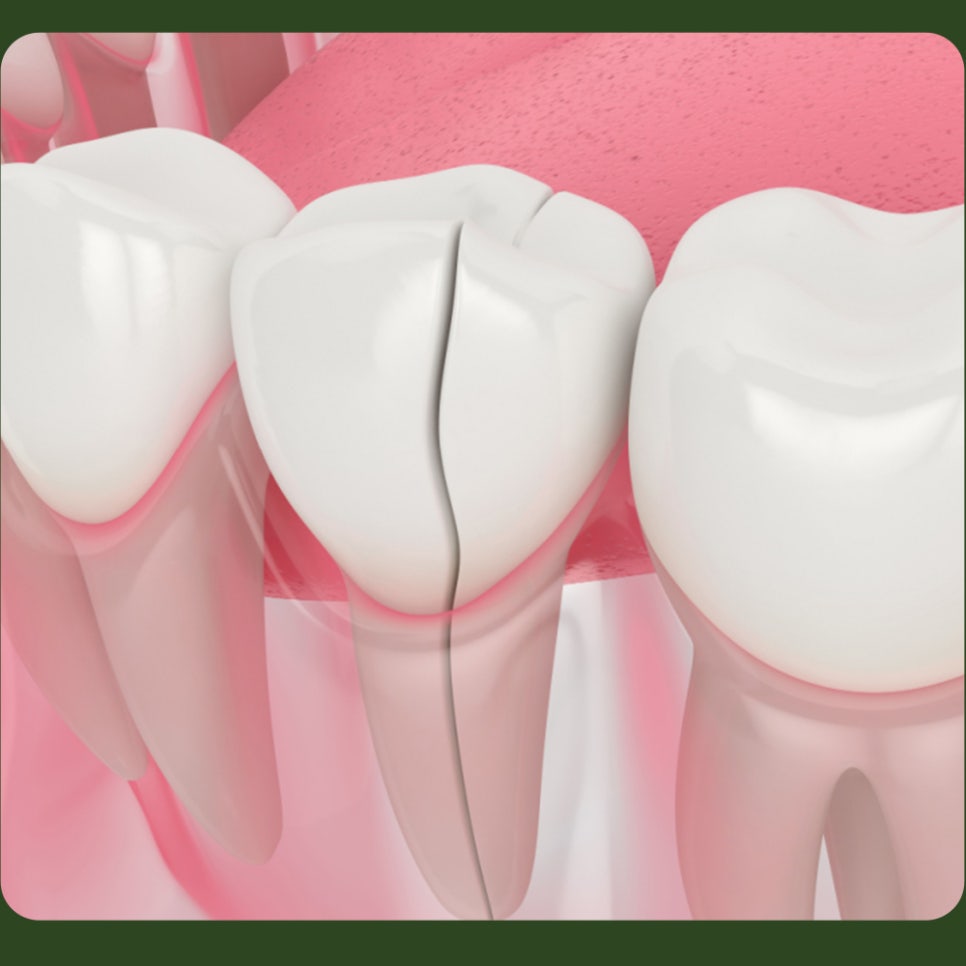
If a crack has already formed in a tooth,
the treatment method will vary depending on the location,
depth, and extent of progression.
Even if it looks like a simple crack from the outside,
the prognosis can differ greatly depending on how far it has progressed internally,
so an accurate diagnosis is important.
First, in the early stage,
if the crack is only in the crown of the tooth (the enamel or dentin),
recovery is possible with relatively simple treatment.
In this case, prosthetic treatments such as an inlay or crown
can be used to cover and protect the tooth,
and if needed, root canal treatment can be performed together
to improve pain.
On the other hand, if the crack becomes deeper
and affects the nerve,
root canal treatment is performed first.
After that, a crown is placed to protect the weakened tooth
and prevent further fracture.
However, if the crack has extended to the root of the tooth,
it is often difficult to preserve the tooth,
so extraction may have to be considered.
Tooth cracks tend to worsen over time,
so it is most important to detect them early
and treat them quickly.
Therefore, do not dismiss even small pain lightly,
and if you feel something is wrong,
please get a clear examination at a dental clinic.
Also, even if you do not have any special symptoms,
checking the condition of your teeth through regular checkups
will be very helpful in maintaining healthy teeth
for a long time! 😊
Seoul Ove Dental Hospital
4th and 5th Floors, 196 Baekjegobun-ro, Songpa-gu, Seoul