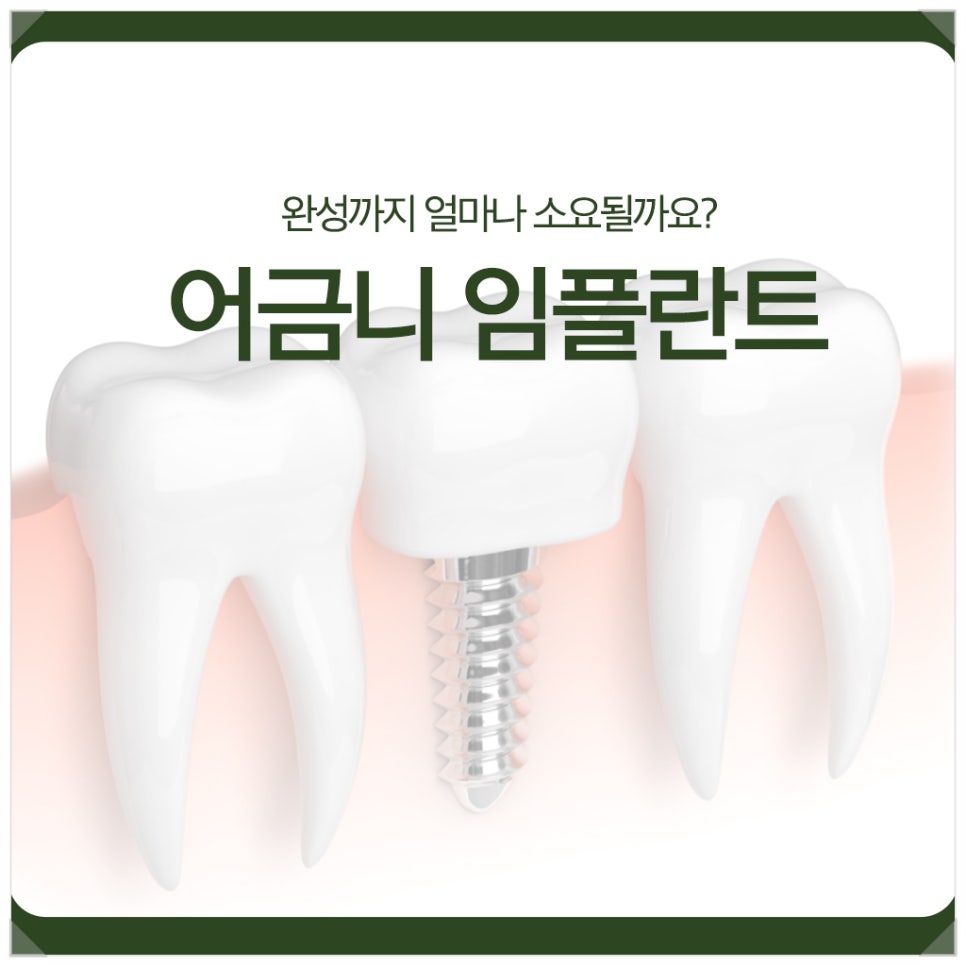
When you lose a molar,
it becomes difficult to chew food properly,
and over time, nearby teeth may tilt
or the bite may become misaligned.
Especially since molars play a central role
in chewing function,
treatment to restore function
as soon as possible is needed.
One of the most commonly considered options
at this time is an implant.
One of the questions people planning implants
often ask is:
“How long does treatment take?”
The treatment period for a molar implant
can vary depending on factors such as
the condition of the jawbone,
after extraction, the need for bone grafting,
and overall health status.
In this post,
we’ll look at
how molar implant treatment progresses,
and how long treatment typically takes! 🦷
Molar implant molar implant
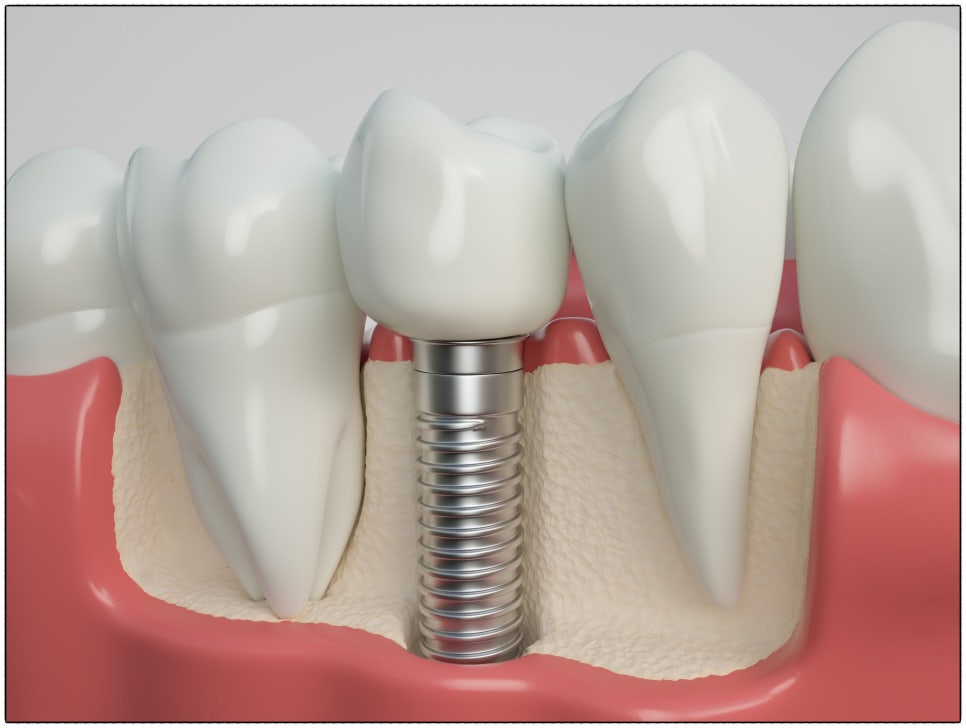
An implant is placed by inserting a titanium artificial root
into the jawbone,
and enough time must be allowed
for the bone and implant to bond stably.
In general, the total treatment period
for a molar implant
is often said to be about
3 to 6 months.
The upper jaw often has softer bone
than the lower jaw,
so it tends to take longer.
However, this is only an average range,
and depending on the patient’s oral condition,
the period may be shorter
or longer.
For example, if there is insufficient jawbone
or the bone density is weak,
it may be difficult to place the implant immediately.
In such cases, bone grafting may be performed first,
and since additional time is needed
for the bone to settle stably,
the overall treatment period may become longer.
In addition, if there was severe inflammation
after extraction,
or if the gum condition is poor due to periodontal disease,
you may need more time for recovery and stabilization.
Also, if you have systemic conditions such as diabetes
or high blood pressure,
they can affect recovery speed and the osseointegration process,
so the period may vary in several ways.
Recently, immediate implant placement,
where the implant is placed on the same day as extraction,
is sometimes performed.
Depending on the case,
a temporary tooth can also be connected quickly,
which may help shorten the treatment period.
However, immediate placement
is not possible for all patients;
the extraction site should not have severe inflammation,
the amount and shape of the jawbone must be sufficient,
and the oral condition must allow
for initial stability to be secured.
If the conditions are not suitable
and treatment is rushed unnecessarily,
the stability of the implant may actually decrease,
so
rather than shortening the treatment period,
it is more important to establish a treatment plan
that fits your own oral condition.
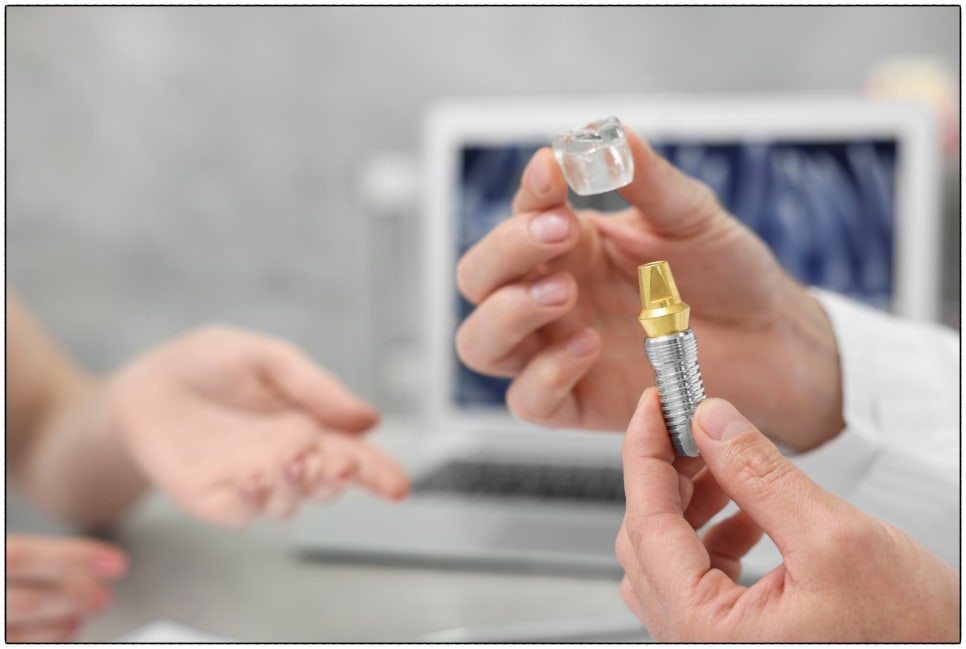
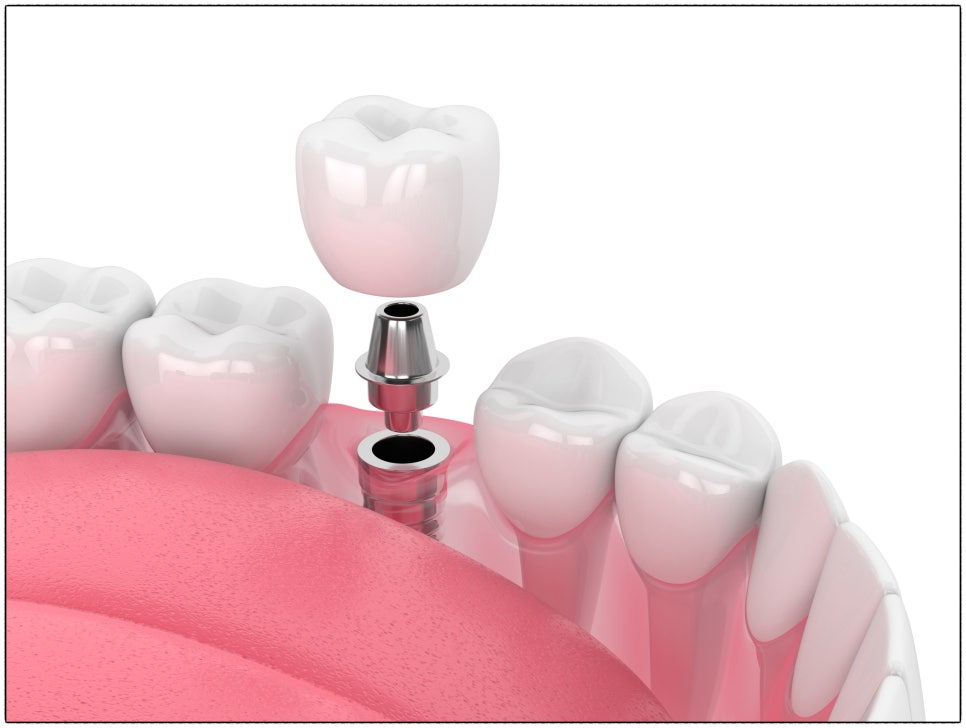
After osseointegration has been stably achieved,
a crown, which serves as the tooth portion,
is placed.
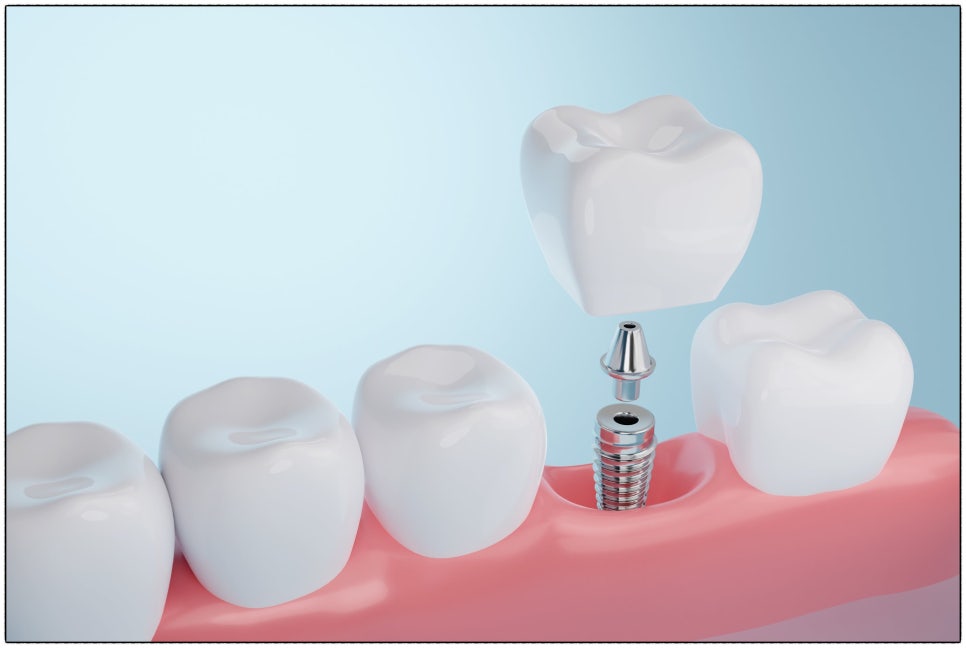
First, a abutment that connects the implant and the prosthesis
is attached,
and then a prosthesis is made to match
the patient’s tooth shape and bite.
Since molars are areas that receive strong chewing force,
when making the prosthesis,
it is not simply a matter of matching the shape;
the bite and chewing pressure are also carefully considered.
Once placed,
an implant is a treatment that must be used
for a long period of time.
Therefore, rather than focusing only on
finishing treatment quickly,
it is important to create stable results
based on an accurate diagnosis and sufficient recovery time.
In particular, molars are areas where
strong chewing forces are transmitted,
so even more careful planning is needed.
If you are considering implants~?
First, through a detailed examination,
check the condition of the jawbone and the oral environment,
and consult sufficiently about the treatment method
and expected period that are suitable for you!