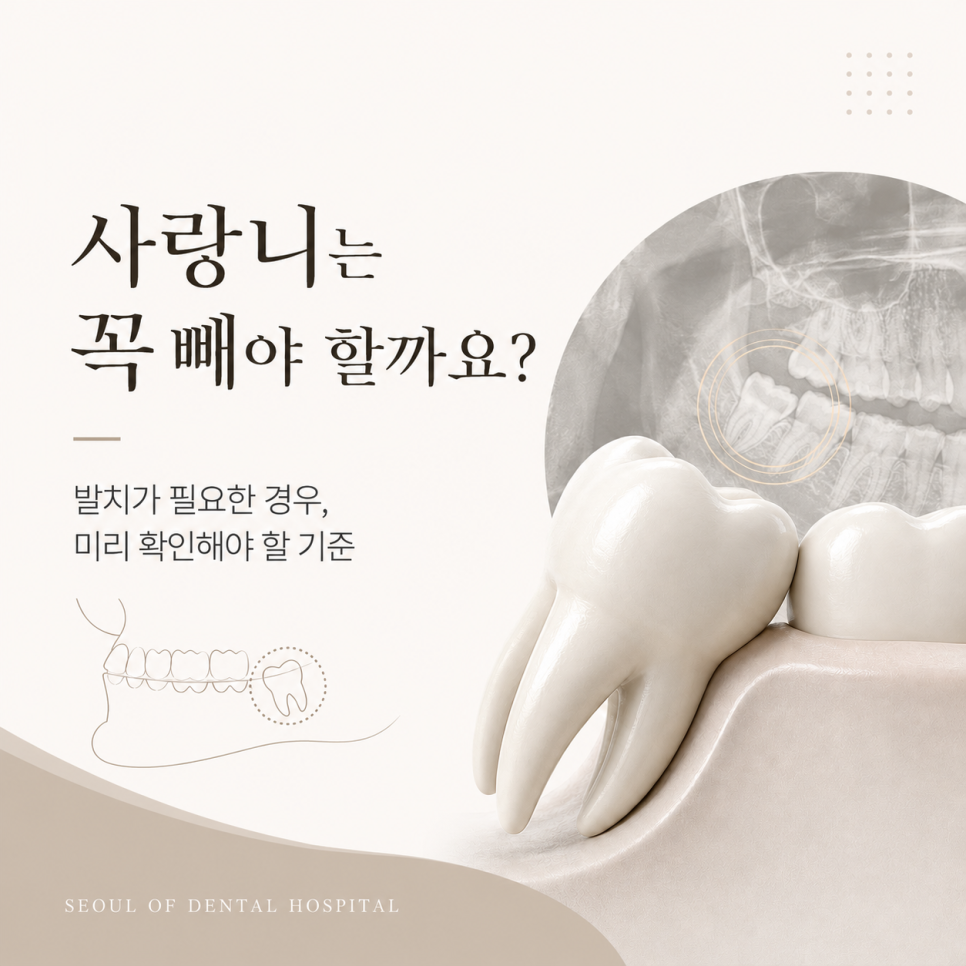
Do wisdom teeth have to be removed?
Cases where extraction is necessary
Wisdom teeth are the rearmost molars
that usually erupt from the late teens
through the early twenties.
Their official name is the third molar.
Because they are the last teeth to emerge,
if there is not enough space in the jaw,
they often cannot erupt normally.
For this reason, many people find themselves
wondering whether “wisdom teeth must always be removed”
or whether “they can simply be left alone if they do not hurt.”
Depending on their condition, wisdom teeth may or may not require extraction.
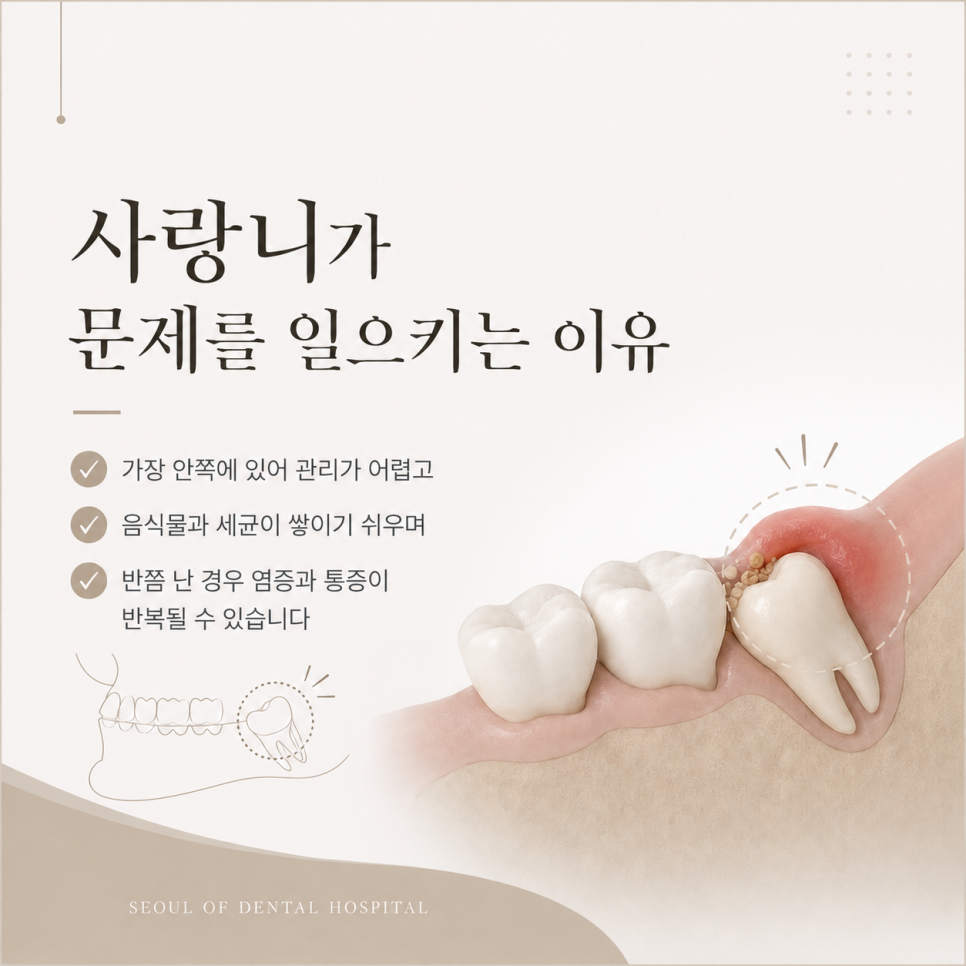
Why wisdom teeth cause problems
Because wisdom teeth are located at the very back,
they are difficult to reach with a toothbrush
and can be hard to keep clean.
As a result, food can become trapped easily,
creating an environment where bacteria can accumulate.
In particular, when a wisdom tooth has only partially erupted,
bacteria can collect in the space beneath the gums,
causing recurring inflammation and pain.
This condition is commonly referred to as wisdom tooth inflammation.
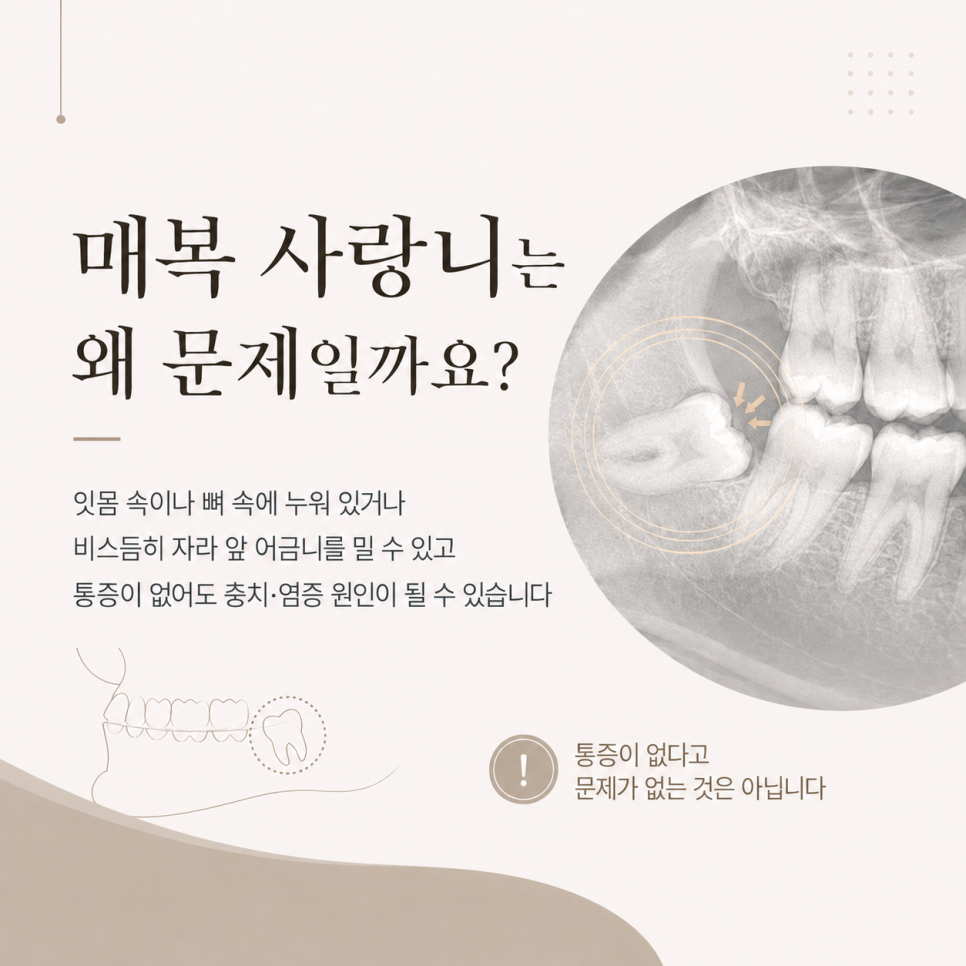
Why can impacted wisdom teeth cause problems?
A wisdom tooth that is lying inside the gums or jawbone,
or growing at an angle, is called an impacted wisdom tooth.
Even if an impacted wisdom tooth is not visible,
it can push against the molar in front of it,
causing cavities or gum disease.
It can also lead to recurring inflammation,
pain in the jawbone, or difficulty opening the mouth.
In many cases, the absence of visible pain
does not necessarily mean there is no problem.
Can a wisdom tooth be left alone
if it does not hurt?
If a wisdom tooth has erupted straight,
has proper contact with the opposing tooth,
and is located where it can be cleaned properly,
extraction may not necessarily be required.
However, even if there is no pain,
if the gums around the wisdom tooth become inflamed repeatedly,
or if it is affecting the molar in front of it,
considering extraction in the long term may be helpful.
The important criterion is not the presence of pain now,
but the possibility of problems developing in the future.
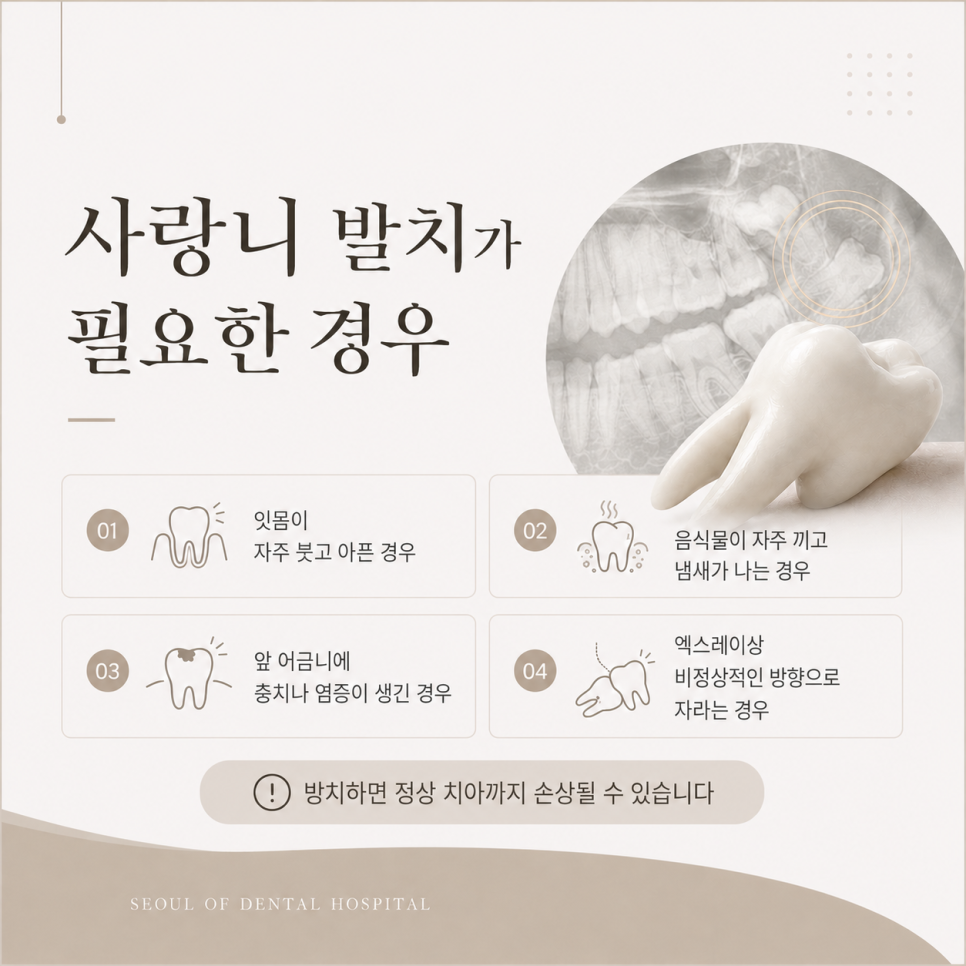
Cases where wisdom tooth extraction is necessary
You are more likely to be advised to have a wisdom tooth extracted
in the following situations.
-
When the gums around the wisdom tooth
frequently swell and hurt
-
When food frequently becomes trapped
and causes an odor
-
When an impacted wisdom tooth has caused
a cavity or inflammation in the molar in front of it
-
When an X-ray shows that it is growing
in an abnormal direction within the bone
If these conditions are left untreated,
not only the wisdom tooth but also otherwise healthy teeth may be damaged.
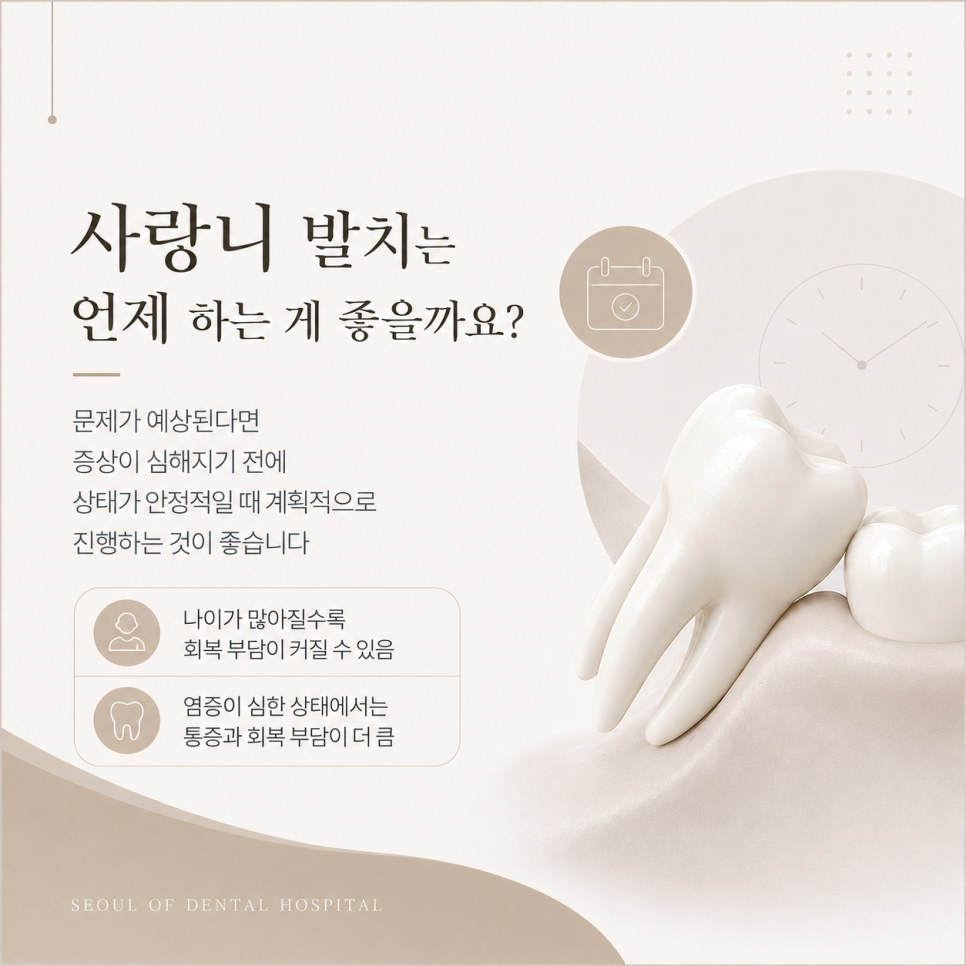
When is the best time to have a wisdom tooth extracted?
As you get older, the jawbone around a wisdom tooth can become harder,
and recovery may take longer.
Therefore, if a wisdom tooth is expected to cause problems,
extraction is often considered proactively before symptoms become severe.
In particular, extraction when inflammation is severe
can involve greater pain and a heavier recovery burden,
so it is preferable to proceed when the condition is stable.
What should be checked before wisdom tooth extraction?
Because wisdom teeth are located deep in the mouth
and are often close to nerves,
it can be difficult to make a decision simply based on whether
the tooth is visible or not.
It is important to check the wisdom tooth’s position,
direction, and distance from the nerves using an X-ray or CT,
and then determine whether extraction is needed and how difficult it may be.
Not all wisdom teeth are extracted in the same way,
and the approach may vary depending on the individual’s condition.
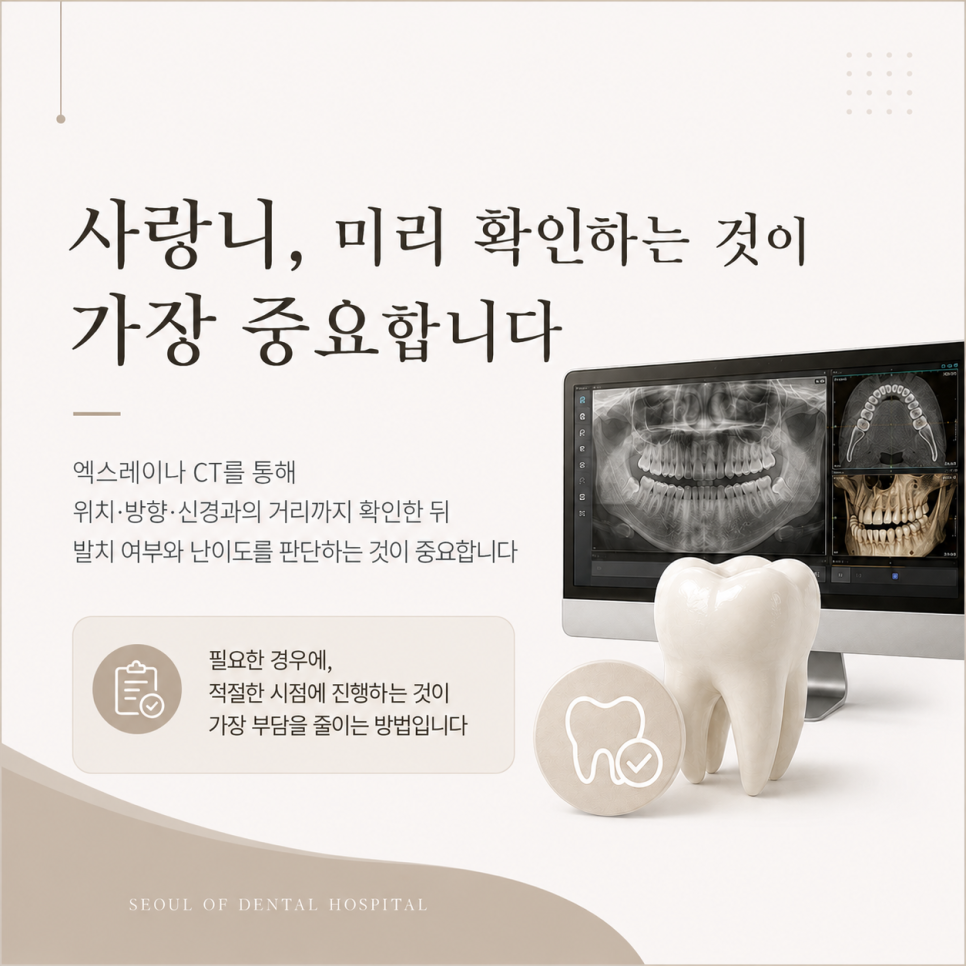
Wisdom teeth: checking them in advance
is most important
Rather than waiting until a wisdom tooth starts to hurt,
it is important to first determine whether it has the potential to cause problems.
Even if you currently have no discomfort,
regular checkups to monitor the condition of your wisdom teeth
can help reduce unnecessary pain or emergency situations.
When extraction is necessary,
proceeding at an appropriate time
is the best way to reduce the burden.
#WisdomToothExtraction #OralAndMaxillofacialSurgerySpecialist #ImpactedWisdomToothExtraction #WisdomToothExtractionCost