Hello!
This is Seoul Ove Dental Hospital.
Today, we would like to introduce a case in which a molar that had been loose for a long time due to periodontitis was extracted and restored with an Osstem implant.
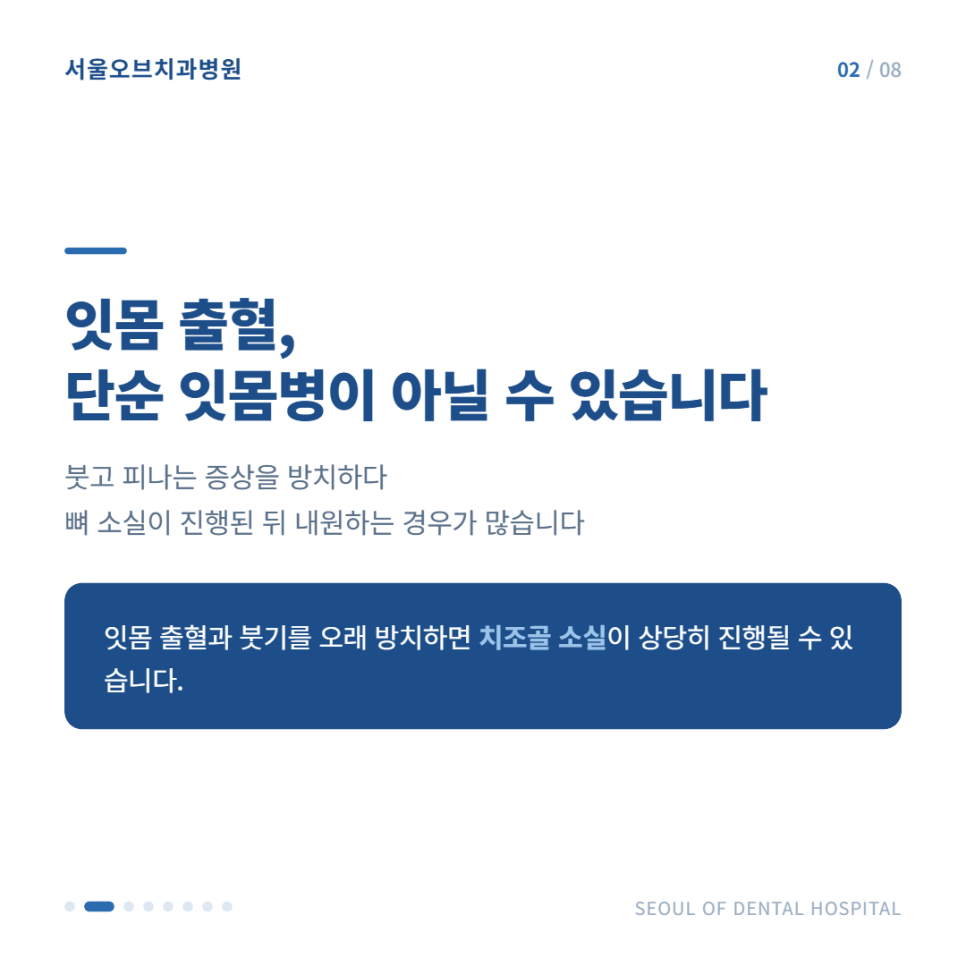
Many people considering implants regard symptoms such as swollen and bleeding gums as a simple gum condition and leave them untreated. As a result, they often visit a dental hospital only after significant bone loss has occurred.
We hope today’s case will be helpful to those experiencing similar concerns.
Condition at the Initial Visit
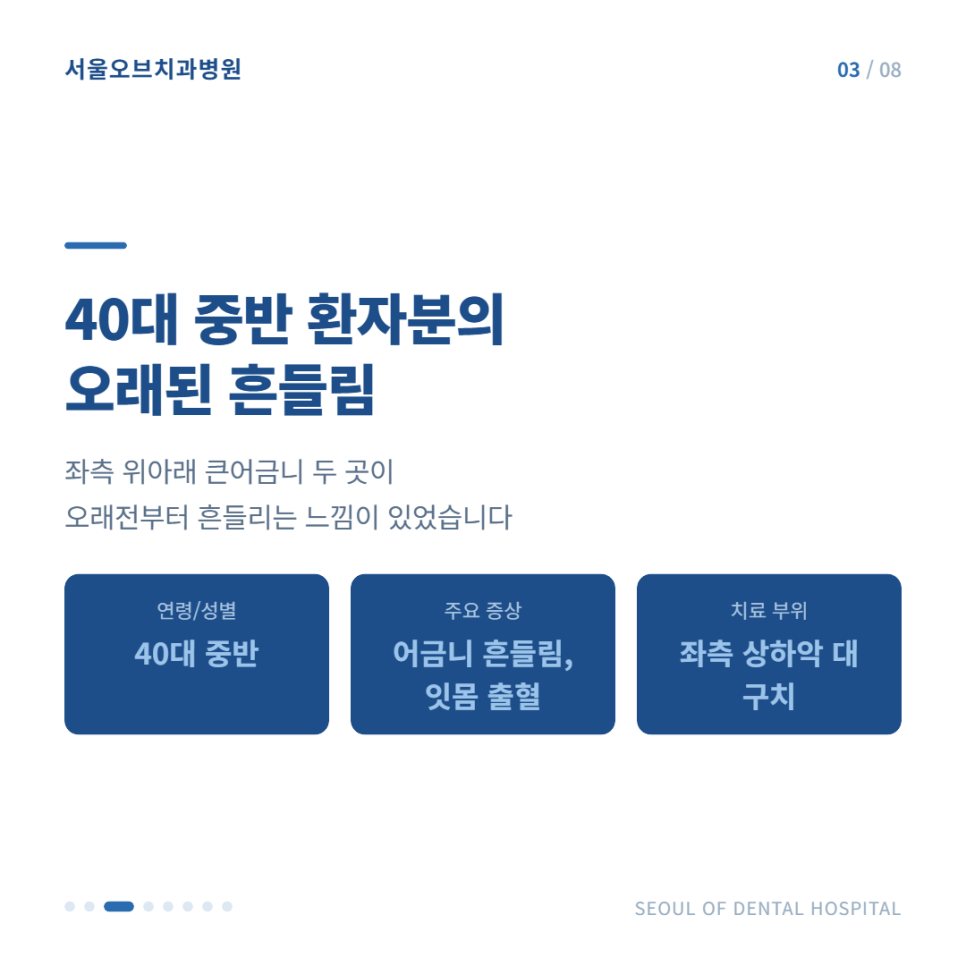
The patient was in their mid-40s and had felt that two molars on the upper and lower left sides had been loose for a long time. However, because the pain was not severe, treatment had been postponed.
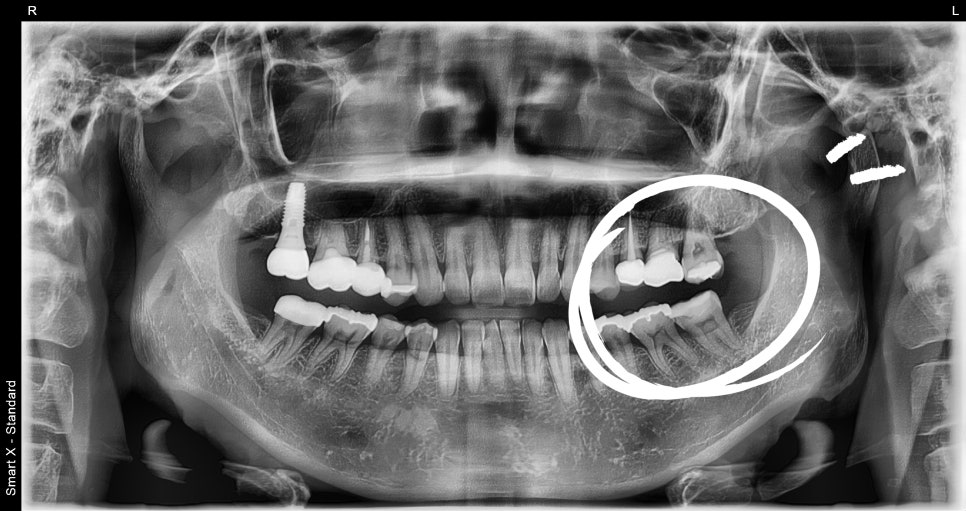
Photo before implant treatment
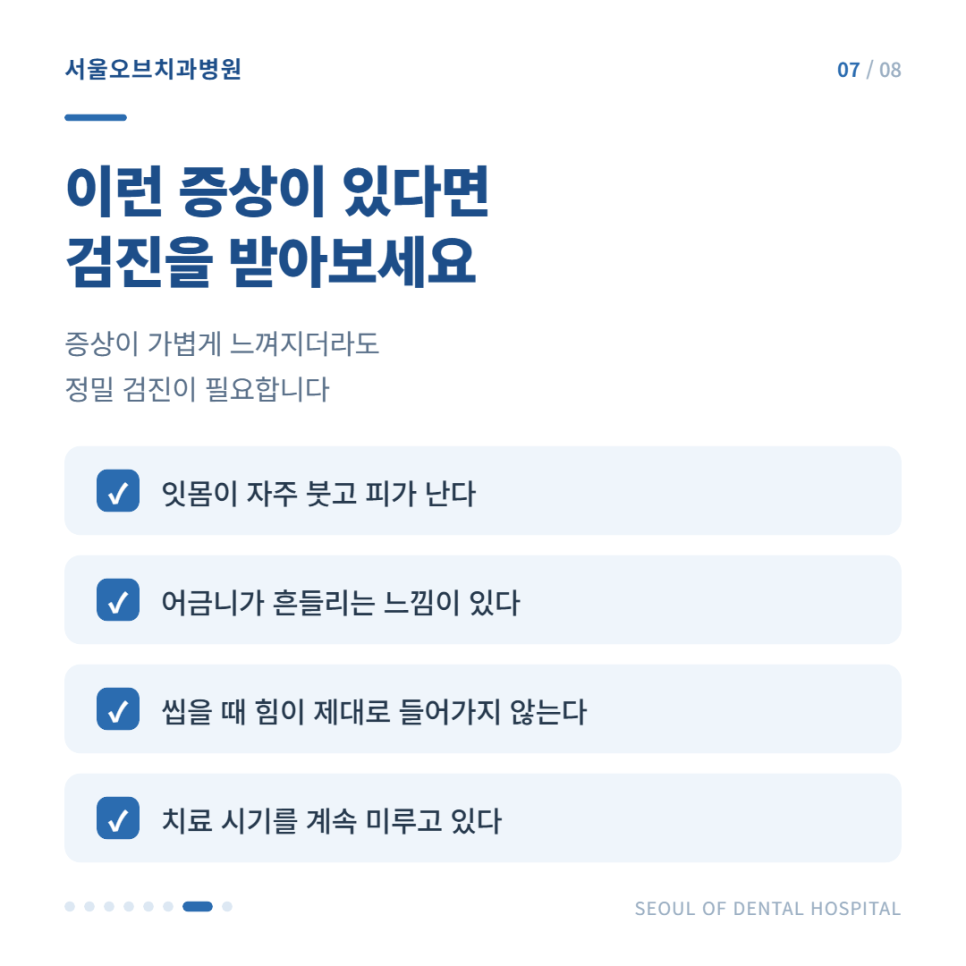
At the time of the visit, the patient also had frequent gum swelling and bleeding, and reported that they could not apply sufficient force when chewing food.
Among those who visit us for Samjeon dental implant consultations, quite a few do not come in until their periodontitis has progressed significantly.
We also occasionally meet patients visiting for Jamsil dental implant treatment whose condition has worsened after enduring their symptoms for a long time.
Detailed Diagnosis and Treatment Plan
At Seoul Ove Dental Hospital, we precisely assessed the extent of alveolar bone loss through 3D CT imaging.
Significant bone loss caused by periodontitis had progressed around both the upper and lower left molars. We determined that, in the long term, extraction followed by implant restoration would be more stable than attempting to preserve the existing teeth.
We also assessed the amount and density of bone required for implant placement and developed a treatment plan involving bone grafting based on these findings.
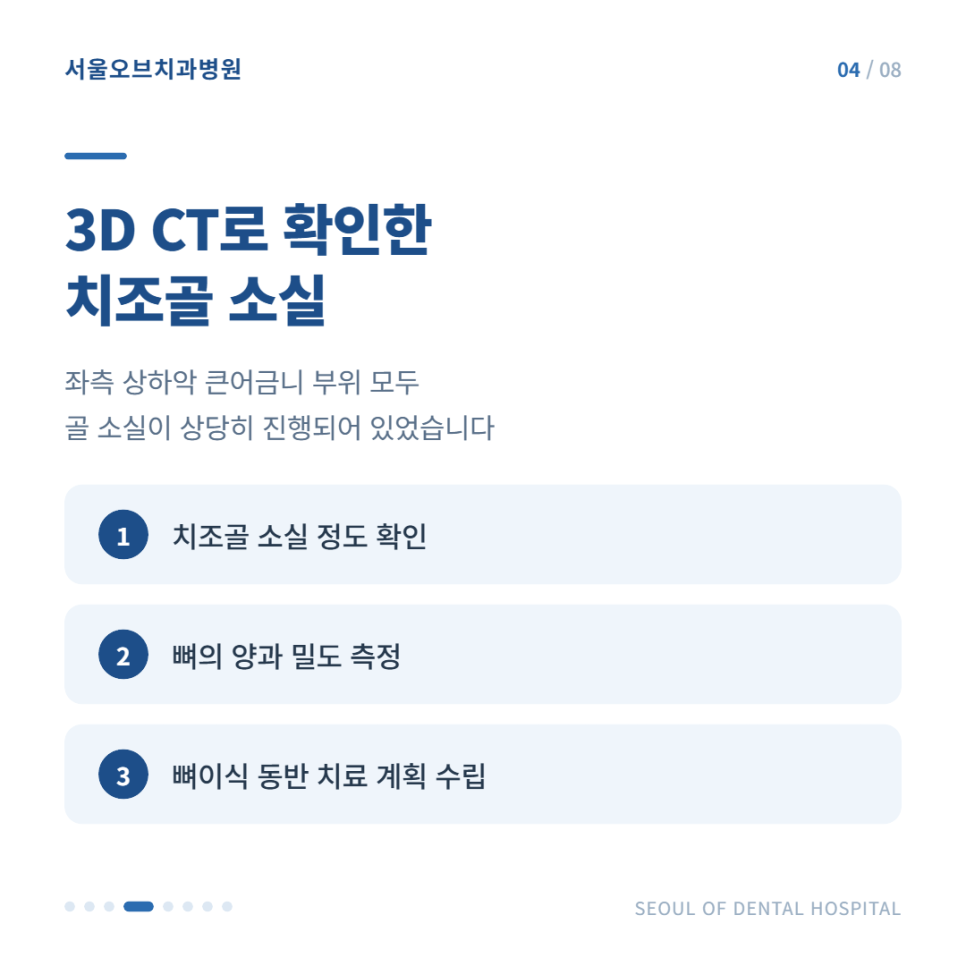
Because molars affected by advanced periodontitis often have more severe bone loss than is apparent externally, a detailed diagnosis is essential.
Osstem Implant Placement Process
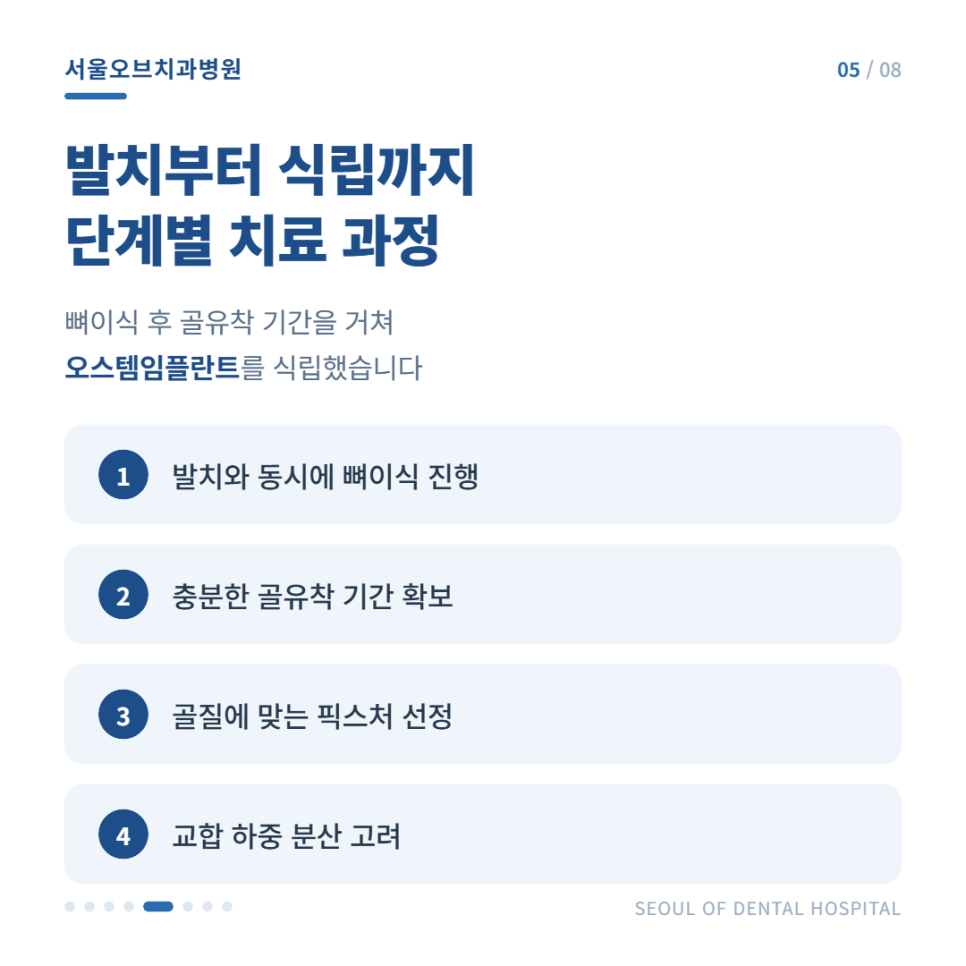
Bone grafting was performed in the areas of insufficient alveolar bone at the same time as the extractions. After allowing sufficient time for bone healing and integration, the implants were placed.
When performing implant treatment, the type of fixture and placement angle are selected differently depending on bone quality. In this case, Osstem implant fixtures were selected to enhance stability according to the patient’s bone quality.
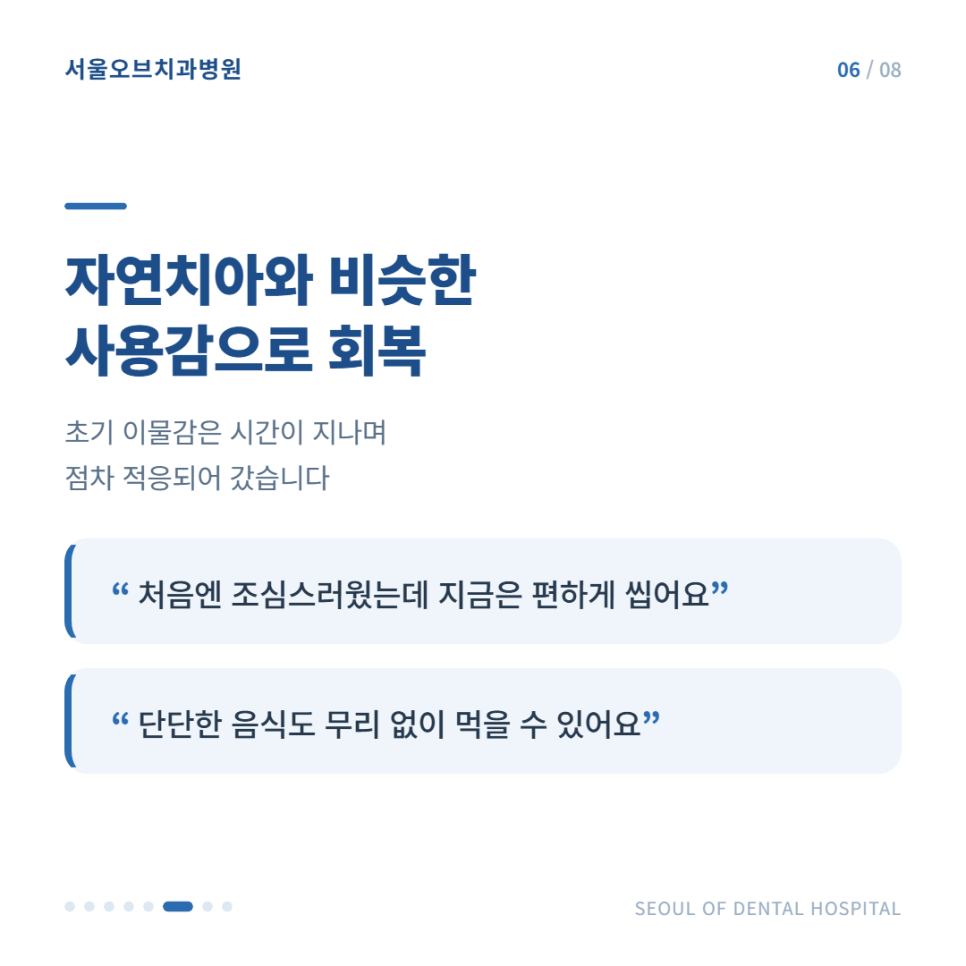
Because implants were being placed in two areas, the upper and lower left sides, the treatment plan needed to take both the placement sequence and the distribution of occlusal forces into account.
We also explain to patients receiving implant treatment that selecting fixtures suited to the bone quality and quantity can have a significant effect on the treatment outcome.
Recovery Process and Changes After Treatment
< Photo before treatment >
Photo before implant treatment
< Photo after treatment >
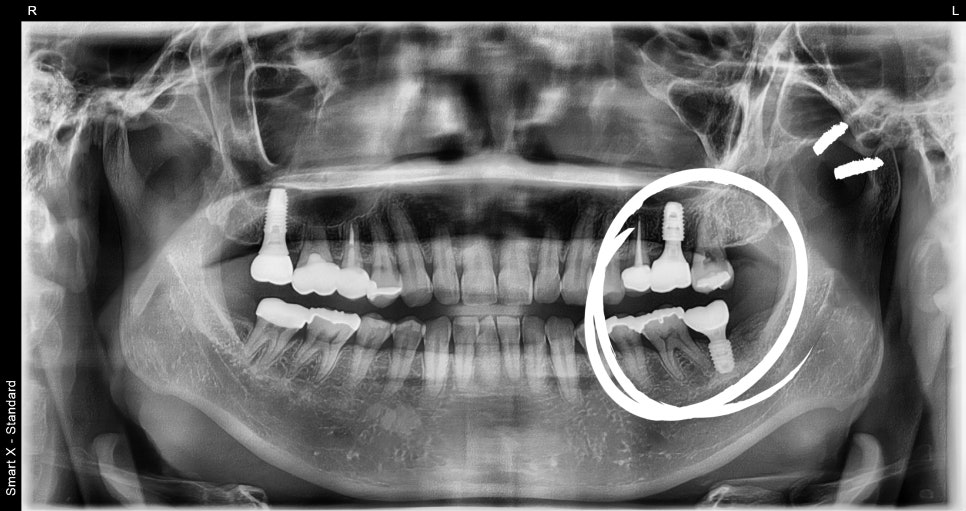
Photo after implant treatment
After placement, we checked the condition of osseointegration and the extent of gum healing through regular visits.
There was initially a slight foreign-body sensation and some caution when chewing, but over time, the patient gradually adapted to a sensation similar to that of natural teeth.
The patient has now recovered a substantial degree of chewing function and can eat hard foods without difficulty.
Regular checkups are also being used to manage the gums around the implants.
If care becomes inadequate after Osstem implant placement, it may lead to peri-implantitis. Therefore, our hospital recommends continuing regular checkups after placement.
Patients who have received implant treatment are also maintaining good results through this type of regular care.
Implant treatment does not end with placement; consistent care afterward affects the longevity of the implants.
Costs and Frequently Asked Questions
The cost of Osstem implants varies depending on whether extraction is required, whether bone grafting is necessary, the number of implants being placed, and the type of fixture. Accurate information can only be provided after a detailed examination.
Cost is the point most frequently asked about by people considering Samjeon dental implants. At our hospital, we first determine the required scope of treatment through a detailed 3D CT examination and then proceed with the consultation.
Through a collaborative system involving specialists trained at Seoul National University, each stage—from extraction and bone grafting to implant placement and prosthetic fabrication—is reviewed and carried out step by step. We also operate an in-house dental laboratory, allowing us to manage prosthetic fabrication schedules with relatively greater flexibility.
Sedation treatment is also available for those who feel particularly anxious about the treatment process, and details can be provided during the consultation.
If teeth that have become loose due to periodontitis are left untreated for a long time, bone loss may progress further and the scope of treatment may increase.
If you are considering Jamsil or Samjeon dental implants, we recommend undergoing a detailed examination first, even if your symptoms seem mild.
The outcome of implant treatment and the speed of recovery may vary depending on the patient’s gum condition and overall health.
(This post provides general information only. Diagnosis and treatment methods may vary depending on an individual’s oral condition.)
Seoul Ove Dental Hospital
196 Baekjegobun-ro, Songpa-gu, Seoul, B1, 4th, and 5th floors
A 1-minute walk from Exit 3 of Samjeon Station
02-418-2275
💬 Kakao Channel inquiries