
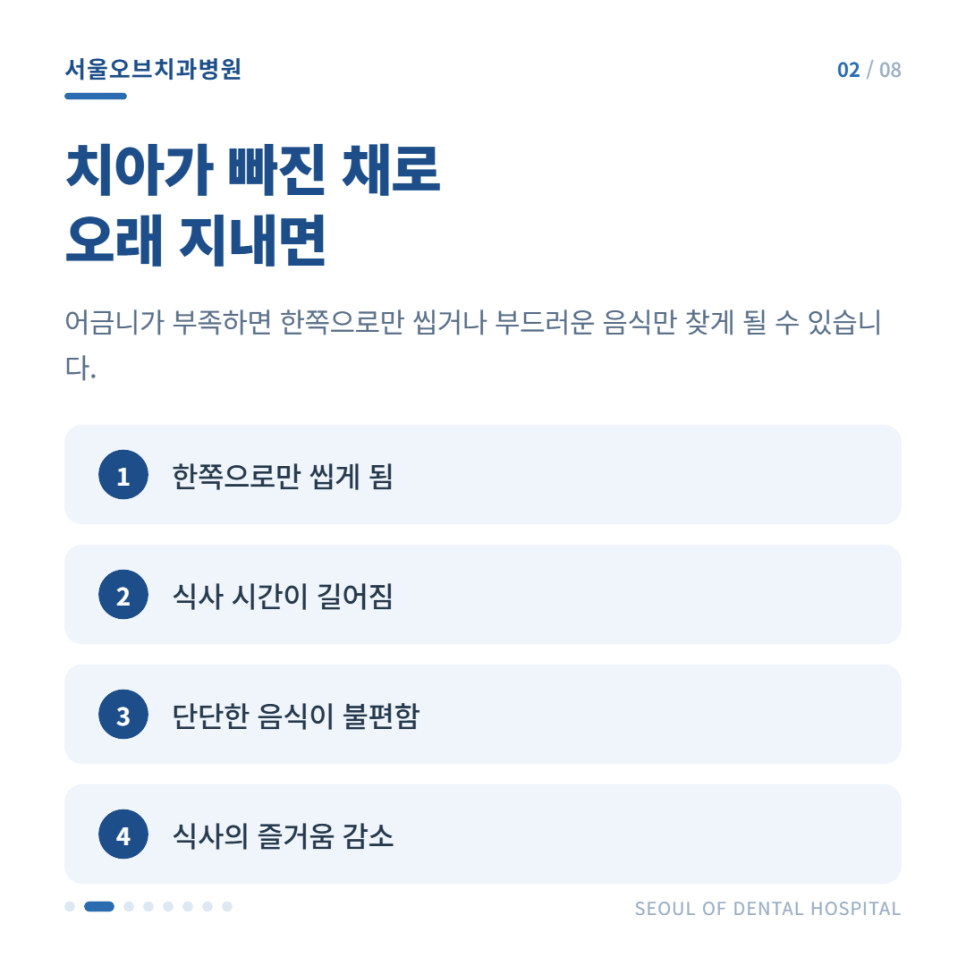
Living for a long time with missing teeth can cause you to chew food on only one side or spend more time eating.
In particular, when molars are missing, people tend to avoid hard foods and seek only soft foods, making it easy for the pleasure of eating to diminish.
At times like this, you may consider implants,
but older adults often begin with concerns such as:
“I'm older—will it be okay to undergo surgery?”
Geriatric implant treatment is not determined by age alone.
Treatment decisions should be made after considering the medications currently being taken, systemic diseases, the condition of the jawbone, and the body's ability to recover.
A case of molar implant treatment in an 86-year-old patient
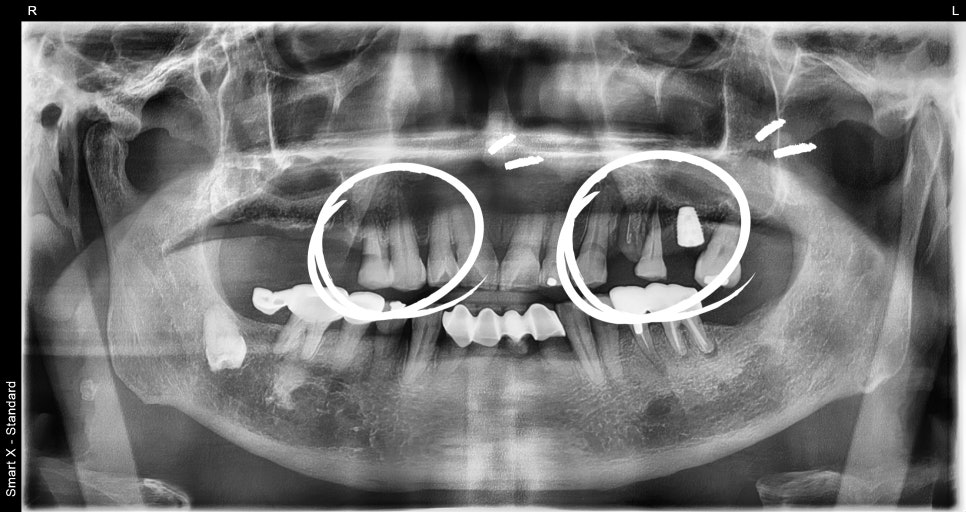
A case of molar implant treatment in an 86-year-old patient
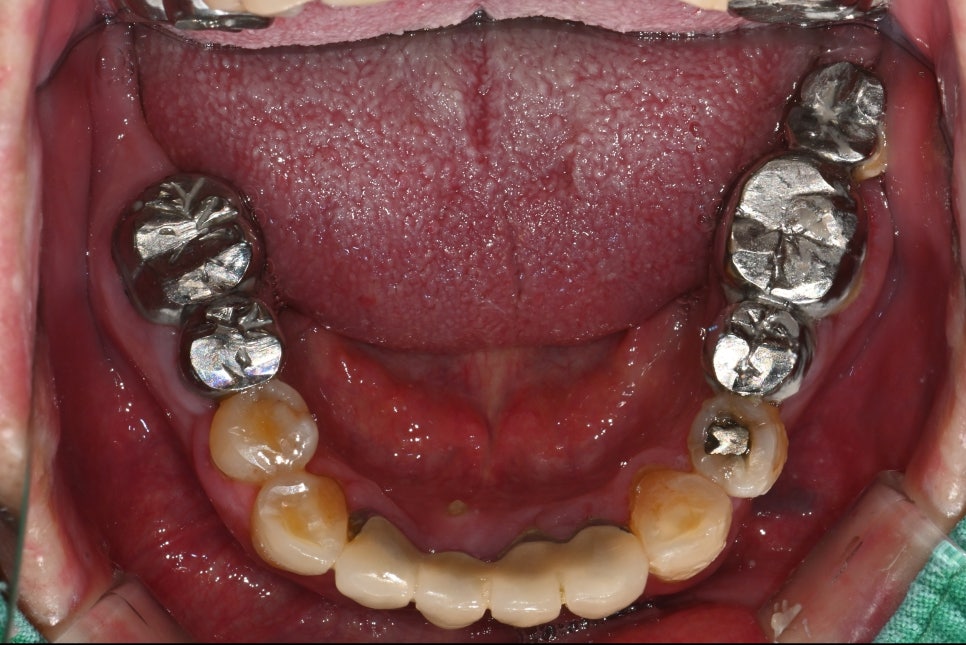
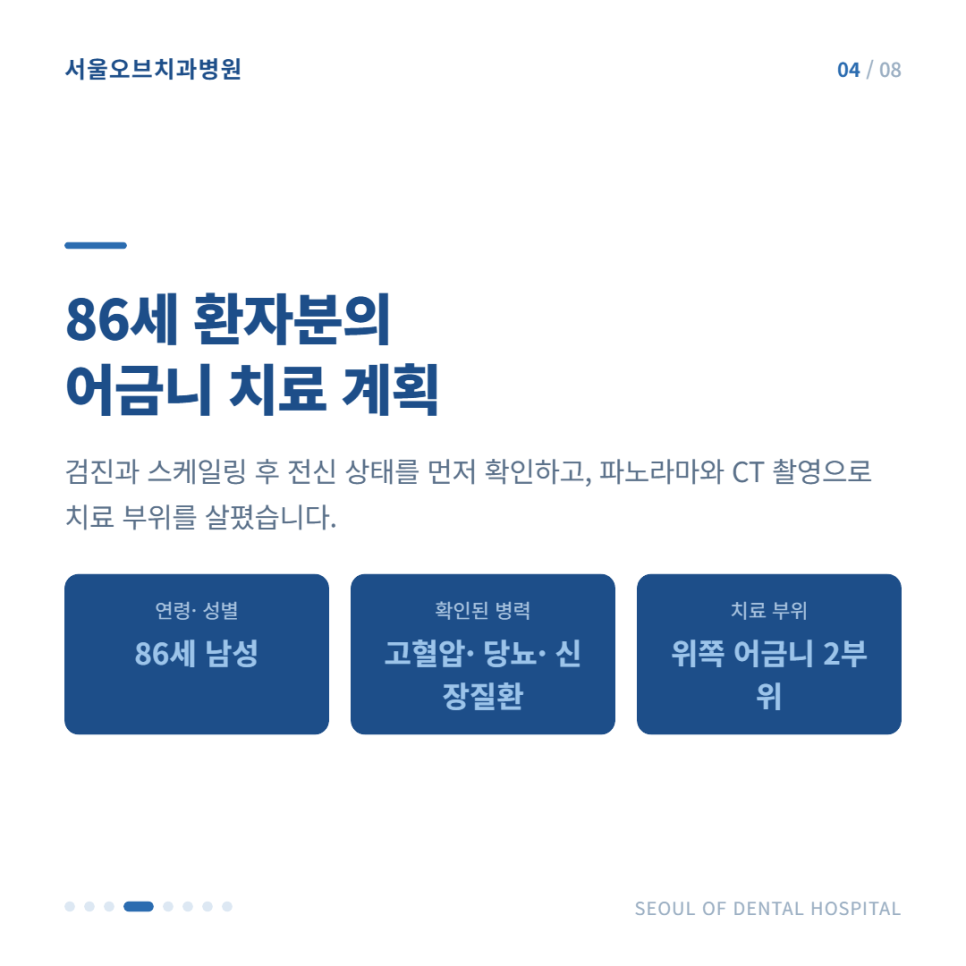
This patient was 86 years old and visited the clinic for a dental examination and scaling.
Because the patient had a medical history including hypertension, diabetes, and kidney disease, we first reviewed the medications being taken and the patient's overall systemic condition.
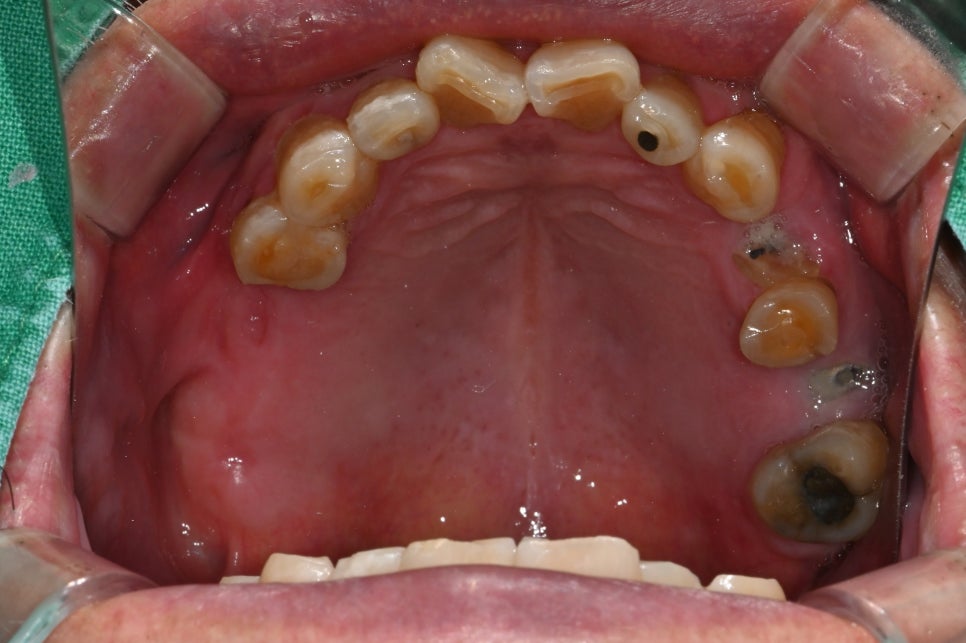
Afterward, panoramic X-rays and CT scans were used to examine the height and width of the jawbone and the surrounding structures. Implant treatment was then planned for two areas of the upper molars.
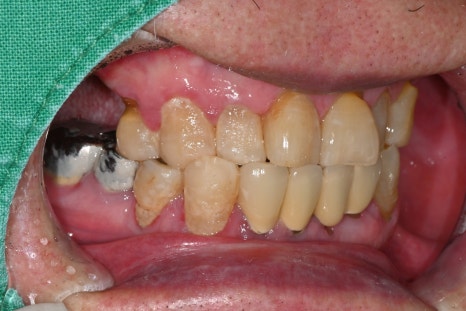
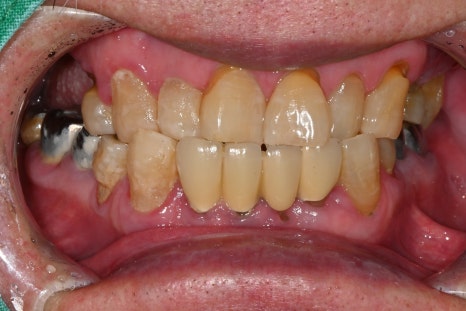
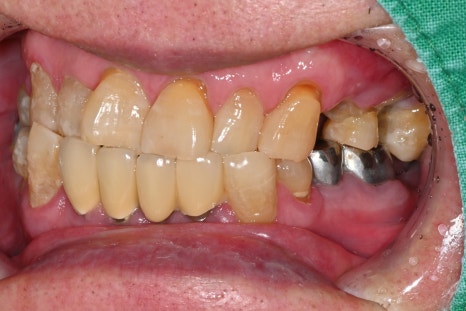
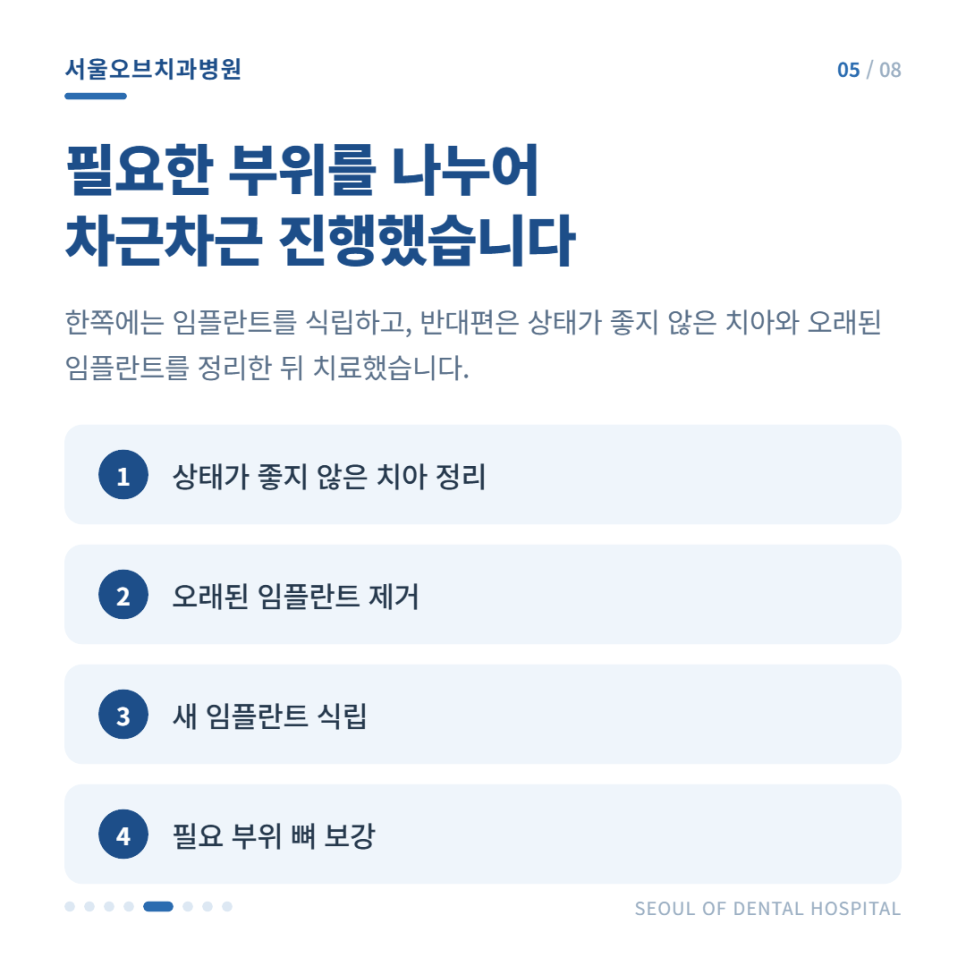
An implant was placed in one molar area. On the opposite side, a tooth in poor condition and an old implant were removed before placing a new implant.
In areas where the bone was insufficient, bone augmentation treatment was also performed to provide stable support for the implants.
Are implants possible for people in their 80s?
Are implants possible for people in their 80s?
Being advanced in age does not necessarily mean that you must give up on implant treatment.
However, rather than proceeding at the same pace as with younger patients, it is advisable to divide the treatment into stages while taking physical strength and recovery into consideration.
The following points are checked before implant treatment for older adults.
Whether blood pressure and blood sugar are being managed stably
Whether the patient is taking aspirin or medications related to blood circulation
Whether the patient has kidney disease or cardiovascular disease
Whether there is sufficient jawbone at the surgical site
Whether a caregiver can provide care after surgery
For this patient as well, treatment was divided into the necessary areas, and swelling and bleeding were monitored after surgery.
Afterward, sutures were removed and gum treatment was performed while allowing time for the implants to become firmly integrated with the jawbone.
How does insurance-covered implant treatment proceed?
How does insurance-covered implant treatment proceed?
If you are 65 or older, you may be eligible for National Health Insurance coverage for implants under specified conditions.
However, not all treatment is automatically covered by insurance. Coverage may vary depending on the number and location of implants eligible for coverage and the current condition of the teeth.
In this case as well, one area was treated with an insurance-covered implant.
As with standard implant treatment, insurance-covered implant treatment proceeds in the order of diagnosis, implant placement, and placement of the final tooth.
At each stage, the implant's stability is checked before moving on to the next step.
Because eligibility for insurance coverage and out-of-pocket costs may vary from patient to patient, the most accurate way to confirm them is through a consultation after examination.
Why you need to wait after implant placement
Why you need to wait after implant placement
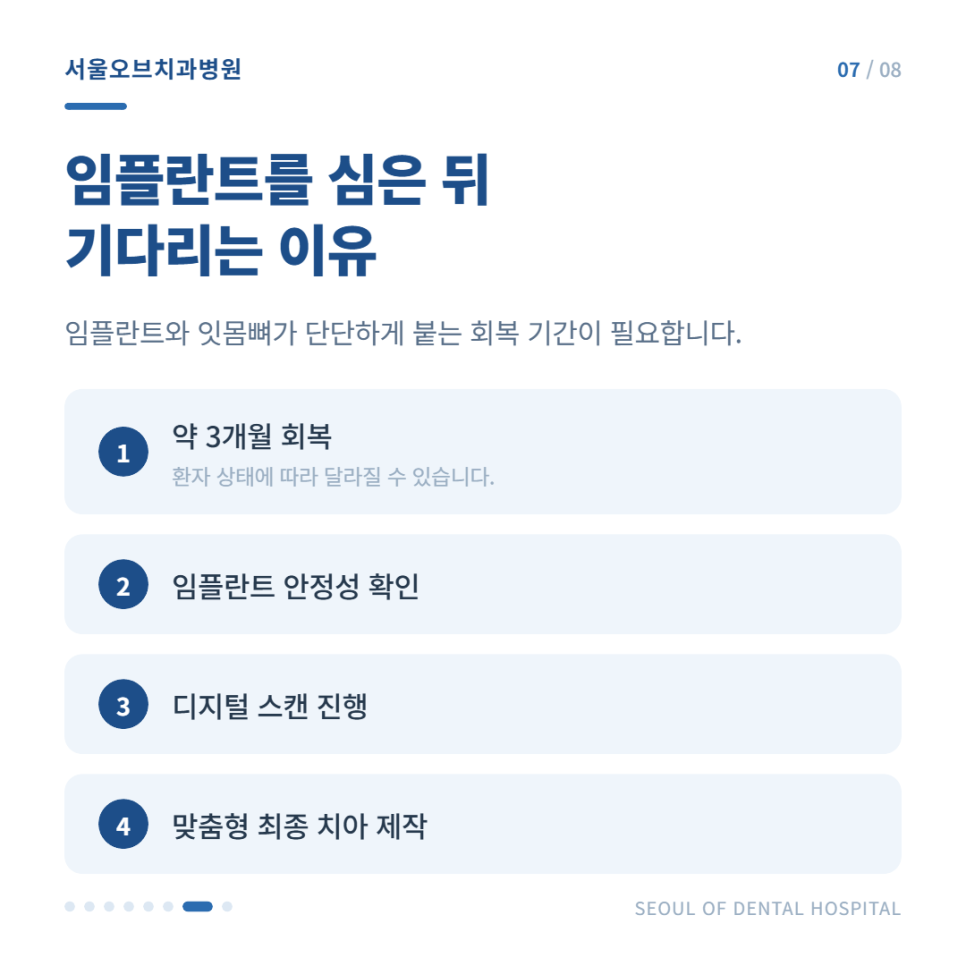
Implant treatment does not end immediately after the implant is placed in the gum. A recovery period is needed for the implant to become firmly integrated with the jawbone.
This patient went through a recovery period of approximately three months before the stability of the implants was checked.
Afterward, the connecting components were exposed through the gums, and the final teeth were fabricated using a digital scan.
Recovery speed can vary among older patients. Therefore, rather than following set dates alone, it is important to determine the next step after checking the actual condition of the bone and gums.
Careful checking is also needed when making the final teeth
Careful checking is also needed when making the final teeth
Once the implants have integrated well with the jawbone, the final teeth are made to match the patient's gum shape and the color of the surrounding teeth. For this patient, two molar areas were completed using customized connecting components and zirconia restorations.
Keeping the mouth open for a long time can be difficult for older patients. Therefore, treatment is carried out with sufficient breaks, and after the final teeth are placed, the dentist carefully checks for any areas that feel too high or uncomfortable when chewing.
After treatment, the patient said,
“It feels comfortable and fine.”
Follow-up care and gum examinations continued afterward.
Geriatric implant treatment at 서울오브치과병원
Geriatric implant treatment at 서울오브치과병원
Geriatric implant treatment does not end with the surgery to place the implants. The entire process must be considered, from reviewing medications to surgery, fabrication of the final teeth, and gum care.
서울오브치과병원 coordinates surgical care by an oral and maxillofacial surgery specialist with prosthetic treatment by a prosthodontics specialist.
During the surgical stage, CT scans are used to examine the jawbone and surrounding structures. During the prosthetic stage, the height and shape of the teeth are adjusted so that the patient can chew comfortably in daily life.
<Photo before implant treatment>
<Photo after implant treatment>
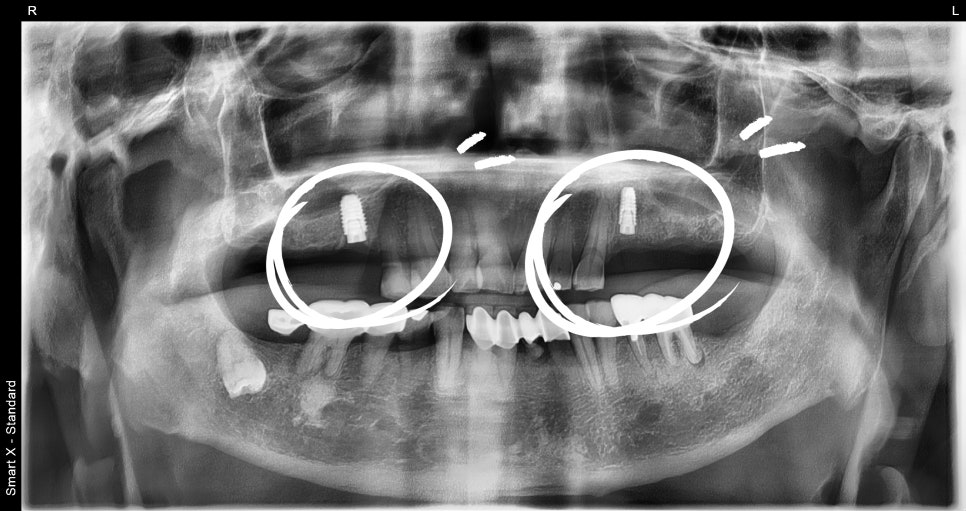
Photo after implant treatment
The clinic also has an in-house dental laboratory and an on-site dental technician, allowing the medical team and technician to communicate directly about the patient's gum shape, tooth color, and prosthetic design during fabrication.
When treatment time may be physically demanding, as it can be for older patients, treatment is carried out with breaks in between based on the patient's stamina and ability to cooperate. Caregivers are also informed about the treatment process and care instructions.
Regular checkups and gum care are still necessary after implant treatment is complete.
If food becomes trapped around the implant or tartar builds up, the gums may swell and bleed. Therefore, the patient is given instructions on brushing and interdental care suited to their condition, and localized scaling is performed when necessary.
서울오브치과병원
196 Baekjegobun-ro, Songpa-gu, Seoul, B1, 4th, and 5th floors
A 1-minute walk from Exit 3 of Samjeon Station
02-418-2275
💬 Kakao Channel inquiries