Hello. This is 서울오브치과병원. :)
There is one phrase we hear most often during consultations for no-prep veneers.
“I want to avoid shaving down my teeth as much as possible.”
That is completely understandable. Once a tooth has been shaved down, it cannot be restored to its original state.
So today, I will explain how tooth reduction for veneers is actually determined, and how far minimal-prep and no-prep veneers are possible, using a real case.
Let’s first clarify what “no-prep” means
Conventional veneers generally involve reshaping the front surface of the tooth by approximately 0.3 to 0.7 mm.
This process creates space for the ceramic.
“No-prep” or “minimal-prep” means reducing the tooth by much less than this.
The procedure is performed at the level of surface treatment, with reduction of 0.3 mm or less.

Ove Zero veneers at 서울오브치과병원
However, there is an important point to note here.
Cases involving absolutely no reduction at all are uncommon.
This is because the tooth surface needs to be prepared so that the ceramic can bond to it.
That is why, rather than focusing on the term “no-prep,” we explain it in terms of “how little can be reduced.”
The amount of reduction is determined tooth by tooth, not case by case
Let me tell you about this patient.
Eight upper front teeth were treated, but all eight did not have the same conditions.
[Before minimal-prep veneer treatment]
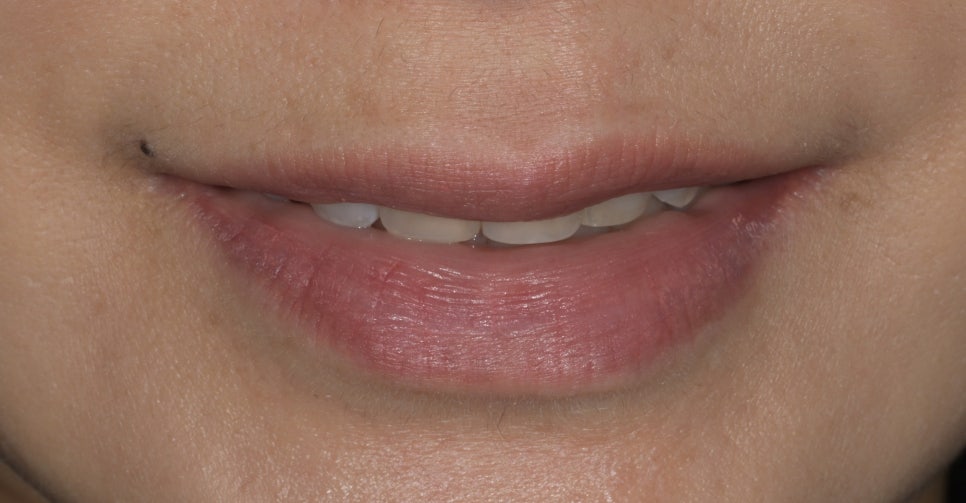
Seven teeth were treated using a line that involved almost no reduction.
However, one tooth needed to be shaped slightly more using a different line.
Although this was the same treatment for the same person, the amount of reduction differed from tooth to tooth.
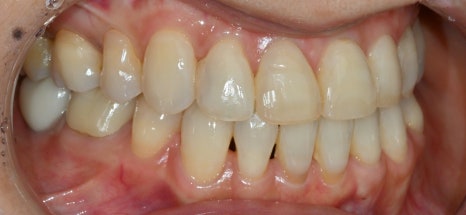
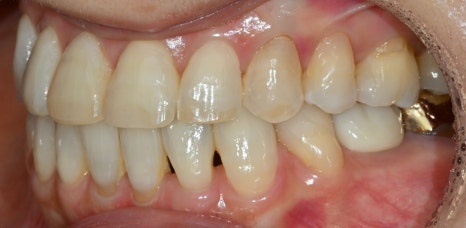
[Intraoral photographs before treatment]
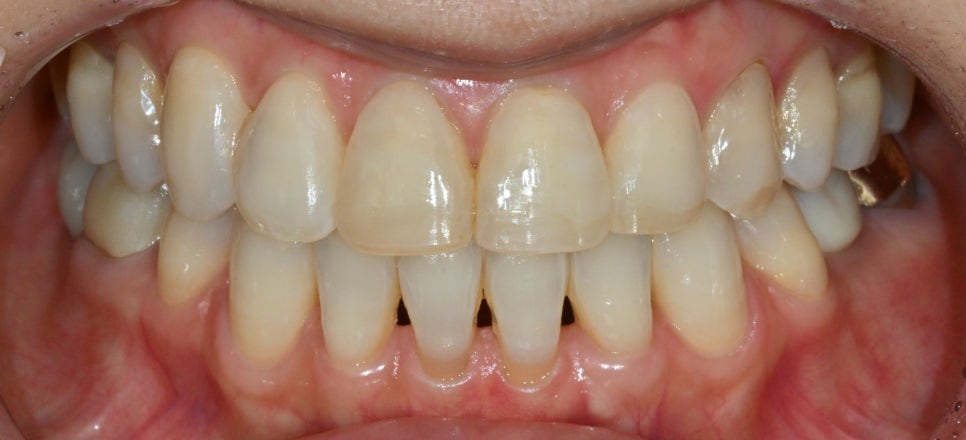
This is the point I most want to emphasize today.
There is no single answer to the question, “How many millimeters does this clinic shave down?”
① It varies depending on the desired result
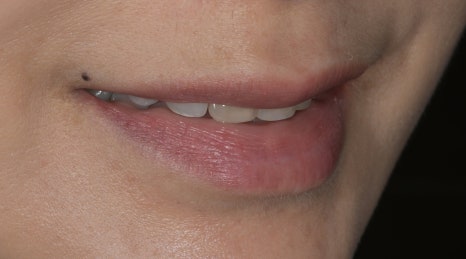
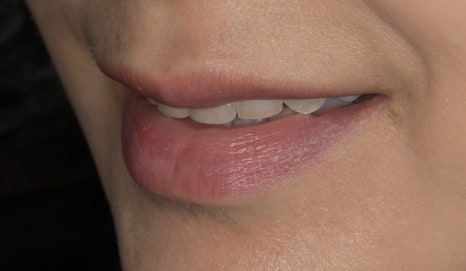
This patient wanted teeth with slightly more volume than before.
If you want a shape that projects slightly forward, space for the ceramic is already available to some extent.
That reduces the need for tooth reduction.
[Before treatment – side view]
On the other hand, if you want the teeth positioned farther inward than they are now, the situation is different.
To move them inward, the teeth need to be shaped by the amount of space required.
The desired direction of movement determines the amount of reduction first.
② It varies depending on the condition of each tooth
This is why one of the eight teeth was reduced more.
That tooth was discolored and darker than the others.
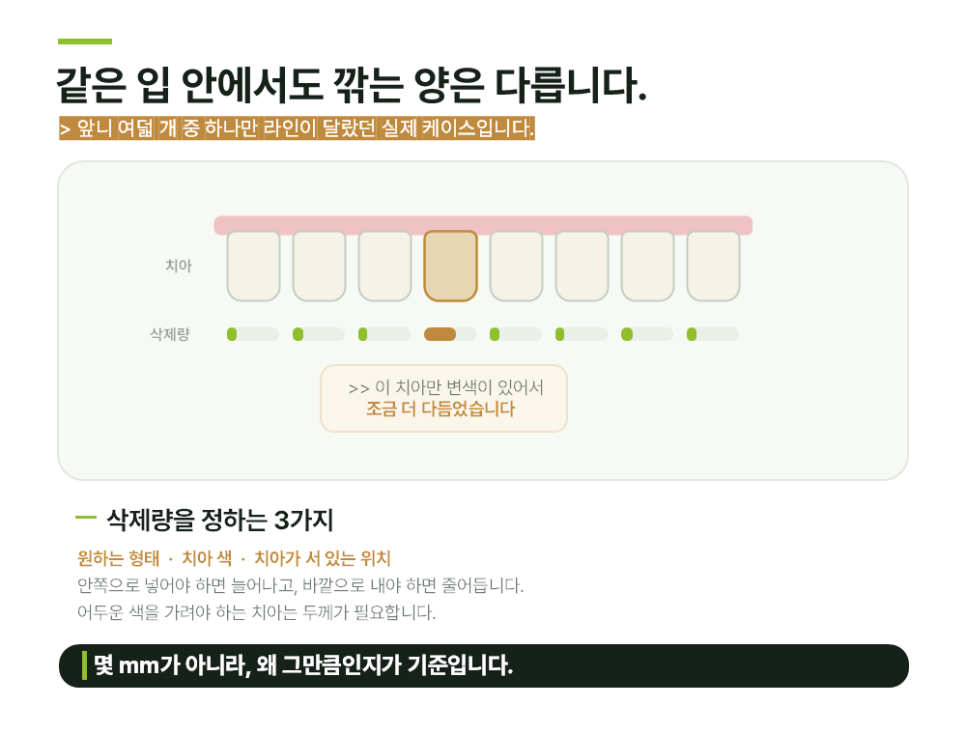
If the ceramic is too thin, the color underneath shows through.
Covering a dark color requires sufficient thickness, and adding thickness requires space.
Therefore, only that one tooth was shaped slightly more, and its color was checked separately so that it could be designed independently.
The original color of the other seven teeth was not unfavorable, so they could be treated with a thinner design.
③ It varies depending on the position of each tooth
One tooth was tilted inward.
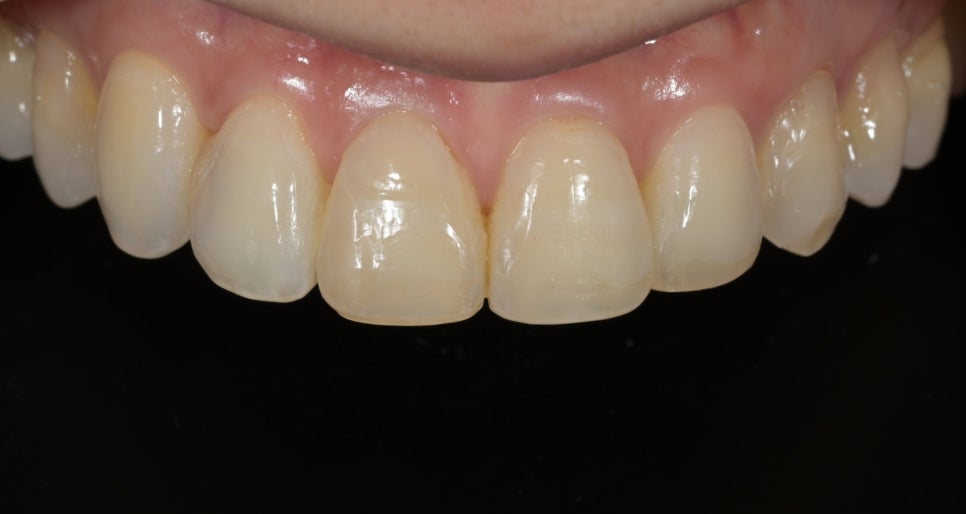
For teeth like this, the alignment is actually corrected by bringing them outward.
If the tooth is being moved outward, there is no reason to reduce it.
Conversely, a tooth that already projects outward needs to be moved inward, which increases the amount of shaping required.
Even within the same mouth, the decision may go in opposite directions depending on where each tooth is positioned.
That is why it is difficult to answer the question of how many millimeters with a single number.
There is a trend toward emphasizing increasingly thinner veneers competitively, but when thinness itself becomes the goal, the priorities become reversed.
If a tooth that needs to be masked is treated excessively thin, the result may be unsatisfactory.
[After minimal-prep veneer treatment]
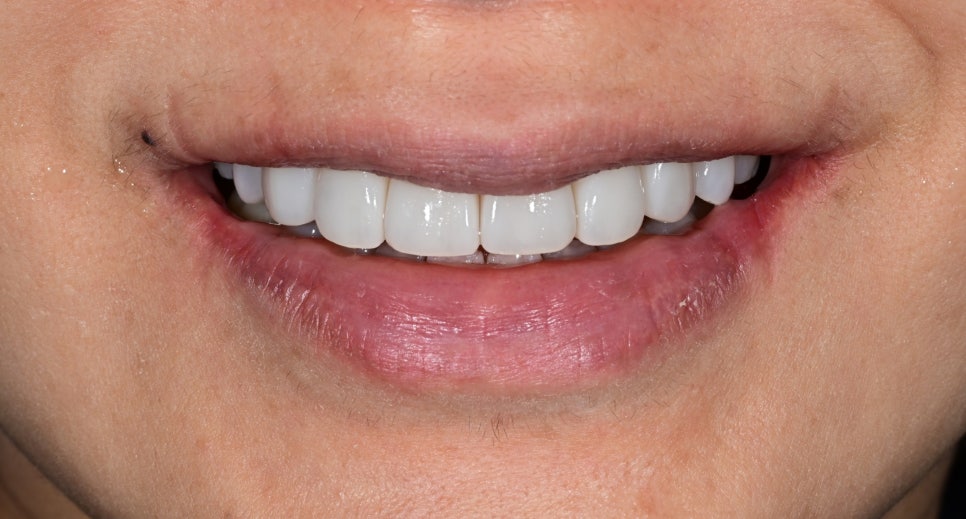
This is also why we use different lines.
Teeth that require almost no reduction are treated using that line, while teeth that need thickness because of their color or shape are treated using another line.
It is actually common to combine two lines for one person.
That was the case for this patient.
Temporary veneers are used only when necessary
When very little reduction is performed, temporary veneers are often not necessary.
[After treatment]
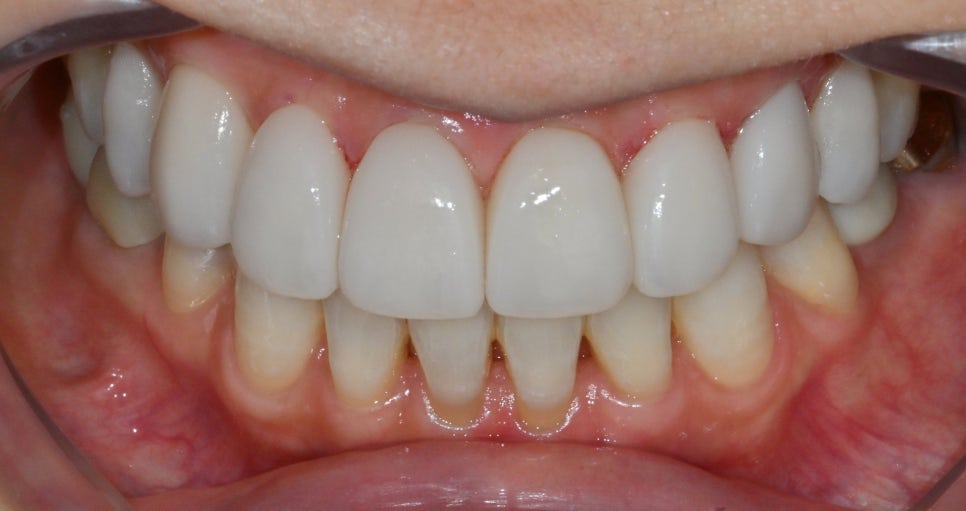
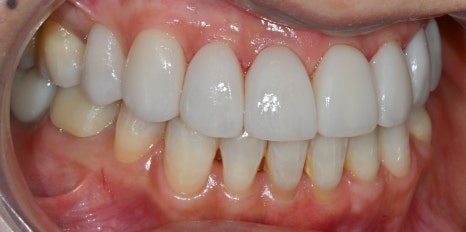
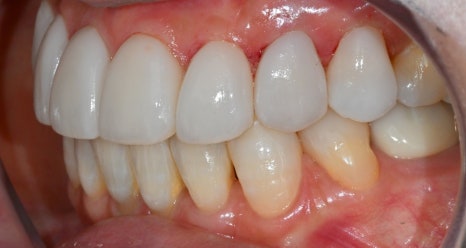
We had prepared to place a temporary veneer on one tooth for this patient, but the patient said they were satisfied with the shape and color after shaping, so they left it as it was.
This eliminated one step in the process.
If something is not essential, we do not add it.
What we paid attention to in the design
The length was increased by only about 0.5 mm from the shaped state.
The front surfaces were kept flat, while the outer corners were gently rounded.
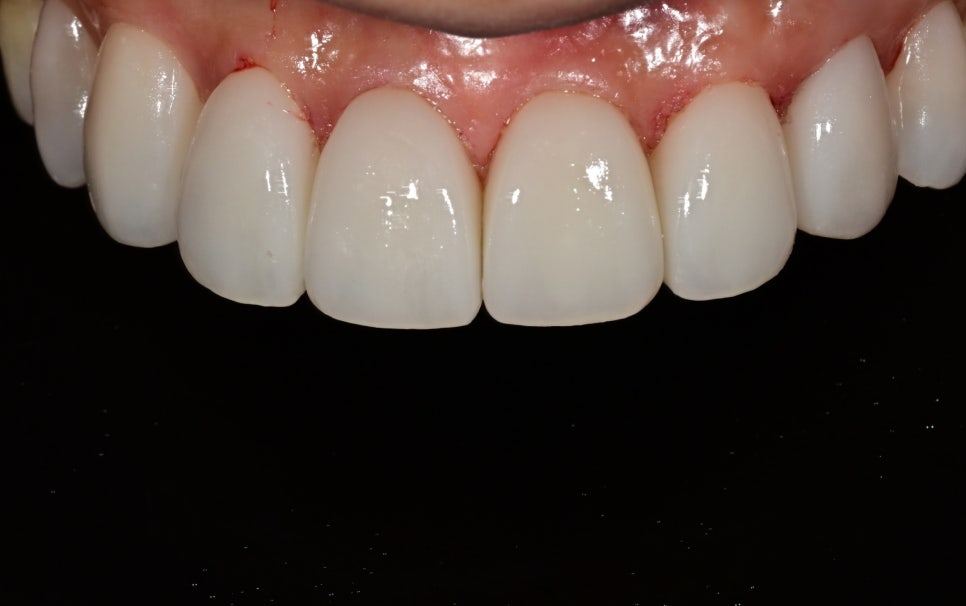
The difference in length between the central incisors and lateral incisors was kept small to create an orderly appearance. The spaces between the teeth were made narrower only in the center and left more open elsewhere.
[After treatment – side view]
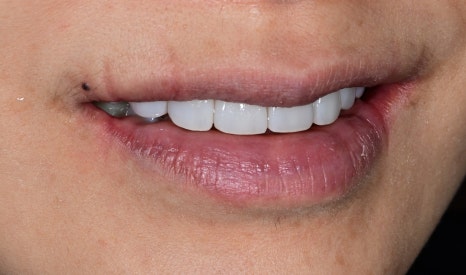
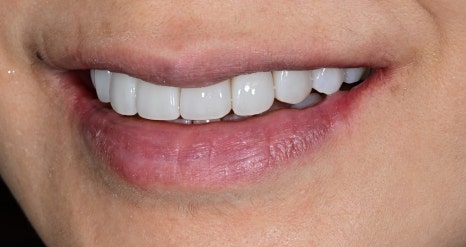
The tips of the canines were rounded while retaining a slightly pointed appearance.
The color was matched to a bright tone, while the one discolored tooth was measured separately so that it would blend with the surrounding teeth.
Before treatment / After treatment
[before & after]
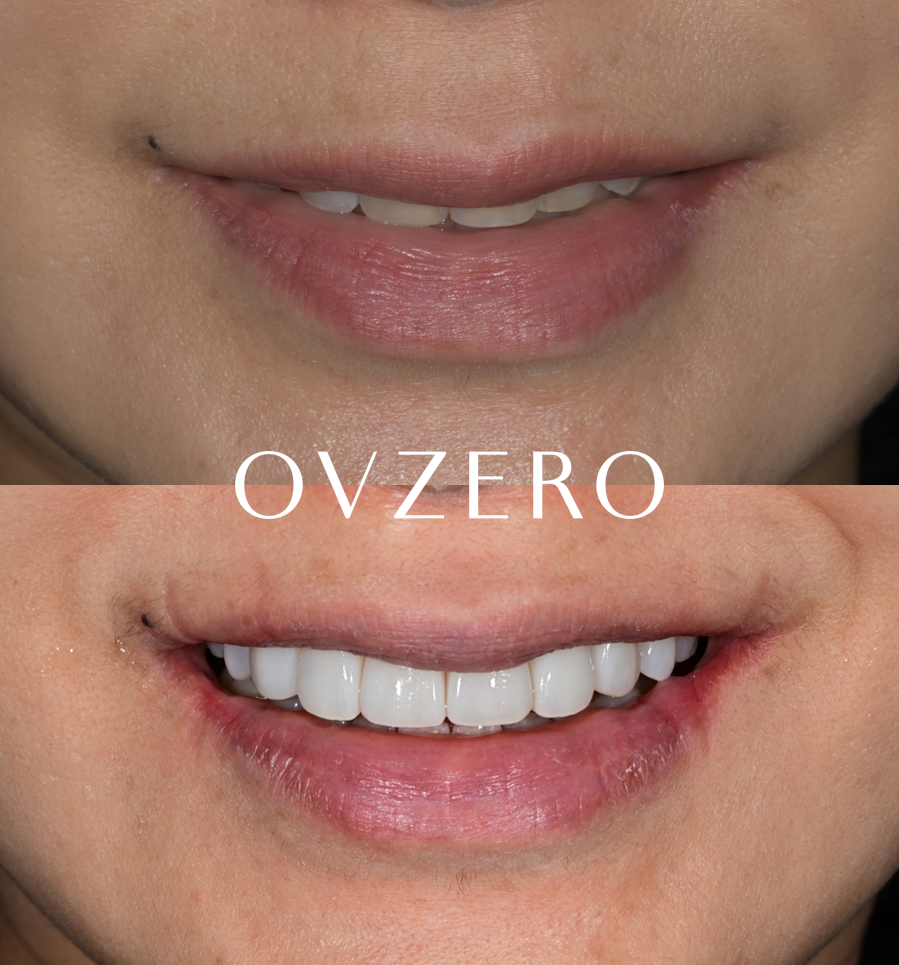
The amount of reduction was small, but the result was different.
A greater change does not necessarily require more reduction. The result is shaped by deciding where and how much to reduce.
The longevity of veneers varies depending on usage habits and care, so regular checkups are necessary.
Frequently asked questions
No-prep veneer FAQ
Q. Does no-prep veneer treatment mean that none of the teeth are shaved down?
>> Completely reduction-free treatment is uncommon.
In most cases, very minimal reduction of 0.3 mm or less or surface treatment is necessary.
Rather than focusing on the name, it is more accurate to check how little your own teeth can be reduced.
Q. How much tooth reduction is involved in veneer treatment?
>> Generally, 0.3–0.7 mm; with a minimal-prep approach, 0.3 mm or less.
However, the amount can vary even among the teeth of the same person depending on the desired shape, tooth color, and tooth position.
Q. Is no-prep treatment impossible if there is discoloration?
>> It is often difficult.
If the veneer is thin, the dark color underneath may show through.
One option is to shape only that tooth slightly more while using a minimal-prep approach for the others.
Q. If less of the tooth is shaved down, can the veneers be replaced later?
>> The more natural tooth structure remains, the broader the range of options.
That is why it is important not to reduce more than necessary from the beginning.
The most important thing to be cautious about with veneers is excessive reduction.
At the same time, if insufficient thickness cannot be provided where it is needed, the result may be unsatisfactory.
The design process involves making this judgment for each tooth.
[Video to watch before a veneer consultation]
“서울오브치과병원’s prosthodontist personally performs the diagnosis and designs the treatment plan.”
The hospital also has an in-house dental laboratory, so the dental technician responsible for fabrication reviews the diagnostic materials together with the dentist and determines how much thickness is needed.
The clinic is a one-minute walk from Exit 3 of Samjeon Station, making it convenient to visit from the Jamsil and Songpa areas.
If you want to reduce your teeth as little as possible, please feel free to visit us for a consultation.
[Directions]
📍 서울오브치과병원
196 Baekjegobun-ro, Songpa-gu, Seoul, B1, 4th, and 5th floors
🚇 One-minute walk from Exit 3 of Samjeon Station
[Quick reservations and inquiries]
📞 02-418-2275
💬 Kakao Channel inquiries
[Parking information]
✅ Parking Lot 1: 196 Baekjegobun-ro, Songpa-gu, Seoul
✅ Parking Lot 2: 28-23 Samjeon-dong, Songpa-gu, Seoul
*If Parking Lot 1 is full, please use Parking Lot 2.
#MinimalPrepVeneers #VeneerToothReduction #NoPrepVeneers #VeneerReductionAmount #OveZeroPure #FrontTeethVeneers #OveZeroVeneers #JamsilVeneers #SongpaVeneers #SamjeonStationDentist #서울오브치과병원