Hello. This is 서울오브치과병원 :)
Most people who visit us because their front teeth have chipped
have already received treatment once before.
This patient was the same.
The tooth had previously been repaired with composite resin,
but the resin had come off again by the time the patient visited us.
Filling the chipped area again is important,
but there is something that must be checked first:
why that particular area chipped in the first place.
Why did that area chip?
The front teeth are not teeth used for chewing.
Even so, some people experience chipped front teeth.
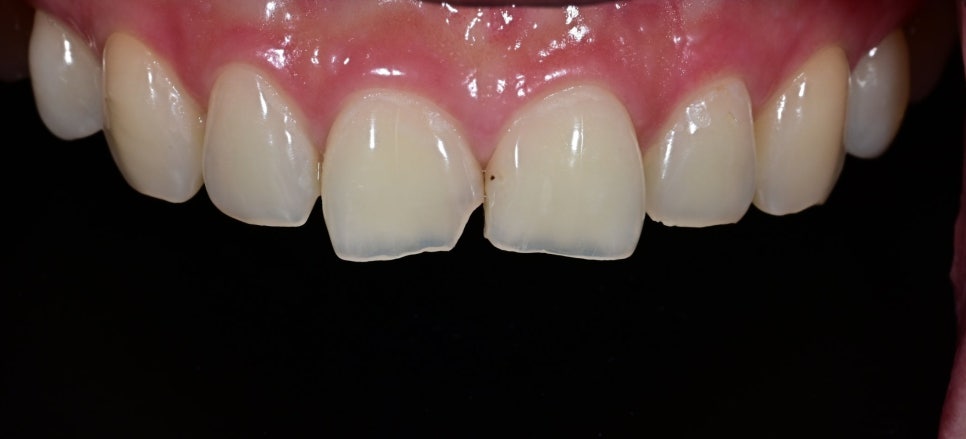
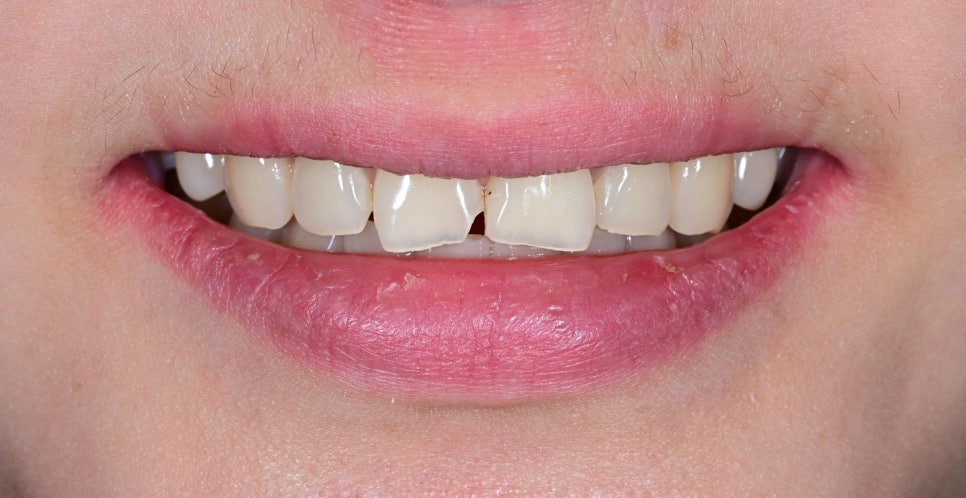
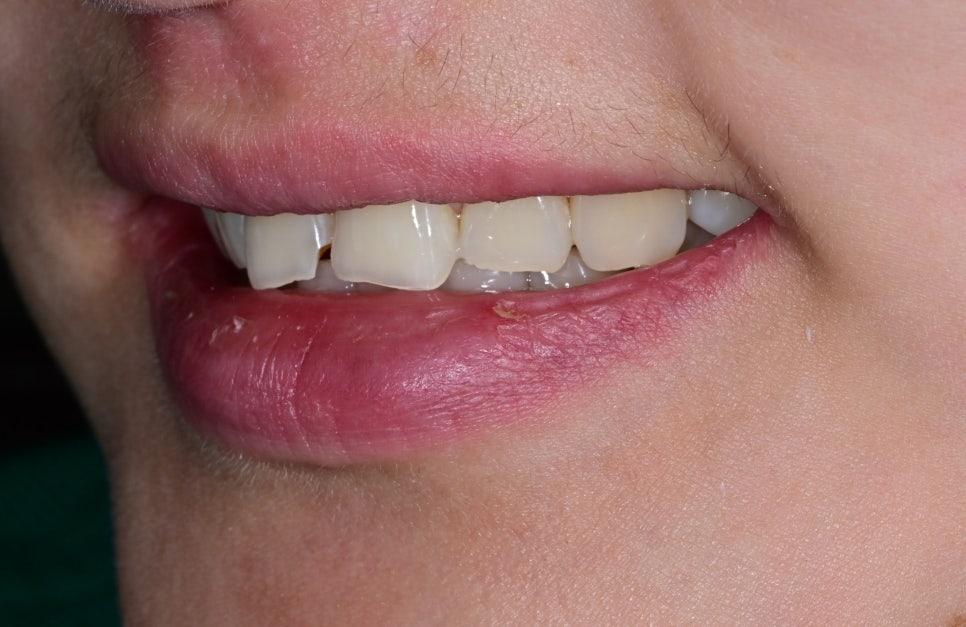
Before treatment – Chipped front tooth
This patient had an issue with their bite.
When the lower front teeth move forward,
the edges of the upper and lower front teeth slide against each other while nearly touching.
This means that every time food is cut with the front teeth,
force is concentrated on their edges.
The bite also placed more force on the teeth than in most people.
In fact, the force was strong enough to chip a natural tooth.
[Intraoral photographs before treatment]
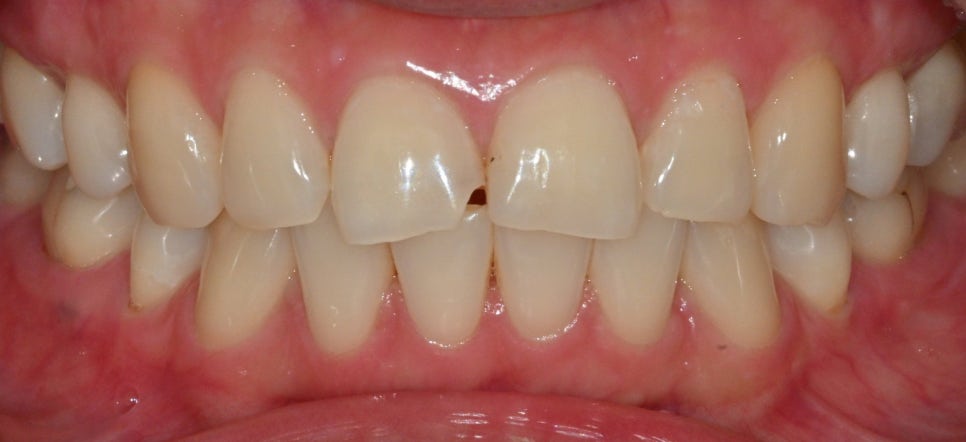
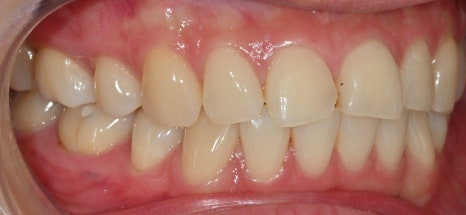
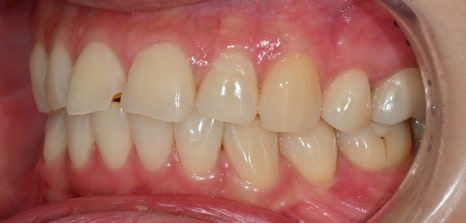
The reason the composite resin kept coming off was the same.
It was not a problem with the bonding material;
force had continued to be applied to that area.
That is why we did not cover the edge completely.
This is the most important part of this case.
When placing a laminate on a chipped front tooth,
there are two ways to handle the edge.
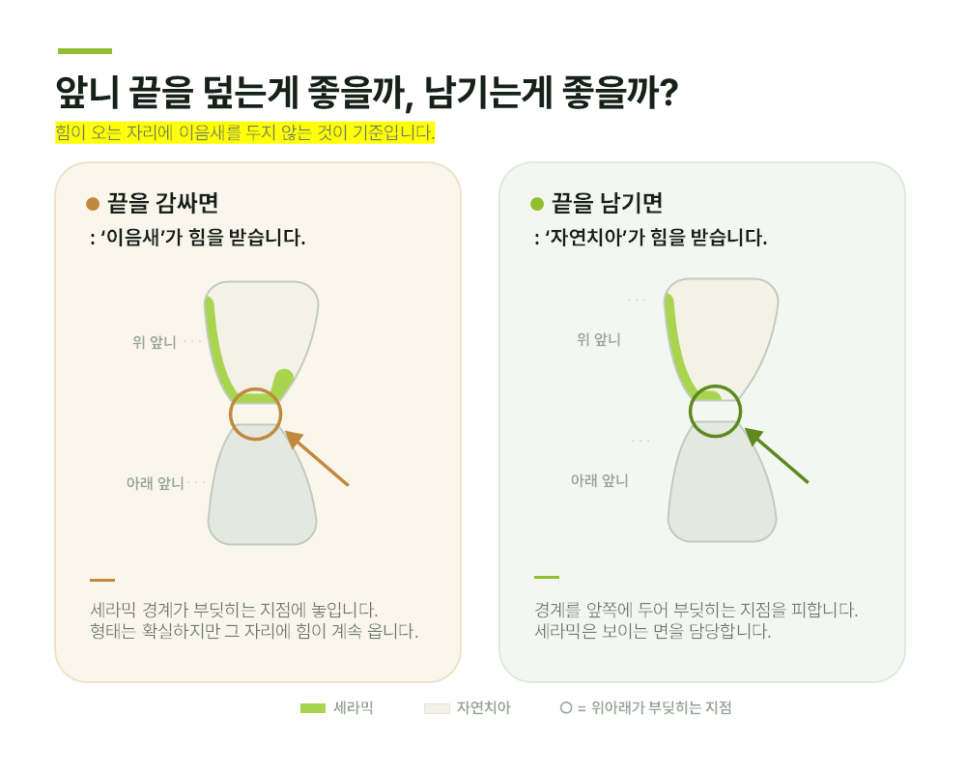
- Wrap the edge with ceramic and cover it toward the inside
: With the first method, the shape
can be made more clearly and precisely.
- Do not cover it completely and place the margin toward the front
: The other method is to extend beyond the edge
without covering it completely,
and place the margin toward the front.
This patient chose the second option.
Second method: Do not cover it completely and place the margin toward the front
There was a reason for this.
If the edge is wrapped, the ceramic margin is placed
where the upper and lower front teeth meet.
This creates a seam exactly where the greatest force is applied.
[Before treatment]
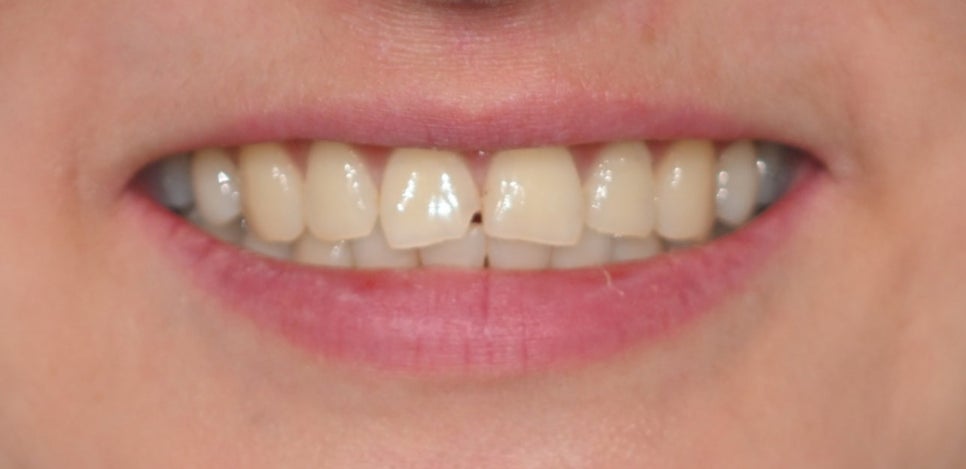
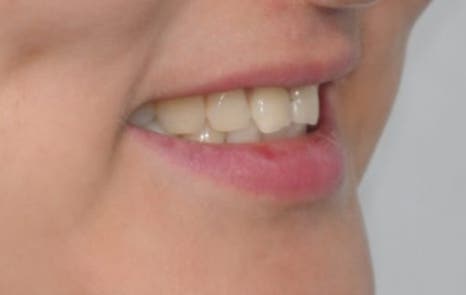
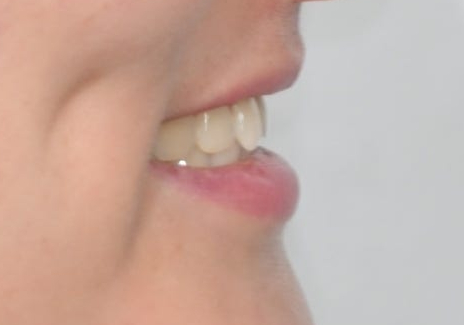
Conversely, when the margin is placed toward the front,
the natural tooth receives the force at the point where the teeth actually come into contact.
The ceramic handles the visible surface,
while the tissue that originally received the force continues to do so.
We also adjusted the angle of contact.
Shape alone is not enough.
If the angle at which the lower front teeth meet the upper front teeth
as they move forward is steep, the force applied is correspondingly greater.
[Before treatment]
So we made this angle as gradual as possible
and designed it to allow the teeth to slide past each other smoothly.
We did not simply leave it as it was after placement.
We made multiple adjustments while checking the bite with articulating paper,
and also adjusted the lower front teeth so that force would not be concentrated in one spot.
This process took longer than the bonding itself.
We treated the cavities first.
“Are you saying the cavities in the front teeth were treated before the procedure?”
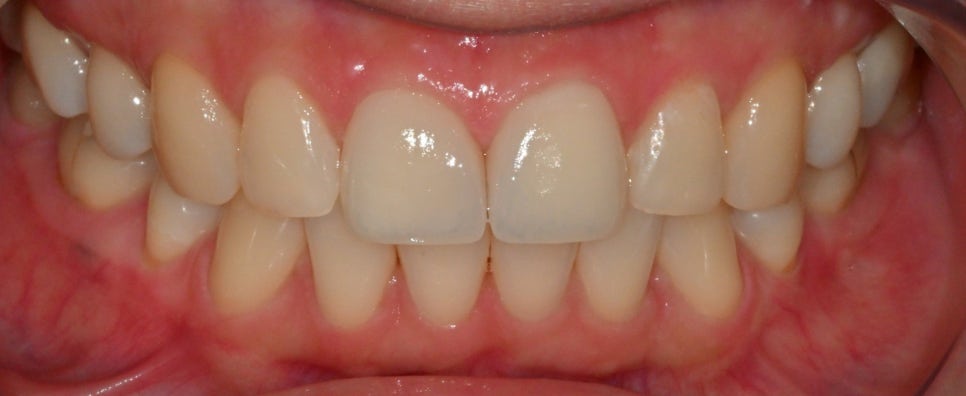
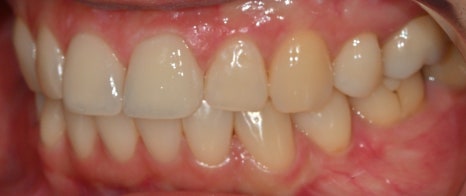
[Intraoral photographs after treatment]
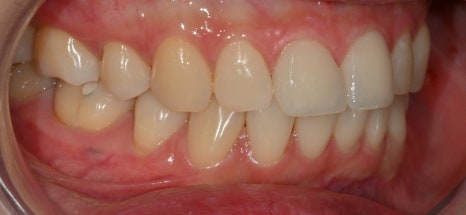
Of course, that is done first.
If cavities remain under the ceramic, the problem will continue later.
The cavities in the front teeth were treated during the laminate process,
and because there was also gum inflammation, we first completed scaling and gum treatment before beginning.
Only two teeth were treated.
The chipped area was on the central front teeth,
and only those two teeth were treated.
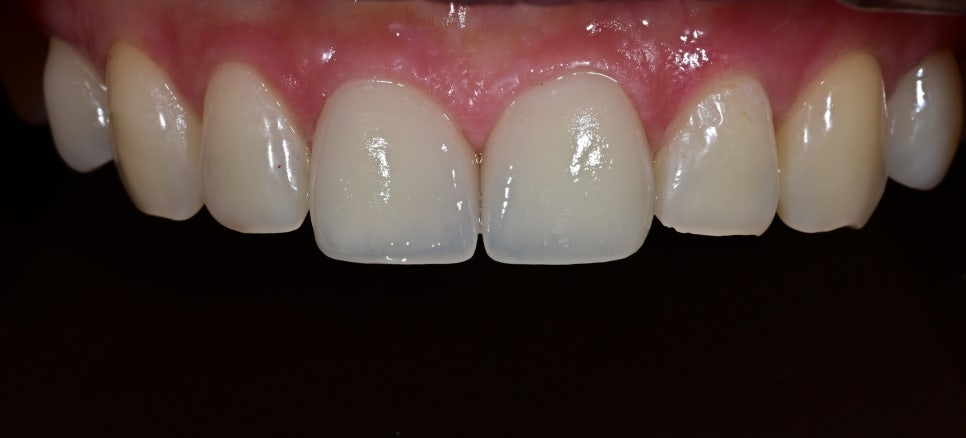
After treatment
In some cases, the treatment is extended to the neighboring teeth to match the color,
but for this patient, we used the original tooth color as the reference
and designed the result to blend using only two teeth.
It is better not to alter teeth unnecessarily.
This is especially true for people whose teeth receive a lot of force.
We also explained the following in advance.
People with strong biting force may also experience ceramic laminate fracture.
Since the natural tooth had chipped in that area, ceramic is not an exception.
[After treatment]
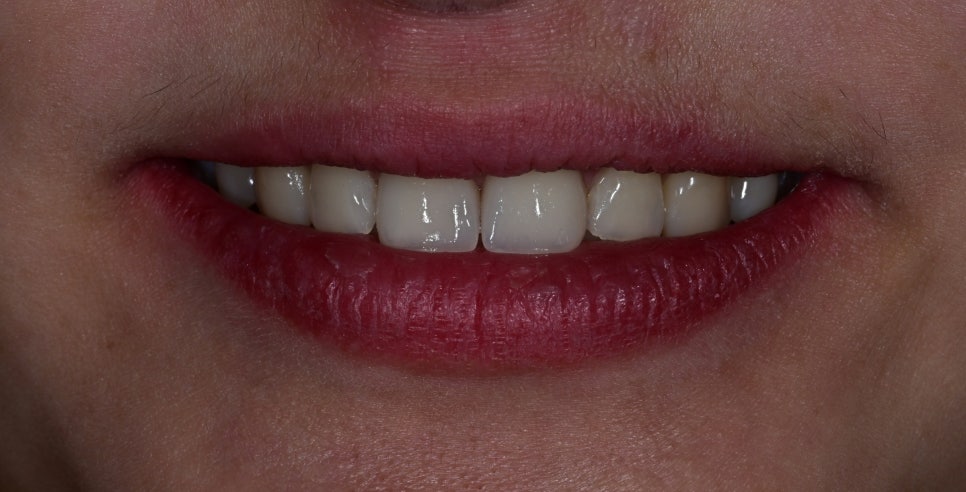
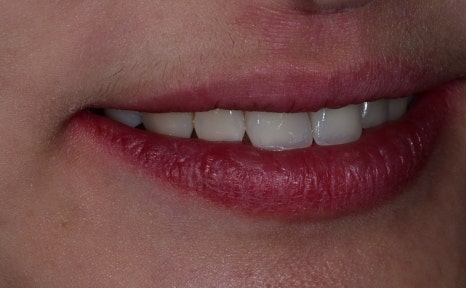
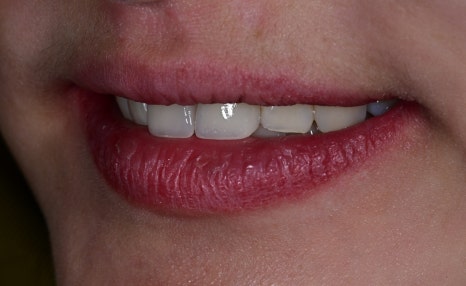
We explained two things during placement.
The patient should avoid the habit of forcefully biting through things with the front teeth.
And if the laminate chips again,
it may be necessary to use a method that covers the entire tooth.
Before treatment / After treatment
The chipped area was restored, and the two front teeth blended naturally with the neighboring teeth.
The color was matched to the original tooth tone,
so even though only two teeth were treated, they do not look out of place.
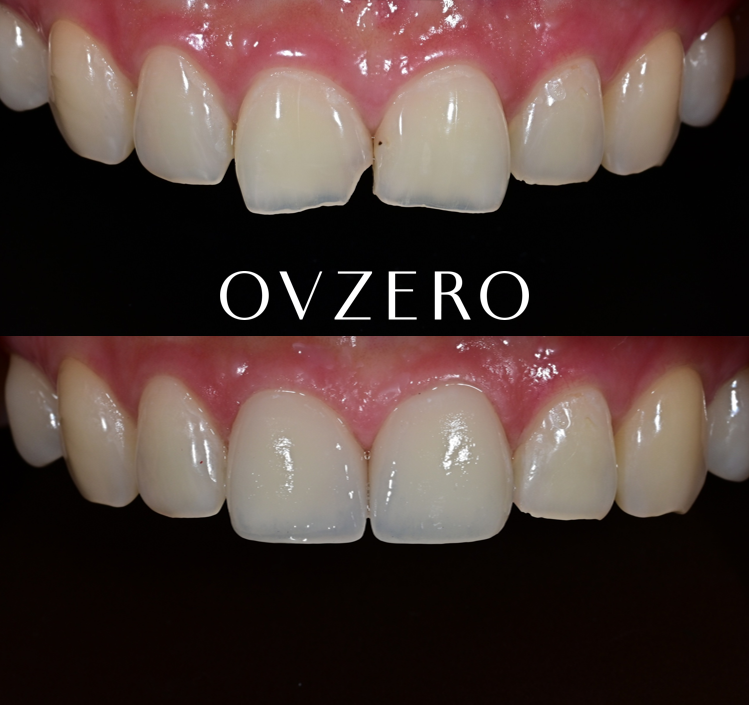
Laminates by 오브제로 라미네이트
The duration of laminate maintenance varies depending on usage habits and care,
so regular checkups are necessary.
Frequently Asked Questions
FAQ
Q. For a chipped front tooth, which is better: composite resin or a laminate?
If the chipped area is small and does not receive significant force,
composite resin may be sufficient. However, if the same area repeatedly
comes loose, the bite should be checked first rather than focusing on the material.
Q. How many laminates are needed for chipped front teeth?
In some cases, only the chipped tooth is treated.
In this case, only two teeth were treated.
If there is a significant color difference from the neighboring teeth, the treatment area may be extended.
Q. Will a laminate prevent the tooth from chipping again?
We cannot say that it will.
People with strong biting force may also chip ceramic.
That is why we also adjust the shape and angle
to design the restoration to reduce the force.
Q. What if a front tooth is chipped and also has a cavity?
The cavity is treated first.
If it is left in place and covered, the restoration may need to be opened again later.
A chipped front tooth is not treated simply by filling the chipped area.
If force continues to be applied to the same spot,
the same problem will recur regardless of what material is used.
That is why we check the bite before creating the shape.
[Reference video before laminate treatment]
At 서울오브치과병원, a specialist in prosthodontics
handles this assessment and treatment design.
In addition, the dental technician responsible for fabrication at our in-house laboratory
reviews the diagnostic materials together with the dentist
and jointly determines how far the edge should be extended.
The clinic is a one-minute walk from Exit 3 of Samjeon Station,
making it convenient to visit from the Jamsil and Songpa areas.
If the same area keeps chipping or coming loose,
please feel free to visit us for a consultation.
<Directions>
📍 서울오브치과병원
196 Baekjegobun-ro, Songpa-gu, Seoul, B1, 4th, and 5th floors
🚇 One-minute walk from Exit 3 of Samjeon Station
<Inquiries>
📞 02-418-2275
💬 Kakao Channel inquiry
〈Parking Information〉
✅ Parking Lot 1: 196 Baekjegobun-ro, Songpa-gu, Seoul
✅ Parking Lot 2: 28-23 Samjeon-dong, Songpa-gu, Seoul
*Please use Parking Lot 2 when Parking Lot 1 is full.
#ChippedFrontTooth #LaminateForChippedFrontTooth #ChippedFrontTeeth #FrontToothFracture #CompositeResinForChippedFrontTooth #FrontToothLaminate #NoPreparationLaminate #오브제로라미네이트 #SongpaLaminate #JamsilLaminate #SamjeonStationDentist #서울오브치과병원