Scalp hair loss: if you catch it early,
can it be treated effectively?
Scalp hair loss can be treated effectively
if it is found early and addressed properly.

However, the problem is that the early stage
is not easy to notice, so many people
end up missing it.
In this post, we will look at how to check
the early symptoms of scalp hair loss and
the key to improving treatment results.

As scalp hair loss progresses, many people
notice that their hair becomes thinner
and the amount of hair decreases.
But at that point, most people
think it is a temporary condition
and leave it alone.
In this post, I will explain how to
accurately assess the early stage,
as well as prevention and treatment methods.
- Early symptoms of scalp hair loss
The early symptoms begin with a feeling
that there is less hair than before.
If more hair than usual falls out when
washing your hair, or if it becomes hard
to style your hair the way you used to,
it is worth suspecting hair loss.
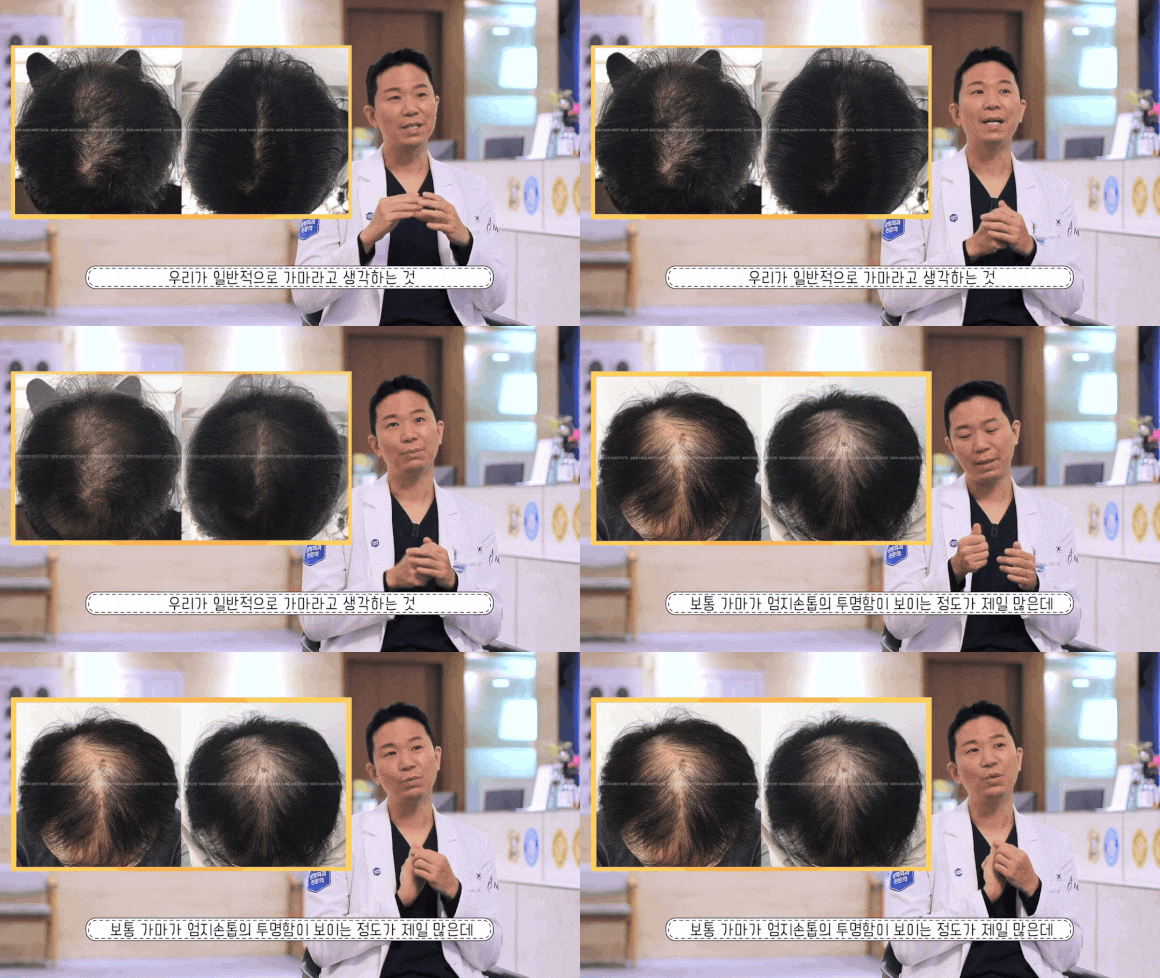
In particular, if the crown area looks
transparent or the scalp is clearly visible,
there is a high chance it is an early stage
of scalp hair loss.
Unlike the hairline, the crown area is
hard to check directly, so it is easy to
miss how far it has progressed.
These days, more people are taking selfies
or videos and checking the condition of
their scalp.
Compared with older photos, if the part
has become wider, it can be considered
an early stage.
- How to check scalp hair loss yourself

To check scalp hair loss yourself, it is a
good idea to take photos regularly in a
place with consistent lighting and compare
them.
Taking photos in the bathroom or in front
of a bright mirror makes it easy to check
the condition of the scalp.

In particular, for women, a pattern where
the part widens into a Christmas tree shape
can appear more easily.
Comments from people around you can also
be an important signal.
If someone says, “Your hair looks very thin,”
it means it has already progressed quite a bit.
In such cases, it is a good idea to visit a clinic
and receive a detailed examination such as
a microscopic test.
- Why early treatment for scalp hair loss matters
Scalp hair loss responds better when it is
treated early.
In particular, the younger the age of onset,
the faster the treatment response tends to
appear.
If you miss the timing for treatment, the
progression may speed up, so if symptoms
are suspected, you should visit a clinic
right away.
Early treatment can often stop progression
with medication or scalp care alone.
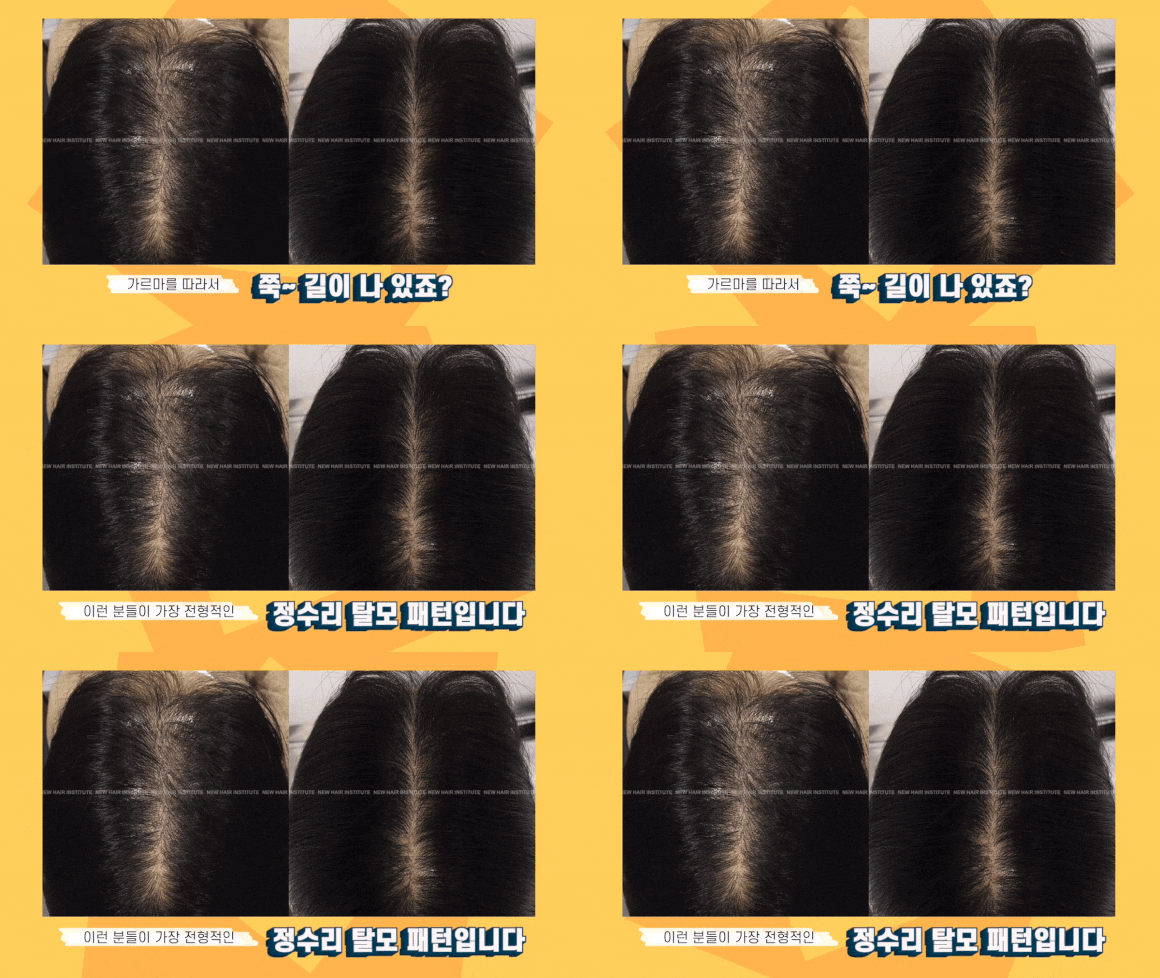
The crown area responds faster to treatment
than the hairline, and you can more easily
see the effect of hair growing back.
Therefore, in the early stage, the key is to
visit the clinic regularly and consistently
check your condition.
- Tips for preventing and managing scalp hair loss
To prevent scalp hair loss, it is important to
build habits that maintain scalp and hair health.
First, protect the scalp by using sunscreen,
and reduce the influence of hormones that
trigger hair loss through stress management.
If there is a family history, regular scalp
checks are necessary.
If you cannot visit a clinic, recording the
state of the crown at home and checking for
changes is also a good method.
Along with this, it helps to avoid hair products
that irritate the scalp, and to use shampoos
or tonics that help with nourishment.
The early symptoms of scalp hair loss are
not easy to notice, so they are easy to leave
untreated, but if found and treated early,
the results are clear.

Regularly checking your scalp condition in
daily life,
and getting examined when needed,
is the quickest way to prevent progression.
The earlier hair loss starts, the more important
it is to treat it quickly so you can maintain
healthy hair.
If you suspect scalp hair loss, do not worry
about it alone—visit a clinic for an accurate
diagnosis and proper management.
Please remember that prevention and treatment
both depend on consistency.
[This post was written directly by the director to provide information in accordance with Article 56, Paragraph 1 of the Medical Service Act. Hair loss surgery and treatment may have side effects, and you should make a careful decision after consulting with a specialist.]