The Hidden Cause of Hair Loss Progression: Fibrosis
Male pattern androgenetic alopecia is commonly known to be influenced by genetic factors and male hormones, especially DHT.
However, recent studies have emphasized that perifollicular fibrosis around hair follicles plays an important role in the progression of hair loss.
Fibrosis is a condition in which skin tissue becomes hardened, negatively affecting hair growth.
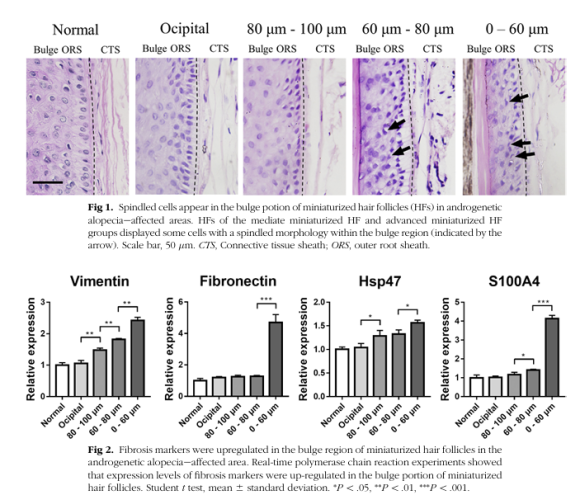

According to studies, collagen deposition around hair follicles increases in the scalps of patients with hereditary hair loss, and this is associated with the progressive shrinking of hair follicles, known as “miniaturization.”
In normal hair follicles, active cell division occurs during the growth phase, but
in fibrotic hair follicles, the surrounding tissue hardens, blood supply decreases, and
ultimately hair growth is inhibited.
In particular, a protein called TGF-β1 (Transforming Growth Factor-beta 1) plays an important role in this process.
It normally regulates cell growth, but in scalps where hair loss is progressing, it has been shown to promote collagen production and induce fibrosis.
Research has reported that DHT increases the expression of TGF-β1, accelerating fibrosis.
- Use of Skin Antifibrotic Agents
- Recent studies have suggested that drugs that inhibit skin fibrosis may be effective in treating hair loss.
For example, Pirfenidone, known as an antifibrotic drug, may help relieve perifollicular fibrosis.
- Research on TGF-β1 Inhibitors
- Drugs that lower the expression of TGF-β1 are being studied as hair loss treatments, and some have already shown positive results in experimental stages.
- Combination Therapy with Existing Hair Loss Treatments
- Some studies suggest that combining antifibrotic treatments with finasteride, dutasteride, and minoxidil, which are currently in use, may lead to better results.
To help prevent hair loss and slow its progression, I recommend several lifestyle habits that can help suppress fibrosis.
• Scalp massage: It promotes blood circulation and can help prevent the progression of fibrosis.
• Intake of antioxidant-rich foods: Foods rich in vitamin C, vitamin E, and polyphenols (for example, blueberries and green tea) help reduce inflammation and improve scalp health.
• UV protection: Excessive UV exposure may increase TGF-β1 expression, so it is advisable to wear a hat or use a scalp protection product containing SPF.
• Intake of DHT-suppressing foods: Foods containing pumpkin seeds, green tea extract, and saw palmetto may help naturally lower DHT levels.


Hair loss treatment is not simply about regrowing hair, but about maintaining a healthy environment around the hair follicles.
As it has become clear that fibrosis plays an important role in the progression of hair loss, new hair loss treatments targeting fibrosis are likely to emerge in the future.
If you are currently considering hair loss treatment, it would be best to combine existing treatments with lifestyle habits that support scalp health in order to achieve optimal results.
Now it’s time to hairhair, Kim Jin-o.
Pilsaengsinmo (必生新毛).
References
-
Li K, Liu F, Sun Y, et al. Association of fibrosis in the bulge portion with hair follicle miniaturization in androgenetic alopecia. J Am Acad Dermatol. 2022;86(1):213-215. doi:10.1016/j.jaad.2021.01.078
-
Yoo HG, Kim JS, Lee SR, et al. Perifollicular fibrosis: pathogenetic role in androgenetic alopecia. Biol Pharm Bull. 2006;29(6):1246-1250. doi:10.1248/bpb.29.1246
[This post is written directly by the clinic director for informational purposes in accordance with Article 56, Paragraph 1 of the Medical Service Act. Hair loss surgery and treatment may have side effects, and they should be decided carefully through consultation with a specialist.]