To treat hair loss, it is important to identify the cause of the problem.
Various tests are needed to diagnose the type of hair loss and the condition of the scalp.
▶ The Need for Hair Loss Testing
In the early stages of hair loss, it is often difficult to confirm with the naked eye.
Hair loss testing is especially effective for identifying early-stage hair loss.
Early hair loss is often hard to judge visually, but using testing equipment makes early detection possible.
In cases of ongoing hair loss, the progression speed and future outlook can be assessed to support appropriate response.
▶ The 4-Step Hair Loss Test at New Hair Plastic Surgery Clinic
New Hair Plastic Surgery Clinic conducts a 4-step hair loss test.
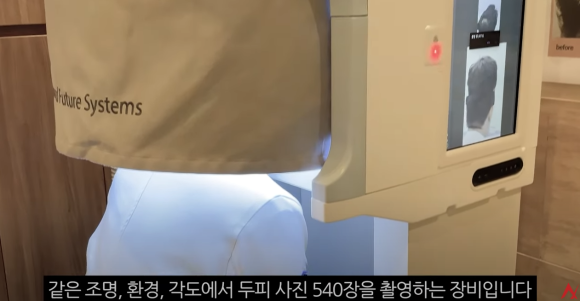
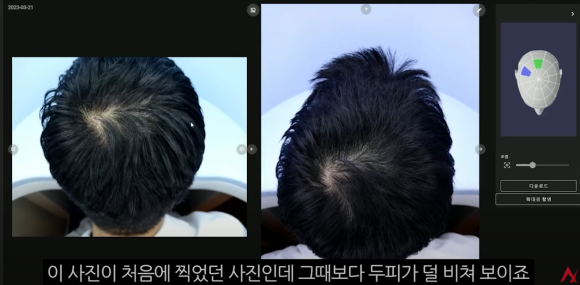
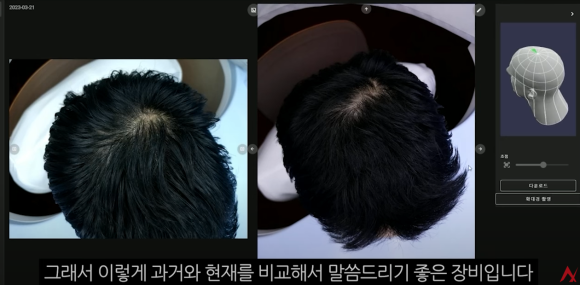
- 360-degree hair loss imaging
The scalp and hair are photographed under the same conditions by controlling indoor lighting and shooting angle.
More than 500 photos are taken in 360 degrees to identify symptoms across the entire head.
Hair loss symptoms, the presence of inflammation, and the condition of the scalp and hair can be assessed, and if records are kept periodically every 3 months, 6 months, and 1 year, they play an important role in judging the pattern and progression speed of hair loss.
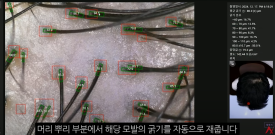
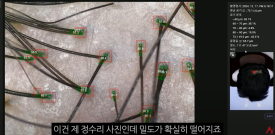
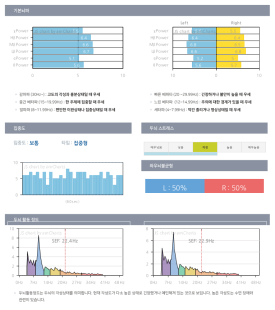
- Scalp microscope imaging
The enlarged scalp condition is checked to analyze hair distribution.
Pores and follicle locations are identified and measured using AI functions.
If scalp microscope imaging is also recorded through periodic testing,
it plays an important role in understanding hair distribution, hair thickness, and scalp condition.
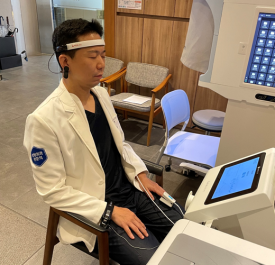
- Stress test
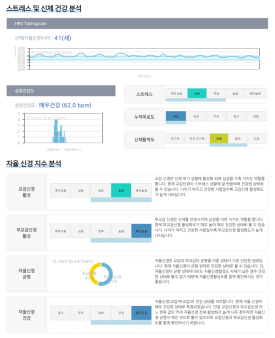
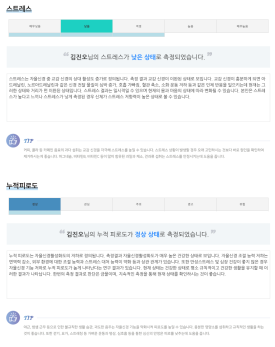
Hair loss can occur not only due to genetic factors, but also due to various causes such as stress, hormonal changes, and social and emotional factors.
By measuring pulse waves and brain waves, stress, accumulated fatigue, and physical age, which are among the main causes of hair loss, are assessed.
When our bodies are under stress, the autonomic nervous system and sympathetic nervous system may not function properly, which can reduce scalp blood flow and weaken hair follicles, potentially accelerating hair loss.
Therefore, in addition to genetic factors, we examine in detail what else is causing the hair loss.
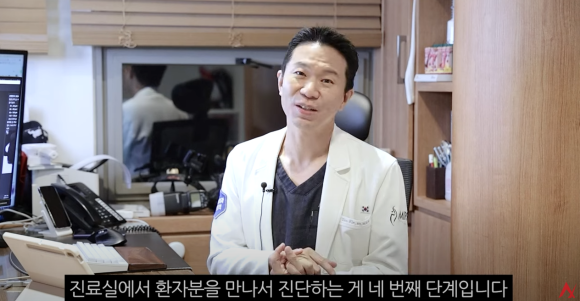
- Direct doctor diagnosis and treatment plan establishment
After completing the 360-degree hair loss imaging, scalp microscope examination, and stress test,
based on the test results and the doctor's diagnosis, the treatment method is determined by comprehensively evaluating the patient's genetic factors, medical history, existing conditions, and previous hair loss treatment experience.
Depending on the progression and cause of hair loss, an appropriate plan such as medication, injections, tattooing, or surgery is established.
▶ The Importance of Early and Regular Checkups
Like all diseases, hair loss is much easier to treat when detected through early screening.
If you receive early and regular checkups before hair loss progresses severely, it can be managed and treated more effectively.
Hair loss: checking the condition early and setting a management direction is an important step in starting treatment.
Early and regular checkups help evaluate the progression of hair loss and plan treatment at the right time.
If you identify the speed and cause of hair loss and begin personalized care and treatment,
it can have a positive effect on maintaining scalp and hair health.