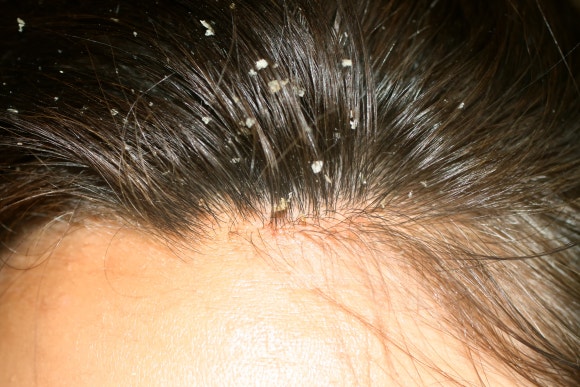
Do you feel that as dandruff gets worse, your scalp becomes itchy and your hair seems to be falling out too?
Dandruff is not just a cosmetic issue; it is an important sign that can lead to hair loss.
If dandruff appears, it means the scalp barrier has weakened, and if left untreated, inflammation can worsen and lead to hair loss.
A healthy scalp is not just the foundation for beautiful hair; it also serves as an important barrier that protects the body from environmental stress, pollutants, and microbial invasion.
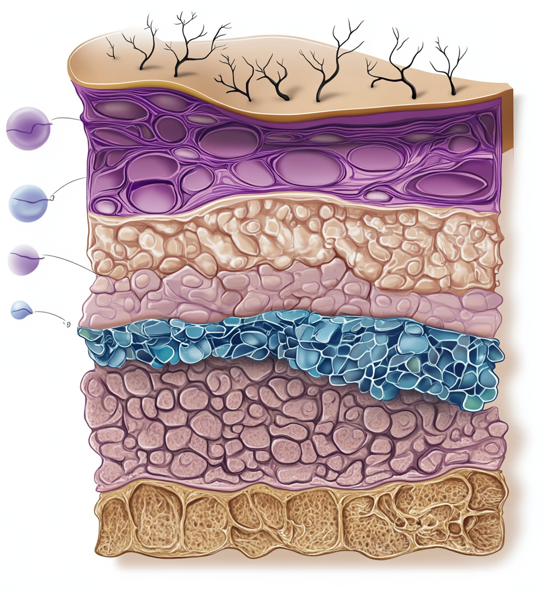
Like other parts of our skin, the scalp also has a sophisticated protective barrier called the stratum corneum.
This layer is often compared to bricks and mortar, where dead skin cells act as the “bricks,” and lipid components such as ceramides, fatty acids, and cholesterol act as the “mortar” that binds them together.
These lipids play important roles such as:
-
Preventing excessive moisture loss
-
Blocking the penetration of harmful substances
-
Regulating immune responses
However, when essential lipids are depleted or their arrangement is disrupted, the scalp barrier weakens.
According to published studies, people with dandruff and seborrheic dermatitis have significantly lower levels of ceramides and other essential lipids, which increases transepidermal water loss (TEWL) and makes the scalp more vulnerable to irritation, microbes, and environmental pollution.
A strong scalp barrier does more than simply retain moisture; it also has a major impact on hair health.
Hair growth begins deep within the hair follicle, and this process requires a proper microenvironment.
A healthy scalp barrier regulates the exchange of nutrients, hormones, growth factors, and other elements essential for hair growth.
However, when the scalp barrier is damaged, it is easily exposed to external irritants, hair growth signals are disrupted, and as a result, hair becomes thinner or more prone to breakage.
In addition, a healthy barrier also plays a role in suppressing the growth of opportunistic infectious microorganisms.
In a dandruff condition, the microbial balance of the scalp is disrupted, and in particular, the Malassezia fungus overgrows, causing scalp irritation and worsening dandruff.
How scalp barrier damage causes dandruff
Dandruff is more than just an appearance issue; it is a sign of impaired scalp barrier function.
When the scalp barrier is damaged, its ability to retain moisture and block external irritants decreases, triggering the following chain reaction:
-
Increased moisture loss (higher TEWL)
-
Irritation and micro-inflammation
-
Excessive shedding of skin cells (flaking)
-
Persistent itching and inflammation
Latest treatments for restoring the scalp barrier
- Barrier-strengthening products
- Use shampoos and moisturizers containing ceramides, fatty acids, and cholesterol to reduce TEWL and restore the barrier.
- Antioxidant therapy
- Ingredients such as niacinamide, panthenol, and caffeine neutralize free radicals and reduce oxidative damage to the scalp.
- Antifungal shampoos
Antifungal shampoos help suppress the overgrowth of Malassezia fungus on the scalp, easing inflammation and helping restore the barrier.
Typical antifungal ingredients include:
-
Ketoconazole: With strong antifungal effects, it suppresses Malassezia growth and reduces inflammation.
-
Ciclopirox Olamine: Inhibits the growth and metabolism of fungal cells, helping restore the scalp’s microbial balance.
-
Selenium: Helps ease scalp inflammation through its Malassezia-suppressing and antioxidant effects.
It is important to choose an antifungal shampoo that suits your scalp condition, and with proper use, you can maintain scalp health and hair fullness.
Could dandruff cause hair loss? Is that true?
Conclusion
When the scalp barrier is damaged, inflammation worsens and the risk of hair loss increases.
As an early sign of barrier damage, if it is left untreated, scalp inflammation can continue and eventually lead to hair loss.
Therefore, if dandruff is detected, it is very important to promptly combine treatments that can restore the scalp barrier and reduce inflammation with lifestyle improvements to help prevent hair loss.
Through the latest research and innovative treatments, ceramide-based products, antioxidant therapy, and antifungal shampoos (ketoconazole, ciclopirox olamine, selenium) can effectively restore the scalp barrier.
If you practice proper scalp care, you can break the vicious cycle of dandruff-related inflammation and hair loss and maintain a healthy scalp and full hair.

It is time for hair hair, this was Kim Jino.
Pilsaengsinmo (必生新毛).
[This post is written directly by a board-certified plastic surgeon for informational purposes in accordance with Article 56, Paragraph 1 of the Medical Service Act. Hair loss surgery and treatment may have side effects, and you should make a careful decision through consultation with a specialist.]