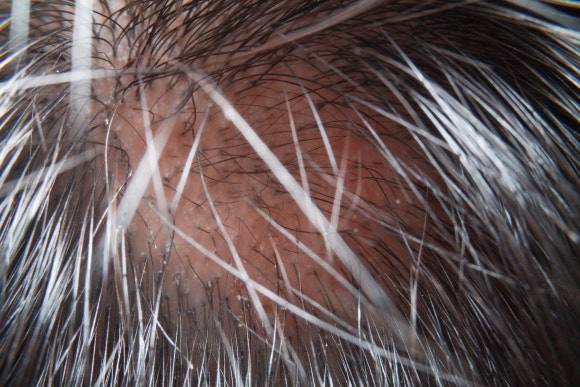
Ritlecitinib, a treatment for alopecia areata, was recently launched in Korea.
This medication can be used not only by adults but also by adolescents aged 12 and older, so it can be a good option for patients who are worried about hair loss at a young age.
Alopecia Areata and JAK Inhibitors
Alopecia areata is an autoimmune disease in which the immune system attacks the hair, causing it to fall out.
Among domestic patients with alopecia areata, adolescents account for about 10%, and the earlier the onset, the more severe the symptoms can become and the higher the likelihood of it becoming chronic.
Therefore, adding a treatment option for adolescents is significant.
A few years ago, when baricitinib was introduced in Korea, JAK inhibitors began to be used in earnest for alopecia areata treatment.
Baricitinib is currently widely used in adult patients, and with the addition of ritlecitinib, treatment options have become even more diverse.
How JAK Inhibitors Work
In our bodies, there is a protein called Janus kinase (JAK), which plays an important role in regulating immune responses.
However, in alopecia areata, JAK signaling becomes excessively activated, causing immune cells to attack the hair follicles.
JAK inhibitors help prevent hair loss progression by blocking this signal. The JAK inhibitors currently used to treat alopecia areata include baricitinib and ritlecitinib.
Comparison of the Two Treatments
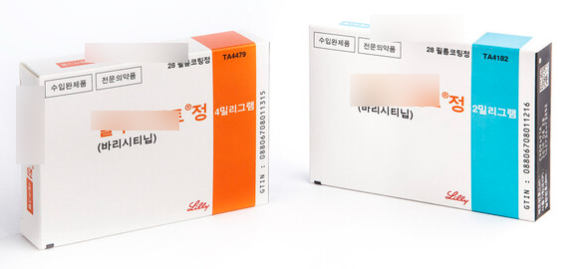
Source - BioTimes
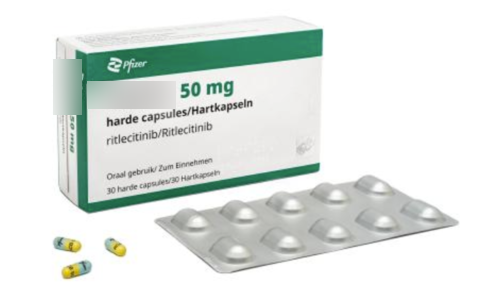
Source - PharmNews
- Mechanism of Action
-
Baricitinib: Inhibits JAK1 and JAK2 to reduce inflammation and prevent immune cells from attacking the hair follicles.
-
Ritlecitinib: Inhibits JAK3 and TEC kinases to regulate immune responses more precisely. It was designed to be usable by adolescents as well.
- Treatment Effect
-
Baricitinib: Among adult patients with alopecia areata who took it for 36 weeks, 30–40% showed hair regrowth of 80% or more.
-
Ritlecitinib: Among patients who took it for 24 weeks, 23% showed significant hair regrowth, and after 48 weeks, the effect was sustained in 43% of patients.
- Side Effects
-
Baricitinib: Side effects such as upper respiratory infections like the common cold, headache, and increased blood lipids have been reported.
-
Ritlecitinib: Headache, diarrhea, and upper respiratory infections may occur, and it is considered relatively safe to use.
Patient-Specific Treatment Selection
-
Adult patients with severe alopecia areata: Baricitinib has proven efficacy in adult patients and is a treatment with relatively more accumulated long-term use data.
-
Adolescents and young patients: Ritlecitinib is an approved treatment that can also be used in adolescents, and its precise immunomodulatory effect may make it more suitable for adolescent patients.
What Role Does Ritlecitinib Play in Research on Treating Alopecia Areata in Adolescents? Conclusion
With the recent launch of ritlecitinib, opportunities for adolescents to receive treatment for alopecia areata have expanded.
With a variety of treatment options now available alongside the existing baricitinib, personalized treatment tailored to each patient’s characteristics has become possible.
We hope that further research in the future will clarify the long-term efficacy and safety of JAK inhibitors, and that this will improve the quality of life of patients with alopecia areata in Korea.
Now it is time for hairhair, Kim Jino.
Pilsaengsinmo (必生新毛).
Related article
References
-
King, B.A., Craiglow, B.G. et al. (2023) ‘Two Phase 3 Trials of Baricitinib for Alopecia Areata’, The New England Journal of Medicine, 388(12), pp. 1091–1101.
-
Ritlecitinib Efficacy Study Group (2022) ‘Efficacy and Safety of Ritlecitinib in Adults and Adolescents with Alopecia Areata: A Randomized, Double-Blind, Multicentre, Phase 2b–3 Trial’, The Lancet, 400(10350), pp. 1234–1243.
-
Barati Sedeh, F., Michaelsdóttir, T.E., Henning, M.A.S., Jemec, G.B.E. and Ibler, K.S. (2023) ‘Comparative Efficacy and Safety of Janus Kinase Inhibitors Used in Alopecia Areata: A Systematic Review and Meta-analysis’, Acta Dermato-Venereologica, 103, Article adv00855.
[In accordance with Article 56, Paragraph 1 of the Medical Service Act, this post is written directly by a plastic surgery specialist for informational purposes. Hair loss surgery and treatment may involve side effects, and you should make a careful decision after consulting with a specialist.]