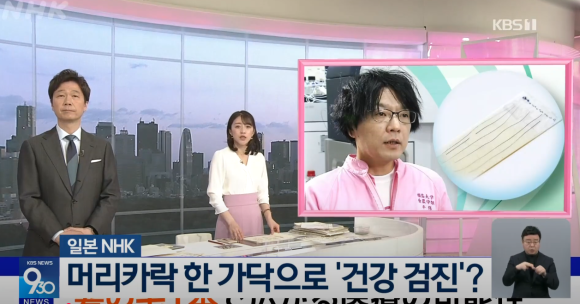
Source - KBS News
Recently, Professor Daira’s research team at Fukushima University announced an innovative study that quantifies physical changes recorded inside hair using a laser analysis device.
The key to this study is using a special machine that precisely cuts hair to half its thickness and accurately measures the various chemical components accumulated inside.
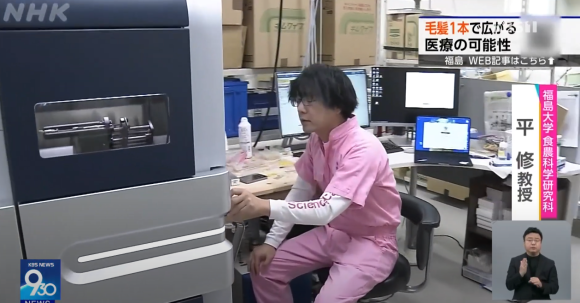
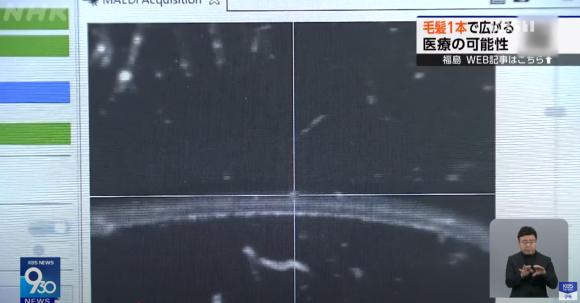
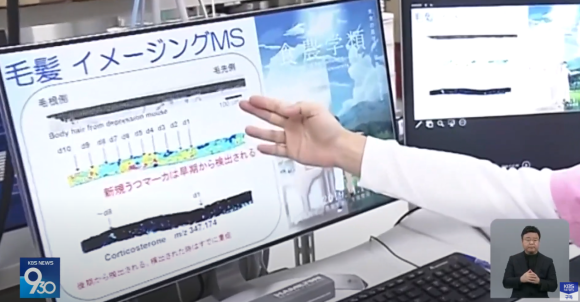
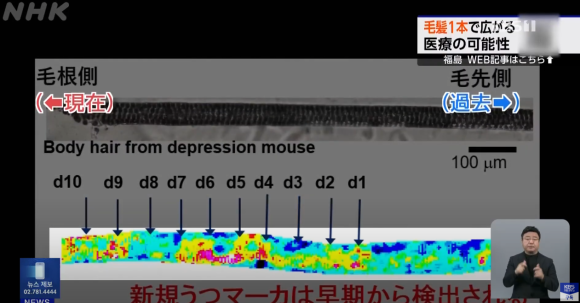
In a study involving laboratory mice, it was confirmed that as stress levels increased, the amounts of antioxidants and inflammation-related molecules in the hair also increased.
This shows that hair can be an important indicator reflecting the body’s health status, and it suggests the possibility of early disease diagnosis and prevention without blood tests.
Over time, health checkup methods using hair have been steadily studied.
In the United States, a study published in the Journal of Biomedical Optics developed a technique that uses laser spectroscopy to measure, in real time, the degree of accumulation of heavy metals and toxic substances in hair.
This study suggested the possibility of noninvasively evaluating biomarker signals related to stress or aging by quantifying subtle changes in hair composition.
By analyzing substances accumulated in the body over long periods, it can be used as a new way to monitor health status.
In Japan, studies analyzing hair cross-sections in detail have been published in journals such as Analytical Sciences.
Researchers have attempted to uncover stress responses and early signs of disease by analyzing specific pigments or chemicals inside hair.
In particular, they succeeded in confirming a direct link to bodily stress by quantifying the amounts of antioxidants and inflammation-related molecules.
This shows that hair can serve as a kind of 'record book' for tracking health status.
Professor Daira’s team’s research and the U.S. and Japanese examples all take a common approach: precisely measuring chemical changes inside the body through hair.
Compared with conventional blood tests, this technology can reduce the burden on patients and may help with early disease detection and prevention.
In particular, the U.S. study successfully monitored the accumulation of toxic substances such as heavy metals by applying real-time laser spectroscopy, while the Japanese study measured the amounts of antioxidants and inflammation-related molecules through hair cross-section analysis and identified their relationship with stress.
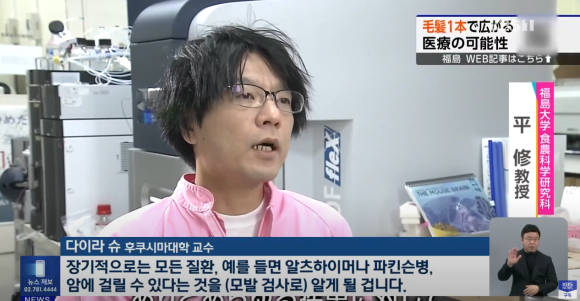
As these technologies advance, they may be used to help diagnose a variety of diseases early, including Alzheimer’s disease, Parkinson’s disease, and cancer.
Ultimately, it seems increasingly likely that an era will come when a precise health checkup can be done with just one strand of hair.
Noninvasive hair analysis technology is highly likely to become an innovative tool that changes the future paradigm of health checkups.
As shown in research cases from the United States and Japan, the fact that subtle chemical changes left in hair can predict the body’s stress state and the risk of disease is very promising.
If these technologies are commercialized, they will reduce the inconvenience of blood tests and greatly help patient management through early diagnosis and prevention.
In addition, a simple and cost-effective screening method would likely be especially helpful for older adults and patients with chronic illnesses who find it difficult to manage their health.
If hair analysis technology becomes more sophisticated and gains clinical reliability in the future,
there may come a time when hospitals check health status using just a strand of hair instead of a blood test.
We look forward to continued research so that noninvasive and highly accessible technologies can be widely used.
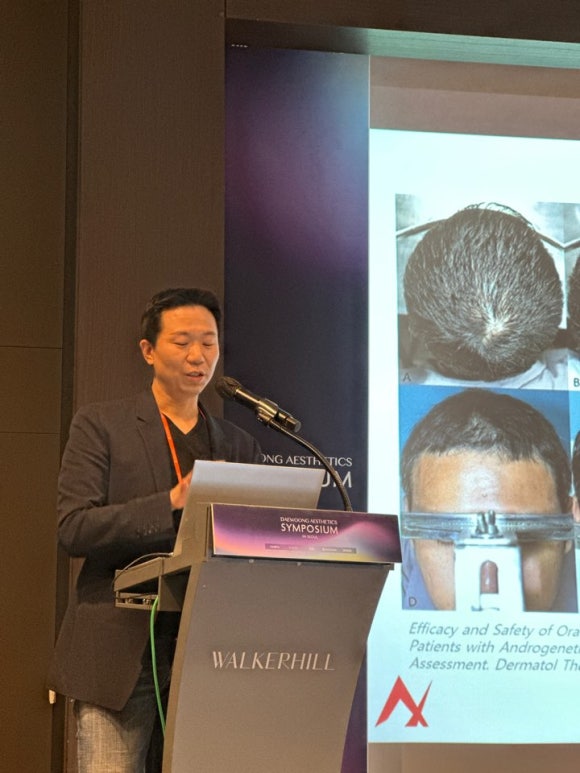
It’s time to hairhair; this was Kim Jin-o.
Pilsaengsinmo (必生新毛).
[This post was written directly by a board-certified plastic surgeon for informational purposes in accordance with Article 56, Paragraph 1 of the Medical Service Act. Hair loss surgery and treatment may have side effects, and you should make a careful decision after consulting with a specialist.]