As we get older, there may be more and more moments when we look in the mirror and sigh.
Wrinkles and reduced skin elasticity are also concerns, but for many women, the bigger shock is hair loss.
In particular, research showing that more than half of women experience female pattern hair loss (Female Pattern Hair Loss, hereinafter FPHL) after menopause will likely come as a surprise to many. Hair loss is not just a cosmetic issue; it can also affect quality of life and self-esteem.
What is the connection between menopause and hair loss?
Menopause is a natural process in a woman’s life, but the hormonal changes that occur during this time can cause various physical changes.
In particular, a decrease in estrogen levels can affect the hair growth cycle and lead to hair loss.
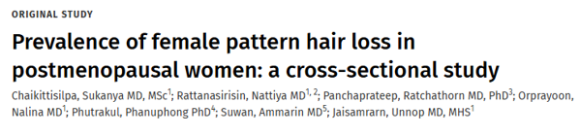
According to a study published in 2022, 52.2% of postmenopausal women experience FPHL, and this rate tends to increase with age and the length of time since menopause (Chaikittisilpa et al., 2022).
It is also noteworthy that the longer the time after menopause, the higher the likelihood that hair loss will progress.
Characteristics of female pattern hair loss
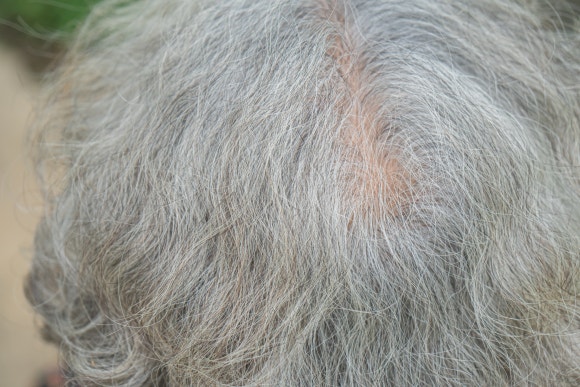
Female pattern hair loss (FPHL) progresses differently from male pattern baldness. It mainly has the following characteristics.
• Widening of the part line: FPHL begins in the central crown area and gradually progresses into a wider part.
• Overall reduction in hair density: As the hair becomes thinner and finer, you may feel that the overall volume has decreased.
• Does not progress to complete baldness: Unlike male hair loss, the hairline is often preserved.
Based on these characteristics, FPHL can be divided into three stages according to the Ludwig classification.
• Stage 1 (Ludwig I): Hair density decreases, but the part line is not clearly visible (73.2%)
• Stage 2 (Ludwig II): The part line becomes noticeably wider and the hair becomes finer (22.6%)
• Stage 3 (Ludwig III): Severe hair loss with the scalp almost completely visible (4.3%)
Main causes of female hair loss
According to the study, the following factors are closely associated with the occurrence of FPHL.
-
Age: The likelihood of hair loss increases as more time passes after menopause.
-
Body mass index (BMI): When BMI is 25 kg/m² or higher, the risk of FPHL was found to increase by 2.65 times.
In other words, obesity increases the likelihood of hair loss.
-
Genetic factors: If there is a family history, the likelihood of hair loss is higher.
-
Hormonal changes: A decrease in estrogen and an increase in male hormones affect hair growth.
How to manage hair loss after menopause
If hair loss is detected early and managed properly, its progression can be slowed or improved. Effective management methods include the following.
- Consultation with a specialist and early diagnosis
The most important thing is to visit a dermatologist for an accurate diagnosis. The cause of hair loss must be identified accurately in order to determine an effective treatment plan.
- Improving lifestyle habits
• Nutritional management: A diet rich in iron, vitamin D, and protein can help.
• Exercise: Regular exercise promotes blood circulation and is beneficial for maintaining healthy hair.
• Stress management: Stress can worsen hair loss, so it is a good idea to combine this with meditation or yoga.
- Using hair loss treatments
• Minoxidil: An FDA-approved hair loss treatment that stimulates hair follicles and promotes hair growth.
• Hormone therapy: In some cases, estrogen replacement therapy may be helpful.
• Injection treatments: Follicle injections, autologous cell therapy, PRP, and growth factor injections may be used.
• Noninvasive treatments: Low-level laser therapy (LLLT), radiofrequency treatment, and microneedling show effectiveness.
- Scalp and hair care
• Keep the scalp clean: Excess sebum secretion should be prevented, and a healthy scalp environment should be created.
• Avoid excessive heat and chemicals: It is better to reduce the use of hair dryers and flat irons and choose products that are less irritating.
Postmenopausal Hair Loss: Why Do More Than Half of Women Experience It?
Conclusion
Postmenopausal hair loss is a reality that many women experience, but with appropriate response and treatment, its progression can be slowed and improved.
Above all, it is important not to feel ashamed of hair loss or neglect it, but to respond actively.
It is important to seek consultation early, improve lifestyle habits, and choose appropriate treatments.
Hair loss is not just an appearance issue; it is connected to quality of life, so consistent care is essential for a healthy scalp and hair.
It is time for hair hair, this was Kim Jin-oh.
Pilsengsinmo (必生新毛).
References
Chaikittisilpa, S., Rattanasirisin, N., Panchaprateep, R., Orprayoon, N., Phutrakul, P., Suwan, A. and Jaisamrarn, U., 2022. Prevalence of female pattern hair loss in postmenopausal women: a cross-sectional study. Menopause, 29(4), pp.415-420. DOI:10.1097/GME.0000000000001927.
[In accordance with Article 56, Paragraph 1 of the Medical Service Act, this post is written directly by a plastic surgery specialist for informational purposes. Hair loss surgery and treatment may involve side effects, so please make a careful decision through consultation with a specialist.]