The hairline is an important factor that shapes the overall impression of the face.
When the forehead is wide or the hairline is asymmetrical,
many people worry that their face may look larger or give a stronger impression.
In particular, because the shape and density of the hairline differ between men and women,
hairline correction using hair transplantation (female hair transplant) requires a different approach depending on gender.
Male Hair Transplant
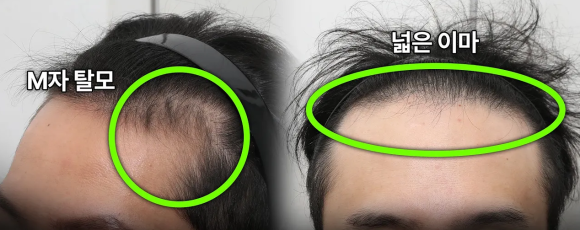
In men, due to genetic factors,
M-shaped hair loss progresses and the amount of hair gradually decreases.
For male hair transplantation, it is important to increase the density of the thinning area
and to carry out hair transplantation together with hair loss treatment.
Of course, there are also many cases in which surgery is performed for cosmetic purposes even without hair loss.
Hairline Correction (Female Hair Transplant)
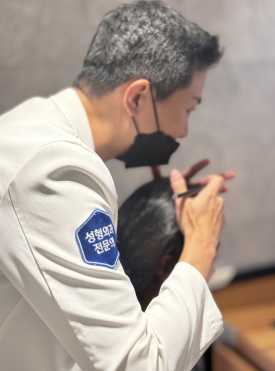
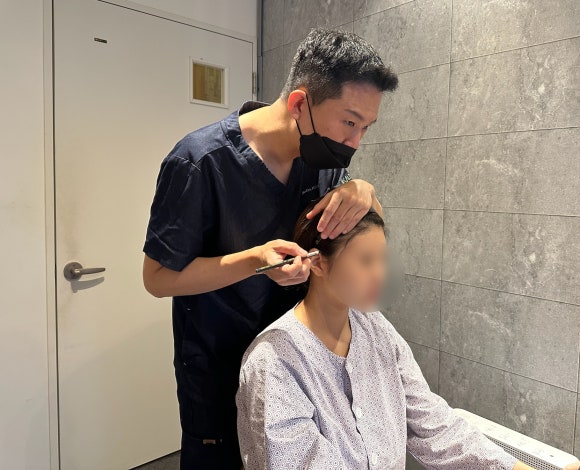
Hairline correction (female hair transplant) is performed more often for cosmetic purposes than for hair loss treatment.
In cases of a naturally wide or asymmetrical forehead,
adjusting the hairline can create a more balanced face shape
and produce a softer impression.
Hairline correction (female hair transplant) is not simply hair transplantation,
but a design that takes the individual's hairline and face shape into account is key.
In the past, many people underwent the procedure to reduce a wide forehead,
but recently many people also have surgery for the purpose of correcting the line.
Key Points of Hairline Correction (Female Hair Transplant)
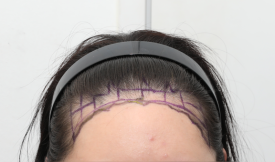
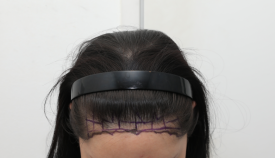
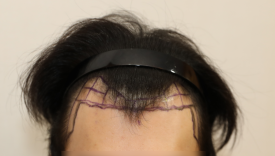
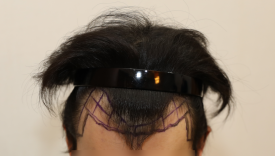
- Face-shape-tailored design
Rather than simply narrowing the forehead,
an ideal curve suited to the face shape must be designed.
By forming temple peaks to create a soft curve,
and not simply reducing the forehead unconditionally,
a customized design that considers each person's face shape is applied.
Laser pointing is used to check facial proportions and plan the design.
- Delicate transplantation that also considers baby hairs
A female hairline has fine, baby-hair-like strands in the front,
with thicker hair arranged toward the back.
Therefore, in hairline correction (female hair transplant), thin hairs must be selected
and placed in the front.
By using a high-magnification microscope to separate and place hairs of different thicknesses,
the transplant is performed so that the hairline does not look unnatural.
Surgical equipment that helps with graft survival
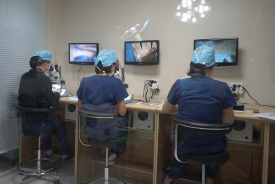
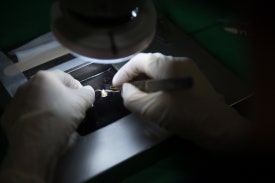
- Use of a high-magnification microscope to delicately separate follicles
To precisely separate follicles and minimize follicle damage,
a high-magnification microscope is used.
This allows for more detailed work, helping to prevent follicle damage
and to carefully shape them into a form suitable for transplantation.
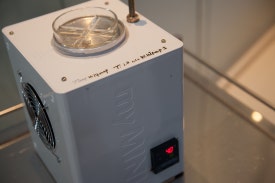
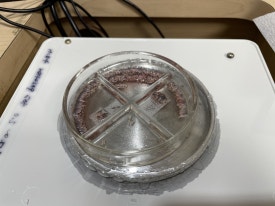
- A low-temperature moisture-retaining device that maintains a constant temperature
If hair remains outside the body for a certain period of time,
moisture can evaporate quickly, making transplantation difficult.
Therefore, a storage environment that maintains moisture and an appropriate temperature is essential.
Through a low-temperature moisture-retaining device, a low temperature is maintained so that the follicles do not rapidly consume energy outside the body.
By maintaining a constant temperature,
it helps increase follicle survival rates
and may lead to healthier hair growth.
- Use of preservation solution for transplant procedures
By applying the principles used in liver transplantation, kidney transplantation, and similar procedures,
follicles can be stored in a stable environment.
This solution helps maintain a consistent environment while the follicles are outside the body.
Hairline correction (female hair transplant) is not simply a hair transplant,
but a precise design that takes facial harmony into account.
The process of designing a natural-looking hairline is important,
based on analysis of each individual's face shape, facial features, and scalp condition.
For this reason, it is necessary to make a careful decision about the method that is suitable for you
through 충분한 consultation.
It may also be helpful to decide after checking what techniques and equipment are used during the procedure.