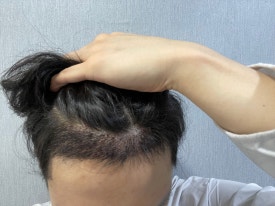
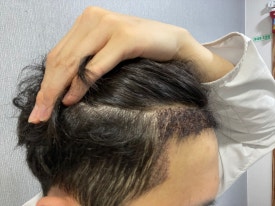
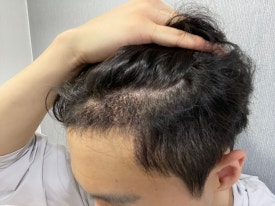
“Wow... did you get a hair transplant?” This is one question many patients dread hearing the most.
No one wants their transplant to be noticed before their hair has even settled in.
In fact, it is something many patients worry about even if they do not say it out loud.
Work, company dinners, blind dates, presentations, and other everyday schedules do not accommodate the recovery period.
Today, we have put together some tips to help you return to daily life naturally after a hair transplant.
- Hairstyle is the first strategy to prepare
Right after a hair transplant, a style that can naturally cover the transplanted area as much as possible is ideal.
For example, a layered medium-length hairstyle, a cut with bangs, or, for women, a naturally flowing half-up style is recommended.
On the other hand, styles that leave the forehead fully exposed or are too short should be avoided.
During recovery, protection comes before style.
- Hair products can help you look less noticeable and work well when used properly
Volumizing powders, texture sprays, and hair fibers can help with coverage.
However, you need to be careful not to let them touch the transplanted area directly, and it is best to choose low-irritation products.
For concealer products, choose a tone that is as close as possible to your own hair color for a natural look.
In general, it is best not to apply any products for the first 5 days after the transplant, and after that, we recommend using products mainly as advised by the clinic.
- Hats and accessories can hide things while also enhancing your style
Hats are the most effective way to cover up during the early recovery period.
Breathable fabric materials, deep-brim caps without pressure, and soft bucket hats are recommended.
For situations where you need to take them off indoors, you can also use knit beanies, headbands, or scarves.
Glasses are also a good accessory because they draw attention away without being too noticeable.
- Skin condition during recovery does not need to make you anxious
Scabbing, redness, and slight swelling are normal parts of the recovery process.
According to the guidelines of the International Society of Hair Restoration Surgery (ISHRS), these reactions are common for about 5 to 10 days after the transplant, and during this period, avoiding irritation and focusing on moisturizing and anti-inflammatory care helps improve graft survival.
If you have sensitive skin, it is important to faithfully follow the care instructions provided by the clinic.
- “I changed my style” is the safest comeback line
People perceive changes in others’ appearance by only about 20–30% on average.
Others are much less observant than you might think.
So, if you prepare a few phrases in advance, you can get through it quite naturally.
For example: “I changed my style a bit.”, “My hair had become too thin, so I’m taking care of it.”
Just one line like this can smooth over awkward looks.
- What really matters is not “not being noticed,” but “growing well”
Many patients focus on whether they will be found out, but in fact, the most important thing is for the follicles to settle in well.
According to recent research, most patients with high graft survival rates were those who strictly followed the post-surgery care guidelines for two weeks after the procedure.
Rather than thinking, “I need to make sure my hair transplant isn’t noticeable,” a mindset of “I need to help my hair grow healthily” leads recovery in a better direction.
Returning to daily life after a hair transplant
How can you do it without it showing? Conclusion
-
Naturally cover it with hairstyle and products
-
Divert attention with hats, scarves, glasses, and more
-
Prepare to return with a confident tone and attitude
-
Above all, focus on care that improves graft survival
�
�
�
This was Kim Jin-oh, saying it is time for hairhair.
Pilsaeng Sinmo (必生新毛).
�
�
[This post is written directly by a board-certified plastic surgeon for information-sharing purposes in accordance with Article 56, Paragraph 1 of the Medical Service Act. Hair loss surgery and treatment may have side effects, so please make a careful decision after consulting with a specialist.]