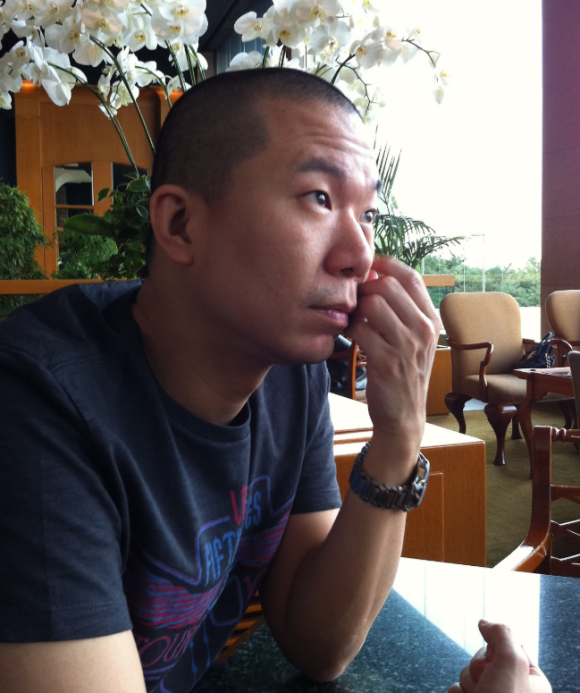
No one would need to comb their hair.
Hair salons would not exist, and instead of shampoo and conditioner, only a “scalp-only cleanser” would remain.
Even the word “bald” might never have appeared in the dictionary.
Because the concept of hair loss itself would not exist at all.
I look in the mirror.
The face is familiar, but the forehead and crown are completely smooth.
It would be a world where there would be no need to worry about an M-shaped hairline or a broad forehead.
Because everyone has no hair, that itself becomes the norm and the standard.
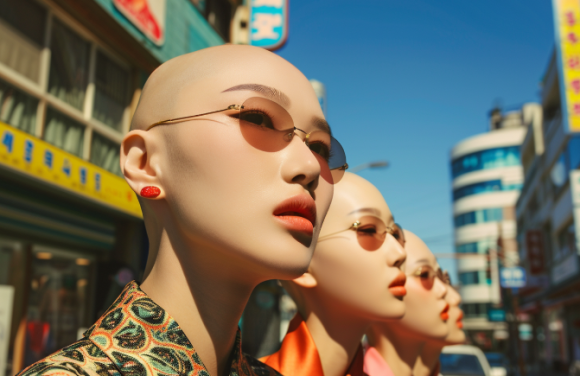
The center of fashion would also be completely different.
People would express individuality not through hairstyles, but through scalp tattoos, shine, color, patterns, and more.
A new trend called “skull style” might have emerged.
Dedicated lotions to maintain a unique sheen, powders that highlight the texture of the scalp, tattoo techniques that carve patterns...
The tool for self-expression would have become the scalp instead of hair.

What about society?
Instead of hair transplant clinics, “scalp tattoo clinics” would become trendy, and special creams for forehead shine would be displayed in supermarkets.
Even superheroes in movies would appear with smooth scalps reflecting the sun, instead of flowing hair.
Detectives would deduce a criminal’s identity using clues from the person’s “scalp pattern,” and the standard of beauty would be “shine and elasticity,” not “hair volume.”
The way people responded to climate change would also have been different.
Instead of carrying an umbrella on rainy days, people would apply waterproof scalp cream.
In summer, “scalp sunscreen” that blocks ultraviolet rays would be popular, and people would wear “scalp protection caps” instead of sunglasses.
Hair salons would be replaced by “scalp spas,” and services like “crown shine care programs” would become widespread.
It would not have been free of inconvenience, but people would have developed various scalp care and fashion items to express individuality.
Wigs might have become as important as hair is now, and the question “Would this wig suit me?” might have become part of everyday conversation.
Certain patterns or levels of shine might also have become symbols representing social status.
The medical field would have changed too.
The “hair loss treatment” I am researching now would not exist, and instead “scalp shine enhancement procedures” or “forehead shine maintenance procedures” might have dominated the medical field.
Scalp injections to maintain smooth scalp elasticity might also have become popular.
There would have been major changes psychologically as well.
Right now, having a lot of hair is seen as making you look younger, while hair loss is seen as making you look older, but in a world without hair, “scalp shine” or “elasticity” would likely have become the standard for looking youthful.
People would have exchanged questions like, “How do you take care of your scalp these days?” and put as much effort into scalp style as we do now when thinking about hairstyles.
But in the end, the essence is the same.
Whether there is hair or not, people are always searching for their own beauty.
What matters more than what we are born with is how we accept and care for it.
I look in the mirror again.
Me with hair, me without hair. Imagining those two forms coexisting, I become certain of one thing.
The truly important thing is not whether there is hair, but how you see yourself.