Recently, I came across a paper about research aimed at clarifying the relationship between hair loss and depression.
In fact, in clinics and hospitals, I often meet patients who report feeling depressed because of hair loss.
It is not just the problem of hair falling out; many people also describe the emotional difficulties that come with it.
Many people talk about lowered self-esteem, social withdrawal, and, in severe cases, a decline in quality of life.
So, does hair loss cause depression, or does depression worsen hair loss?
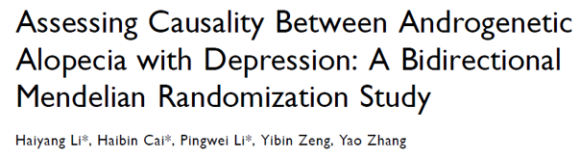
This study analyzed the relationship between androgenetic alopecia and depression.
The researchers used large-scale genetic data to investigate whether hair loss increases the risk of developing depression.
According to the study, the more hair loss progressed, the higher the tendency for the risk of depression to increase.
However, no evidence was found that depression directly causes hair loss.
Why hair loss may increase the risk of depression
Hair loss is not just a cosmetic issue.
According to the study, many patients with hair loss experience anxiety about changes in their appearance, social withdrawal, and lowered self-esteem.
In particular, when hair loss begins at a young age, the likelihood of having difficulties in interpersonal relationships or feeling socially isolated becomes even greater, which can increase stress and ultimately raise the risk of developing depression.
In addition, because hair loss often progresses regardless of one's will, it can add a sense of helplessness from being unable to control it.
If these feelings continue, psychological distress can deepen, making anxiety or depression more likely to worsen.
What are the treatment methods?
This study emphasizes that psychological care should be provided alongside hair loss treatment.
In fact, among patients who have received hair loss treatment, many experience positive psychological changes as well.
Using hair loss treatment methods such as hair transplantation, scalp micropigmentation, and medication is important, and psychological counseling or emotional support also plays an important role.
Medical staff should also take the patient's emotional difficulties into account.
Rather than simply checking the progression of hair loss, it is important to assess the psychological burden the patient is experiencing because of hair loss and, when necessary, provide appropriate counseling or support.
It is also necessary to let patients know that hair loss is not the end, that there are various treatment options,
and that hair loss is not a factor that determines quality of life.
Can hair loss affect depression? (Hair Loss Depression)
Conclusion
This study shows that hair loss treatment is not simply about outward changes, but can also affect mental health.
Going forward, patients with hair loss will likely need a comprehensive approach that includes not just treatment, but also mental support and counseling.
What is needed to create a society where people are not pushed into depression by hair loss, but can remain confident even if they experience it?
As someone who treats hair loss, I now feel it is time to look at this issue from a broader perspective beyond simple treatment.

Now it is time for hair to grow, this was Kim Jino.
Pilsaengsinmo (必生新毛).
References
Li, H., Cai, H., Li, P., Zeng, Y., & Zhang, Y. (2025). Assessing Causality Between Androgenetic Alopecia with Depression: A Bidirectional Mendelian Randomization Study. Clinical, Cosmetic and Investigational Dermatology, 18, 445-451. https://doi.org/10.2147/CCID.S501182
[In accordance with Article 56, Paragraph 1 of the Medical Service Act, this post has been written directly by a plastic surgery specialist for the purpose of providing information. Hair loss surgery and treatment may have side effects, so please make a careful decision through consultation with a specialist.]