Why are TV protagonists always so full-haired?
Even these days, when you watch TV, it is easy to see that people with thick hair still tend to take on the role of the protagonist.
On the other hand, characters with hair loss or who are bald are often limited to comic roles or supporting parts.
Sometimes hair loss is exaggerated with a wig, or turned into an obvious gag.
But I can hardly remember seeing such a character stand at the center of a serious life drama or become the lead in a romance.
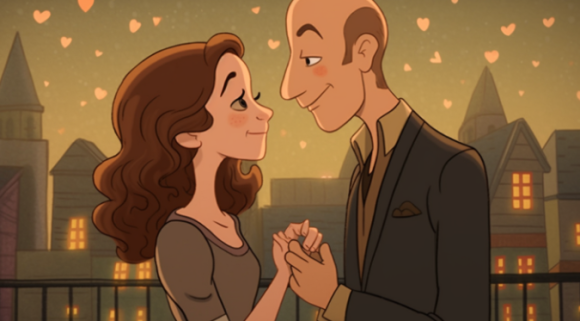
Even when I think back to movies and dramas I have watched recently, the situation is not much different.
Bald characters usually play the protagonist’s friend or helper, and are often portrayed as villains or as characters who simply provide light humor.
Meanwhile, protagonists with thick hair lead the narratives of romance, action, and growth, taking center stage.
Naturally, this makes you wonder, ‘Is this a world where people with more hair get more attention?’
(Of course, there are actors like Bruce Willis and Jason Statham who have taken lead roles despite hair loss, but those cases still feel like exceptions.)
Hair loss as a joke? A perception that started in childhood
Even when I think back to my school days, it seems much the same.
I remember friends saying, “Wow, you really have a lot of hair—I’m jealous,” and on the other hand, there were times when casual behind-the-scenes jokes were exchanged about teachers with slightly wide foreheads.
Maybe from that time on, I started hoping, ‘I hope I never get hair loss,’ and wishing, ‘I hope my hair always stays thick.’
But I only began to think seriously about hair when I opened my practice and actually started meeting patients with hair loss.
That was because I came to realize firsthand that hair is not simply a cosmetic issue, but something that can affect self-esteem and quality of life.
The honesty hidden in laughter in the consultation room
In the consultation room, unexpected humor often comes up.
Once, a patient opened the door, came in, and jokingly said, “Doctor, if you find my hair, I’ll give you a reward.” I couldn’t help laughing, and the nurse beside me burst out laughing too.
There may have been some real discomfort hidden in that joke, but I still remember that moment as one that made the consultation room feel a little brighter.
I also take hair loss medication
Actually, there is a family history of hair loss in my family.
My father and my uncle both gradually developed wider foreheads as they got older, and seeing that made me think that one day the same change might come to me too.
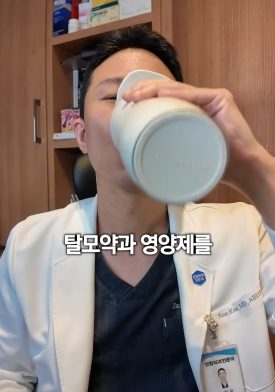
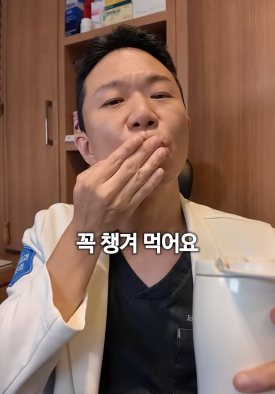
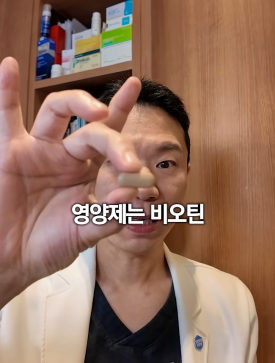
And in fact, from my mid-30s I started to notice my hair thinning, and now I am taking hair loss medication.
At first, I thought, surely not. But as time passed, looking at my forehead and crown in photos made me think, ‘So this is where it starts.’
Maybe that is why, whenever I see patients, I often think about the meaning of hair. I even wonder, ‘Can just a few strands of hair change a person’s confidence this much?’
The spot of the protagonist is decided not by hair, but by the person
Even now, I continue researching hair loss and meeting many patients.
Of course, I focus on treatment, but at times the cheerful conversations we have in the consultation room give me great energy as well.
Whether someone has a lot of hair or very little, I think what matters is the attitude of enjoying the moment and living fully.
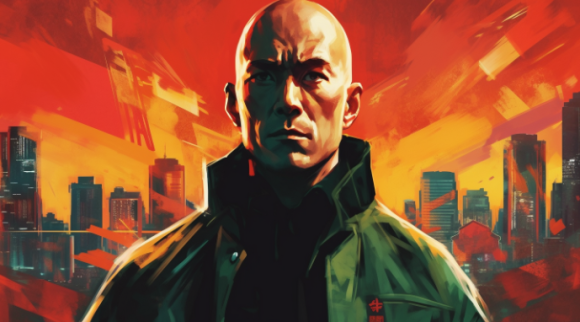
With time, there will surely come a day when, in Korea as well, a bald actor becomes the lead in a romantic comedy, and a character no longer hides hair loss but stands at the center of a serious drama just as they are.
When that day comes, it will be an era in which a person’s charm and story draw more attention than the amount of hair they have.
I hope that day comes soon.
An era in which even people with hair loss can stand proudly as the protagonist—an era of true protagonists.