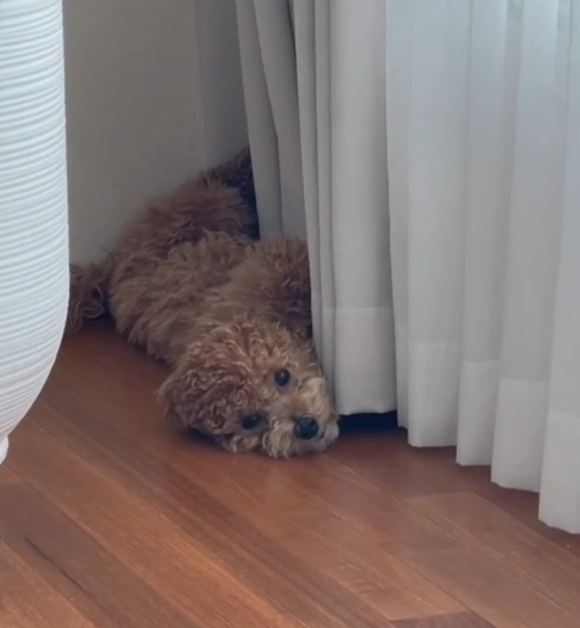
It’s not only humans who experience hair loss; dogs can too.
If you live with a dog, you may have worried at least once about shedding problems.
In particular, once the hair starts falling out, it often spreads wider and does not grow back, which can be upsetting.
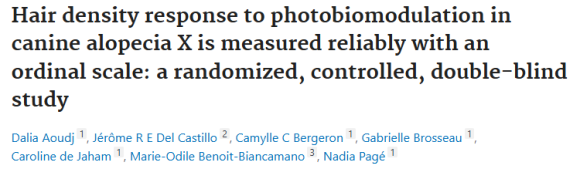
Recently, a study published in a U.S. veterinary journal tested whether canine hair loss could be treated with light alone.
I found it somewhat novel that hair loss in dogs is being researched and published in papers just like it is in humans.
Because hair loss treatment usually takes a long time, it is important to keep checking whether it is actually effective.
But for both dogs and humans, it is difficult to express this accurately in numbers.
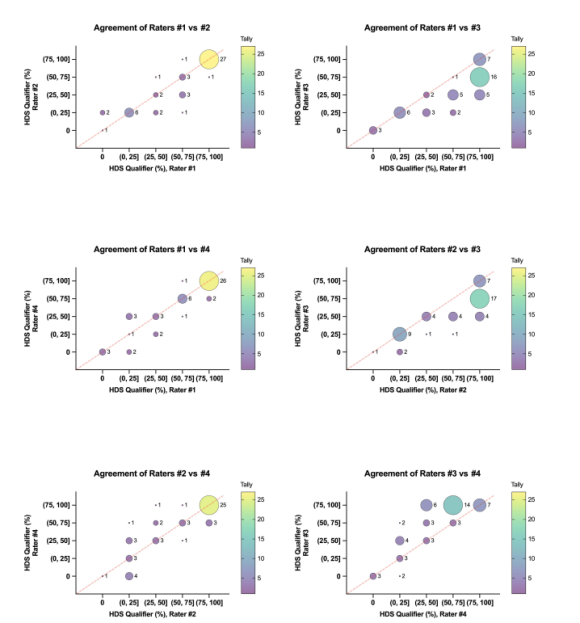
So the researchers created a “Hair Density Score (HDS),” which divides hair density into five levels.
Fifty dog photos were evaluated separately by several veterinarians.
The consistency was high enough that they gave nearly the same scores.
In other words, it means this can be a standard that anyone can easily use.
The research team conducted an 8-week experiment with 7 dogs suffering from “alopecia.”
Each dog had hair-loss areas on both sides of the body; one side was exposed to light, and the other side received no treatment.
However, the same gel was applied to both sides.
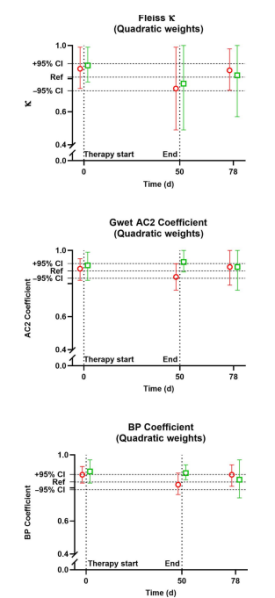
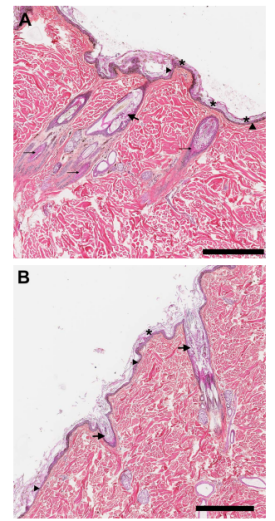
As time passed, hair began to grow little by little on both sides,
but in areas with moderate hair loss, the side exposed to light tended to grow better.
When tissue biopsies were examined, there was no noticeable difference, but visually there was a clear difference.
Looking at this study, a few interesting points stood out.
- The evaluation criteria are simple and intuitive
We also compare before-and-after photos of treatment,
or check effectiveness by counting the number of hairs,
but sometimes a standardized numerical criterion like this is more helpful.
- Light therapy is already being used in humans
Treatments using low-level laser, LED, and similar devices
are already widely used, and many patients actually see results.
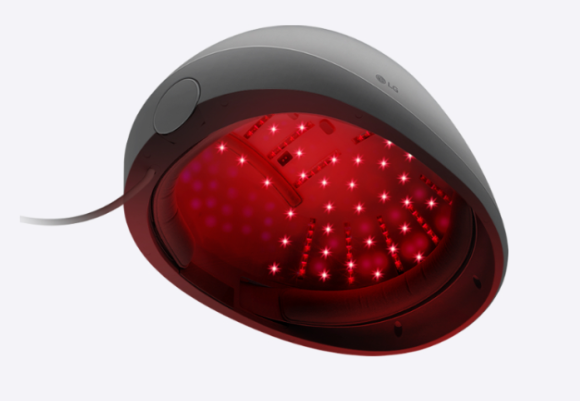
Source - Money Today
At-home low-level laser device
A few years ago, LG made headlines by creating an at-home low-level laser device.
However, the fact that there was no major change on tissue biopsy means that even if hair seems to be growing, the deeper structure may not change much.
What I found interesting was that hair loss treatments used in humans could also potentially be used for companion animals.
Now it’s time for hairhair, Kim Jin-oh.
Pilsaengsinmo (必生新毛).
References
Aoudj D, Del Castillo JRE, Bergeron CC, Brosseau G, de Jaham C, Benoit-Biancamano MO, Pagé N. Hair density response to photobiomodulation in canine alopecia X is measured reliably with an ordinal scale: a randomized, controlled, double-blind study. Am J Vet Res. 2025 May 2:1-11.
[This post was written directly by a board-certified plastic surgeon for information-sharing purposes in accordance with Article 56, Paragraph 1 of the Medical Service Act. Hair transplant surgery and treatment may have side effects, and should be decided carefully through consultation with a specialist.]