Ever since I was young, I have lived in a world where hair determines a person’s impression.
Adults often said that long hair symbolizes femininity, while short hair suggests an energetic personality.
Among friends, comments like “That hairstyle doesn’t suit you” were exchanged casually.
A culture that judges people by their hair still continues today, and many people accept it as natural.
During high school, one friend suddenly shaved his head and came to school.
He appeared after making his long, shiny hair disappear in an instant, and became the center of attention right away.
Questions like “What happened?”, “Are you going to the military?” came flooding in.
Even though he had just shaved his head, the reaction around him was as if something major had happened.
He laughed and said, “I just didn’t want to deal with washing my hair,” but it seemed difficult for the people around him to accept it easily.
That was when I first realized. We give hair far too much meaning.
Even after entering college, the atmosphere was not much different.
What stuck with me was something a friend heard at a hair salon before a job interview.
“If it’s too short, you look strong, and if it’s too long, you look like you don’t take care of yourself. Trimming it to an appropriate length can give a sense of trustworthiness.”
In the end, my friend cut their hair into a safe, ordinary style, but said that remark kept lingering in their head.
It felt as if the outcome of the interview depended on the length of their hair.
I had a similar experience after starting working life.
At a company dinner, a senior asked me,
“When are you going to cut your hair? Short hair looks more professional.”
I laughed it off at the time, but inside I felt bitter.
I found it surprising that hairstyle could become the standard in a place where people should be judged by their work and results.
There were even more extreme cases.
A person I met in the clinic said this to me:
“Once my hair started falling out, people’s eyes toward me changed.”
They used to hear that they looked young and energetic, but after hair loss progressed,
they often heard, “You look tired these days.”
Hair seemed to be treated like a measure of tiredness or vitality.
In the end, that person decided to undergo a hair transplant.
We are accustomed to connecting hair with a person’s identity.
Long hair means femininity, short hair means strength, hair loss means aging, dyeing hair means rebellion.
But hair is, in the end, nothing more than a mass of protein.
And yet we judge personality by it, question ability, and even discriminate based on it.
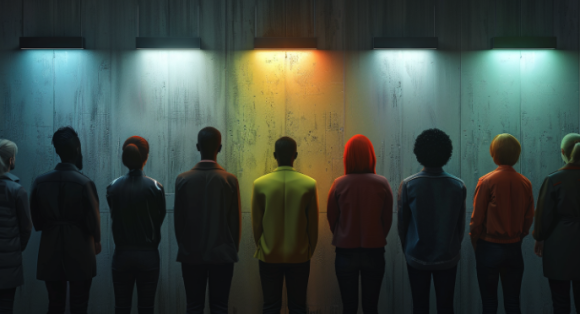
Now I hope people will first look at a person’s thoughts and actions, not their hair.
Whether they have a lot of hair or little, whether it is long or short, dyed or not.
I hope a society will come where no meaning is attached to that by itself.
I hope that someday, even when we see a shiny head on the subway, we can simply pass by without feeling anything at all.