Crown hair loss progresses differently from M-shaped hair loss.
Because it starts from the center of the head, it is not easily visible in the mirror,
and in the early stages, it is often difficult to notice.
However, at some point, the hair starts to look sparse, and parting or styling becomes difficult, making the hair loss noticeable.
In this way, crown hair loss shows clear outward changes as it progresses, so many people end up wondering when and how to treat it.
At this point, hair transplantation is one option that can be considered.
So, in what cases can crown hair transplantation be considered?
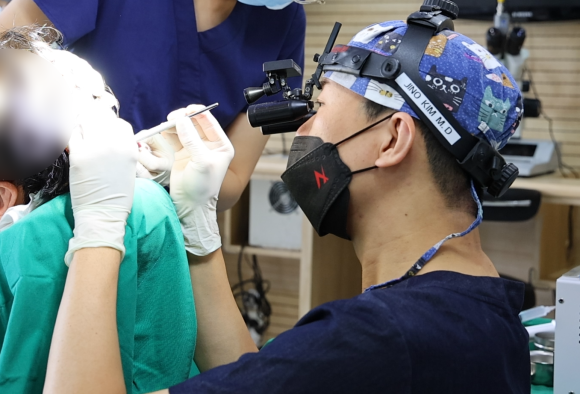
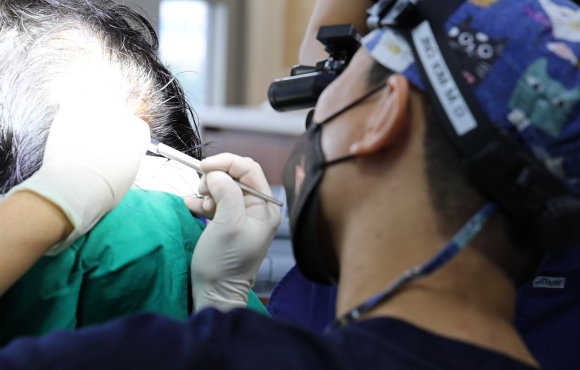
- If density improvement is difficult even after medication
Crown hair loss is often managed with medication in the early stages.
Some people see improvements in hair thickness or density after taking medication for a certain period,
but as time passes, there may come a point when no further improvement seems possible.
- If the amount of hair has noticeably decreased
If the hair has clearly thinned and the crown is visibly exposed,
then it may be worth considering hair transplantation.
This can be an even more appropriate decision if medication has already been tried sufficiently.
What if the density feels lacking after transplantation?
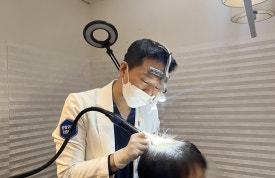
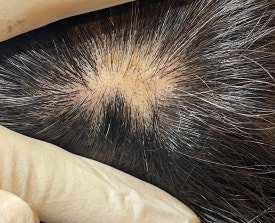
In the crown area, transplanted hair blends in among the existing hair,
so the perceived effect may seem less pronounced.
If the density still feels insufficient after transplantation,
you can also consider combining it with scalp micropigmentation,
which visually fills in the spaces between transplanted hairs.
Also, because hair transplantation involves collecting follicles from the back of the head,
there may be limits to the resources available for each person.
If you have previously undergone hair transplant surgery or
if the hair density in the occipital area is not sufficient,
it may be difficult to cover a wide area with transplantation alone.
In such situations, scalp micropigmentation can be a strategy to
compensate for visual density while taking limited follicle resources into account.
At New Hair Plastic Surgery Clinic, we take into account each person's hair thickness,
density, and even irregular hair patterns,
and design natural dot expressions so they look like real hair.
Through customized density control for each individual,
we aim for a visual effect that blends harmoniously with transplanted hair.
Depending on your current condition, it is important to make a decision after充分 consulting with medical staff about whether and when to combine medication, hair transplantation, and scalp micropigmentation.
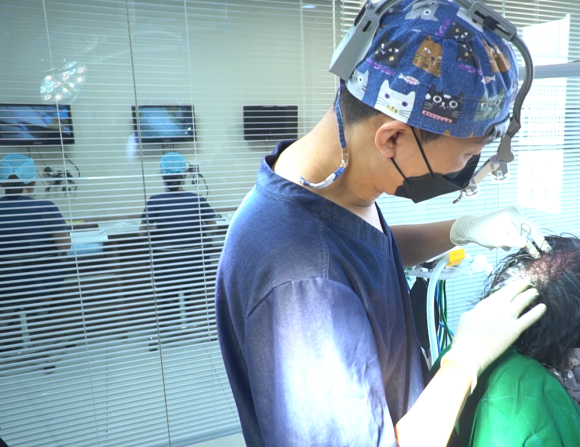
Crown hair loss does not necessarily mean poor results.
In the crown area, hair often becomes thinner and looks sparse,
so it can seem wider than the actual area of hair loss.
Because of this, some people worry after hearing that transplantation won’t be effective for the crown, but that is not necessarily true.
Crown hair transplantation is not the right answer for everyone.
However, depending on your current hair loss status, the speed of progression, the remaining follicle resources, and the results you hope for,
it is one of the methods that can be sufficiently considered.
The most important thing is not to decide on surgery blindly, but to create a plan that fits your condition through diagnosis and consultation.