Hair casts, trichorrhexis nodosa, and monilethrix: differential diagnosis
When performing a scalp magnification exam (trichoscopy), you may sometimes find small white nodules attached to the hair shaft.
At first glance, they may look like nits, but most are noninfectious conditions rather than infections.
Representative examples include hair casts, trichorrhexis nodosa, and monilethrix.
These conditions may appear similar in terms of symptoms, but the causes and treatment approaches differ greatly, so an accurate differential diagnosis is necessary.
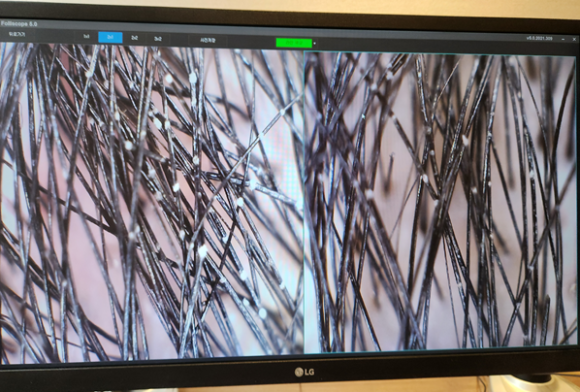
Hair casts, an optical illusion created by external keratin
Hair casts are white nodules formed when flakes of keratin or sebum debris shed from the scalp wrap around the hair in a cylindrical shape.
They are unrelated to infection, and because they look like nits, many people are startled or misunderstand them.
However, a defining feature is that they easily slide off when pushed downward along the hair with a finger or comb, which helps distinguish them from actual nits.
Common contributing factors include seborrheic dermatitis, scalp psoriasis, hyperkeratosis, and excessive use of hair products.
Management is more important than treatment, and using medicated shampoos containing ketoconazole, zinc pyrithione, or salicylic acid 2 to 3 times a week is effective.
After shampooing, the nodules can be physically removed using a fine scaling brush, and if inflammation is present, a topical steroid or calcipotriene ointment may also be used.
Trichorrhexis nodosa, a trace of repeated damage
Trichorrhexis nodosa is a structural abnormality in which the hair cortex ruptures, causing the fibers to spread apart on both sides and resemble a brush-like shape.
This damage is associated with repeated heat exposure, chemical treatments (dyeing, perming), friction, nutritional deficiencies (especially iron and zinc), or hypothyroidism.
Under the microscope, the fiber structure appears separated like two comb teeth facing each other, and the affected area breaks easily.
As a result, the hair cannot grow beyond a certain length and keeps breaking.
The key to treatment is minimizing damage.
It is recommended to avoid high-temperature hair dryers and flat irons and to use low-irritation shampoos and silicone-based products for damaged hair care.
If necessary, protein and mineral supplementation and thyroid function testing may also be considered.
Monilethrix, a genetic structural abnormality
Monilethrix is a congenital genetic disorder in which the hair becomes regularly narrower and wider at fixed intervals.
This structure creates an appearance like beads strung on a thread,
and it is caused by mutations in keratin genes such as KRT81, KRT83, and KRT86.
Most cases are inherited in an autosomal dominant pattern, and a family history is common.
From childhood, the hair tends to be thin, does not grow well, and breaks easily. On trichoscopy, a regular pattern of alternating narrow and widened segments can be seen.
Monilethrix is a condition that is difficult to cure at the root, but reducing heat exposure and friction can help relieve symptoms.
In addition, clinical attempts are being made to improve hair thickness and density through low-level laser therapy (LLLT) and PRP treatment.
| Condition | Nodule shape | Nodule interval | When pushed with a finger | Main cause |
|---|
| Hair casts | External keratin clumps | Irregular | Moves easily or falls off | Keratin, sebum, scalp inflammation |
| Trichorrhexis nodosa | Brush-like fiber fracture | Irregular | Breaks easily | Heat, chemical damage, nutritional deficiency |
| Monilethrix | Regular constrictions and expansions | Consistent | Breaks easily | Keratin gene mutation |
Self-diagnosis guide
If you shampoo hair with nodules and, while it is still wet, push it downward with your finger or a comb, the nodules move and fall off, it is likely a hair cast.
On the other hand, if there is a history of repeated chemical treatments or high-heat styling and the hair breaks at the nodule site, trichorrhexis nodosa should be suspected.
If the hair has not grown well since childhood and there is also a family history, monilethrix is possible and a detailed examination is needed.
For a more accurate diagnosis, it is advisable to perform magnified examination or trichoscopy, and if necessary, analyze a hair sample under the microscope.
Even if the symptoms seem similar, the causes and treatments are completely different, so rather than judging on your own, it is important to receive a diagnosis from a specialist.
Now it’s time for hair hair, this was Kim Jino.
May new hair always grow.
References
-
Ruiz-Villaverde R, Galán-Gutierrez M. Hair casts (pseudonits). CMAJ. 2013;185(9):E425. doi:10.1503/cmaj.120894
-
França K, et al. Hair casts or pseudonits. Int J Trichology. 2011;3(2):121-122.
-
Anannya S, et al. Hair Shaft Fracture in a Young Athlete: A Rare Case Report of Acquired Trichorrhexis Nodosa. Cureus. 2024;16(8):e67341.
-
Haskin A, Kwatra SG, Aguh C. Breaking the cycle of hair breakage: Pearls for the management of acquired trichorrhexis nodosa. J Dermatol Treat. 2017;28(4):322-326.
-
Chabchoub I, Souissi A. Monilethrix. StatPearls [Internet]. Treasure Island (FL): StatPearls Publishing; 2023-.
[This post is written directly by a plastic surgery specialist for informational purposes in accordance with Article 56, Paragraph 1 of the Medical Service Act. Hair loss surgery and treatment may have side effects, so please make a careful decision after consulting with a specialist.]